
Ever been there? You’re cruising on your e-bike, feeling the breeze, and then… a hill. That gentle electric “assist” suddenly feels more like a polite suggestion as you grind your way to the top, getting passed by riders on more powerful machines. Or maybe you’re on a flat, open road, and that 20 mph speed limiter kicks in right when you’re in the groove. It’s frustrating. You love your bike, but you just wish it had… more.
If you’re
tinkering with the idea of upgrading e bike motor for more power, you’ve landed in the right place. This isn’t just about going faster; it’s about transforming your ride. It’s about conquering those hills, hauling cargo without breaking a sweat, or simply making your commute more thrilling.
✨Was this helpful? Spread the word! 🚀
But let’s be real: the world of e bike motor upgrade for more power can be a confusing mess of watts, volts, mid-drives, and hub motors. What’s the difference? What do you actually need? And what will just be a waste of money?
Before we dive into the specific kits, let’s look at the main paths you can take. Upgrading isn’t a one-size-fits-all solution. Your choice will depend on your bike, your budget, and your ultimate goal.
Upgrade Paths: New Kit vs. New Bike
| Feature | Upgrading Your Current Bike | Buying a New, Powerful E-Bike |
| Cost | $500 – $1,500+ | $2,500 – $8,000+ |
| Customization | ✅ Total Control: You pick the exact motor, battery, and power level. | 🛑 Limited: You get what the manufacturer offers. |
| Effort | 🛠️ High: Requires research, compatibility checks, and installation (DIY or pro). | ✅ Low: Buy it and ride it. |
| Sentimental Value | ✅ High: You get to keep the bike frame and setup you already love. | 🛑 None: You have to start a new bike relationship. |
| Legality | ⚠️ Complex: Easy to accidentally build a machine that’s no longer a “Class 1/2/3” e-bike. | ✅ Simple: Comes with a clear classification (usually). |
As you can see, upgrading is the tinkerer’s dream. It’s the path for those who want specific performance and aren’t afraid to get their hands dirty (or pay someone who isn’t).
🚴♂️ Quick Comparison: Top 7 Paths to More Power
Here’s a quick look at the game-changing kits and upgrades we’re about to dive into. Whether you want raw torque for off-road trails or a simple unlock for your commuter, there’s a solution here.
| Product/Upgrade | Type | Best For | Power Level (Approx.) |
| 1. Bafang BBSHD 1000W | Mid-Drive Kit | Raw Power & Off-Road | 1000W (1500W+ Peak) |
| 2. Bafang BBS02 750W | Mid-Drive Kit | All-Around Performance | 750W (1200W Peak) |
| 3. Tongsheng TSDZ2 750W | Mid-Drive Kit | Natural Ride Feel (Torque) | 750W (1000W Peak) |
| 4. Bafang 750W Rear Hub Kit | Hub Motor Kit | Solid Commuting & Simplicity | 750W (1000W Peak) |
| 5. Ebikeling 1200W Hub Kit | Hub Motor Kit | High Speed (Direct Drive) | 1200W (1500W+ Peak) |
| 6. Voilamart 1000W Rear Kit | Hub Motor Kit | Budget Power Upgrade | 1000W (1200W Peak) |
| 7. SpeedBox 3.0 Chip | Tuning Chip | Derestricting Brand-Name Motors | N/A (Unlocks existing) |
Top 7 Products for Upgrading E Bike Motor for More Power: Expert Analysis
We searched Amazon and the web for the most effective, popular, and value-packed solutions for upgrading e bike motor for more power. Here’s a detailed breakdown of the top contenders.
1. Bafang BBSHD 1000W Mid-Drive Kit
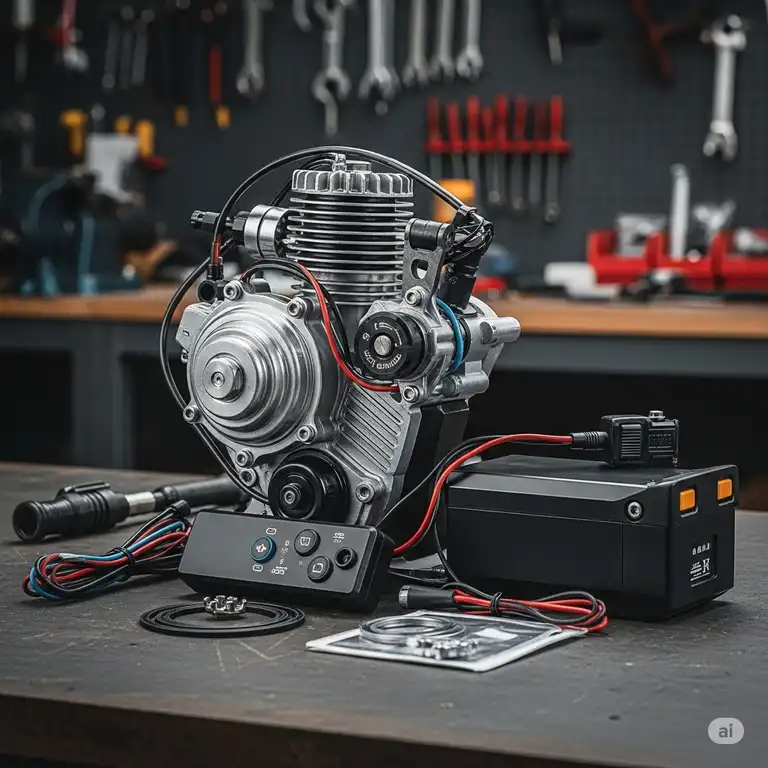
The Bafang BBSHD is the undisputed king of DIY e-bike kits for a reason. This 1000W beast is not for the faint of heart. It’s designed to replace your bike’s entire crankset and bottom bracket, delivering massive power directly through your bike’s drivetrain.
-
Detailed Specifications:
-
Motor Type: Mid-Drive
-
Power: 1000W (nominal), often peaks over 1600W
-
Voltage: 48V or 52V
-
Max Torque: 160 Nm (This is huge)
-
Compatibility: Fits standard 68-73mm, 90-100mm (fat bike), and 120mm (fat bike) bottom brackets.
-
Display: DPC-18 color display (common option)
-
Components: Includes motor, display, cranks, chainring, speed sensor, and wiring harness.
-
-
Customer Review Analysis:
-
Users consistently rave about the “insane torque” and “unstoppable hill-climbing” ability. Many say it turned their old mountain bike into an off-road “motorcycle.”
-
The primary complaint? It’s power-hungry. It will drain batteries fast if you’re heavy on the throttle. Some users also note that it can be tough on chains and cassettes if you don’t shift properly.
-
-
Warranty: Typically comes with a 1-year limited warranty from most sellers, covering manufacturing defects.
-
Professional Applications: Ideal for heavy cargo bikes, serious off-road trail riding, and “speed-demons” building powerful commuters.
-
Pros & Cons:
-
✅ Pros: Unbelievable power and torque, utilizes bike’s gears for efficiency, relatively straightforward (if involved) installation, built like a tank.
-
🛑 Cons: Very heavy, can destroy weaker drivetrains, eats batteries for breakfast, legally “off-road use only” in most of the USA.
-
2. Bafang BBS02 750W Mid-Drive Kit
If the BBSHD is the “monster truck,” the Bafang BBS02 is the “sports car.” It’s the perfect balance of power, efficiency, and usability for most people. At 750W, it’s still wildly powerful (peaking over 1200W) and remains the gold standard for a high-performance e bike motor power upgrade.
-
Detailed Specifications:
-
Motor Type: Mid-Drive
-
Power: 750W (nominal), ~1200W peak
-
Voltage: 48V
-
Max Torque: 120 Nm
-
Compatibility: Fits standard 68-73mm bottom brackets.
-
Display: Various options, including DPC-18 and 850C.
-
Components: Full kit with motor, display, cranks, chainring, sensors, and wiring.
-
-
Customer Review Analysis:
-
This is the crowd-pleaser. Owners love that it’s “plenty powerful” for the steepest city hills but “quieter and more refined” than its bigger brother. It’s considered the sweet spot for a versatile e bike motor upgrade for more power.
-
Fewer complaints about destroying drivetrains, but users still stress the importance of quality bike components.
-
-
Warranty: 1-year limited warranty is standard.
-
Professional Applications: The ultimate commuter upgrade, perfect for bike packers, and more than capable for most trail riding.
-
Pros & Cons:
-
✅ Pros: Excellent power-to-weight ratio, highly efficient, very reliable and popular (tons of community support), legal 750W rating (in some states).
-
🛑 Cons: Still requires a compatible bottom bracket, can be overkill for a simple assist.
-
3. Tongsheng TSDZ2 750W Mid-Drive Kit
The Tongsheng TSDZ2 is the choice for the e-bike “purist.” Its killer feature? A built-in torque sensor. Unlike the Bafang kits (which are cadence-based, meaning they give power just because you’re pedaling), the TSDZ2 measures how hard you’re pedaling and matches your effort.
-
Detailed Specifications:
-
Motor Type: Mid-Drive with Torque Sensor
-
Power: 750W (also available in 500W)
-
Voltage: 48V (or 36V/52V options)
-
Max Torque: 80 Nm
-
Compatibility: Fits 68-73mm bottom brackets.
-
Display: VLCD5, VLCD6, and other options.
-
Components: Full kit, but often lauded for its cleaner install.
-
-
Customer Review Analysis:
-
The feedback is almost universally about the ride feel. “It feels like I’m just having a really, really good leg day.” People love how intuitive and natural it is, which also leads to better battery range.
-
Some technically-minded users note that the nylon primary gear can be a weak point under extreme load, but metal replacements are available.
-
-
Warranty: Typically 1-year, though some sellers offer less.
-
Professional Applications: Ideal for anyone who wants to “forget” they have a motor. It’s fantastic for fitness-oriented riders, touring, and anyone who finds cadence-sensors “jumpy.”
-
Pros & Cons:
-
✅ Pros: Amazingly natural and intuitive ride feel, excellent battery efficiency, generally lighter and smaller than Bafang kits.
-
🛑 Cons: Less raw “throttle-jockey” power than a Bafang, internal nylon gear can be a concern for very aggressive riders.
-
4. Bafang 750W Geared Rear Hub Motor Kit
Moving away from mid-drives, we have the classic hub motor. This Bafang 750W Geared Hub Kit is a workhorse. It replaces your entire rear wheel (it comes pre-laced into a rim) and provides a powerful, independent drive system.
-
Detailed Specifications:
-
Motor Type: Rear Hub (Geared)
-
Power: 750W (nominal), ~1000W peak
-
Voltage: 48V
-
Max Torque: 80 Nm
-
Compatibility: Fits standard 135mm rear dropouts. Must specify wheel size (26in, 27.5in, 700c) when purchasing.
-
Display: LCD display with multiple assist levels.
-
Components: Full wheel (motor, rim, spokes), controller, display, throttle, e-brakes, and wiring.
-
-
Customer Review Analysis:
-
Users praise the “simplicity” and “easy installation” compared to a mid-drive. There’s no need to mess with the crankset. It’s described as a “solid, silent, and strong” pusher.
-
The main downside is that it’s “unsprung weight” (it adds weight to the wheel, not the frame), which can slightly affect handling. It’s also less efficient on steep hills than a mid-drive.
-
-
Warranty: 1-year on the motor is common.
-
Professional Applications: A fantastic, reliable choice for building a powerful commuter, a “get-around-town” bike, or for converting bikes with unusual bottom brackets that can’t take a mid-drive.
-
Pros & Cons:
-
✅ Pros: Very simple install, no stress on your bike’s drivetrain (chain, cassette), very reliable, great for flat-to-rolling terrain.
-
🛑 Cons: Less efficient on steep climbs, adds weight to the rear wheel, changing a flat tire is more complex.
-
5. Ebikeling 1200W Direct-Drive Rear Hub Kit
The Ebikeling 1200W Kit is a “direct-drive” hub motor. Unlike the geared Bafang hub, this has no internal gears. It’s just a large-diameter motor that spins. This design has one huge advantage: regenerative braking (if the controller supports it) and near-silent operation.
-
Detailed Specifications:
-
Motor Type: Rear Hub (Direct-Drive)
-
Power: 1200W (nominal), ~1500W+ peak
-
Voltage: 48V
-
Max Torque: ~45 Nm (less torque, but more high-speed power)
-
Compatibility: Fits 135mm rear dropouts. Available in multiple wheel sizes.
-
Display: LCD display (either twist or thumb throttle).
-
Components: Full wheel (motor, rim, spokes), controller (often in a bag), display, throttle, e-brake levers.
-
-
Customer Review Analysis:
-
This is the “speed” kit. Users love how “smooth and silent” it is at high speeds. It’s a favorite for building fast, 30+ mph commuters (where legal).
-
The trade-off is poor low-end torque. It feels “sluggish” from a dead stop compared to a geared hub or mid-drive. It’s also large and heavy.
-
-
Warranty: Ebikeling offers a 1-year US-based warranty, which is a big plus for customers.
-
Professional Applications: Best for high-speed, long-distance commuting on relatively flat roads. The silence and smoothness are key.
-
Pros & Cons:
-
✅ Pros: Capable of high speeds, virtually silent, extremely durable (few moving parts), potential for regenerative braking.
-
🛑 Cons: Very low starting torque (bad for hills), heavy, and “cogs” (you can feel motor resistance) when pedaling with no power.
-
6. Voilamart 1000W Rear Wheel Kit
For those who are just exploring how to upgrade e bike motor for more power on a budget, the Voilamart 1000W Kit is a very popular entry point. It’s a no-frills, powerful (for the price) geared hub motor kit that gets the job done.
-
Detailed Specifications:
-
Motor Type: Rear Hub (Geared)
-
Power: 1000W
-
Voltage: 48V
-
Max Torque: ~85 Nm
-
Compatibility: Fits 135mm rear dropouts.
-
Display: Simple LED or basic LCD display.
-
Components: Full wheel, controller, thumb throttle, e-brake levers.
-
-
Customer Review Analysis:
-
The sentiment is “amazing value.” People are consistently shocked at the power they get for the low price. It’s considered a fun, powerful “hot rod” kit.
-
Common critiques focus on the “messy” wiring, the bulky controller bag, and the lower-quality fit and finish on the accessories (like brake levers). But the motor itself is generally considered reliable.
-
-
Warranty: Warranty can be more limited, often 90 days to 1 year, depending on the seller.
-
Professional Applications: Great for a budget-build, a “fun” second bike, or for someone who wants to experiment with an e bike motor power upgrade without a huge investment.
-
Pros & Cons:
-
✅ Pros: Extremely low price, very powerful for the money, simple geared-hub design.
-
🛑 Cons: Lower-quality accessories, controller is often external and bulky, questionable long-term durability vs. premium brands.
-
7. SpeedBox 3.0 Tuning Chip (for Bosch/Shimano/etc.)
This is a completely different approach. What if you already have a great e-bike (like a Bosch, Shimano, or Yamaha) but you just hate the speed limiter? The SpeedBox 3.0 Tuning Chip is the answer. It’s not a motor; it’s a small electronic module that tricks your bike’s computer.
-
Detailed Specifications:
-
Motor Type: N/A – It’s a tuning module.
-
Power: N/A – It unlocks your existing motor’s full potential.
-
Voltage: N/A – Plugs into your existing system.
-
Compatibility: CRITICAL: You must buy the exact chip for your exact motor (e.g., “SpeedBox 3.0 for Bosch Gen 4”).
-
Display: Works with your existing display. This model allows you to turn the “tune” on or off.
-
-
Customer Review Analysis:
-
Owners call it a “game-changer” and “the way the bike should have come.” They love that they can finally use their motor’s power past 20 mph (or 28 mph for Class 3).
-
The biggest concern is the warranty. Installing this will 100% void your e-bike’s motor warranty. No question. Some users also report (uncommon) error codes.
-
-
Warranty: The chip itself has a warranty, but it voids your bike’s warranty.
-
Professional Applications: For owners of premium, name-brand e-bikes who are frustrated by the legal speed limiters and want to unlock the full performance of the motor they already paid for (for use on private land, of course).
-
Pros & Cons:
-
✅ Pros: Unlocks your motor’s full speed, completely invisible, easy to install (plug-and-play), can be turned on/off.
-
🛑 Cons: Instantly voids your motor’s warranty, can be expensive, and makes your bike illegal for use on many public paths.
-
✨ Don’t Miss These Exclusive Deals!
🔍 Take your e-bike to the next level with these carefully selected upgrade kits. Click on any highlighted item to check the latest availability and explore options. These kits will help you conquer hills and add serious speed to your ride!
💬 Just one click – help others make better buying decisions too!😊
🤷♂️ Why Bother? The Real Reasons for Upgrading
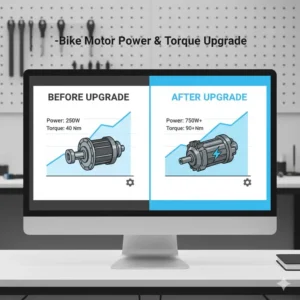
So, why go through all this trouble? The reasons for upgrading e bike motor for more power usually fall into three categories.
- ** conquering Hills (Torque):** ⛰️This is the most common one. You live in a hilly area, and your 250W or 500W stock motor just isn’t cutting it. You need more torque (the rotational force) to get you up that grade without your legs feeling like jelly. This is where mid-drive kits like the Bafang BBSHD shine, as they can leverage your bike’s gears.
- Chasing Speed (Watts): ⚡You have a long, flat commute, and that 20 mph (Class 2) or 28 mph (Class 3) limit is just… too… slow. You want to keep up with traffic or just cut your commute time. This often means a high-wattage hub motor (like the Ebikeling 1200W) or a tuning chip (like the SpeedBox) to uncork your existing motor.
- Hauling Cargo (Power & Gearing): 📦You’re using your bike for utility. You’re pulling a trailer with kids, groceries, or work supplies. Your stock motor works fine when you’re alone, but it struggles under load. You need a robust, powerful system that can handle the extra weight, which again points to a high-torque mid-drive or a powerful geared hub motor.
The Three Paths to Power: A Deeper Dive
Let’s break down those three core upgrade methods. Each has a completely different feel, installation, and set of pros/cons.
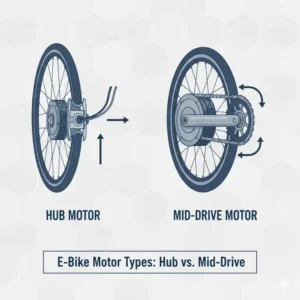
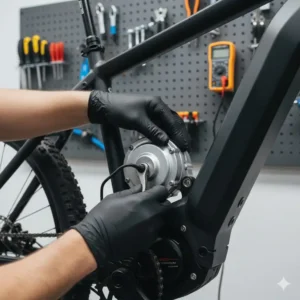
1. Mid-Drive Conversion Kits
These are the “enthusiast’s” choice. The motor is mounted in the middle of the bike, replacing your bottom bracket and cranks.
-
How it works: The motor drives the chainring directly. This means the motor’s power is sent through your bike’s gears.
-
The benefit: This is a massive advantage. You can downshift on a steep hill, and the motor will spin faster and more efficiently, giving you massive climbing torque.
-
The downside: Installation is more complex. It also puts more wear and tear on your chain, cassette, and derailleur.
| Mid-Drive Kits: Pros vs. Cons | |
| ✅ Pros | 🛑 Cons |
| Unmatched hill-climbing torque | More complex installation (crank puller needed) |
| Uses bike’s gears for high efficiency | Puts more stress on your drivetrain (chains, etc.) |
| Keeps weight low and centered (better handling) | Generally more expensive |
| Feels more natural (especially torque-sensing) | Not compatible with all bike frames |
2. Hub Motor Conversion Kits
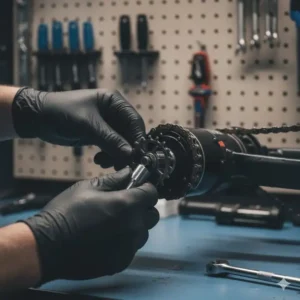
These are the original, and still incredibly popular, e-bike solution. The motor is built directly into the hub of your front or rear wheel (rear is more common for power).
-
How it works: The motor spins the wheel directly, completely independent of your pedals or gears. It’s like having a “pusher” on your bike.
-
The benefit: Simple, reliable, and easy to install. Since it’s not connected to your drivetrain, it puts zero extra stress on your chain or cassette.
-
The downside: It’s “dumb” to gearing. On a steep hill, as the wheel slows down, the motor slows down, losing efficiency and power right when you need it most.
| Hub Motor Kits: Pros vs. Ccons | |
| ✅ Pros | 🛑 Cons |
| Simple, often easier installation | Less efficient on very steep hills |
| No extra wear on your bike’s drivetrain | Adds “unsprung weight” to the wheel (affects handling) |
| Very reliable with fewer moving parts | Changing a flat tire is more complicated |
| Cheaper (often) | Can feel like the bike is being “pushed” or “pulled” |
3. Tuning Chips (Speed Unlockers)
This is the “stealth” option for people who already own a quality e-bike with a name-brand motor (Bosch, Shimano, Brose, Yamaha).
-
How it works: These motors are often electronically limited, not physically. A 250W Bosch motor can often output 600W+ peaks, but the computer cuts the power at 20 mph. The chip splices into the speed sensor and “tricks” the computer, making it think you’re going slower than you are, so it doesn’t cut the power.
-
The benefit: You get to use 100% of the motor you already paid for. It’s completely invisible and adds no weight.
-
The downside: It 100% voids your warranty. It can also put extra stress on a motor and battery that weren’t designed for sustained high-speed output.
| Tuning Chips: Pros vs. Cons | |
| ✅ Pros | 🛑 Cons |
| Unlocks full speed of your premium motor | VOID. YOUR. WARRANTY. (Instantly) |
| Completely invisible and adds zero weight | Can cause (rare) error codes or system conflicts |
| Can be turned on/off | Puts extra heat/stress on motor components |
| Installation is simple (plug-in) | Makes your bike non-compliant with e-bike laws |
🛑 A Critical Warning: Legality, Safety, and Warranty
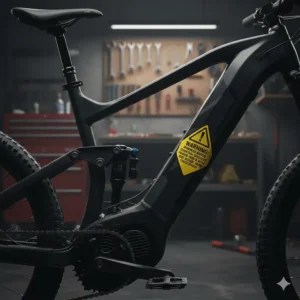
This is the part no one likes, but everyone needs to read. Upgrading e bike motor for more power is a serious modification.
-
Legality: The USA uses a 3-Class e-bike system.
-
Class 1: Pedal-assist only, 20 mph limit.
-
Class 2: Throttle-assist, 20 mph limit.
- Class 3: Pedal-assist only, 28 mph limit.Most of the kits on this list (like the Bafang BBSHD) will instantly make your bike an “out-of-class” motor vehicle, legally similar to a moped or motorcycle. This means you cannot legally ride it on bike paths, in bike lanes, or on mountain bike trails. You are restricted to roads or private property. For more on this, check the excellent resources from PeopleForBikes on e-bike laws.
-
-
Safety (Brakes!): Your bike was designed for a certain speed. If you double your power, you must upgrade your brakes. That 1000W motor will get you to 35 mph, but the stock mechanical disc brakes on your old mountain bike are not designed to stop you from that speed. Budget for an upgrade to hydraulic disc brakes with larger rotors.
-
Safety (Your Bike Frame): Not all bikes are created equal. Putting a 160 Nm Bafang BBSHD on a cheap, 20-year-old aluminum frame is a recipe for disaster. The torque can literally crack the frame. This is also true for high-power hub motors, which can twist and break the “dropouts” (the slots the wheel axel sits in).
Head-to-Head: Mid-Drive vs. Hub Motor vs. Tuning Chip
| Feature | Mid-Drive Kit | Hub Motor Kit | Tuning Chip |
| Best Use | Hill Climbing, Off-Road | Commuting, Simplicity | Unlocking Brand-Name Bikes |
| Power Feel | Natural, “Bionic Legs” | “The PUSHER” | Same as stock, but faster |
| Installation | High (Bottom Bracket) | Medium (New Wheel) | Low (Plug-in) |
| Drivetrain Stress | High | None | Low-Medium |
| Warranty Impact | N/A (New System) | N/A (New System) | VOIDS BIKE WARRANTY |
| Avg. Cost | $700 – $1,500 | $400 – $900 | $150 – $250 |
🔧 Will It Even Fit? A Quick Compatibility Guide
Before you click “Buy,” you must check if these kits are compatible with your “donor” bike.
Compatibility Checklist
| Check This… | For Mid-Drives (Bafang, Tongsheng) | For Rear Hub Motors (Voilamart, Ebikeling) |
| 1. Bottom Bracket | CRITICAL: Measure the width of your bottom bracket shell (the tube the cranks go through). Most are 68-73mm. Fat bikes are 100-120mm. You must buy the kit for your size. | Not relevant. |
| 2. Bottom Bracket Type | CRITICAL: These kits are designed for threaded “BSA” bottom brackets. If you have “Press-Fit” (PF30, BB92), you will need a special adapter. | Not relevant. |
| 3. Rear Dropout | Not relevant. | CRITICAL: Measure the width of your rear dropouts (where the wheel axle bolts in). Most modern bikes are 135mm. Fat bikes are 170-190mm. |
| 4. Brakes | Make sure you have room for the motor. | If you have disc brakes, ensure the hub has a 6-bolt or center-lock mount. |
| 5. Battery Space | You need space in your frame’s “triangle” to mount a new, large battery. | Same. You need space for the battery. |
Don’t Forget the Rest of Your Bike!
Upgrading the motor is just step one. A more powerful motor will expose every other weak link in your setup.
| Component | Why Upgrade It? | Estimated Cost |
| Battery 🔋 | Your old, small battery won’t be able to provide the amps (current) a 1000W motor demands. It will either shut down or have terrible range. | $400 – $800+ |
| Brakes 🛑 | More speed requires more stopping power. Period. | $100 – $250 (Hydraulic Set) |
| Drivetrain ⚙️ | A 160Nm mid-drive will snap old chains and shred plastic-cog cassettes. | $50 – $150 (Steel chainring, new chain) |
| Torque Arms | Essential for hub motors. These metal brackets prevent the powerful motor axle from twisting and breaking your frame’s dropouts. | $20 – $50 |
✨ Ready to Build Your Dream Ride?
You’ve seen the options, from the hill-crushing Bafang BBSHD to the natural-feeling Tongsheng TSDZ2. Clicking the highlighted links not only gets you the latest info but also helps support our research in finding the best e bike motor power upgrade solutions for you!
🏁 Conclusion: Is This Upgrade for You?
The journey of upgrading e bike motor for more power is one of the most rewarding (and addicting) projects a bike owner can undertake. It can genuinely transform an old, forgotten bike into a high-performance machine that’s an absolute joy to ride.
But it’s not a simple “plug-and-play” solution.
-
If you’re a tinkerer who loves a project, and you want to build a “sleeper” bike with insane hill-climbing power, a mid-drive kit like the Bafang BBS02 750W or the mighty Bafang BBSHD is your ticket.
-
If you just want a reliable, simple, and powerful “push” to make your commute easier, a rear hub kit like the Bafang 750W Geared Hub is a fantastic, cost-effective choice.
-
And if you already have a premium bike you love, but you’re just tired of that speed limiter, a SpeedBox 3.0 (and a willingness to void your warranty) is the stealthy, simple answer.
Whichever path you choose, remember the three rules: Check compatibility first, budget for a better battery, and please upgrade your brakes.
FAQs
✅ The Bafang BBSHD 1000W is the undisputed king for hills. As a mid-drive, it leverages your bike's gears, allowing you to downshift and spin the motor efficiently. This provides massive torque (up to 160Nm) to tackle even the steepest grades...
✅ A full conversion kit (motor, controller, display) typically costs between $400 for a budget hub kit and $1,500 for a high-end mid-drive. This does not include the high-output battery, which is essential and costs an additional $400-$800...
✅ Probably not. High-power motors (750W+) require a battery with a high 'Continuous Discharge' rating (BMS), usually 30A or more. Most stock e-bike batteries are 15-20A and will be damaged or shut down by the high power draw...
✅ It's complicated. Most 750W+ kits make your bike an 'out-of-class' motor vehicle, restricting them to private property or roads (not bike paths). Installing a tuning chip to exceed 28 mph also makes it non-compliant. Always check your local state and city laws...
✅ A rear hub motor kit is generally the easiest. The motor comes pre-laced into a new wheel, so you just swap the wheel, mount the controller and display, and run the wires. A mid-drive kit is much more involved, requiring you to remove your bike's cranks and bottom bracket... ❓ What's the best e-bike motor upgrade kit for climbing steep hills?
❓ How much does upgrading e bike motor for more power usually cost?
❓ Can I use my existing e-bike battery with an upgraded motor?
❓ Is upgrading my e-bike motor legal in the USA?
❓ What is the easiest e-bike motor upgrade to install myself?
Recommended for You
- Best E Bike Batteries for Long Range: 7 Top Picks 2025
- Electric Fat Tire Bikes Under 1500: Best Affordable Rides for Adventure Lovers [2025]
- Best E Bikes for Seniors with Balance Issues: 7 Safe Picks 2025
Disclaimer: This article contains affiliate links. If you purchase products through these links, we may earn a small commission at no additional cost to you.
✨ Found this helpful? Share it with your friends! 💬🤗