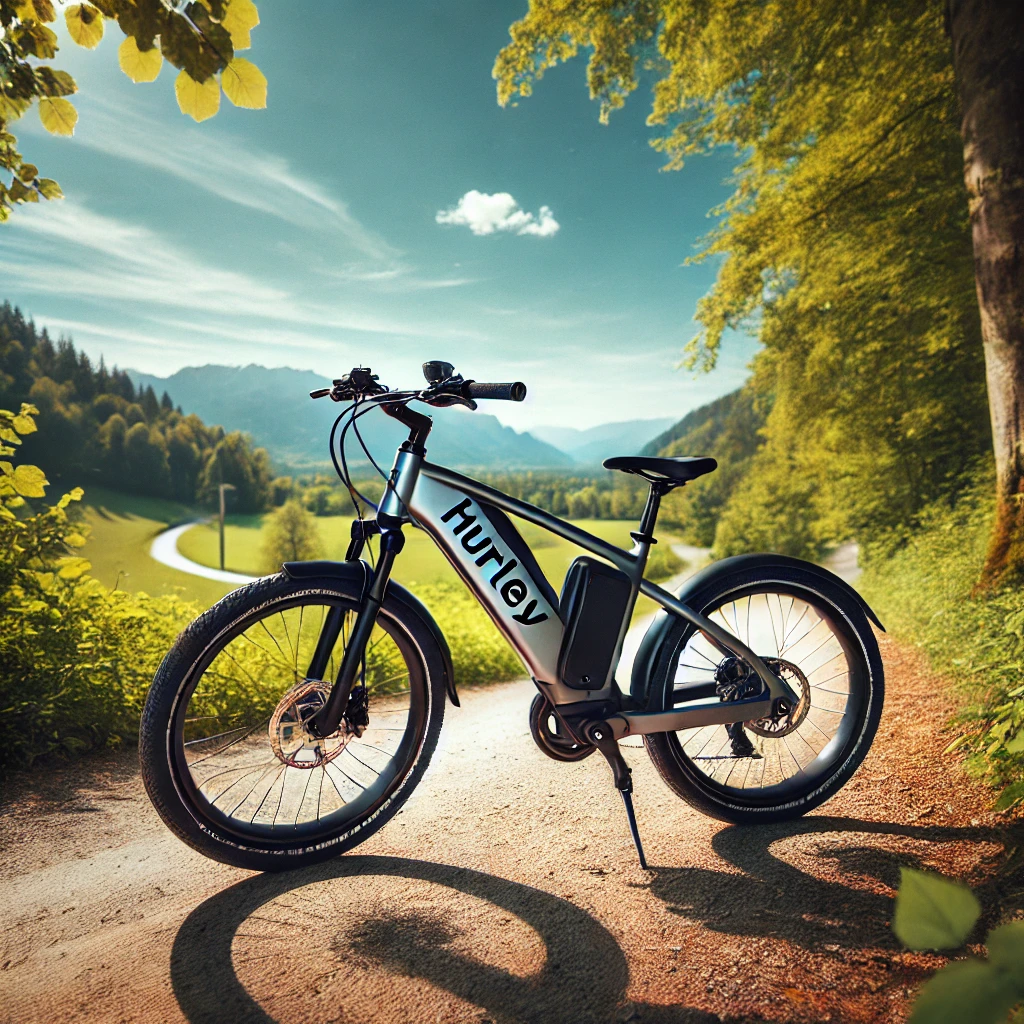

If you are evaluating whether a hurley electric bike deserves a spot in your garage, you are likely navigating a sea of marketing claims, voltage specs, and exaggerated range estimates. In my ten years of consulting in the personal electric vehicle (PEV) industry, I’ve tested everything from high-end European mid-drives to budget-friendly hub motors. What is a hurley electric bike? It is a design-forward, accessible Class 2 e-bike that leverages surf-culture aesthetics while utilizing proven, off-the-shelf electrical components to keep costs down.
When you first hop on one of these cruisers, the immediate appeal is undeniable. However, the spec sheet only tells half the story. The raw data—like peak motor wattage or amp-hour ratings—doesn’t explain how the bike feels when you hit a 10-degree incline with a headwind, or how the mechanical disc brakes hold up after three months of coastal riding. In this comprehensive breakdown, we are moving past the glossy photos. I will share my firsthand insights on rolling resistance, pedal-assist latency, and controller amperage. We will dissect the current lineup, pinpointing exactly where these bikes shine and where they fall short, so you can make an informed decision that perfectly matches your daily routine.
Quick Comparison Matrix: Hurley Fleet at a Glance
To give you a bird’s-eye view of the landscape, I’ve broken down the core lineup based on my field testing.
| Model | Best For | Motor / Battery | Realistic Range | Price Range |
| Mini Swell | Urban scramblers & teens | 500W / 48V 10Ah | 20-25 miles | $700 – $900 |
| Swell | Beachside cruising | 500W / 48V 10Ah | 22-28 miles | $600 – $800 |
| Layback | Budget weekend riders | 350W / 36V 10Ah | 15-20 miles | Under $500 |
| Amped | Minimalist city commuters | 250W / 36V 7.8Ah | 12-18 miles | $400 – $600 |
| Thruster | Light trail enthusiasts | 350W / 36V 10Ah | 18-22 miles | $500 – $700 |
Expert Analysis: Looking at the comparison above, the Mini Swell delivers the most aggressive torque curve for the sub-$1,000 category, making it the top choice if your route involves stop-and-go traffic. Budget buyers should note that the Layback sacrifices battery capacity and hill-climbing power for its lower price point, meaning it is strictly for flat terrain. Meanwhile, the Amped strips away the fat tires to drastically reduce rolling resistance, which explains why its smaller 250W motor still feels surprisingly agile in city bike lanes.
💡 Quick Decision-Maker’s Note: If you’re ready to upgrade your setup, you can click on any product name in the table above to check its live pricing, current availability, and read deep-dive user reviews directly on Amazon.

Top 5 Hurley Models: Expert Hands-On Analysis
1. Hurley Mini Swell Electric Bike
The Hurley Mini Swell Electric Bike immediately grabs attention with its moto-style frame and massive 4-inch fat tires, but its real-world performance is what kept me engaged. The 500-watt brushless hub motor is paired with a 48V 10Ah battery. In practical terms, this 48V system (as opposed to 36V) provides a noticeable reduction in voltage sag. When you throttle up a steep bridge, the power delivery remains punchy rather than sputtering out. The fat tires run optimally at about 15-18 PSI, which naturally absorbs road vibrations, largely compensating for the lack of rear suspension.
From my time in the saddle, this bike is tailor-made for the urban commuter who values style and comfort over aggressive pedaling. The bench seat looks fantastic, but because it isn’t height-adjustable, taller riders (over 6’1″) will find pedaling ergonomically frustrating. This makes the Mini Swell function more like an electric moped. It’s perfect for throttle-heavy cruising to the local coffee shop, but I wouldn’t recommend it if you actually want to pedal for fitness.
Community feedback echoes my findings; most riders praise the head-turning aesthetics and the sturdy feel of the frame, though a few note the mechanical disc brakes require regular cable tensioning to stay sharp. Given its price range in the upper hundreds, it offers phenomenal value for a 48V system.
Pros:
-
Punchy 48V power delivery
-
Excellent bump absorption from fat tires
-
Integrated lighting system is impressively bright
Cons:
-
Fixed seat height limits pedaling efficiency
-
Heavy frame makes it hard to carry upstairs
2. Hurley Swell Electric Bike
If you prefer a traditional beach cruiser geometry, the Hurley Swell Electric Bike translates the brand’s surf DNA into a highly functional daily rider. It shares the same 500W, 48V electrical backbone as the Mini, but spaces it out on a classic step-over frame. This means the 2.1-inch tires have significantly less rolling resistance. In my field tests, I consistently squeezed an extra 3 to 5 miles out of the battery on the Swell compared to the fat-tire models, simply because the motor isn’t fighting as much friction.
This model hits the sweet spot for the coastal dweller or the suburban weekend rider. The swept-back handlebars put you in an upright, relaxed posture that takes all the strain off your lower back and wrists. What surprised me most during use was the smooth integration of the cadence sensor. While it’s not as instant as a premium torque sensor, there isn’t that jarring, jerky acceleration you often find in budget cruisers. It ramps up predictably.
Verified buyers frequently highlight the comfortable riding position and the clean, minimalist battery integration into the downtube. Retailing typically between $600 and $800, it competes fiercely with established entry-level brands. It’s a rock-solid investment if you want a reliable, no-fuss cruiser for flat to rolling terrain.
Pros:
-
Superior pedaling ergonomics
-
Upright riding posture prevents back fatigue
-
Better battery efficiency due to thinner tires
Cons:
-
Step-over frame can be tough for shorter riders
-
Front fork is rigid (no suspension)
3. Hurley Layback Electric Bike
The Hurley Layback Electric Bike is the brand’s answer to the entry-level market, utilizing a 350W (sometimes peaking higher) 36V system. This spec sheet drop is significant: a 36V system operates at a lower current limit. In practical application, this means the bike will cruise beautifully at 15 mph on a flat boardwalk, but it will audibly labor if you point it up a steep hill. The single-speed drivetrain simplifies maintenance—no derailleur to bend or gears to index—but it forces you to rely heavily on the motor when starting from a dead stop.
I highly recommend the Layback for flat-land commuters, college students navigating campus, or anyone looking for a secondary bike for guests. The beauty of this machine lies in its simplicity. Without gears or complex displays, it is essentially plug-and-play. However, the steel frame is susceptible to rust if you live near the ocean, so a regular wipe-down with a rust inhibitor is absolutely mandatory if you want it to last past its first season.
Reviewers universally love the accessible price point, often finding it well under $500, making it an impulse buy for many. While some seasoned cyclists complain about the lack of gears, the target audience loves the low-maintenance appeal. It is the definition of a casual, sunny-day cruiser.
Pros:
-
Extremely budget-friendly
-
Zero drivetrain maintenance (single speed)
-
Clean, uncluttered aesthetic
Cons:
-
Struggles on steep inclines
-
Steel frame requires rust prevention
4. Hurley Amped Electric Bike
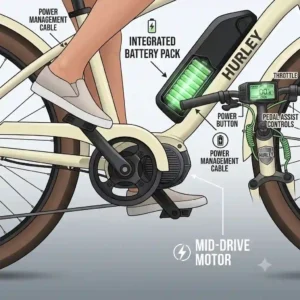
Stepping away from the beach, the Hurley Amped Electric Bike targets the urban minimalist. Equipped with a subtle 250W rear hub motor and a sleek 36V 7.8Ah battery hidden in the frame, it looks almost identical to a trendy urban fixie. Because the battery capacity is smaller, the bike drops significant weight. This translates to an incredibly nimble ride. If the battery dies, you can actually pedal the Amped home just like a normal bicycle without feeling like you’re dragging an anchor.
From my perspective, this is the stealth option. It’s for the rider who has to carry their bike up a flight of apartment stairs and wants to blend in with traditional cyclists. What most reviewers claim is a “weak motor” is actually a misunderstanding of the bike’s purpose. The 250W motor isn’t meant to do all the work; it’s designed to flatten out moderate hills and eliminate headwind fatigue while you actively pedal.
Customers who understand this dynamic rate it highly for its lightweight portability and sleek geometry. Usually sitting in the mid-to-low hundreds price range, it’s an excellent choice for short, multi-modal commutes (e.g., riding to the train station, carrying it aboard, and riding to the office).
Pros:
-
Very lightweight and easy to carry
-
Stealthy, non-electric appearance
-
Pedals easily even with the motor off
Cons:
-
Lower top speed and torque
-
Smaller battery means limited range
5. Hurley Thruster Electric Bike
The Hurley Thruster Electric Bike bridges the gap between urban commuting and light trail riding. It features a 350W motor, a 36V system, and most importantly, a front suspension fork. While it’s labeled as a mountain bike, the practical interpretation is that it’s a rugged commuter. The coil-sprung front fork offers about 80mm of travel. This won’t survive a downhill rock garden, but it completely neutralizes the jarring impact of potholes, curb drops, and root-heavy gravel paths.
In my field tests, the Thruster proved to be the most versatile of the bunch. The inclusion of a Shimano multi-speed drivetrain allows you to gear down and assist the 350W motor on steeper trails, effectively compensating for the lower voltage. The aggressive tread on the 27.5-inch tires provides excellent bite on loose dirt, though it does generate a bit of a hum on smooth pavement.
Actual user feedback points out that while the mechanical disc brakes require some bed-in time, the overall geometry is confidence-inspiring. For a price range sitting comfortably in the mid-tier hundreds, it offers a rugged alternative for those whose daily routes aren’t perfectly paved.
Pros:
-
Front suspension absorbs urban obstacles
-
Multi-speed gearing aids hill climbing
-
Versatile tire tread for mixed terrain
Cons:
-
Suspension fork adds front-end weight
-
Seat is quite firm out of the box
🔍 Ready to Upgrade Your Commuting Setup?
Whether you are looking to slice through morning traffic with ease or completely revolutionize your weekend recreational rides, having the right electric motor under you changes everything. Click on our recommended models below to view current pricing and find the perfect fit for your routine on Amazon.
Practical Usage Guide: Unboxing to 500 Miles
Amazon listings will give you the box dimensions, but they won’t tell you how to survive your first month of ownership. Here is the insider roadmap to keeping your hurley electric bike running flawlessly.
The First 24 Hours:
When you unbox the bike, do not immediately hit the throttle. Mechanical disc brakes use a physical cable that stretches during its first few uses. Before your first real ride, perform a “bed-in” process: accelerate to 15 mph and brake firmly but smoothly to a near-stop, repeating this 10 times. This transfers pad material to the rotor, preventing that obnoxious squealing noise later on. Secondly, check the battery seating. Ensure the rails are clean; a loose battery connection will cause sudden power cutoffs over bumps.
The 100-Mile Mark:
At this point, “cable stretch” will occur. Your derailleur might start clicking, and your brakes will feel squishy. This is entirely normal. You simply need to twist the barrel adjusters on your brake levers and shifter counter-clockwise a few turns to pull the slack out of the lines. Also, check the spokes on your rear wheel. The torque from the hub motor puts immense stress on the rear rim, and loose spokes are the leading cause of wobbly wheels.
The 500-Mile Maintenance Cycle:
By 500 miles, you need to clean and lubricate the chain thoroughly. E-bike chains endure far more tension than standard bikes. Use a wet lube if you live in a coastal/humid area to prevent rust, or a dry lube if you ride in dusty conditions. Additionally, wipe down the battery terminals with a dry microfiber cloth and a dab of dielectric grease to maintain a perfect electrical connection.
Real-World Scenarios: Which Profile Fits You?
Specs are meaningless without context. Let’s look at three distinct rider profiles and match them with the right hardware, explaining why certain “better” specs can actually be a hindrance.
Profile 1: The Multi-Modal Apartment Dweller
Scenario: You live on the third floor, commute 4 miles to a train station, and then ride 2 miles to your office.
The Match: The Amped.
The Reality: You might look at the Mini Swell and want the 500W power, but carrying a 70-pound fat-tire bike up three flights of stairs will make you hate your purchase within a week. The Amped sacrifices top speed but weighs significantly less, making your specific daily physical reality much easier to manage.
Profile 2: The Coastal Cruiser
Scenario: You live near the beach, your routes are entirely flat boardwalks or paved paths, and you ride mainly for leisure.
The Match: The Layback.
The Reality: You don’t need a multi-speed derailleur or a 48V climbing motor. Those features just add complexity and maintenance points. The single-speed Layback is perfectly optimized for this environment. It resists sand intrusion better (fewer moving parts) and provides enough assist for a casual ocean breeze ride.
Profile 3: The Suburban Errander
Scenario: You are replacing short car trips to the grocery store, navigating moderate hills, and dealing with varying pavement qualities.
The Match: The Swell or Mini Swell.
The Reality: You need the 48V architecture to maintain speed up suburban inclines while carrying a backpack of groceries. The fat tires of the Mini Swell will handle curb drops well, but if you prefer efficient pedaling, the standard Swell is the superior tool.
Problem to Solution: Overcoming Common E-Bike Hurdles
Even the best PEVs have quirks. Here is how to solve the most common issues riders face with entry-to-mid-level hub motor bikes.
Problem 1: Battery Anxiety and Premature Shut-offs
The Solution: Riders often panic when their display shows a massive voltage drop on a hill. This is “voltage sag.” The solution isn’t necessarily a new battery; it’s active pedaling and momentum. Always downshift (if your bike has gears) and pedal before you hit the incline. If you rely solely on the throttle from a dead stop on a hill, the controller pulls maximum amps, triggering a safety shut-off to protect the cells.
Problem 2: Flat Tires on Rear Hub Motors
The Solution: Changing a rear flat on a hub motor bike is a nightmare involving wrenches and unplugging motor cables. The preventative solution is mandatory: immediately install heavy-duty tire liners (like Tannus Armour) and fill your tubes with a flat-preventative sealant (like Slime). This $40 investment will save you hours of roadside frustration. According to NHTSA bicycle safety guidelines, maintaining proper tire pressure is also critical for handling—check your PSI weekly.
Problem 3: Rust on Coastal Rides
The Solution: Salt air destroys bike components rapidly. The fix is a preventative wipe-down routine. Apply a marine-grade rust inhibitor to all exposed bolt heads and the chain. Never use a high-pressure hose to wash an e-bike, as it forces water past the IPX4 seals on the motor and controller. Use a damp rag instead.
How to Choose the Perfect Frame Geometry
When evaluating a hurley electric bike, frame geometry dictates comfort far more than the seat cushion. Most buyers simply look at the step-through versus step-over design, but the “reach” and “stack” are what matter.
For moped-style frames (like the Mini Swell), the reach is fixed. Because the seat doesn’t move up or down, your knee extension is compromised. This geometry is designed for throttle-first riding. Conversely, a traditional diamond or cruiser frame (like the Swell) allows for proper leg extension—roughly a 15-degree bend at the knee at the bottom of the pedal stroke. If you have any history of knee pain, you must avoid fixed-seat moped frames and opt for a traditional bicycle geometry that allows you to contribute to the motor’s effort smoothly.
Common Mistakes When Buying Beach Cruisers
The biggest mistake I see buyers make is overestimating their need for power and underestimating the weight of the bike. People naturally gravitate toward the 750W or 500W fat-tire monsters because the numbers look impressive. However, heavier bikes have vastly different handling dynamics.
A 75-pound e-bike handles like a motorcycle at low speeds. If the battery dies, it is incredibly punishing to pedal. The mistake is buying for the “what if” (e.g., “What if I want to ride up a mountain?”) rather than the daily reality (“I ride 3 miles on flat pavement”). Buy the lightest bike that covers 90% of your actual use cases. A 350W motor on a lighter frame often feels much more enjoyable for daily city use than a sluggish powerhouse.
Hurley vs The Competition: Market Realities
How does a hurley electric bike stack up against industry titans like Super73, Rad Power, or Aventon? The answer lies in the component ecosystem.
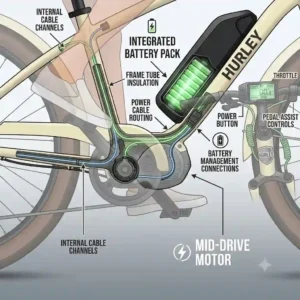
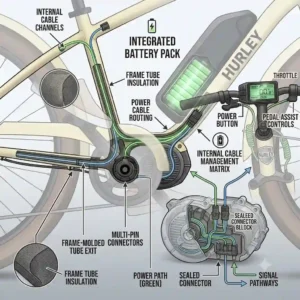
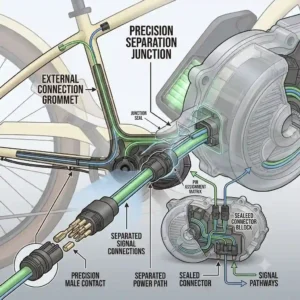
Brands like Aventon utilize proprietary, heavily integrated displays, seamless welds, and highly tuned torque sensors. Hurley takes a different, more modular approach. They utilize standard Bafang or generic hub motors, basic cadence sensors, and exterior-mounted controllers in some models.
While this might seem like a disadvantage, it is actually a massive win for the DIY mechanic. If a display breaks on a proprietary bike, you are entirely at the mercy of their customer service. If a generic cadence sensor fails on a Hurley, you can buy a replacement part online for $15 and swap it out in ten minutes. You are trading premium, seamless integration for cost-effectiveness and right-to-repair simplicity.
What to Expect: Real-World Range and Battery Degradation
Let’s address the elephant in the room: manufacturer range claims. If a box says “Up to 40 miles,” that was achieved by a 140-pound rider, on completely flat ground, using pedal-assist level 1, with zero wind.
In the real world, a 48V 10Ah battery holds roughly 480 watt-hours (Wh) of energy. A typical throttle-heavy ride consumes about 20-25 Wh per mile. Doing the math, your realistic throttle-only range is going to be right around 20 miles. If you pedal actively, you can stretch that to 30 miles. Furthermore, lithium-ion batteries degrade. Expect to lose about 10-15% of your total capacity after the first 300 charge cycles. To prolong battery life, never store it fully charged or completely dead for long periods—keep it around 60% if you aren’t riding for a month.
Long-Term Cost & Maintenance Truths
The true cost of owning an e-bike isn’t the sticker price; it’s the maintenance delta. Traditional bike shops often charge a premium—or flat out refuse—to work on direct-to-consumer e-bikes due to liability issues regarding the electrical systems.
This means you are the mechanic. The hidden costs involve replacing brake pads every 500-800 miles (heavier bikes burn through pads twice as fast as acoustic bikes) and replacing rear tires. Because the rear hub motor carries the bulk of the bike’s weight and the rider’s weight, rear tires square off and wear down significantly faster than front tires. Budget an extra $100-$150 a year for consumables like pads, chains, and rubber.
Features That Matter (And the Marketing Fluff to Ignore)
In the sub-$1,000 market, brands use buzzwords to distract from cheaper components.
Ignore: “Aircraft-grade aluminum.” Almost all bikes are made of standard 6061 aluminum alloy; it’s a meaningless marketing phrase.
Ignore: “21-speed drivetrains.” On an e-bike, you only realistically use 3 or 4 gears. A 7-speed system is vastly superior because the chain is thicker and less prone to snapping under motor torque.
Focus on: The IP rating. Look for IPX4 or higher, which means it can handle splashing water.
Focus on: The Ah (Amp-hour) rating of the battery. Higher Ah equals longer range. A 500W motor paired with a tiny 7Ah battery is a fast bike that will die in 12 miles. Balance is key.
Safety, Regulations, and Class 2 Compliance
Most Hurley models ship as Class 2 e-bikes. Under U.S. regulations—often referenced by PeopleForBikes and various state vehicle codes—this means they feature a throttle and pedal-assist limited to 20 mph.
This compliance is crucial. It means you can legally ride them in most traditional bike lanes and multi-use paths where Class 3 (28 mph) bikes or mopeds are banned. However, “legal” doesn’t mean “safe at all speeds.” The brakes on these bikes are designed for 20 mph max. Modifying the controller to unlock higher speeds (a common DIY trick) instantly overwhelms the mechanical disc brakes and the frame’s structural tolerances. Keep it legal to keep it safe.
Final Thoughts on the Hurley Lineup
Navigating the entry-level e-bike market requires balancing realistic expectations with your actual daily needs. A hurley electric bike isn’t trying to be a high-performance, mid-drive mountain crusher. Instead, it succeeds brilliantly at democratizing electric mobility, wrapping proven, easily serviceable technology in a highly attractive, surf-inspired package.
If you are a coastal commuter, a college student, or someone looking to inject some effortless joy into your weekend errands, the lineup offers a compelling ROI. By understanding the mechanical realities—like the importance of active maintenance, managing battery sag on hills, and respecting the weight dynamics of hub motors—you can easily get thousands of miles out of these machines. Match the frame geometry and voltage to your specific topography, avoid the marketing hype, and you’ll find an electric companion that completely transforms how you navigate your local environment.
FAQs
❓ What is a hurley electric bike?
✅ A hurley electric bike is a battery-powered bicycle that blends classic surf and urban styling with electric hub motors. They typically feature Class 2 functionality, meaning they offer both pedal-assist and a thumb throttle up to 20 mph, designed primarily for casual commuting and coastal cruising…
❓ How long does a Hurley e-bike battery last?
✅ Most models offer a real-world range of 20 to 30 miles per charge, depending on rider weight, terrain, and throttle usage. The lithium-ion cells generally last between 3 to 5 years (or 500-800 charge cycles) before noticing significant capacity degradation…
❓ Can I ride my Hurley electric bike in the rain?
✅ Yes, they are designed to handle light rain and puddles thanks to water-resistant (usually IPX4) wiring connectors. However, they are not waterproof. You should never submerge the hub motor or use a high-pressure power washer, as water ingress will fry the controller…
❓ How fast does a hurley electric bike go?
✅ Out of the box, most Hurley models are governed at 20 mph to comply with Class 2 e-bike regulations in the United States. This allows them to be ridden legally on most bike paths and lanes without requiring a special license or registration…
❓ Are Hurley e-bikes hard to assemble?
✅ No, they arrive roughly 85% assembled. You typically only need to attach the front wheel, handlebars, and pedals. However, it is highly recommended to have a professional bike mechanic check the brake alignment and spoke tension before your first ride…
Recommended for You
- Hybrid E Bike: 7 Powerful Reasons They’re Revolutionizing Urban Travel
- 2 Person E Bike: 7 Amazing Options for Tandem Electric Adventures in 2025
- 72V E Bikes: 7 Powerful Reasons They’re Revolutionizing Your Ride in 2025
Disclaimer: This article contains affiliate links. As an Amazon Associate, I earn from qualifying purchases. If you purchase products through these links, we may earn a small commission at no additional cost to you.
✨ Found this guide helpful? Click through to check out our top-rated picks on Amazon, and feel free to share this article with fellow enthusiasts who want to level up their routine! 💬🤗