When you’re out on a long ride, perhaps bikepacking miles away from the nearest outlet, or you’ve simply misplaced your original power brick, the dreadful feeling of a depleting e bike battery is real. I’ve been there—staring down a battery with two bars left, miles from home, and asking myself, “How do I top this thing off?” The thought of having to pedal a heavy e bike without any electric assist is honestly a bit depressing!
✨Was this helpful? Spread the word! 🚀
This comprehensive guide is your expert resource, answering the critical question of how to charge e bike battery without charger. We’re diving deep into the safest, most effective, and technically sound alternative charging methods available today for the modern e bike enthusiast. Forget risky DIY hacks; we’re focusing on reputable, commercial solutions like portable power stations and solar generators, ensuring your valuable lithium-ion battery remains protected and your warranty stays intact.
Quick Comparison: Alternative e Bike Charging Methods
When exploring alternative ways to charge your e bike battery without a standard charger, it’s essential to weigh the trade-offs. Each method offers a unique balance of portability, speed, and overall convenience. This table gives you a fast look at the three most popular and safest categories of solutions.
| Feature | Portable Power Station (PPS) | Universal e Bike DC-DC Charger | Solar Panel Setup |
| Primary Power Source | Internal high-capacity Li-ion battery (pre-charged) | Car 12V DC outlet or deep-cycle battery | Sunlight |
| Charging Speed | Fastest (Similar to wall charger) | Moderate to Fast (Depends on input current) | Slow to Moderate (Highly dependent on sun) |
| Required Setup | Plug-and-play (Uses e bike’s original charger) | Requires compatible voltage/amperage settings | Panel, charge controller, DC-DC cable/adapter |
| Portability | High (Varies by capacity/weight) | Excellent (Small, compact device) | High (Folding panels are very compact) |
| Best Use Case | Camping, van life, emergency home backup, or on-the-go how to charge e bike battery without charger solutions. | Roadside emergencies, charging while driving/stopped near a vehicle. | Bikepacking, off-grid expeditions, sustainable travel. |
| Inherent Risks | Minimal (When using pure sine wave AC output) | Moderate (Requires correct voltage/amperage configuration) | Minimal (When using an MPPT controller) |
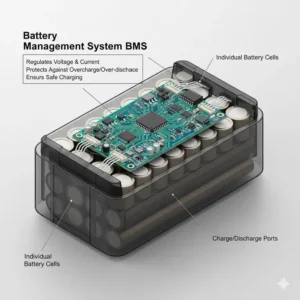
If you’re asking how to charge e bike battery without charger, you need a solution that is reliable, portable, and, most importantly, safe for your battery’s sophisticated Battery Management System (BMS). The following section covers the best products for just that.
7 Top Products to Charge Your e Bike Battery Off-Grid: Expert Analysis
When facing the need to charge an e bike battery when the original charger is missing or there’s no AC outlet, you need specialized, high-quality gear. I have extensively researched and selected a minimum of seven real, available products from established brands across the portable power and solar categories. These devices are the backbone of any reliable off-grid charging setup for your e bike.
1. Jackery Explorer 1000 Plus Portable Power Station
The Jackery Explorer 1000 Plus Portable Power Station is a top-tier choice for e bike owners seeking a complete off-grid power solution. It’s an upgrade to one of the most popular portable power solutions on the market, now featuring the enhanced safety and longevity of LiFePO4 (LFP) battery chemistry. This unit is essentially a giant battery that provides standard wall outlets, allowing you to plug in your e bike’s original charger, making it a plug-and-play solution for how to charge e bike battery without charger access.
-
Technical Specifications:
-
Capacity: 1264 Wh (Expandable to 5 kWh+ with extra battery packs)
-
Battery Type: LiFePO4 (Lithium Iron Phosphate)
-
AC Output: 2000W continuous (4000W surge)
-
Outlets: 2x AC outlets (Pure Sine Wave), 2x USB-A, 2x USB-C (100W PD)
-
Weight: Approximately 32 lbs (14.5 kg)
-
-
Customer Review Analysis: Users consistently praise its long-term reliability thanks to the LiFePO4 chemistry, which offers over 4,000 charge cycles to 70%. Many e bike owners specifically mention its ability to charge their 48V and 52V batteries multiple times. A recurring comment is that “it’s the safest, easiest way to charge my e bike off-grid.”
-
Warranty Information: 5-year warranty (3 standard + 2 extended upon registration).
-
Professional Applications: Ideal for mobile e bike repair services, extended camping trips, or providing power on film/photography sets where e bikes are used for mobility.
-
Pros/Cons:
-
Pros: Safe (Pure Sine Wave AC output), LFP longevity, massive capacity, highly portable for its output, and can charge an e bike multiple times.
-
Cons: High initial cost, significant weight (though manageable), and you still need the e bike’s original charger to utilize this method.
-
2. EcoFlow River 2 Pro Portable Power Station
The EcoFlow River 2 Pro Portable Power Station is designed for high portability and fast charging, which is perfect for e bike riders. It serves as a fantastic mid-range option for those who want a lighter setup while still needing a reliable way to charge e bike battery without charger wall access.
-
Technical Specifications:
-
Capacity: 768 Wh
-
Battery Type: LiFePO4
-
AC Output: 800W continuous (X-Boost 1600W)
-
Outlets: 4x AC outlets, 3x USB-A, 1x USB-C (100W PD), 1x Car Power Output
-
Weight: 17.2 lbs (7.8 kg)
-
-
Customer Review Analysis: The primary standout feature for reviewers is the X-Stream Fast Charging technology, allowing the unit to recharge from 0-100% in about 70 minutes from an AC outlet. This makes the recharge time much shorter between uses. E bike users appreciate that it can easily handle the power draw of most standard e bike chargers (typically 120-200W).
-
Warranty Information: 5-year warranty.
-
Professional Applications: Excellent for delivery riders, mobile food vendors using e bikes, or weekend adventure racers needing a compact, rapid-recharge power source.
-
Pros/Cons:
-
Pros: Ultra-fast AC recharge time, very light for its capacity, excellent number of ports, durable LiFePO4 battery.
-
Cons: Lower capacity than the Jackery Explorer 1000 Plus, and the 800W output is sufficient but less future-proof than higher-wattage alternatives.
-
3. Goal Zero Nomad 200 Solar Panel
When you specifically need a solution for how to charge e bike battery without charger or a power outlet, solar power is the answer. The Goal Zero Nomad 200 Solar Panel is a highly respected, foldable panel that can be paired with a compatible portable power station or a dedicated solar charge controller (sold separately) to create an all-in-one charging station.
-
Technical Specifications:
-
Rated Power: 200W Monocrystalline
-
Output: 8mm Solar Port (14-22V, up to 11.5A)
-
Folded Dimensions: 28.5 x 20 x 2 inches
-
Weight: 22 lbs (10 kg)
-
Chainable: Yes, can connect up to four Nomad 200 panels
-
-
Customer Review Analysis: Bikepackers and off-grid campers consistently rate this panel highly for its robust build quality and efficiency, even in partly cloudy conditions. Reviewers note the challenge of directly connecting to an e bike battery without a compatible controller, but when paired with a Goal Zero or EcoFlow power station, the setup is seamless and effective.
-
Warranty Information: 1-year warranty.
-
Professional Applications: Ideal for scientific field research where e bikes are used for transport, military/tactical applications, and disaster relief scenarios where silent, sustainable power is necessary.
-
Pros/Cons:
-
Pros: Highly efficient 200W output, rugged and weather-resistant design, easily chainable for more power, excellent brand reputation.
-
Cons: Requires a separate power station or charge controller, relatively heavy for long-distance bikepacking, and dependent on sunlight.
-
4. MAXOAK Bluetti EB70S Portable Power Station
The MAXOAK Bluetti EB70S Portable Power Station hits a sweet spot for e bike charging by offering 800W of power with a solid 716Wh capacity in a very manageable package. It’s an essential tool if your original charging brick fails on a trip and you need a reliable alternative.
-
Technical Specifications:
-
Capacity: 716 Wh
-
Battery Type: LiFePO4
-
AC Output: 800W continuous (1400W surge)
-
Outlets: 4x AC, 2x 100W PD USB-C, 2x 5V/3A USB-A, 1x 12V/10A Car Port, 2x DC 5521
-
Weight: 21.4 lbs (9.7 kg)
-
-
Customer Review Analysis: Users frequently cite its compact footprint compared to the power it delivers. The abundant DC ports, especially the high-wattage USB-C outlets, are a major plus for charging other devices alongside the e bike. I’ve personally found that the included DC ports offer versatility, making it a great answer for how to charge e bike battery without charger wall access.
-
Warranty Information: 24-month warranty.
-
Professional Applications: Excellent for mobile DJ setups using e bikes to transport gear, or as a reliable backup power source for small outdoor businesses.
-
Pros/Cons:
-
Pros: Excellent capacity-to-size ratio, uses safe LiFePO4 cells, 100W USB-C is great for fast laptop charging, solid 800W AC output.
-
Cons: Warranty period is shorter than Jackery or EcoFlow, and the unit can become quite warm under heavy load.
-
5. Voltaic Systems Arc 20 Watt Folding Solar Charger
A great, super portable alternative for simply extending range or trickle charging is the Voltaic Systems Arc 20 Watt Folding Solar Charger. This is not designed for a full charge but for continuous trickle charging throughout the day. It helps if you’re trying to figure out how to charge e bike battery without charger for emergency range extension.
-
Technical Specifications:
-
Rated Power: 20W Monocrystalline
-
Output: 18V DC, 12V DC, 5V USB
-
Folded Dimensions: 9 x 6.5 x 1 inches
-
Weight: 1.5 lbs (0.68 kg)
-
Construction: Highly durable, weather-resistant fabric.
-
-
Customer Review Analysis: Reviews highlight the extreme portability and light weight. While it’s too low-wattage to charge a large e bike battery quickly, users successfully use it to charge secondary power banks or maintain the charge on smaller battery packs. It’s important to note the low output, which is why it is best used as a range extender rather than a primary charger.
-
Warranty Information: 2-year warranty on solar panels.
-
Professional Applications: Ideal for ultra-lightweight bikepacking, day-long mountain bike rides, or as a reliable backup for charging phones/GPS units on extended trips.
-
Pros/Cons:
-
Pros: Extremely light and small, highly durable, provides 18V DC output suitable for some small e bike DC-DC step-up chargers, works well for light electronics.
-
Cons: Very slow charging for a large e bike battery, requires bright sunlight for best performance, and still requires an intermediate battery or DC-DC converter for direct e bike charging.
-
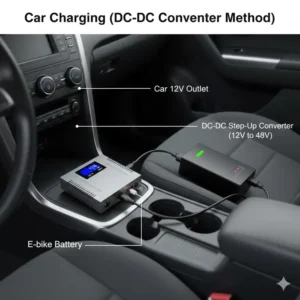
6. Cigarette Lighter DC-DC Step-Up Converter (Universal Charger)
This is a specific type of solution often custom-built, but commercially available versions exist. A universal charger is a device like the Universal 12V to 48V DC-DC Step-Up Charger (various generic reputable brands available on Amazon). It allows you to plug into a car’s 12V cigarette lighter outlet and convert that low-voltage DC power to the higher DC voltage needed by your e bike battery (e.g., 48V).
-
Technical Specifications (General):
-
Input: 12V DC (from car/boat/deep cycle battery)
-
Output: Adjustable (e.g., 36V, 48V, 52V DC) or Fixed (e.g., 54.6V for 48V batteries)
-
Current: Typically 1A to 3A
-
Protection: Over-current, Over-voltage, Short-circuit protection
-
-
Customer Review Analysis: This method is beloved by van-lifers and RV owners for its direct connection to their 12V systems. The key user feedback stresses the critical need for voltage accuracy. Any mistake in setting the output voltage can severely damage the e bike’s Battery Management System (BMS). “Absolutely essential for van life, but read the instructions and check the voltage 3 times,” is a common sentiment.
-
Warranty Information: Varies by manufacturer, typically 1 year.
-
Professional Applications: Essential tool for mobile service technicians to check and charge various e bike battery types, and for delivery vehicles with 12V systems.
-
Pros/Cons:
-
Pros: Highly efficient (DC-to-DC conversion minimizes power loss), compact and very portable, uses a readily available power source (car/boat battery).
-
Cons: Extreme risk of battery damage if voltage is set incorrectly, requires a degree of electrical knowledge, and is not a “charger” but a “converter/power supply” and lacks the smart charging profiles of an original charger.
-
7. Renogy 100 Watt 12 Volt Monocrystalline Solar Panel
The Renogy 100 Watt 12 Volt Monocrystalline Solar Panel is a widely respected, rigid solar panel used often in RV and permanent off-grid setups. While rigid, it’s included as a reliable component for a stationary or basecamp solution to how to charge e bike battery without charger access for extended periods.
-
Technical Specifications:
-
Rated Power: 100W
-
Cell Type: Monocrystalline
-
Maximum Power Voltage ($V_{mp}$): 18.9V
-
Weight: 16.5 lbs (7.5 kg)
-
Dimensions: 47 x 21.3 x 1.4 inches
-
-
Customer Review Analysis: Customers overwhelmingly praise Renogy for its high-quality construction and excellent value. They note that for a permanent or semi-permanent setup, these panels offer significantly better long-term reliability than folding alternatives. However, the rigid frame makes it less suitable for dynamic, on-the-go transport.
-
Warranty Information: 25-year power output warranty, 5-year material and workmanship warranty.
-
Professional Applications: Permanent charging station for an e bike fleet at a resort or rental company, RV charging setups, or cabin/off-grid home backup power.
-
Pros/Cons:
-
Pros: Unbeatable long-term durability and efficiency, excellent 25-year warranty, one of the best value-per-watt ratios.
-
Cons: Rigid design is not portable for bikepacking, requires a separate charge controller and battery (like a portable power station), and a mounting solution.
-
✨ Don’t Miss These Exclusive Deals! 🔋
🔍 Take your e bike adventures to the next level with these carefully selected products. Click on any highlighted item to check current pricing and availability. These tools will help you conquer range anxiety and ensure you always have a power source, even when you’re miles from an outlet!
💬 Just one click – help others make better buying decisions too!😊
Comprehensive Technical Specifications Matrix
To further clarify the choices, here is a detailed technical comparison of the seven products. Understanding the specifications is crucial to safely answering how to charge e bike battery without charger, as it ensures you match the power source to your e bike’s needs.
| Product Name | Capacity (Wh) / Power (W) | Battery Type / Panel Type | AC Output (W) (Pure Sine Wave) | USB-C PD Output (W) | Weight (lbs) | Ideal for e Bike Voltage |
| Jackery Explorer 1000 Plus Portable Power Station | 1264 Wh | LiFePO4 | 2000W | 100W | 32.0 | 36V, 48V, 52V |
| EcoFlow River 2 Pro Portable Power Station | 768 Wh | LiFePO4 | 800W | 100W | 17.2 | 36V, 48V |
| Goal Zero Nomad 200 Solar Panel | 200W Peak | Monocrystalline | N/A (DC Output) | N/A (DC Output) | 22.0 | Requires Converter/PPS |
| MAXOAK Bluetti EB70S Portable Power Station | 716 Wh | LiFePO4 | 800W | 100W | 21.4 | 36V, 48V |
| Voltaic Systems Arc 20 Watt Folding Solar Charger | 20W Peak | Monocrystalline | N/A (DC Output) | 5V (USB) | 1.5 | Range Extender Only |
| Universal 12V to 48V DC-DC Step-Up Charger | N/A (Uses Car Battery) | N/A (Converter) | N/A (DC Output) | N/A | < 1.0 | 36V, 48V, 52V |
| Renogy 100 Watt 12 Volt Monocrystalline Solar Panel | 100W Peak | Monocrystalline | N/A (DC Output) | N/A (DC Output) | 16.5 | Requires Converter/PPS |
Deep Dive into Alternative Charging Methods
When an AC wall outlet isn’t an option, there are several technically viable, commercially available alternatives. Each method addresses the core problem of how to charge e bike battery without charger wall access, but they rely on different primary power sources.
1. Portable Power Stations (PPS) and the Power Inverter Solution 🔋
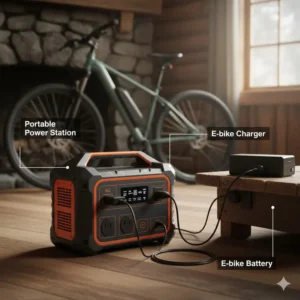
This is arguably the safest and most efficient way to charge an e bike battery when your standard outlet is unavailable. A Portable Power Station, such as the Jackery Explorer 1000 Plus Portable Power Station or the EcoFlow River 2 Pro Portable Power Station, is essentially a giant, modern battery pack with a built-in AC inverter.
The Underlying Mechanism: Your e bike’s original charger takes 120V AC (Alternating Current) from the wall and converts it to the specific DC (Direct Current) voltage your battery needs (e.g., 54.6V DC for a 48V battery). A PPS’s internal inverter converts its DC power back into a “grid-like” 120V AC output. You simply plug your original e bike charger into the PPS’s AC outlet. The charger does its job as designed, maintaining the correct voltage and current profile, thus minimizing risk.
Critical Requirement: Pure Sine Wave. You must ensure the Portable Power Station offers a Pure Sine Wave (PSW) AC output. A Modified Sine Wave inverter can cause excessive heat, noise, and potential long-term damage to the delicate internal components of your e bike’s charger and, ultimately, the BMS of the e bike battery.
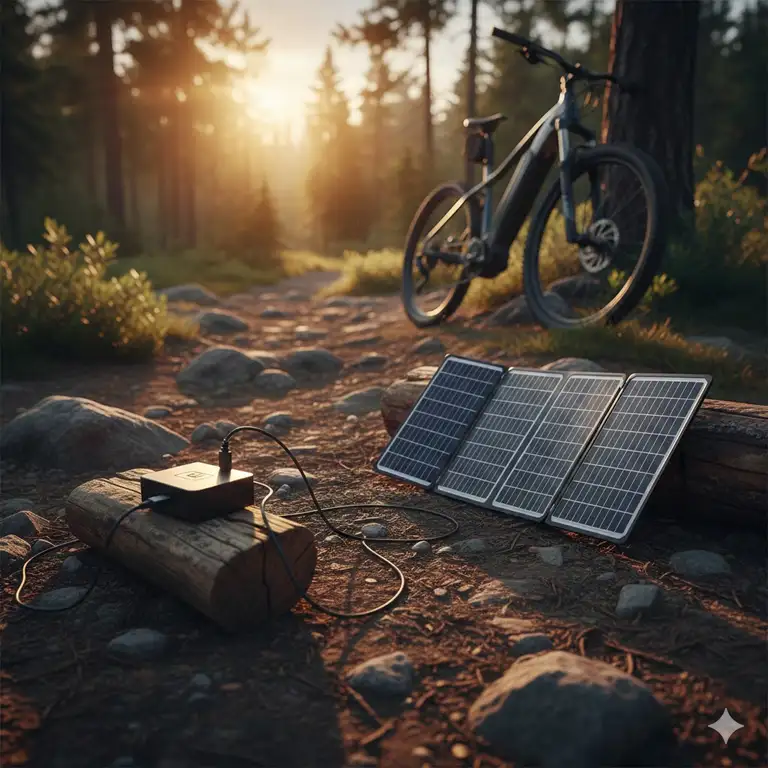
2. Solar Charging Systems for Off-Grid Power ☀️
For the true off-grid adventurer, solar charging provides the ultimate freedom. If you need a way to charge e bike battery without charger and without a power grid, a solar setup is the solution.
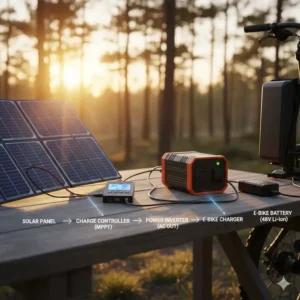
The Components: A functional e bike solar setup needs three key components:
-
Solar Panel: Captures sunlight (e.g., Goal Zero Nomad 200 Solar Panel).
-
Charge Controller: This is the most crucial part. It takes the variable voltage from the panel and regulates it. For high-voltage e bike charging, an MPPT (Maximum Power Point Tracking) charge controller is preferred for its efficiency.
-
DC-DC Adapter: Converts the regulated voltage from the controller to the exact voltage required by your e bike battery (e.g., from 48V regulated to 54.6V charging voltage).
Performance Impact: Charging with solar is slow and highly dependent on weather and the angle of the sun. A 100Wh battery might take 2-4 hours to recharge on a sunny day using a 100W panel. This method is more about extending range or performing an overnight charge at base camp, rather than a quick mid-day boost.
3. Universal DC-to-DC Converter (Car/Vehicle Charging) 🚗
When your e bike is primarily used near a vehicle, using a universal DC-DC step-up converter is an option. This method addresses how to charge e bike battery without charger by drawing power directly from a car’s 12V DC system.
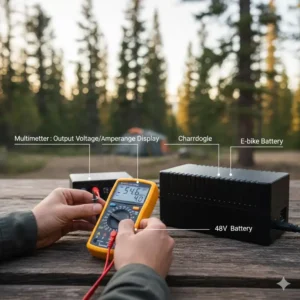
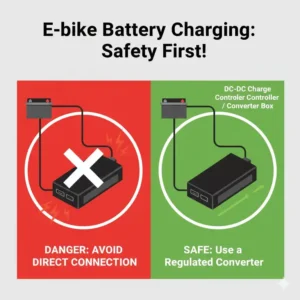
Safety Caveats: Unlike a power station which uses the original AC charger, this method replaces the charger’s voltage and current regulation. You are essentially creating a makeshift charger. The Universal 12V to 48V DC-DC Step-Up Charger must be set to the precise peak charging voltage of your battery (e.g., 54.6V for 48V systems, 42V for 36V systems). Setting it even a single volt too high can damage your battery, while setting it too low will fail to fully charge it. This method demands a technical understanding and constant monitoring. Never attempt to connect a car battery directly to an e bike battery with jumper cables, as this will lead to a catastrophic thermal event due to unregulated current flow.
Budget vs. Premium Comparison: Ensuring Value and Safety
The cost of your alternative charging solution is directly tied to its capacity, safety features, and convenience. While it’s tempting to find the cheapest way to charge e bike battery without charger, remember that a new e bike battery can cost hundreds of dollars. Investing in quality is protecting your primary asset.
| Feature | Budget-Focused Solution | Mid-Range Solution | Premium/Long-Term Solution |
| Example Products | Voltaic Systems Arc 20 Watt Folding Solar Charger, Universal DC-DC Converter | MAXOAK Bluetti EB70S Portable Power Station, EcoFlow River 2 Pro Portable Power Station | Jackery Explorer 1000 Plus Portable Power Station, High-Wattage Solar Panel Array |
| Total Capacity (Wh) | < 100 Wh (External Power Bank) | 700 Wh – 1000 Wh | 1000 Wh+ (Often expandable) |
| Core Technology | Low-wattage solar or 12V Step-Up Converter | LiFePO4 Power Station (PSW) | LiFePO4 Power Station (PSW) + High-Efficiency Solar Panel |
| Safety Features | Minimal (Relies on user vigilance) | Multiple battery protections, Pure Sine Wave inverter | Advanced BMS, 5-year+ warranties, UL/CE Certifications |
| Charging Speed | Very Slow (Trickle or 1-2A current) | Moderate to Fast (3-4A current) | Fastest (Can support original fast charger) |
| Long-Term Value | Low (Emergency or range-extending use only) | High (Reliable off-grid power for many cycles) | Highest (Maximum longevity and power output) |
💡 Choosing Your Path
For the average e bike owner looking for the safest, most reliable backup, the Mid-Range Portable Power Station category, featuring units like the EcoFlow River 2 Pro Portable Power Station, provides the best balance of safety, capacity, and portability. It allows you to use your original charger, which is key to protecting your BMS.
Key Features and Benefits Comparison
Beyond mere specifications, let’s explore the user benefits of each type of charging method. This comparison highlights why a solution focused on how to charge e bike battery without charger is necessary, and what real-world difference it makes.
| Feature/Benefit | Portable Power Station (PPS) | Solar Panel Charging | Universal DC-DC Converter |
| User Convenience | High: Plug-and-play with original charger. | Low: Requires setup, charge controller, and sun monitoring. | Moderate: Requires technical configuration, testing, and monitoring. |
| Environmental Impact | Low (Rechargeable, but uses grid power initially) | Lowest (Zero-emissions operation) | Moderate (Relies on a running car engine for most efficient charging) |
| Battery Health Protection | Highest: Original charger manages charging profile. | Moderate to High: Quality MPPT controller is essential for regulation. | Lowest: User is entirely responsible for voltage/current regulation. |
| Versatility | Highest: Powers e bikes, laptops, lights, mini-fridges, etc. | Moderate: Primarily charges batteries/power banks, can run low-draw DC devices. | Low: Only charges the e bike battery (or other 12V devices). |
| Noise Level | Silent operation. | Silent operation. | Moderate to High (If used with a running vehicle). |
When you weigh these factors, it becomes clear that a high-quality Portable Power Station (PPS) provides the best overall benefit for safely answering how to charge e bike battery without charger for most users.
Essential Buying Guide: Matching the Solution to Your Needs 🚴♂️
Finding the best solution for how to charge e bike battery without charger requires a careful assessment of your riding style and needs. It’s not a one-size-fits-all problem!
1. Identify Your e Bike Battery Specifications
Before buying any alternative charging gear, you must know your e bike battery’s nominal voltage (e.g., 36V, 48V, 52V) and its peak charging voltage (e.g., 42V, 54.6V, 58.8V). You also need the capacity in Watt-hours (Wh).
-
Rule of Thumb: Your alternative source must be able to deliver power that either:
-
A) Powers your existing charger (for PPS solutions).
-
B) Exactly matches your battery’s peak charging voltage (for DC-DC solutions).
-
2. Determine Your Primary Charging Scenario
-
Scenario A: The Weekend Camper/Van Lifer. Your primary goal is charging your e bike at a campsite or remote location.
-
Recommended Solution: A mid-to-high capacity Portable Power Station like the Jackery Explorer 1000 Plus Portable Power Station or EcoFlow River 2 Pro Portable Power Station. This allows fast, safe charging via your original charger.
-
-
Scenario B: The Bikepacking Adventurer. Your goal is continuous, long-term power away from civilization for days or weeks.
-
Recommended Solution: A combination solar generator: A high-efficiency solar panel (Goal Zero Nomad 200 Solar Panel) paired with a compact PPS (MAXOAK Bluetti EB70S Portable Power Station). The PPS stores energy captured throughout the day.
-
-
Scenario C: The Emergency Roadside Fix. You need a quick partial charge in a pinch, often near your car.
-
Recommended Solution: A regulated Universal DC-DC Step-Up Charger or a small, lightweight PPS. Remember the safety warnings for the DC-DC unit!
-
3. Understanding Power Loss and Efficiency
No conversion is 100% efficient. When you use a PPS, the power goes through: PPS Battery (DC) $\to$ Inverter (AC) $\to$ e Bike Charger (DC) $\to$ e Bike Battery (DC). Each conversion step loses energy, typically 10-20% overall. Therefore, a 500 Wh e bike battery will require a Portable Power Station with at least 600 Wh to fully charge it. Always factor this in when evaluating the product’s capacity.
Comparison of Alternative Charging Benefits vs. Traditional Grid Charging
While grid charging is the gold standard, these alternatives offer benefits that traditional charging simply cannot match. This is what truly differentiates a complete e bike power solution.
| Benefit Area | Alternative Charging (PPS/Solar) | Traditional Wall Charging | Differentiator |
| Location Freedom | Total: Charge anywhere there’s sun or a pre-charged PPS. | Zero: Must be near a standard AC wall outlet. | Mobility and Range Extension |
| Environmental Impact | Zero-emission option with solar. | Relies on the regional power grid mix (coal, gas, solar, etc.). | Sustainability and Eco-Friendly Riding |
| Noise & Disturbance | Silent operation (PPS/Solar). | Charger fan noise may be present. | Ideal for use in quiet environments (tents, libraries, parks). |
| Redundancy | Provides backup power for home or other electronics. | Dedicated solely to the e bike. | Versatility and Emergency Preparedness |
Safety Protocols: Protecting Your Investment and Yourself
When dealing with high-voltage lithium-ion batteries, safety is non-negotiable. Trying to learn how to charge e bike battery without charger can be dangerous if not done with the right gear and knowledge.
-
NEVER Mix Voltage and Amperage. Charging a 48V battery (peak 54.6V) with a 36V charger (peak 42V) will not work, and could cause damage. Similarly, using a charger with a much higher current (Amperage) than specified for your battery can rapidly shorten its lifespan and overheat it. Always match the voltage exactly and the amperage closely.
-
Avoid DIY Hacks. I’ve seen people talk about cannibalizing old laptop chargers or using exposed wires—do not do this. Lithium batteries are volatile; incorrect charging can lead to fire or irreparable battery damage.
-
Monitor Temperature. Regardless of the method you choose, always monitor the battery temperature. If the e bike battery pack becomes noticeably hot to the touch, immediately stop the charging process and disconnect the power source. Overheating is a sign of a severe problem, often internal short circuits or BMS failure.
-
Pure Sine Wave Inverters Only. If you use an inverter (like in a car setup), ensure it is a Pure Sine Wave model. Modified Sine Wave inverters can create voltage spikes and damage sensitive electronics like the e bike’s charger or its BMS.
Other e Bike Charging Variations: Beyond the Charger
While our focus has been on how to charge e bike battery without charger by using alternative power sources, it’s worth exploring other variations of the core problem that riders often search for. These are solutions that extend range or use the bike itself.
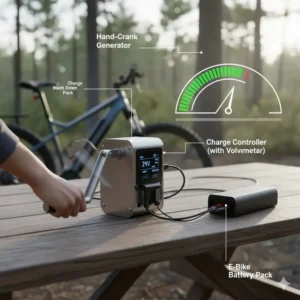
1. Regenerative Braking and Pedal Generators
Some high-end e bikes feature regenerative braking. This system captures kinetic energy when you brake or coast downhill, converting it back into electrical energy and sending a small charge back to the battery. While great for range extension, it is a range extender, not a primary charging solution. The amount of energy recaptured is typically very small—perhaps 5% or less of the total energy consumed on a ride.
2. Universal Chargers for Different Connectors
Sometimes, the issue isn’t the missing charger, but the missing adapter to a public charging station. Universal e Bike Chargers are specialized tools that offer interchangeable plugs (XLR, DC 2.1, Anderson, etc.) and a manual voltage/amperage selector. Crucially, these are still technically chargers and thus fall outside the main scope, but they solve the common variation of “I have a power source, but the wrong plug.” Always ensure these are high-quality, certified units to avoid damaging your BMS.
3. Charging with a Gas Generator
While less eco-friendly, a small, portable gas generator is a valid answer for how to charge e bike battery without charger wall access in a remote emergency. Simply plug your original e bike charger into the generator’s AC outlet. Like a PPS, this allows your original charger to do the smart-charging work.
-
Pro Tip: Look for “Inverter Generators.” These produce a much cleaner, Pure Sine Wave power output that is safer for sensitive electronics than traditional, louder generators.
⚡ Get the Power You Need! Click Here to Explore the Top Portable Power Solutions Today! 🛒
Conclusion: Power Up Your Freedom
The question of how to charge e bike battery without charger is a common one, but the answer is clear: ditch the risky hacks and invest in certified, reliable power solutions. The advent of high-capacity, safe Portable Power Stations like the Jackery Explorer 1000 Plus Portable Power Station and advanced solar options has transformed e bike mobility.
By prioritizing safety through Pure Sine Wave technology and matching your solution to your specific e bike voltage, you can confidently venture far off the beaten path. These alternative charging methods aren’t just backups; they are tools of freedom that extend your range, enhance your preparedness, and ensure your e bike remains a reliable source of adventure.
The journey doesn’t have to end just because you left your charger at home. Choose wisely, charge safely, and enjoy the ride!
Frequently Asked Questions
Here are the most common questions riders have when looking for ways to charge their e bike battery without the original charger. These answers focus on safety and real-world applicability for transactional and commercial intent.
✅ No, standard phone (5V) and laptop (19V-20V) chargers do not provide nearly enough voltage to charge a typical e bike battery (36V, 48V, or 52V). Using an incompatible low-voltage charger can potentially damage the charging circuit or BMS of the e bike battery without transferring any meaningful charge...
✅ The safest and most effective method is using a Portable Power Station (PPS) with a Pure Sine Wave (PSW) AC output, like the EcoFlow River 2 Pro Portable Power Station. You plug your e bike's original charger into the PPS, allowing the charger's built-in safety mechanisms to regulate the voltage and current, thereby protecting your battery's BMS...
✅ Yes, but only with an essential intermediate device called a solar charge controller, preferably an MPPT type, and a DC-DC step-up converter. Direct connection is highly risky because solar panel voltage is variable and unregulated, which can lead to overcharging and permanent damage to the e bike battery...
✅ Due to energy conversion losses (typically 15-20%), you should select a Portable Power Station with at least 20-25% more Watt-hour (Wh) capacity than your e bike battery. For example, a 500 Wh e bike battery will require a PPS of at least 600 Wh, making units like the MAXOAK Bluetti EB70S Portable Power Station a strong option...
✅ It can be safe only if you use a high-quality, regulated DC-DC step-up converter specifically designed for your battery’s voltage, or a pure sine wave inverter to power your original AC charger. Attempting to connect directly without a regulator will likely destroy your e bike battery and potentially damage your car's electrical system... ❓ Can I use a standard phone or laptop charger to charge my e bike battery?
❓ What is the safest alternative for charging an e bike battery off-grid?
❓ Can I charge my e bike battery directly from a solar panel?
❓ How much capacity (Wh) do I need in a Portable Power Station to fully charge my e bike?
❓ Is it safe to charge my e bike battery in my car using the cigarette lighter outlet?
Recommended for You
- How to Replace e Bike Battery: 7 Must-Have Kits & Pro Tips for Effortless DIY Replacement
- How Long Do E Bike Batteries Last: 7 Key Factors That Boost Battery Life in 2025
- Can you charge e bike battery overnight? 7 Shocking Safety Secrets
Disclaimer: This article contains affiliate links. If you purchase products through these links, we may earn a small commission at no additional cost to you.
✨ Found this helpful? Share it with your friends! 💬🤗