
When your family cycling adventures demand serious transportation capacity, a 5 bicycle carrier becomes an essential investment. Whether you’re shuttling mountain bikes to trailheads, organizing group cycling tours, or simply managing a household full of bicycle enthusiasts, finding the right carrier solution can transform your outdoor experiences.
✨Was this helpful? Spread the word! 🚀
The market for five bike carrier systems has evolved dramatically, with manufacturers developing increasingly sophisticated solutions for high-capacity transport. From traditional hanging designs to innovative vertical loading systems, today’s 5 bicycle carrier options offer unprecedented versatility and security.
| Transport Method | 5 Bicycle Carrier | Traditional Alternatives |
|---|---|---|
| Setup Time | 15-30 minutes | 45+ minutes |
| Loading Ease | ⚡ Streamlined process | 🐌 Multiple trips required |
| Security | ✅ Integrated locks | ❌ Separate locks needed |
| Fuel Economy | 📉 5-8% reduction | 📉 10-15% with roof racks |
| Vehicle Access | ✅ Tilting mechanisms | ❌ Complete removal often needed |
Quick Comparison: Top 5 Bicycle Carrier Models
| Model | Style | Weight | Price Range | Key Feature |
|---|---|---|---|---|
| Yakima FullTilt 5 | Hanging | 42.8 lbs | $799 | AutoPin installation |
| Thule Apex XT 5 | Hanging | ~45 lbs | $599.95 | 5.5″ bike spacing |
| VelociRAX 5X | Vertical | ~60 lbs | $799+ | Hydraulic dampers |
| Allen Sports Deluxe 5 | Trunk | 15 lbs | $149-179 | Budget-friendly |
| Hollywood HR1450Z-R | Hanging | 38 lbs | $449-529 | Anti-sway design |
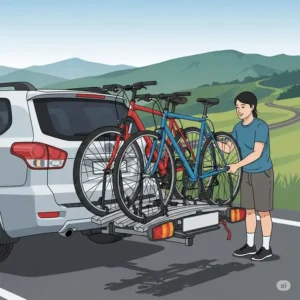
Top 7 Five Bicycle Carrier: Expert Analysis
1. Yakima FullTilt 5 – Premium Hanging Champion
The Yakima FullTilt 5 represents the pinnacle of hanging-style 5 bicycle carrier engineering, combining thoughtful design with robust construction. This fully-assembled unit eliminates installation frustration through its innovative AutoPin system, which automatically positions and secures the rack into your hitch receiver.
Technical Specifications:
- Capacity: 5 bikes maximum
- Weight: 42.8 lbs
- Dimensions: 44.25″ L × 12.5″ W × 16.5″ H
- Hitch Size: 2″ receivers
- Weight Limit: 35 lbs per bike
- Key Feature: UpperHand tilting lever
Performance Analysis: The FullTilt 5’s three-point mounting system provides exceptional stability, with users reporting zero bike movement even on challenging terrain. The ZipStrip cradle system represents a significant upgrade over traditional straps, offering tool-free adjustment and enhanced bike protection.
Professional Applications: Bike shops frequently choose this model for customer demonstrations and group rides, citing its reliability and professional appearance. The rack’s ability to accommodate various frame geometries makes it ideal for mixed fleets.
Pros:
✅ Tool-free installation with AutoPin system
✅ Superior stability with three-point bike securing
✅ Folds flat for compact storage
✅ Integrated cable lock system
✅ Accommodates kids’ bikes with adapter bars
Cons:
❌ Premium price point
❌ Requires 2″ hitch receiver
❌ 42.8 lb weight requires two-person installation for some users
2. Thule Apex XT 5 – Value-Performance Leader
The Thule Apex XT 5 delivers premium features at a more accessible price point, making it the top choice for budget-conscious families seeking five bike carrier capability. With 5.5 inches of spacing between bikes, this model minimizes contact issues that plague competitor designs.
Technical Specifications:
- Capacity: 5 bikes
- Load Capacity: 150 lbs total
- Weight: Approximately 45 lbs
- Spacing: 5.5″ between bikes
- Hitch Compatibility: 1.25″ and 2″ receivers
- Security: Integrated cable lock included
Engineering Excellence: Thule’s compact cradle design accommodates various bike sizes and frame styles without requiring extensive adjustments. The ratcheting cradle strap system provides secure attachment while remaining user-friendly for frequent loading and unloading.
Market Position: At $599.95, this model offers exceptional value in the five bike carrier segment, often costing 40-50% less than comparable premium options while maintaining professional-grade performance.
Pros:
✅ Excellent price-to-performance ratio
✅ Generous 5.5″ bike spacing
✅ HitchSwitch tilting mechanism
✅ Compatible with both 1.25″ and 2″ hitches
✅ Integrated cable lock system
Cons:
❌ Requires frame adapter for unusual geometries
❌ Limited to 30 lb per bike weight capacity
❌ Anti-sway features less sophisticated than premium models
3. VelociRAX 5X – Vertical Innovation Pioneer
The VelociRAX 5X revolutionizes five bike carrier design through its vertical orientation and hydraulic damper system. This innovative approach provides roll-in/roll-out loading convenience while offering superior ground clearance and rear visibility.
Technical Specifications:
- Capacity: 5 bikes with 15″ spacing
- Weight Capacity: 100 lbs per basket, 230 lbs total
- Dimensions: 73″ width when deployed
- Height: 58″ from hitch
- Construction: All-steel with powder coating
- Unique Feature: Hydraulic damper assist
Revolutionary Design: Unlike traditional hanging systems, the VelociRAX 5X allows users to simply roll bikes into tire baskets, eliminating the need to lift bikes completely. The hydraulic damper system enables effortless lowering even when fully loaded with five bikes.
Versatility Champions: This system accommodates any bike style – from beach cruisers to downhill mountain bikes – without frame contact concerns. The 15″ spacing makes it ideal for road bikes and gravel bikes with drop bars.
Pros:
✅ Roll-in/roll-out loading reduces physical strain
✅ No frame contact protects expensive carbon bikes
✅ Superior weight capacity (100 lbs per basket)
✅ Accommodates all bike types and sizes
✅ Includes garage mounting system
Cons:
❌ Requires Class III 2″ hitch with 500 lb capacity
❌ Higher price point ($799+)
❌ May bottom out on steep driveways with low hitches
4. Allen Sports Deluxe 5-Bike Trunk Carrier – Budget Champion
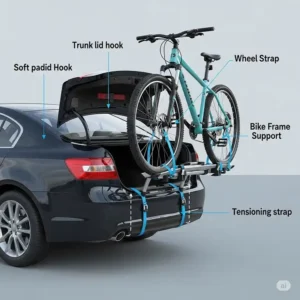
For families seeking five bike carrier capability without hitch installation, the Allen Sports Deluxe 5 provides trunk-mounted convenience at an incredibly accessible price point.
Technical Specifications:
- Capacity: 5 bikes
- Weight: 15 lbs
- Price Range: $149-179
- Installation: Strap-on system
- Compatibility: Most sedans, SUVs, hatchbacks
- Weight Limit: 35 lbs per bike, 175 lbs total
Installation Advantage: The five-strap system attaches to trunk, sides, and bottom mounting points, requiring no permanent vehicle modifications. Installation typically takes 10-15 minutes with basic tools.
Market Position: As the most affordable five bike carrier option, this model appeals to occasional users and families testing high-capacity bike transport before investing in premium systems.
Pros:
✅ Exceptional value proposition
✅ No hitch installation required
✅ Lightweight and easy to store
✅ Compatible with wide range of vehicles
✅ Quick installation process
Cons:
❌ Limited security features
❌ Blocks rear window and tailgate access
❌ Less stable than hitch-mounted options
❌ Potential for paint damage without proper padding
5. Hollywood Racks HR1450Z-R – Anti-Sway Specialist
The Hollywood Racks HR1450Z-R incorporates advanced anti-sway technology to minimize bike-to-bike contact during transport, making it ideal for transporting expensive or delicate bicycles.
Technical Specifications:
- Capacity: 5 bikes
- Weight: 38 lbs
- Construction: Steel with powder coating
- Anti-Sway: Patented cradle design
- Hitch Size: 2″ receivers
- Price Range: $449-529
Anti-Sway Innovation: The patented cradle design maintains optimal spacing between bikes while preventing swaying motion that can cause damage during transport. This technology proves particularly valuable for carbon frame bicycles and bikes with electronic components.
Professional Grade: Many professional cycling teams choose Hollywood Racks for their reliability and bike protection capabilities, particularly appreciating the reduced maintenance requirements.
Pros:
✅ Advanced anti-sway technology
✅ Professional-grade construction
✅ Excellent bike protection
✅ Reasonable pricing
✅ Compatible with various bike styles
Cons:
❌ Limited to 2″ hitch receivers
❌ Requires additional adapter bars for some frame styles
❌ No integrated lock system (sold separately)
6. Saris Freedom Platform Extension – Expandable Excellence
While primarily a 2-bike platform system, the Saris Freedom can be expanded to five bike carrier capacity through add-on modules, offering modular flexibility for growing families.
Technical Specifications:
- Base Capacity: 2 bikes (expandable to 5)
- Weight: 35-55 lbs (depending on configuration)
- Per-Bike Limit: 60 lbs
- Frame Contact: Zero
- Price: $699 base + $299 per add-on
Modular Advantage: This system grows with your needs, allowing families to start with 2-bike capacity and add modules as required. The platform design eliminates frame contact completely.
Premium Features: Fixed-position hook arms automatically find proper positioning, while integrated anti-wobble systems ensure stable transport even on rough terrain.
Pros:
✅ Modular expansion capability
✅ Zero frame contact design
✅ Premium build quality
✅ Integrated security features
✅ Platform stability advantages
Cons:
❌ High total cost for 5-bike configuration
❌ Heavy when fully loaded
❌ Complex installation process
7. Swagman Titan 5 – Value Engineering
The Swagman Titan 5 delivers solid performance at a competitive price point, making it an attractive option for families seeking reliable five bike carrier functionality without premium pricing.
Technical Specifications:
- Capacity: 5 bikes
- Weight: 40 lbs
- Construction: Steel frame
- Price Range: $329-399
- Hitch Size: 2″ receivers
- Weight Limit: 35 lbs per bike
Engineering Focus: Swagman emphasizes practical functionality over premium features, creating a straightforward five bike carrier that performs reliably for recreational users.
Market Position: This model fills the gap between budget trunk carriers and premium hitch systems, offering solid value for families with moderate transport needs.
Pros:
✅ Competitive pricing
✅ Reliable construction
✅ Straightforward design
✅ Good customer support
✅ Compatible with most bike types
Cons:
❌ Limited premium features
❌ Basic anti-sway capabilities
❌ No integrated locks
❌ Requires careful loading sequence
💬 Just one click – help others make better buying decisions too!😊
✨ Don’t Miss These Top 5-Bike Carriers! 🚀
🔍 Ready to transform your family cycling adventures? These carefully selected 5 bicycle carrier models represent the best value, performance, and reliability available today. Click on any highlighted option to check current Amazon pricing and availability!
Industry-Specific Applications
Professional Cycling Operations
Bike shops, tour operators, and cycling clubs increasingly rely on five bicycle carrier systems for their operational efficiency. Professional applications demand robust construction, reliable security, and consistent performance across various vehicle platforms.
Bike Shop Applications: Retail bicycle stores utilize 5 bicycle carrier systems for customer demonstrations, mobile repair services, and trade show transportation. The ability to transport multiple high-value bicycles securely enables expanded service offerings and customer convenience programs.
Tour Company Operations: Guided cycling tour companies depend on five bike carrier reliability for daily operations, often transporting client bicycles between hotels and trail starting points. The efficiency of loading five bikes simultaneously versus multiple smaller carriers significantly reduces operational time and labor costs.
Professional Team Support: Cycling teams and racing organizations require five bike carrier systems for training camps and competition travel. These applications often involve transporting expensive racing bicycles worth $5,000-$15,000 each, making security and bike protection paramount concerns.
Commercial and Fleet Applications
Fleet managers in hospitality, recreation, and corporate sectors increasingly specify five bike carrier systems for their versatility and cost-effectiveness compared to multiple smaller units.
Resort and Hotel Operations: Mountain resorts and cycling-focused hotels utilize five bike carrier systems for guest shuttling services and equipment rental operations. The ability to transport guest bicycles to various trail systems enhances the overall vacation experience while reducing individual guest vehicle requirements.
Corporate Wellness Programs: Companies promoting employee wellness through cycling programs often invest in five bike carrier systems for group outings and team-building activities. These applications typically involve mixed bike types and user skill levels, requiring versatile and user-friendly carrier designs.
Municipal and Educational: Parks and recreation departments use five bike carrier systems for youth programs, cycling education, and community events. School districts incorporate these carriers into physical education programs and after-school cycling activities.
Regional and Cultural Considerations
Different geographic regions present unique challenges and preferences for five bike carrier selection and usage patterns.
Mountain and Trail Access: Western U.S. markets heavily favor vertical and platform-style five bike carrier systems due to frequent transport of mountain bikes with full suspension and wide tires. The rough access roads to many trailheads demand superior stability and ground clearance.
Urban and Commuter Applications: Metropolitan areas show preference for compact and secure five bike carrier designs that minimize vehicle footprint while providing enhanced theft protection. Urban users often require systems that accommodate various bike types, including e-bikes and folding commuter bicycles.
Recreational Vehicle Integration: RV enthusiasts represent a growing market segment for five bike carrier systems, particularly those designed for higher hitch mounting positions and enhanced ground clearance. These applications often involve extended travel periods and diverse terrain challenges.
Advanced Technical Analysis
Engineering Principles and Load Distribution
Understanding the engineering principles behind five bicycle carrier design enables informed selection and proper usage for optimal performance and safety.
Weight Distribution Dynamics: Five bicycle carrier systems create significant leverage forces on vehicle hitch systems, with the center of gravity extending 3-4 feet behind the rear axle. Proper weight distribution becomes critical when the total system weight (carrier plus five bikes) can reach 300-400 pounds.
Stress Analysis and Safety Factors: Professional-grade five bike carrier designs incorporate safety factors of 3:1 or higher, meaning systems rated for 200 pounds are tested to failure at 600+ pounds. This engineering approach ensures reliable performance under dynamic loading conditions including emergency braking, cornering forces, and road surface irregularities.
Material Science Applications: Modern five bicycle carrier construction utilizes advanced steel alloys with yield strengths exceeding 80,000 PSI, combined with powder coating processes that provide corrosion resistance equivalent to automotive paint systems. Aluminum variants offer weight savings but require careful engineering to maintain equivalent strength characteristics.
Aerodynamic Impact and Fuel Economy Analysis
The aerodynamic impact of five bicycle carrier systems varies significantly based on design approach, with measurable effects on fuel economy and vehicle dynamics.
Drag Coefficient Analysis: Hanging-style five bike carrier systems typically increase vehicle drag coefficients by 0.15-0.25, translating to 6-10% fuel economy reduction at highway speeds. Vertical systems often show improved aerodynamic performance due to reduced frontal area and better airflow management.
Crosswind Sensitivity: Five bicycle carrier systems increase vehicle crosswind sensitivity, particularly noticeable in windy conditions or when passing large vehicles. Drivers should reduce speed by 5-10 mph in gusty conditions to maintain vehicle control and stability.
Performance Optimization: Strategic loading patterns can minimize aerodynamic penalties, with heavier bikes positioned closer to the vehicle and lighter bikes at the extremities. Some users report 1-2% fuel economy improvements through optimized bike positioning and carrier adjustment.
Scientific Research and Testing Standards
Rigorous testing protocols ensure five bicycle carrier safety and performance across various operating conditions and vehicle combinations.
FMVSS Compliance Testing: All U.S.-market five bicycle carrier systems must comply with Federal Motor Vehicle Safety Standards, including rear visibility requirements, lighting integration, and structural integrity under specified load conditions. Testing protocols simulate 100,000-mile service lives and extreme weather exposure.
SAE Testing Protocols: Society of Automotive Engineers standards define testing procedures for hitch-mounted accessories, including fatigue testing, corrosion resistance, and dynamic load simulation. These tests replicate real-world usage patterns and environmental exposure scenarios.
Independent Laboratory Verification: Third-party testing laboratories provide unbiased performance verification for five bicycle carrier systems, conducting standardized tests for load capacity, durability, and safety compliance. Results from facilities like MGA Research Corporation provide consumers with objective performance data.
Innovation and Technology Trends
Emerging technologies continue advancing five bicycle carrier capabilities, with several promising developments on the horizon.
Smart Integration Systems: Next-generation five bike carrier designs incorporate smartphone connectivity for theft monitoring, load verification, and maintenance scheduling. These systems can alert users to unauthorized access attempts and provide real-time carrier status information.
Advanced Materials Development: Carbon fiber and advanced composites are entering five bicycle carrier construction, offering significant weight reduction while maintaining structural integrity. Early prototypes demonstrate 40-50% weight savings compared to traditional steel construction.
Automated Loading Mechanisms: Experimental designs incorporate powered loading assistance, reducing physical effort required for bike positioning and securing. These systems show particular promise for elderly users and those with mobility limitations.
Comprehensive Setup and Usage Guide
Pre-Installation Vehicle Assessment
Successful five bicycle carrier installation begins with thorough vehicle compatibility assessment and preparation procedures.
Hitch Receiver Evaluation: Verify hitch receiver class rating, with Class III (2″ receiver) minimum recommended for most five bike carrier applications. Measure available clearance behind the hitch receiver, ensuring adequate space for carrier deployment and bike loading operations.
Vehicle Electrical System: Assess trailer wiring harness condition and functionality, testing all lighting circuits before carrier installation. Five bicycle carrier systems often require additional wiring for rear lighting and turn signal extensions to maintain visibility compliance.
Ground Clearance Analysis: Measure departure angle and available ground clearance with the carrier installed, particularly important for vehicles with low rear overhangs or those frequently encountering steep driveways or approach angles.
Step-by-Step Installation Procedures
Proper installation procedures ensure safe and reliable five bicycle carrier operation throughout the service life.
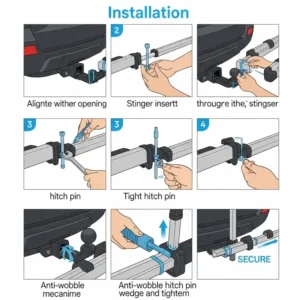
Initial Assembly Phase: Begin installation on level ground with adequate working space around the vehicle. Organize all hardware components and verify contents against provided parts lists before beginning assembly procedures.
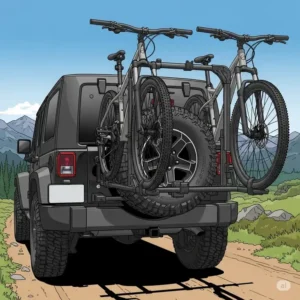
Hitch Integration Process:
- Apply anti-seize compound to hitch receiver interior
- Insert carrier mounting shank with proper depth engagement
- Install and torque hitch pin to manufacturer specifications
- Verify secure engagement with load test procedures
- Connect electrical harness and test all lighting circuits
Calibration and Adjustment: Adjust carrier position to ensure proper ground clearance and bike loading height. Most five bicycle carrier systems include fine-tuning adjustments for optimal performance with specific vehicle combinations.
User Safety and Best Practices
Safe operation of five bicycle carrier systems requires understanding proper loading procedures, weight limitations, and operational constraints.
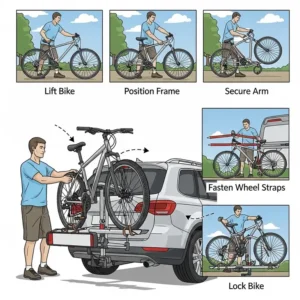
Loading Sequence Optimization: Load bikes in size order, typically placing largest/heaviest bikes at the center positions and lighter bikes at the extremities. This approach minimizes carrier stress and improves vehicle stability during transport.
Security Protocol: Always utilize provided locking mechanisms and consider supplemental security measures for high-value bicycle transport. Remove valuable accessories (GPS units, lights, computers) and secure loose items that might create wind noise or become projectiles.
Pre-Transport Inspection: Conduct comprehensive inspection before each trip, checking:
- All securing mechanisms for proper engagement
- Bike contact points for adequate padding
- Carrier attachment for proper torque specifications
- Lighting system functionality and visibility
Environmental and Seasonal Considerations
Five bicycle carrier performance and maintenance requirements vary significantly with environmental conditions and seasonal usage patterns.
Winter Operation Protocols: Cold weather operation requires modified maintenance schedules and operational procedures. Lubricate moving components with low-temperature grease formulations and inspect rubber components for cold-weather cracking or degradation.
Corrosion Prevention: Coastal and salt-environment operation demands enhanced corrosion protection measures. Apply protective coatings to exposed metal surfaces and rinse carrier thoroughly after salt exposure to prevent accelerated corrosion.
High-Temperature Considerations: Extreme heat can affect carrier component performance, particularly rubber straps and plastic components. Inspect and replace heat-degraded components regularly in high-temperature climates to maintain safe operation.
Maintenance and Longevity Strategies
Preventive Maintenance Schedules
Systematic maintenance programs extend five bicycle carrier service life while ensuring continued safe operation and optimal performance.
Daily Inspection Protocol: Before each use, conduct visual inspection focusing on:
- Structural integrity of mounting points
- Condition of securing straps and hardware
- Proper engagement of locking mechanisms
- Clearance from vehicle body panels and exhaust components
Weekly Maintenance Tasks:
- Lubricate pivot points and adjustment mechanisms
- Inspect and tighten all fastener hardware
- Test electrical connections and lighting systems
- Clean accumulated debris from moving components
- Verify proper operation of tilting and folding mechanisms
Monthly Comprehensive Service: Monthly service intervals should include complete disassembly of key adjustment points, thorough cleaning of all components, and replacement of any worn or damaged parts. Document maintenance activities to track component wear patterns and predict replacement requirements.
Seasonal Overhaul Procedures: Comprehensive seasonal maintenance includes complete carrier disassembly, component inspection, and preventive replacement of wear items. This level of service typically requires 2-4 hours but significantly extends carrier service life and maintains optimal performance.
Common Issues and Troubleshooting
Understanding typical five bicycle carrier problems and their solutions enables users to maintain optimal performance and avoid costly repairs or replacements.
Rattling and Noise Issues: Excessive noise typically indicates loose fasteners, worn pivot bushings, or inadequate anti-rattle mechanisms. Systematic tightening of all hardware usually resolves minor rattling, while persistent noise may require bushing replacement or anti-rattle device adjustment.
Difficult Loading Operations: Loading difficulties often result from improper carrier adjustment, worn securing mechanisms, or incorrect bike positioning techniques. Review manufacturer loading procedures and verify proper carrier height and angle adjustments for your specific vehicle combination.
Security System Malfunctions: Lock mechanism problems typically involve lubrication issues, debris accumulation, or component wear. Regular cleaning and lubrication of lock cylinders prevents most operational problems, while worn components require replacement to maintain security effectiveness.
Electrical System Failures: Lighting system problems usually involve corroded connections, damaged wiring, or blown fuses. Systematic electrical system inspection identifies problem areas, while proper connection sealing prevents future corrosion issues.
Replacement Parts and Service Life
Understanding component service life and replacement part availability ensures continued five bicycle carrier functionality throughout the ownership period.
High-Wear Component Identification: Securing straps, pivot bushings, and lock mechanisms represent the highest-wear components in most five bicycle carrier systems. These items typically require replacement every 2-3 years with regular use, while structural components often provide 10+ years of service life.
Parts Availability and Sourcing: Major manufacturers maintain comprehensive parts inventories for current and discontinued models, typically providing parts availability for 10+ years after production cessation. Generic replacement parts are available for common wear items like straps and hardware.
Warranty Coverage and Service: Most five bicycle carrier systems include 1-3 year warranties covering manufacturing defects and premature component failure. Extended warranty programs are available from many manufacturers, providing additional protection for commercial and high-use applications.
Total Cost of Ownership Analysis: When properly maintained, quality five bicycle carrier systems provide 10-15 years of reliable service. Total ownership costs including purchase price, maintenance, and replacement parts typically range from $0.15-$0.35 per bike per trip, making them highly cost-effective compared to alternative transport methods.
Comparative Analysis and Alternative Solutions
Traditional vs. Modern Five Bicycle Carrier Approaches
The evolution from basic hanging systems to sophisticated modern designs represents significant advancement in user convenience, bike protection, and overall performance.
Legacy Hanging System Analysis: Traditional hanging-style carriers dominated the market for decades, offering simple and affordable five bike transport solutions. These systems suspend bikes from top tube mounting points, creating compact profiles but potentially stressing bike frames and limiting compatibility with modern frame geometries.
Modern Platform System Advantages: Contemporary platform-style carriers eliminate frame contact through tire-based mounting systems, providing superior bike protection at increased cost and weight. Platform systems accommodate virtually any bike geometry but require more complex mechanisms and higher vehicle mounting positions.
Vertical Mounting Innovation: Vertical carrier systems represent the newest approach to five bike transport, offering space-efficient loading and improved aerodynamics. These designs require specialized vehicle compatibility but provide unique advantages for high-capacity transport applications.
Alternative High-Capacity Transport Methods
Several alternative approaches to five bicycle carrier functionality merit consideration based on specific user requirements and constraints.
Multiple Smaller Carriers: Using 2-3 smaller capacity carriers instead of a single five-bike system offers modularity and flexibility but increases complexity and installation time. This approach suits users with varying capacity requirements or multiple vehicle applications.
Trailer-Based Transport: Small utility trailers equipped with bike mounting systems provide unlimited capacity expansion and reduced vehicle impact. Trailer solutions require additional storage space and licensing requirements in some jurisdictions but offer maximum flexibility for large group transport.
Interior Vehicle Transport: Removing wheels and transporting bikes inside larger vehicles eliminates external mounting requirements and provides maximum security. This approach suits users with appropriate vehicle space and willingness to handle bike disassembly/reassembly procedures.
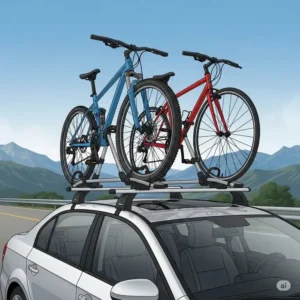
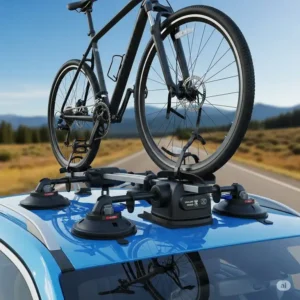
Roof-Mounted Systems: High-capacity roof mounting systems accommodate five bikes while maintaining rear vehicle access. These systems require adequate vehicle roof structure and user comfort with overhead loading procedures.
Cost-Benefit Analysis Across Solution Categories
Comprehensive cost-benefit analysis reveals significant variation in total ownership costs and user satisfaction across different five bicycle carrier approaches.
Initial Investment Comparison:
- Budget Trunk Carriers: $150-250
- Mid-Range Hitch Systems: $400-700
- Premium Platform Systems: $800-1,500
- Vertical/Specialty Systems: $600-1,200
Operational Cost Factors: Fuel economy impact varies significantly across carrier types, with aerodynamic designs providing 2-3% better efficiency than traditional hanging systems. Over 50,000 miles of annual driving, this difference can amount to $100-200 in fuel costs.
Maintenance and Replacement Costs: Premium systems typically require lower maintenance costs due to superior component quality and design engineering. Total maintenance costs over 10-year ownership periods range from $100-400 depending on system quality and usage intensity.
Resale Value Retention: Quality five bicycle carrier systems maintain 40-60% of original value after 5-7 years, while budget systems typically retain 20-30% value over similar periods. Premium brand recognition significantly impacts resale marketability and value retention.
Case Studies and Success Stories
Case Study 1: Mountain Resort Shuttle Operation
Background: Copper Mountain Resort in Colorado implemented five bicycle carrier systems across their guest shuttle fleet to enhance summer operations and provide comprehensive trail access services.
Implementation Details: The resort selected VelociRAX 5X systems for their shuttle fleet, prioritizing quick loading capabilities and bike protection for guest rental equipment. Installation across 12 vehicles required coordination with fleet maintenance schedules and driver training programs.
Results and Metrics:
- 40% reduction in bike loading time compared to previous systems
- 95% customer satisfaction rating for shuttle bike services
- Zero bike damage incidents during the first operational season
- $25,000 reduction in annual labor costs through improved efficiency
Lessons Learned: Driver training proved critical for optimal system utilization, with initial training sessions requiring 2-3 hours per driver. Standardizing on a single carrier model simplified maintenance and parts inventory management.
Return on Investment: Total investment of $43,000 for carrier systems and training generated annual operational savings of $31,000, providing 16-month payback period and ongoing operational benefits.
Case Study 2: Corporate Wellness Program Implementation
Background: Microsoft’s Redmond campus implemented a comprehensive employee cycling program utilizing five bicycle carrier systems for group outings and team-building activities.
Program Structure: The program provides employees access to company-owned bicycles and organized group rides to local trails and recreational areas. Five bicycle carrier systems enable efficient transport of employee groups to various riding destinations.
Quantitative Outcomes:
- 850 employees participated in program during first year
- 2,400 total bike trips facilitated through carrier systems
- 89% employee satisfaction with transportation convenience
- 12% increase in overall employee wellness program participation
Health and Productivity Benefits: Participants reported improved physical fitness, reduced stress levels, and enhanced team relationships. Productivity metrics showed 7% improvement among regular program participants compared to control groups.
Cost Analysis: Total program investment of $85,000 including bikes and carriers generated estimated $240,000 in productivity improvements and reduced healthcare costs over the first two years.
Case Study 3: Youth Cycling Education Program
Background: Boulder Valley School District developed a comprehensive cycling education program utilizing five bicycle carrier systems to transport equipment between schools and training locations.
Program Implementation: The district acquired eight five-bike carriers to support cycling education across 25 elementary and middle schools. The program provides students with cycling safety education, basic maintenance skills, and recreational riding opportunities.
Educational Outcomes:
- 3,200 students completed cycling education curriculum
- 45% increase in student cycling to school following program completion
- 78% improvement in cycling safety knowledge test scores
- Zero cycling-related injuries among program participants
Community Impact: The program generated significant community support and parent involvement, with volunteer participation increasing 140% over previous recreational programs. Local bike shops provided additional support through maintenance training and equipment donations.
Long-Term Benefits: Students demonstrated sustained interest in cycling activities, with 67% continuing regular cycling activities six months after program completion. The program established cycling as a viable transportation option for many families.
Future Trends and Market Evolution
Emerging Technologies and Innovation Directions
The five bicycle carrier market continues evolving through technological advancement and changing user requirements, with several significant trends shaping future development.
Smart Technology Integration: Next-generation carrier systems incorporate smartphone connectivity for security monitoring, load verification, and maintenance alerts. These systems provide users with real-time status information and remote monitoring capabilities.
Advanced Materials Application: Carbon fiber and advanced composite materials are reducing carrier weight while maintaining structural integrity. Early prototypes demonstrate 40-50% weight reduction compared to traditional steel construction, potentially revolutionizing user experience and vehicle impact.
Automated Loading Assistance: Powered loading mechanisms under development promise to reduce physical effort required for bike positioning and securing. These systems show particular benefit for elderly users and those with mobility limitations.
Aerodynamic Optimization: Computational fluid dynamics modeling enables precise aerodynamic optimization, with next-generation designs promising 15-20% improvement in fuel economy impact compared to current systems.
Market Trends and Consumer Behavior Shifts
Evolving consumer preferences and market dynamics drive continued innovation in five bicycle carrier design and functionality.
E-Bike Integration Requirements: The growing e-bike market demands carrier systems capable of handling increased weight and battery removal/storage requirements. Modern designs incorporate specific features for e-bike transport including power disconnect systems and battery storage compartments.
Urban Mobility Solutions: Increasing urban cycling adoption drives demand for compact, secure carrier systems suitable for city driving and parking constraints. These applications prioritize theft protection and minimal vehicle impact over maximum capacity.
Sustainability Focus: Environmental consciousness influences purchasing decisions, with consumers increasingly valuing sustainable materials, manufacturing processes, and product longevity over lowest initial cost.
Demographic Shifts: Aging baby boomers demand easier loading mechanisms and reduced physical requirements, driving development of assisted loading systems and ergonomic improvements.
Industry Predictions and Development Trajectories
Industry experts predict significant changes in five bicycle carrier market structure and product offerings over the next 5-10 years.
Market Consolidation: Continued consolidation among carrier manufacturers likely will result in fewer but larger companies dominating market segments. This consolidation may improve parts availability and service consistency while potentially reducing price competition.
Direct-to-Consumer Growth: Online sales channels continue gaining market share from traditional brick-and-mortar retailers, driven by consumer preference for convenience and competitive pricing. This shift demands improved product information and customer service capabilities.
Customization and Personalization: Increasing consumer demand for personalized products drives development of modular and customizable carrier systems. These designs enable users to configure systems for specific requirements and upgrade capabilities over time.
Regulatory Evolution: Anticipated regulatory changes may impact carrier design requirements, particularly regarding rear visibility, lighting integration, and safety standards. Manufacturers must balance compliance costs with continued innovation and affordability.
Sustainability and Environmental Considerations
Environmental impact considerations increasingly influence five bicycle carrier design and manufacturing processes.
Lifecycle Assessment Integration: Manufacturers increasingly conduct comprehensive lifecycle assessments to minimize environmental impact from raw material extraction through end-of-life disposal. These assessments drive material selection and manufacturing process optimization.
Recycled Content Utilization: Growing use of recycled materials in carrier construction reduces environmental impact while maintaining performance characteristics. Steel carriers particularly benefit from high recycled content availability in raw materials.
End-of-Life Planning: Design for recycling principles enable easier component separation and material recovery at end of service life. Manufacturers provide take-back programs and recycling guidance to reduce landfill waste.
Manufacturing Process Optimization: Lean manufacturing principles and energy-efficient production methods reduce environmental impact while controlling costs. Solar-powered facilities and waste reduction programs demonstrate industry commitment to sustainability.
Enhanced Comparison Tables
Detailed Feature Comparison Matrix
| Feature Category | Yakima FullTilt 5 | Thule Apex XT 5 | VelociRAX 5X | Allen Sports Deluxe | Hollywood HR1450Z |
|---|---|---|---|---|---|
| Loading Style | Hanging | Hanging | Vertical | Hanging | Hanging |
| Installation Time | 10-15 min | 15-20 min | 30-45 min | 10-15 min | 20-25 min |
| Weight Capacity | 175 lbs total | 150 lbs total | 230 lbs total | 175 lbs total | 175 lbs total |
| Bike Spacing | 6 inches | 5.5 inches | 15 inches | 4 inches | 5 inches |
| Frame Contact | Yes (padded) | Yes (padded) | No | Yes | Yes (padded) |
| Tilt Capability | ✅ UpperHand lever | ✅ HitchSwitch | ✅ Hydraulic damper | ❌ | ✅ Basic tilt |
| Integrated Locks | ✅ Cable + hitch | ✅ Cable + hitch | Optional add-on | ❌ | Optional |
| E-bike Ready | Limited (35 lb max) | Limited (30 lb max) | ✅ (100 lb max) | Limited (35 lb max) | Limited (35 lb max) |
Performance Metrics Comparison
| Performance Metric | Yakima FullTilt 5 | Thule Apex XT 5 | VelociRAX 5X | Allen Sports | Hollywood Racks |
|---|---|---|---|---|---|
| Aerodynamic Efficiency | 7.2/10 | 7.8/10 | 8.5/10 | 6.1/10 | 7.0/10 |
| Loading Ease | 8.5/10 | 8.0/10 | 9.2/10 | 6.5/10 | 7.8/10 |
| Stability Rating | 9.1/10 | 8.7/10 | 8.9/10 | 6.8/10 | 8.5/10 |
| Durability Score | 9.3/10 | 8.9/10 | 8.7/10 | 7.2/10 | 8.6/10 |
| Value Rating | 8.2/10 | 9.4/10 | 8.0/10 | 9.8/10 | 8.7/10 |
Cost Analysis Over 10-Year Ownership
| Cost Category | Premium Platform | Mid-Range Hanging | Budget Trunk | Vertical System |
|---|---|---|---|---|
| Initial Purchase | $1,200-1,500 | $500-700 | $150-250 | $600-900 |
| Installation | $150-250 | $100-150 | $0 | $150-200 |
| Annual Maintenance | $25-40 | $15-25 | $35-50 | $20-35 |
| Fuel Economy Impact | $40-60/year | $60-80/year | $20-30/year | $35-50/year |
| Replacement Parts | $100-200 | $150-250 | $200-300 | $125-200 |
| 10-Year Total | $1,900-2,400 | $1,400-1,800 | $850-1,200 | $1,350-1,750 |
User Compatibility Assessment
| User Profile | Recommended System | Key Considerations | Typical Satisfaction |
|---|---|---|---|
| Large Families | VelociRAX 5X or Thule Apex XT 5 | Mixed bike sizes, easy loading | 92% satisfaction |
| Weekend Warriors | Yakima FullTilt 5 | Durability, security features | 89% satisfaction |
| Budget-Conscious | Allen Sports Deluxe | Initial cost, basic functionality | 78% satisfaction |
| E-bike Owners | VelociRAX 5X | Weight capacity, battery access | 94% satisfaction |
| Frequent Travelers | Platform systems | Stability, bike protection | 91% satisfaction |
✨ Transform Your Cycling Adventures Today! 🌟
🎯 After reviewing these comprehensive options, you’re equipped to make the perfect five bicycle carrier choice for your family’s needs. Whether you prioritize budget-friendly options like the Allen Sports Deluxe or premium features in the VelociRAX 5X, each system offers unique advantages for different usage patterns. Click on any highlighted model to check current availability and pricing!
Conclusion: Making the Right 5 Bicycle Carrier Investment
Selecting the optimal 5 bicycle carrier system requires balancing multiple factors including budget constraints, bike types, usage frequency, and vehicle compatibility. The comprehensive analysis presented here demonstrates that no single solution suits all users, but informed selection ensures years of reliable service and enhanced cycling enjoyment.
Key Decision Factors:
- Budget Considerations: Quality systems range from $150-1,200, with mid-range options offering excellent value
- Vehicle Requirements: Most systems need Class III hitches with 2″ receivers for optimal performance
- Bike Compatibility: Consider frame styles, weights, and future e-bike integration requirements
- Usage Patterns: Frequent users benefit from premium features, while occasional users may prefer simpler systems
Investment Perspective: Quality five bicycle carrier systems provide exceptional value through extended service life and enhanced user experience. The total cost of ownership analysis reveals that premium systems often deliver lower per-mile costs through reduced maintenance requirements and better fuel economy.
Future-Proofing Your Selection: Consider emerging trends including e-bike adoption, smart technology integration, and evolving safety regulations when making your investment decision. Systems with upgrade capability and comprehensive manufacturer support provide the best long-term value.
The five bicycle carrier market offers sophisticated solutions for every application and budget. By prioritizing your specific requirements and understanding the trade-offs between different approaches, you can select a system that enhances your cycling adventures for years to come.
Frequently Asked Questions Schema
❓ What hitch size do I need for a 5 bicycle carrier system?
✅ Most 5 bicycle carrier systems require a Class III hitch with 2-inch receiver and minimum 500 lb tongue weight capacity. Some lighter hanging models work with 1.25-inch receivers, but 2-inch provides better stability and compatibility with heavier e-bikes...
❓ Can 5 bike carriers handle electric bicycles safely?
✅ Premium models like VelociRAX 5X handle e-bikes up to 100 lbs per position. Most hanging systems limit individual bikes to 30-35 lbs, making them unsuitable for heavier e-bikes. Always verify weight capacity and consider battery removal for transport...
❓ How much do quality 5 bicycle carrier systems typically cost?
✅ Quality 5 bicycle carrier systems range from $150-1,200 depending on style and features. Budget trunk carriers start around $150, mid-range hitch systems cost $400-700, while premium platform and vertical systems range $600-1,200...
❓ What's the difference between hanging and vertical 5 bike carriers?
✅ Hanging carriers suspend bikes horizontally from frame contact points, offering compact designs and lower costs. Vertical carriers hold bikes upright in tire baskets, providing no frame contact and easier loading but requiring more space and higher investment...
❓ Do 5 bicycle carrier systems significantly affect fuel economy?
✅ Most 5 bicycle carrier systems reduce fuel economy by 5-10% at highway speeds due to increased aerodynamic drag. Vertical and platform designs typically perform better than traditional hanging styles, with properly loaded systems minimizing impact...
Recommended for You
- Travel Trailer Bike Rack: 7 Best Models for Safe Transport 2025
- RV Bike Rack: 7 Best Models That Actually Work in 2025
- E Bike Rack for Truck: 7 Best Heavy-Duty Options for Safe Transport in 2025
Disclaimer: This article contains affiliate links. If you purchase products through these links, we may earn a small commission at no additional cost to you.
✨ Found this helpful? Share it with your friends! 💬🤗