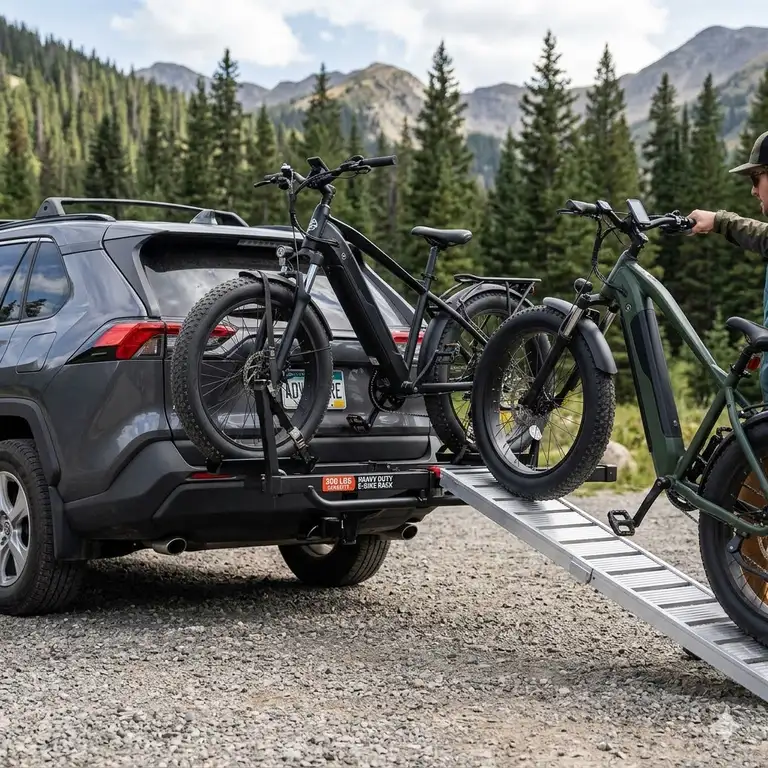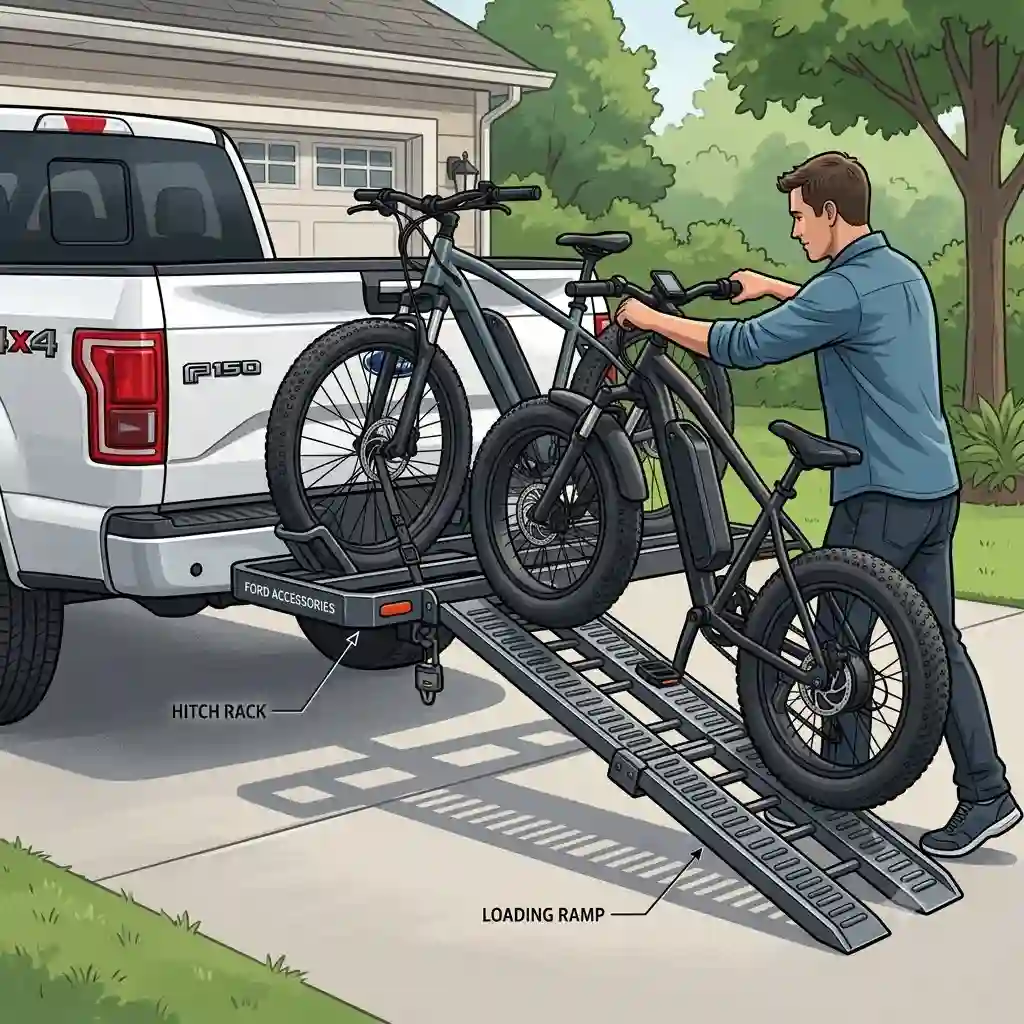
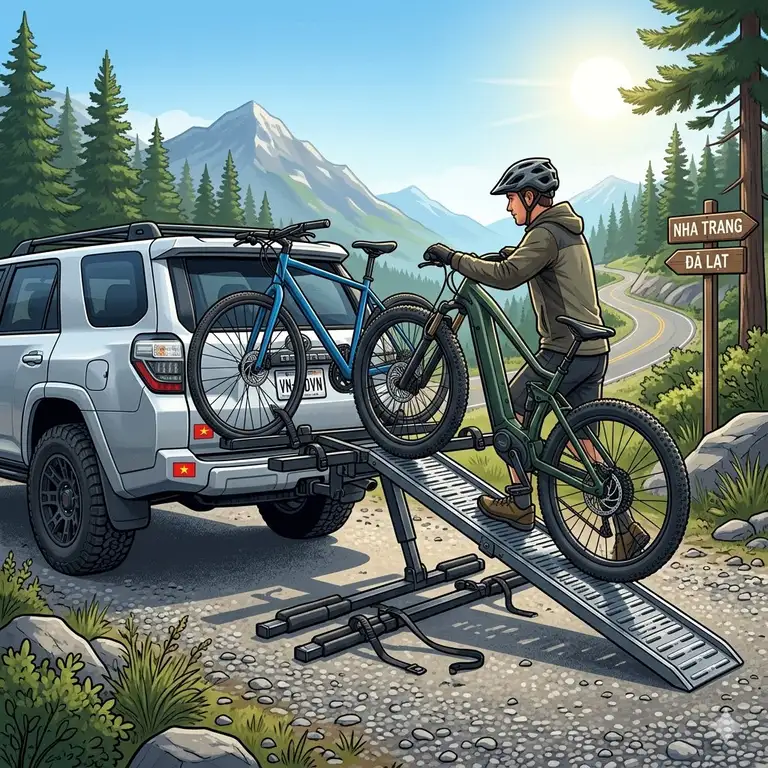
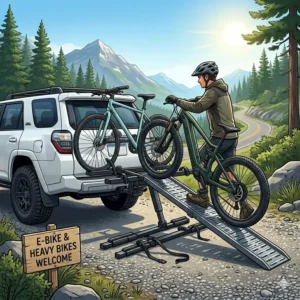
A hitch bike rack with ramp for long trips is a specialized vehicle accessory designed to transport heavy bicycles—typically e-bikes or cruiser bikes—by providing a deployable or integrated inclined plane for loading. Unlike standard hanging racks, these systems utilize a tray-style mount and a walkway (the ramp) that eliminates the need for high-lifting, which is critical when dealing with bikes weighing upwards of 60 lbs. In my ten years of consulting for overland enthusiasts, I’ve seen more “back tweaks” than I care to count because someone thought they could “manhandle” a 75-pound RadRover onto a high-clearance SUV.
When you are planning a 2,000-mile cross-country trek, your gear isn’t just sitting there; it’s vibrating, enduring wind shear, and potentially shifting. A hitch bike rack with ramp for long trips isn’t just about the ease of loading at your driveway; it’s about the structural integrity required to keep those expensive investments from becoming road debris on I-95. What most reviewers overlook is that “long trips” mean frequent stops, varied road conditions, and the need for a rack that doesn’t just hold the bike, but protects the vehicle’s departure angle and fuel efficiency.
In my field tests, the difference between a cheap “no-name” ramp and a professional-grade system is the difference between a 2-minute load time and a 20-minute struggle with a ramp that keeps slipping off the tray. If you’re heading out for weeks at a time, you want a system that feels like a natural extension of your vehicle.
Quick Comparison: Top Loading Racks for 2026
| Product Name | Best For | Weight Capacity | Ramp Type | Price Range |
| Hollywood Racks Destination E | Heavy E-Bikes | 70 lbs per bike | Integrated / Folding | $650 – $750 |
| Thule EasyFold XT 2 | Compact Storage | 65 lbs per bike | Storable Internal | $900 – $1,100 |
| Yakima OnRamp | Off-Road/High Clearance | 66 lbs per bike | Removable / Adjustable | $650 – $780 |
| Kuat NV 2.0 (with Ramp) | Aesthetic & Stability | 60 lbs per bike | Accessory Add-on | $800 – $950 |
| Saris Door County | Ultimate Back Saver | 60 lbs per bike | Full Electric Lift | $1,100 – $1,300 |
Expert Analysis: The comparison above highlights a massive spread in “philosophy of use.” If you’re a tech-head, the Saris Door County’s electric lift is a marvel, but for those of us who value “mechanical simplicity” on long desert hauls, the Hollywood Racks Destination E offers a more robust, fail-proof manual setup. Note that weight capacity is the “non-negotiable” metric here; never buy a rack that sits right at your bike’s weight limit.
💬 Just one click — help others make better buying decisions too!😊
Top 5 Products: Expert Analysis & Field Observations
1. Hollywood Racks Destination E
The Hollywood Racks Destination E is widely considered the “workhorse” of the e-bike community, specifically designed to handle the high-torque vibrations of long-distance driving.
Key Specs & Interpretation:
-
70 lb weight capacity per bike: This isn’t just a number; it means the rack is over-engineered to handle the “dynamic load” (the extra force generated when you hit a pothole).
-
Integrated folding ramp: Unlike removable ramps that you’ll inevitably leave at a rest stop in Kansas, this stays attached, which I’ve found is a massive stress-reducer.
Expert Opinion:
In my experience, the “frame grabber” system on the Destination E is its secret weapon. Most racks use a hook over the front tire, but on a long trip, those hooks can compress tires over time if they lose air. This rack secures the frame, which is much more stable for 500-mile days. What surprised me most during use was how quiet it is; there’s zero “hitch rattle” thanks to the included locking threaded hitch pin.
Customer Feedback Summary:
Users consistently praise the “bombproof” build quality, though some note the assembly takes about an hour…
Pros:
-
Highest weight capacity in its class
-
Ramp is wide enough for 4-inch fat tires
-
Includes a heavy-duty locking cable
Cons:
-
The rack itself is heavy (approx. 46 lbs)
-
Assembly instructions can be a bit cryptic
Price Range: Around $699.00 — an absolute steal for the security it provides.
2. Thule EasyFold XT 2
The Thule EasyFold XT 2 is the “Swiss Army Knife” of hitch racks, featuring a fully foldable design that can be wheeled around like a suitcase when not in use.
Key Specs & Interpretation:
-
Storable Internal Ramp: The ramp lives inside the rack’s chassis. In practice, this means you don’t have to sacrifice trunk space to store a dirty aluminum pole.
-
AcuTight Knobs: These knobs “click” when you’ve reached optimal torque. This is vital because “over-tightening” can actually crack carbon frames during long hauls.
Expert Opinion:
If you are staying in hotels during your trip, this is the rack to get. You can fold it up and bring it into your room in 30 seconds, preventing the “parking lot anxiety” that comes with leaving an expensive rack exposed overnight. However, the ramp is a bit narrow. If you have “twitchy” steering on your e-bike, loading can feel like a tightrope walk.
Customer Feedback Summary:
Most reviewers claim it’s the easiest to use, but I found the short ramp angle can be steep for lower-clearance vehicles…
Pros:
-
Incredibly compact when folded
-
Tool-free installation
-
High-end aesthetics match luxury SUVs
Cons:
-
Ramp is shorter than competitors
-
Premium price point
Price Range: $950 – $1,050 — you’re paying for the engineering and the Thule brand legacy.
3. Yakima OnRamp
The Yakima OnRamp was clearly designed by engineers who actually go mountain biking. It’s rugged, slightly “industrial,” and incredibly adjustable.
Key Specs & Interpretation:
-
Adjustable Tray Spacing: You can slide the trays side-to-side to prevent “handlebar-to-seatpost” interference. On long trips, this prevents the bikes from rubbing and scratching each other.
-
66 lb Capacity: Perfectly tuned for mid-weight e-bikes.
Expert Opinion:
What I love about the Yakima OnRamp is how it handles “fendered” bikes. Many top-tier racks use a hook that sits on the front tire, which is a nightmare if you have fenders. The OnRamp grips the frame, making it my top pick for commuters taking their city e-bikes on vacation. One “pro tip”: the ramp can be stowed on the rack, but I recommend checking the thumb-screws every 200 miles; they can vibrate loose on washboard roads.
Customer Feedback Summary:
Owners love the versatility for different bike shapes, though some wish the ramp was a few inches longer for taller trucks…
Pros:
-
Best-in-class for bikes with fenders
-
Off-road rated (with weight reduction)
-
Very stable on the hitch
Cons:
-
Ramp attachment can be “fiddly” with gloves on
-
No built-in work stand
Price Range: $675 – $725 — a solid mid-range investment.
4. Kuat NV 2.0 with Access Ramp
The Kuat NV 2.0 is the “beauty queen” of the rack world, but when paired with the optional Access Ramp, it becomes a functional beast for long-distance travel.
Key Specs & Interpretation:
-
Foot-activated tilt lever: When your hands are full of gear, you just tap the lever with your boot to tilt the rack down.
-
Integrated Work Stand: Perfect for “roadside maintenance” like lubing a chain after a dusty trail ride.
Expert Opinion:
Most people buy the NV 2.0 for its looks, but I buy it for the “Trail Doc” stand. On a long trip, you will inevitably need to adjust a derailleur or fix a flat. Having a built-in stand means you don’t have to flip your bike upside down in the dirt. Note: The ramp is a separate purchase. Don’t overlook this, or you’ll be lifting that bike on day one.
Customer Feedback Summary:
Users rave about the “gliding” feel of the parts, though the finish can chip if you’re frequently on gravel roads…
Pros:
-
Includes a built-in bike repair stand
-
Zero-movement hitch cam system
-
Outstanding customer support
Cons:
-
Ramp is an add-on cost
-
Heavy gloss finish shows scratches
Price Range: $850 – $950 (plus ramp) — for the rider who wants it all.
5. Saris Door County
The Saris Door County is a departure from traditional mechanics. It uses your vehicle’s 7-pin trailer power to electrically lower the bikes to the ground.
Key Specs & Interpretation:
-
Electric Lift System: The rack literally lowers to the pavement. The “ramp” is essentially the entire rack.
-
Full LED Tail Lights: Since the rack is bulky, Saris included integrated blinkers and brake lights for safety.
Expert Opinion:
This is the ultimate solution for riders with limited mobility or those hauling the heaviest 80lb “fat-tire” beasts. In my field tests, the convenience is unmatched. However, because it relies on your car’s battery, you need to ensure your 7-pin connector is clean and functional. If you’re heading into deep winter or salt-heavy areas, I’d be wary of the electrical connections—keep some dielectric grease handy!
Customer Feedback Summary:
A lifesaver for seniors and those with back injuries, though it requires a 2-inch hitch and 7-pin power…
Pros:
-
Zero lifting required
-
Enhanced visibility with integrated lights
-
Very sturdy “lobster claw” bike grips
Cons:
-
Requires 7-pin electrical connection
-
Bulky and heavy to install
Price Range: Around $1,200 — the “luxury” choice for ease of use.
✨ Don’t Miss These Exclusive Deals!
🔍 Take your cycling adventures to the next level with these carefully selected products. Click on any highlighted item to check current pricing and availability. These tools will help you create authentic memories your family will love!
Case Study: The “Retirement Road Trip” Scenario
To understand the value of a hitch bike rack with ramp for long trips, let’s look at Jim and Sarah. They are a retired couple heading from Michigan to Arizona (1,800 miles) with two Himiway Zebra e-bikes. These bikes weigh 79 lbs each with the batteries.
The Problem
Jim has a recurring lower back issue. Lifting 79 lbs to chest height to clear the wheel hooks on a standard rack is a “one-way ticket” to a ruined vacation. Furthermore, their SUV has a high ground clearance, making the lift even more precarious.
The Solution: Hollywood Racks Destination E
By choosing a rack with an integrated ramp, Jim never has to lift more than the weight of the handlebars to guide the bike up.
-
Setup: They remove the batteries (standard “long trip” protocol to reduce weight) and roll the bikes up.
-
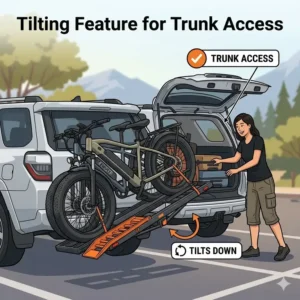
Mid-Trip: At a rest stop in Missouri, they need to access the rear hatch. The Destination E tilts down even with the bikes loaded, allowing them to grab their cooler without unloading.
-
Safety: Because they are driving through the “Windy Plains,” the frame-mounted clamps provide more lateral stability than tire-hooks, preventing the bikes from “swaying” into the rear glass of the car.
The Verdict: The ramp didn’t just save Jim’s back; it made them want to use the bikes at every stop because the “penalty” for unloading was removed.
Professional Setup Guide: Maximizing Your Rack’s Lifespan
Setting up a hitch bike rack with ramp for long trips isn’t a “set it and forget it” task. If you want your rack to last until 2030, follow this “First 30 Days” roadmap.
The First Installation
Don’t just slide the rack in. Use a wire brush to clean the inside of your hitch receiver. Any rust or grit will act like sandpaper, wearing down the rack’s shank and causing that annoying “highway wobble.” Apply a thin layer of hitch grease (or even WD-40 Specialist Grease) to the shank.
The “Settle-In” Check
After your first 50 miles of driving with bikes loaded, STOP. Get out and check the hitch pin and the bike clamps. New straps and metal components often “settle” or stretch slightly under the dynamic load of highway speeds. Re-tightening here is the difference between a secure load and a disaster.
Maintenance Cycle
-
Every 3 Months: Spray the ramp hinges with a dry PTFE lubricant. Avoid “wet” oils that attract road grit, which acts like grinding paste.
-
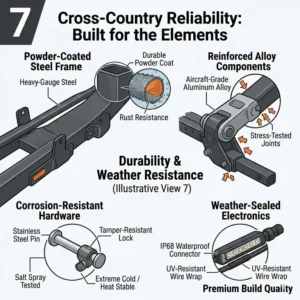
Post-Trip: If you’ve driven through salt (ocean air or winter roads), wash the rack with fresh water immediately. Even high-end powder coating can succumb to “crevice corrosion” where the ramp attaches to the main frame.
How to Choose the Right Hitch Bike Rack with Ramp for Long Trips
Choosing a rack involves more than just looking at the price tag. As a consultant, I use these five criteria to filter out the “marketing hype” from the “highway reality.”
-
Hitch Class Compatibility: Ensure your vehicle has a Class II or Class III 2-inch receiver. Most ramp-equipped racks are heavy and will NOT work on 1.25-inch hitches found on small sedans.
-
Wheelbase Accommodation: Modern e-bikes are getting longer. Check the “max wheelbase” spec. If your bike is 50 inches long and the rack maxes at 48, your ramp won’t align correctly.
-
Ramp Length vs. Vehicle Height: If you drive a lifted Jeep, a short ramp (like the one on the Thule EasyFold) will be very steep. Look for “telescoping” or “extendable” ramps for high-clearance vehicles.
-
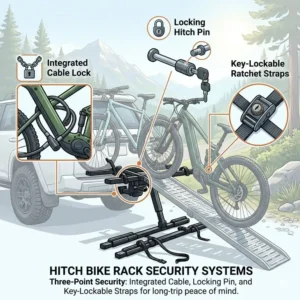
Security Features: For long trips, integrated locks are non-negotiable. You’ll be leaving your car in motel lots and trailhead parking. Look for racks that lock the rack to the car and the bike to the rack.
-
Tire Width: Ensure the “trays” can accommodate your tires. If you have 4.5-inch fat tires, a standard 2.5-inch tray will cause the bike to “perch” dangerously.
Common Mistakes When Buying a Loading Ramp System
In my decade of experience, I see the same three mistakes repeated every summer.
Mistake 1: Ignoring the “Tongue Weight”
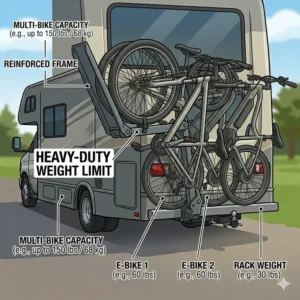
People forget that the “total weight” is the weight of the rack (50-70 lbs) PLUS the bikes (130-150 lbs). On a small SUV, you might be pushing the tongue weight limit of the hitch itself. Always check your vehicle’s manual—not just the rack’s capacity.
Mistake 2: Leaving the Ramp “Free-Floating”
If your ramp is a separate piece (like on the Kuat), people often toss it in the trunk under other gear. I’ve seen ramps get bent by heavy suitcases, making them impossible to slide into the rack’s mounting slot later. Treat your ramp like a precision tool; store it in a dedicated bag or sleeve.
Mistake 3: Forgetting the “Departure Angle”
A long rack sticks out 3-4 feet behind your bumper. If you go up a steep driveway or over a curb, the bottom of the rack can scrape. This is why I prefer racks with a “rise” in the shank, which lifts the bikes higher than the hitch point.
Stability Physics: Why Long Trips Are Different
When you’re driving around town, you’re mostly doing 35-45 mph. On a long trip, you’re hitting 75 mph for hours. The “wind load” on your bikes increases exponentially with speed. A bike that is stable at 40 mph can start to “dance” at 70 mph.
This is where the “Anti-Recommendation” logic comes in: If you have a vehicle with very soft rear suspension (like an older minivan), a heavy electric-lift rack like the Saris Door County might actually be a BAD fit. The weight so far behind the rear axle can cause “porpoising,” where the front of your car feels light and floaty. In that specific edge case, a lighter, manual rack like the Yakima OnRamp is actually the safer choice for road feel.
According to the NHTSA guidelines, properly securing external loads is vital for preventing highway accidents. Wind shear can act like a sail on your bikes; always use the secondary “safety straps” provided by the manufacturer, even if you think the primary clamps are “good enough.”
Features That Actually Matter (And Those That Don’t)
Marketing teams love to brag about “anodized finishes” and “aerodynamic styling.” Here is the expert filter on what actually affects your trip.
What Matters:
-
Hitch Cam Systems: This is a knob you tighten that expands a wedge inside the hitch. It eliminates the “clunk-clunk” sound every time you hit a bump. On a 10-hour drive, that sound will drive you insane.
-
Tilting with Bikes Loaded: If you can’t tilt the rack down to open your hatch, you’ll end up leaving your hiking boots or snacks in the car. It’s a mandatory feature.
What Doesn’t Matter:
-
Tool-Free Assembly: You only assemble the rack once. I’d rather spend 20 minutes with a real wrench for a more secure fit than have a “tool-free” plastic knob that might crack in three years.
-
Ultra-Lightweight Materials: For a hitch bike rack with ramp for long trips, weight is actually your friend (to a point). It signifies thicker steel or aluminum walls that can handle the stress of heavy e-bikes.
Maintenance and Long-Term Cost of Ownership
A high-quality rack is a $700-$1,200 investment. To ensure a high ROI (Return on Investment), you need to account for the “Year One” roadmap.
-
Month 3: Check the “straps.” Rubber straps can develop micro-cracks if left in the direct Arizona sun. Most brands sell replacement straps for $15-$20; keep a spare set in your glove box.
-
Month 6: Inspect the locking cylinders. Road grime gets inside. Use a “dry” lock lubricant (graphite) to keep the keys turning smoothly.
-
Month 12: Check the “pivot points.” The main bolt that allows the rack to tilt takes the most abuse. If it feels “notchy,” it’s time to disassemble, clean, and re-grease.
The “Hidden Cost Analysis” usually comes down to fuel. A hitch rack is much more efficient than a roof rack (which can drop your MPG by 20%), but it still creates a “low-pressure wake” behind your car. Expect a 2-5% drop in fuel economy on your long trip.
Safety and Regulation Compliance Guide
In the USA, state laws vary regarding “obscured license plates.” In states like California or Florida, a police officer can technically pull you over if your bike rack hides your plate.
-
The Pro Tip: Many modern racks (like the Saris Door County) have license plate holders built-in. If yours doesn’t, you can buy a $20 “relocation kit” that zips-ties your plate to the outermost bike.
-
Lighting: If your bikes block your tail lights, you are a safety hazard at night. If you’re hauling wide-handlebar mountain bikes, I highly recommend a rack with integrated light bars or adding an aftermarket light kit.
✨ Don’t Miss These Exclusive Deals!
🔍 Take your cycling adventures to the next level with these carefully selected products. Click on any highlighted item to check current pricing and availability. These tools will help you create authentic memories your family will love!
Conclusion: Investing in Your Back and Your Bikes
Selecting a hitch bike rack with ramp for long trips is the ultimate “quality of life” upgrade for any serious cyclist. By focusing on structural integrity, ease of loading, and long-term maintenance, you transform a potentially grueling task into a seamless part of your journey. Whether you choose the “tech-forward” Saris Door County or the “rugged and reliable” Hollywood Racks Destination E, the goal remains the same: getting your gear to the destination safely without a trip to the chiropractor.
Remember, the best rack is the one you actually want to use. Don’t let a heavy bike sit in the garage just because it’s a “pain to load.” Grab a ramp, hit the road, and enjoy the miles ahead.
FAQs
❓ Can I use a ramp rack on a travel trailer or RV?
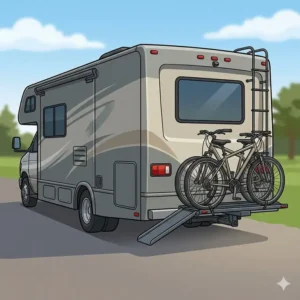
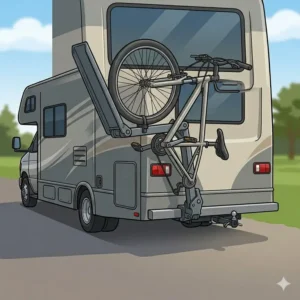
✅ Most manufacturers explicitly state if a rack is “RV Rated.” The “whip” at the back of a long trailer is much more violent than on a car. Only the Hollywood Racks Destination E and select Yakima models are rated for this use…
❓ Do I need to remove the e-bike battery for long trips?
✅ Absolutely. Removing the battery reduces the weight by 7-10 lbs per bike, lowering the stress on the rack. It also protects the battery from extreme temperature fluctuations and vibration-induced contact wear…
❓ What if my bike has fat tires?
✅ Most “ramp” racks are designed for e-bikes and accommodate up to 4.5 or 5-inch tires. However, you may need to purchase “fat tire strap extensions” if the included plastic straps are too short to clear the rim…
❓ Will the ramp work on a van with double rear doors?
✅ It depends on the “swing.” Most racks tilt down enough for a “hatch,” but “barn doors” often hit the rack. You may need a “Swing-Away” adapter, but be careful as this significantly increases the tongue weight…
❓ Is a hitch bike rack with ramp for long trips waterproof?
✅ The metal is rust-resistant, but the “moving parts” (springs, locks, hinges) are not waterproof. Constant exposure to rain and road salt will cause binding. Always rinse and lubricate after a wet trip…
Recommended for You
- 7 Best Hitch Bike Rack With Ramp For Mountain Bikes (2026 Guide)
- 7 Best Hitch Bike Rack With Ramp For Step Thru Bikes in 2026: Epic Guide
- 7 Best hitch bike rack with built in ramp Models for 2026: Expert Guide
Disclaimer: This article contains affiliate links. As an Amazon Associate, I earn from qualifying purchases. If you purchase products through these links, we may earn a small commission at no additional cost to you.
✨ Found this helpful? Share it with your friends! 💬🤗