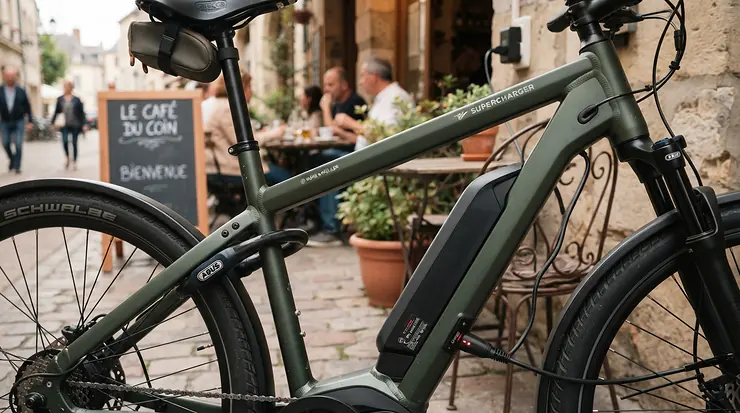
Can a $1,000 budget still buy an e-bike that stops in under 20 feet and carries a safety-certified electrical system? For the best electric bikes under $1000 in 2027, half of the six below do exactly that in Electric Bike Report’s brake tests, while the others stopped later or have no brake test of their own. The GOTRAX Ranger stopped in 16 feet 3 inches on average, the GOTRAX F3 2.0 in 18 feet 11 inches and the Retrospec Chatham Rev 3 in 19 feet 5 inches, while the GOTRAX eFold needed 22 feet 9 inches.
Everything here comes from published tests, maker spec pages and owner threads I could read; Amazon’s own listing pages were not something I could open, so the figures describe the bikes as reviewers and makers present them. Prices move quickly: Electric Bike Report warns that tariffs over the past year mean its under-$1,000 figures may change at any point, so the dollar ranges below are snapshots, not promises.
What a $1,000 budget buys, and the filters behind this list
Electrek’s testing roundup says it is hard to build a quality e-bike for under $1,000, and that most bikes in the bracket give up too much quality or longevity to count as one of the best. That reading shaped the filters here. Each bike needed an independent test or a detailed review, a maker page to check specs against, and either a UL 2849 claim or a clear note about its certification.
Electrek and Electric Bike Report’s under-$1,000 roundup both rank Lectric and Ride1Up bikes highly. In the pages I read, those brands sell mainly through their own sites, so they sit outside this Amazon-focused list; the six models below are the ones with test data and a plausible Amazon listing.
Who gets the most from the best electric bikes under $1000? Riders with short trips, a flat route and a place to charge indoors. Anyone hauling a bike up stairs should read the weight column first, because tested or listed weights run from about 53 to 81 pounds. Riders planning serious trail work need to read the fat-tire section further down.
Brakes, battery and weight: the numbers that separate these six
The table gathers the figures reviewers measured or the makers list. Weights are tested where a test exists; otherwise they are listed figures, and the notes say which.
| Model | Motor | Battery | Weight | Brakes | Speed class |
|---|---|---|---|---|---|
| GOTRAX Ranger | 500W, cadence sensor | 499 Wh | 81 lb tested (69.7 lb claimed) | Hydraulic per Electric Bike Report; one review says mechanical | Class 2 at 20 mph, Class 3 at 25 mph |
| Velotric Fold 1 Lite | 500W, 55 Nm | 486 Wh | 61 lb listed | Hydraulic | Class 2 by default, Class 3 up to 28 mph |
| GOTRAX F3 2.0 | 500W, torque sensor | 672 Wh | 66.5 lb tested (58.3 lb claimed) | Hydraulic | Class 1, 2 or 3, up to 28 mph |
| Retrospec Chatham Rev 3 | 350W, cadence sensor | About 350 to 360 Wh | Not listed in the sources | Mechanical | 20 mph |
| Heybike Mars 2.0 | 750W (1,200W peak), 80 Nm | 600 Wh | 72 lb tested (75 lb claimed) | Mechanical | Class 2 by default, Class 3 up to 27.9 mph |
| GOTRAX eFold | 350W | 374 Wh | 52.8 lb tested (49 lb claimed) | Mechanical | Class 1 or 2, 20 mph |
The tested weights deserve a second look. The GOTRAX Ranger came in about 11 pounds over its claimed weight and the GOTRAX F3 2.0 about 8 pounds over, per Electric Bike Report, while the Heybike Mars 2.0 was about 3 pounds under. If a staircase or a car rack is part of your routine, use the tested figure rather than the listing.
Brake type matters, but not as cleanly as the spec sheet suggests. The mechanical-disc Heybike Mars 2.0 and GOTRAX eFold needed 22 to 24 feet in Electric Bike Report’s tests, while the mechanical-disc Retrospec Chatham Rev 3 stopped in 19 feet 5 inches, close to the hydraulic GOTRAX F3 2.0 at 18 feet 11 inches.
The best ebikes under $1000, ranked by how much bike each dollar buys
1. GOTRAX Ranger — hydraulic brakes in a moto frame
Electric Bike Report put the GOTRAX Ranger in the top five stoppers it has tested, with an average stop of 16 feet 3 inches against 19 feet 11 inches for similar moped-style bikes. The same review found it climbed its hill course faster than other 500W e-bikes despite carrying extra weight. Those two results earn it the first slot.
Expect around $700 to $900: about $900 in that March 2026 review, and a lower sale price on Gotrax’s own page. Under the saddle sits a 48V, 10.4Ah (499 Wh) battery feeding a 500W rear hub. Gotrax lists UL 2849 certification, a two-year warranty, a 264-pound maximum rider weight and a fit range of 5’3″ to 6’3″. The bike runs as Class 2 with a 20 mph throttle limit or Class 3 with pedal assist to 25 mph.
Real-world range is shorter than the sticker. Electric Bike Report measured 22.6 miles on throttle alone against a claimed range of up to 50 miles, at 22.1 Wh per mile versus 27.7 for similar moto-style bikes it has tested. The 2-amp charger took just over five hours. Tested weight was 81 pounds, not the claimed 69.7.
One detail is contested. RiderGuide’s Ranger review says the product page listed both hydraulic and mechanical brakes and that it confirmed dual mechanical discs, while Electric Bike Report and Electric Bike Review describe hydraulic ones. Read the brake line on the listing you open, because the stopping figure above belongs to the hydraulic bike.
Pros:
- ✅ Top-five stopping distance in Electric Bike Report’s testing
- ✅ Suspension fork, fat tires and a comfortable saddle for light off-road riding
- ✅ UL 2849 and a two-year warranty on the maker’s page
Cons:
- ❌ A bar-style battery readout makes remaining range hard to judge
- ❌ Throttle speed is not tied to the assist level, which limits fine control
- ❌ The fixed moped saddle makes pedaling awkward, and the reviewer found the 7-speed largely unnecessary
Check current availability on Amazon.com before you decide.
2. Velotric Fold 1 Lite — step-through folder with a 486 Wh pack
Prices for the Velotric Fold 1 Lite swing more than for any other bike here: around $600 in sale-event deals that 9to5Toys reported, around $1,000 on Electrek’s sub-$1,000 testing list, and roughly $1,100 at other times. The spread says wait for a deal rather than pay the high end.
For that money, the bike has a 500W rear hub with 55 Nm of torque, a 48V 486 Wh battery, hydraulic disc brakes, a 7-speed Shimano drivetrain, 20-by-3-inch tires, fenders and lights. It ships as Class 2 and can be switched to Class 3 for 28 mph. Velotric’s page gives a 4’9″ to 6’5″ fit range on a low step-through frame, and 9to5Toys lists 61 pounds and a 440-pound total payload.
Electrek’s testing note matters here: the review it published was of the larger Fold 1 Plus, not the Lite, though much of the bike is similar. The author liked the tidy cable routing, stable ride and sturdy folding mechanism, and noted that a rear rack costs extra and that the value is not quite on the level of its cheaper rivals. Electrek puts range at up to 48 miles in ideal conditions and 25 to 35 miles in typical use. The bigger Fold 1, with a 750W motor and larger battery, stopped in 16 feet 10 inches in Electric Bike Report’s test; that hints at the brake quality but is not a Lite result.
A retailer’s product page cites UL certification and IPX7 waterproofing for the Lite, while Electrek’s write-up does not mention certification, so ask the seller for the certificate.
3. GOTRAX F3 2.0 — fat tires and a 672 Wh battery
Battery size gives the GOTRAX F3 2.0 its edge: 48V and 14Ah, or about 672 Wh, which is larger than the Ranger’s by roughly a third. Prices on the pages I read run from around $900 to $1,000, with Electric Bike Report listing $899 on its test page and $949 in its roundup, and Ebike Escape at $999.
Electric Bike Report’s test found a 500W hub with a torque sensor, hydraulic Nutt brakes and 20-by-4-inch knobby tires. In its range test, pedal assist level 5 produced 32.26 miles against a claimed 60, while level 1 reached 74 miles at under 8 mph on average, a mode the reviewer called impractical because assist cuts out above roughly 8 mph. Stopping took 18 feet 11 inches versus 19 feet 5 inches for similar bikes, and the pedal-assist hill climb took 1:49 against a 1:58 class average. Weight tested at 66.5 pounds, not the 58.3 claimed.
Ebike Escape’s review of the 2.0 adds owner-level irritations: stock grips that slip on longer rides, a front fork that clunks over rough ground, a key that must stay in the bike, and a battery that is awkward to remove because the frame has to be partly folded. The same reviewer saw ghost pedaling at 24 to 25 mph and suggests treating the bike as a 20 mph Class 2 machine. Ebike Escape expects 28 to 40 miles per charge.
Included extras are a real selling point: Electric Bike Report lists a seat bag, phone holder, lock, mirrors and tire levers. Its test page does not name a revision, so confirm the listing says 2.0 and 672 Wh before ordering.
Pros:
- ✅ Largest battery of the six at about 672 Wh
- ✅ Hydraulic brakes, a 3 A charger and a pedal-assist hill result above its class average
- ✅ Accessories included in the box
Cons:
- ❌ Assist level 1 cuts out above roughly 8 mph
- ❌ A coil fork with 30 to 40 mm of travel that the reviewer called unrefined
- ❌ Weight runs about 8 pounds over the claimed figure
4. Retrospec Chatham Rev 3 — beach-cruiser comfort on flat ground
Built for boardwalks and bike paths, the Retrospec Chatham Rev 3 keeps the power gentle: a 350W geared hub with a cadence sensor, 26-by-3-inch tires and Tektro mechanical disc brakes. Retrospec’s own page shows between $850 and $1,000 depending on promotion, a UL 2849 badge and a 20 mph top assist speed.
Electric Bike Report credits the bike with an above-average brake test, 19 feet 5 inches against 22 feet 0 inches for similar models, and with a pedal-assist hill result a few seconds quicker than the cruiser average. The reviewers liked the low-effort cadence sensor and the comfortable, ergonomic position, which fits riders from 5’2″ to 6’4″ across high-step and step-through frames. They wanted hydraulic brakes and more than seven gears, and noted that there is no suspension fork and no torque sensor.
Battery details vary by page: Retrospec lists a 36V pack of about 350 Wh on one page and 360 Wh on another, with up to 42 miles claimed. A more powerful sibling, the Chatham Rev+ 2, carries a 500W motor and a 500 Wh pack with a claimed 52 miles; I found no price for it.
Warranty wording conflicts too. Retrospec’s page shows a limited lifetime warranty, while an Ace Hardware listing for the same bike says 90 days of limited parts and labor. Treat the seller’s stated terms on the listing as the ones that count.
5. Heybike Mars 2.0 — fast, heavy and priced at the ceiling
Hills are where this one earns its keep. Electric Bike Report’s reviewer found a punchy 750W motor (1,200W peak, 80 Nm) that took a roughly 12 percent grade in 1:14 on pedal assist level 5, and the folder carries a 65 mm fork, a 45 mm suspension seatpost and a rack rated for 120 pounds.
Pricing is the sticking point. Electric Bike Report’s 2024 review puts it a little above $1,000, FreshlyCharged lists $999, Gear Diary $1,099, and Tom’s Guide listed $1,499. Digital Trends called the price the biggest issue in choosing it. The odds of landing under $1,000 depend on a sale.
Tested weight was 72 pounds (64 without the battery), and the mechanical Filel discs needed 23 feet 11 inches to stop. Range at pedal assist 5 was 21.7 miles; at level 2 it reached 32.2 miles, against a claimed 30 to 45. The 2-amp charger took just over six hours for the 600 Wh pack.
Several quirks come up repeatedly. Electric Bike Report names ghost pedaling at higher assist levels with the 7-speed Tourney drivetrain and slow motor re-engagement after coasting, and Tom’s Guide found the lag between pedaling and assist longer than on other folders it has tested. Raising the pedal-assist limit to 28 mph in the app also raises the throttle limit to 28 mph, above the 20 mph that Electric Bike Report says most US locations allow for throttles.
Check current availability on Amazon.com, since the price swings with promotions.
6. GOTRAX eFold — the cheapest tested folder here
Money is the whole argument for the GOTRAX eFold. Electric Bike Report tested it at $498 in June 2026, and Electric Bike Review described it as a $500 to $600 bike. At around $500 to $600 it costs well under the other five and still arrives with UL 2849 certification, a rear rack and an integrated headlight.
Specs are modest: a 350W hub, a 48V 7.8Ah (374 Wh) battery, mechanical 160 mm discs and a class limit of 20 mph. Electric Bike Report measured 41.57 miles on low power, in line with the 40 claimed, and 18.34 miles at maximum power, just under its class average of 19.22. Tested weight was 52.84 pounds, which makes it the lightest of the six. The pedal-assist hill climb took 2:48 versus 2:35 for similar bikes, and the brake stop took 22 feet 9 inches, slightly longer than the 22 feet 4 inches average for mechanical-disc bikes.
Riding it has trade-offs. The reviewers report ghost pedaling from the single gear at assist level 2 and above, a delayed and inconsistent cadence sensor, an assist level 1 capped near 9.6 mph and a rigid fork that makes bumps noticeable on long rides. Electric Bike Review scored its ride quality 6 out of 10 while calling it a good option for a $500 to $600 budget.
Pros:
- ✅ Lowest price Electric Bike Report has tested
- ✅ UL 2849 certified, with rack and headlight included
- ✅ 41.57 miles in the low-power range test
Cons:
- ❌ Mechanical brakes and a rigid fork
- ❌ Ghost pedaling and a delayed cadence sensor
- ❌ A 350W motor that finished its hill test behind the class average
Charging speed and real range: what the tests measured
Shoppers hunting for a fast-charging e-bike under 1000 dollars will find that none of these six charges quickly in the way a phone does. Electric Bike Report timed the GOTRAX Ranger‘s 499 Wh pack at just over five hours on a 2-amp charger, and the Heybike Mars 2.0‘s 600 Wh pack at just over six. The GOTRAX F3 2.0 is the one I found listed with a 3-amp charger, which by my arithmetic (about 164 watts for 672 Wh) points to roughly four hours before the charge tapers.
Range follows effort more than battery size. Electric Bike Report’s measured numbers swing widely with assist level: 74 miles at under 8 mph on the GOTRAX F3 2.0, but 32 miles at assist level 5; 41.6 miles on the GOTRAX eFold at low power, but 18.3 at maximum. A rider who climbs hills on high assist should plan on the lower figure.
Fat tires and forks: how far trails go on a budget e-bike
Searches for top electric mountain bikes under 1000 mostly surface fat-tire folders and moto-style commuters, and that is what the tests describe. Electric Bike Report calls the GOTRAX Ranger usable for light off-road riding and the GOTRAX F3 2.0 suited to wide knobby tires on rougher ground. Even so, the F3’s 30 to 40 mm coil fork was called unrefined, and the Heybike Mars 2.0‘s 65 mm fork plus 45 mm suspension seatpost is the most suspension travel I found listed for these six.
Upway, a refurbished-bike seller, says mid-drive motors and premium suspension are rare at this price, which matches what the spec tables show: all six e bikes under 1000 here use hub motors, and none is listed with full suspension. Gravel paths, packed dirt and park trails suit these bikes. Technical singletrack, steep descents and repeated drops belong to e-MTBs that cost far more.
Old lists complicate the search. Pages still titled for the best ebikes of 2025 under $1,000 carry models and prices that have shifted, so check every figure against a current page.
Best value electric bike under 1000 dollars: what the sticker leaves out
The listed price is the start of the bill. The GOTRAX F3 2.0 includes a lock, mirrors, a seat bag and a phone holder, and the Velotric Fold 1 Lite charges extra for a rack, which the Heybike Mars 2.0 includes with a 120-pound rating.
Support is the larger hidden cost. A mechanic described in an r/ebikes thread, reported by The Cool Down in September 2026, said a roughly $1,500 bike is repaired within a few business days, while an $800 Amazon bike waits about a month for a replacement display. That is one mechanic’s account, but other commenters in the thread made the same point about spare parts and shop support.
Opinions on Gotrax split. RiderGuide notes that Gotrax gives two years of coverage where most brands give one, and one Reddit commenter in an archived thread names Gotrax with Lectric and Ride1Up as having a better track record than random Amazon brands. Another commenter in a separate archived thread rated Gotrax very poorly, and BikeRide’s summary of reviews for the related F1 mentions owner complaints about parts failures and the brand’s support reputation. Those are individual opinions, not a survey.
A sensible plan is to confirm the warranty length and who ships replacement parts before buying, since that is where the thread says cheap bikes lose their value.
UL marks, speed classes and a federal proposal: three checks before you order
Start with the speed class. Federal law, through Section 38(b) of the Consumer Product Safety Act, defines a low-speed electric bicycle as a pedaled bike with a motor under 750 watts and a motor-only top speed below 20 mph with a 170-pound rider. Road rules and class limits are set state by state, and I’m not a lawyer, so check your own state. The bikes here that can reach 25 to 28 mph, such as the GOTRAX Ranger and Velotric Fold 1 Lite, need that check most.
Next, the safety marks. FreshlyCharged’s guide explains that UL 2271 tests only the battery pack, while UL 2849 tests the battery, charger, motor and controller as a system. It advises treating “UL certified” or “UL listed” as meaningful and “UL compliant” as weaker. New York City has required UL certification for e-bikes sold there since 2023; deaths from lithium-ion battery fires in the city fell from 18 in 2023 to one in 2025, per that guide. On July 7, 2026, a federal judge signed a permanent injunction against sellers who used fake UL marks on bikes sold under the Aipas and A4 brands in a case Amazon and UL brought together. The guide points to UL’s Product iQ registry for verification. Sources describe the marks at different levels, too: Electric Bike Report lists UL 2849 for the F3, while Ebike Escape lists a UL 2271 battery.
Last, a rule that may arrive. The Consumer Product Safety Commission published a proposed mandatory safety standard on June 24, 2026, that would require modified versions of UL 2849 for e-bikes and UL 2271 for user-replaceable battery packs. It is a notice of proposed rulemaking, not a final rule, so treat it as a signal and keep buying certified bikes.
Quick answers on e bikes under 1000: price, range, UL and charging
❓ Are e bikes under 1000 any good?
❓ How far does an electric bike under $1,000 go on one charge?
❓ Does a cheap e-bike need UL certification?
❓ Which sub-$1,000 electric bike climbs hills best?
❓ How long does charging take?
Which of the six to start with
The best electric bikes under $1000 reward buyers who decide first what they will give up. For stopping power and a certified system, the GOTRAX Ranger and GOTRAX F3 2.0 lead the evidence. A light folder for apartment storage points to the Velotric Fold 1 Lite on a sale price or the GOTRAX eFold at the budget end. Flat boardwalk riding suits the Retrospec Chatham Rev 3, and the Heybike Mars 2.0 suits hills and a heavier load if its price lands near $1,000.
None of these replaces an e-MTB for technical trails. Check current availability on Amazon.com, and read the brake type and certification wording on the listing before you commit.
Recommended for You
- Best Electric Bikes Under 1000 Dollars: 7 Top Picks 2025
- 5 Best Options for a hitch bike rack with ramp under $1000 in 2026
- 7 Best E Bike for Over 70’s Under $1000: Ultimate Comfort & Safety Guide 2025
Disclaimer: This post contains affiliate links. As an Amazon Associate, I earn from qualifying purchases made through these links, at no additional cost to you.
A cheap e-bike is only a bargain once the battery label, the brake type and the warranty all check out on the page you buy from.