Introduction
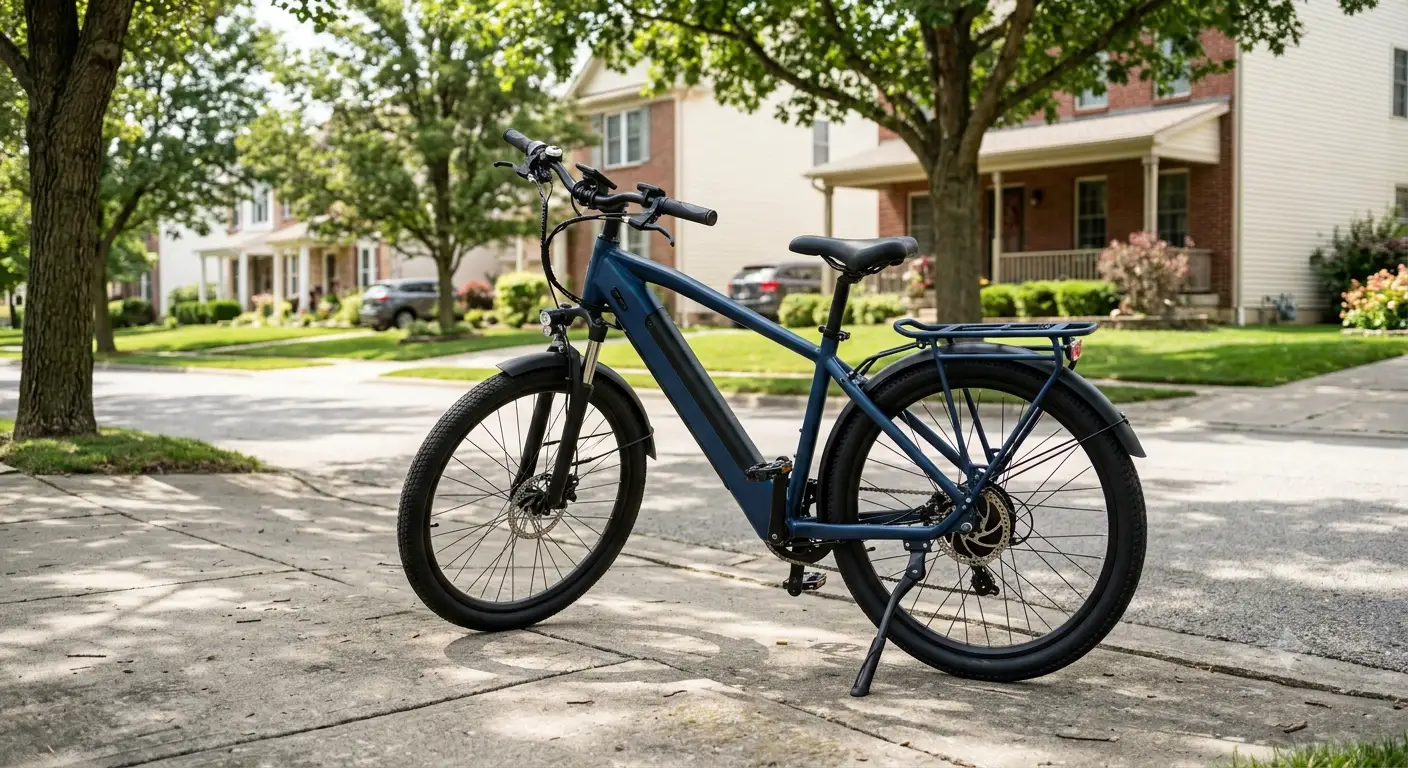
An electric bike with throttle is an e-bike whose motor can move you forward at the push of a thumb lever, twist grip, or trigger — no pedaling required. In the US, most throttle bikes are sold as Class 2 e-bikes, which means motor power is capped at 750W and throttle-only speed tops out at 20 mph.
Disclosure: This article contains affiliate links. If you buy through them, we may earn a commission at no extra cost to you.
So why does that little lever matter so much? Picture a red light at the bottom of a hill, a bag of groceries on the rack, and knees that aren’t quite what they were in 2015. A pedal-assist-only bike asks you to grind out the first few rotations before the motor wakes up. A throttle bike just… goes. That instant launch is the reason throttle models remain some of the most searched-for e-bikes heading into 2027 — and the reason they’re especially popular with commuters, seniors, riders recovering from injuries, and anyone who just wants an easier ride.
The catch is that the throttle category is also where the market gets messy. You’ll find well-engineered, safety-certified bikes from established brands sitting right next to anonymous listings with inflated “peak watt” claims and no clear battery certification. Laws vary from state to state, too, and a federal battery-safety rule is now working its way through the Consumer Product Safety Commission process — a big deal for 2027 buyers.
This guide cuts through that noise. We compared spec sheets, independent test results published by established e-bike reviewers, and aggregated owner feedback for seven real models that span budget, mid-range, and premium price points. You’ll get honest analysis of what each spec means on the road, who each bike actually suits, a first-30-days setup guide, a troubleshooting section, and a clear breakdown of where your throttle is legal. No invented test rides, no fake reviews — just the homework done for you.
Quick Comparison: The Best electric bike with throttle Picks at a Glance
| Model | Best For | Throttle Type | Motor (Nominal) | Price Range |
|---|---|---|---|---|
| Jasion EB5 | Tight budgets, first-timers | Thumb | 350W | $300–$450 |
| Heybike Mars 2.0 | Folding fat-tire fun | Thumb | 750W | $900–$1,300 |
| Heybike Ranger S | Step-thru folding utility | Thumb | 750W | $1,100–$1,500 |
| Lectric XP 4 | Best overall value folder | Thumb | 500W / 750W | $1,000–$1,300 |
| Lectric XP Trike 2 | Seniors, balance concerns | Half-twist | 500W | Around $1,500 |
| Velotric Discover 3 | Long-range comfort commuting | Trigger | 750W | Around $2,000 |
| Aventon Aventure 3 | All-terrain + smart security | Thumb | 750W | $1,800–$2,000 |
Looking at the table, the price jump from the Jasion EB5 to everything else is steep — and it buys you far more than extra watts: hydraulic brakes on most models, bigger batteries, and verified UL 2849 system certification on the mid-range and premium picks. If you’re torn between two folders, the Lectric XP 4 and Heybike Ranger S overlap most, but they target different riders, as you’ll see below. And if stability matters more than speed, the Lectric XP Trike 2 is in a category of its own.
💬 One click helps other shoppers make an informed choice too! Tap a highlighted model to check today’s price and availability. 😊
Top 7 electric bike with throttle Models: Expert Analysis
1. Jasion EB5 — cheapest way into throttle riding
The Jasion EB5 exists to answer one question: how little can you spend and still get a working throttle e-bike? Its 350W brushless rear hub and 36V 10Ah (360Wh) removable battery are modest, but at roughly 50 pounds with the battery, it’s one of the lighter bikes on this list — meaning you can actually carry it up a few stairs. The manufacturer quotes 19–25 miles on throttle alone and 25–40 miles with pedal assist; in practice, a 360Wh pack favors short neighborhood loops and campus commutes over long-haul rides.
Our honest take: this is a “try e-biking without risking much” bike. A 350W motor handles flat suburbs and gentle grades well, but heavier riders on steep hills will feel it run out of breath. The 264-pound load limit is also lower than most mid-range rivals. Listings describe the battery as UL 2849 certified — confirm that on the specific listing you’re buying, since variant pages differ.
Aggregated owner reviews consistently praise the value for money; a recurring complaint is shipping damage or missing small parts that required a customer-service follow-up, plus setup instructions for the display settings that some buyers found confusing.
Pros:
- ✅ Very low entry price for a throttle bike
- ✅ Lighter than most e-bikes at about 50 lbs
- ✅ Removable battery charges indoors easily
Cons:
- ❌ Mechanical brakes and modest motor limit hill confidence
- ❌ Lower 264-lb load capacity than mid-range bikes
Usually priced in the $300–$450 range — strong value if your rides are short and mostly flat.
2. Heybike Mars 2.0 — folding fat-tire with real punch
The Heybike Mars 2.0 squeezes a 750W rear hub (marketed with a 1,400W peak) and a 48V 12.5Ah (about 600Wh) battery into a frame that folds. Translated into real life: 20×4-inch fat tires plus full suspension soak up broken pavement, gravel, and sand, while the folding frame lets it ride in an RV bay or SUV trunk. The battery sits behind the seat tube, which keeps weight centered, and the Heybike app lets you customize settings that budget folders usually lock down.
Here’s what to weigh: it’s genuinely fun, with a lively, quick launch that independent reviewers have called punchier than typical folding fat-tire bikes. That same eagerness can feel twitchy to nervous beginners. It also uses mechanical disc brakes rather than hydraulics — workable, but more hand effort on long descents.
Owner reviews on retail listings consistently praise build quality and speed; the most common complaints are weight (some owners say they rarely bother folding it) and a thumb throttle that feels sensitive if you’re used to a twist grip.
Pros:
- ✅ Full suspension plus fat tires for rough surfaces
- ✅ App customization rare at this price
- ✅ Folds for RVs, trunks, and closets
Cons:
- ❌ Heavy to lift once folded
- ❌ Mechanical brakes need more hand force
Typically $900–$1,300 depending on promotions — very good value for riders who want adventure and storage in one package.
3. Heybike Ranger S — step-thru folder that hauls
The Heybike Ranger S takes the folding fat-tire formula and makes it more practical for everyday errands. Its step-thru frame means you don’t have to swing a leg high — a real advantage with shopping bags or stiff hips. Under the hood: a 48V 750W rear hub, a 691Wh battery that Electric Bike Report measured refilling in roughly three and a half hours, and hydraulic disc brakes with 180mm rotors. Payload is rated at 400 pounds, with up to 150 pounds allowed on the rear rack.
On paper, that combination makes the Heybike Ranger S the utility pick among folders: more battery and better brakes than the Heybike Mars 2.0, with a lower step-over. The trade-off is weight — about 72 pounds claimed — and a folding design that reviewers note lacks a latch to hold the halves together once folded. One independent test also clocked the throttle slightly above the 20 mph Class 2 limit, around 21 mph, worth knowing if you ride where enforcement is strict.
Aggregated expert and owner sentiment highlights smooth, responsive throttle power and stability; recurring complaints include a walk-assist speed that feels too fast and occasional brake-cable rub needing adjustment.
Pros:
- ✅ Hydraulic brakes stop confidently with heavy loads
- ✅ Step-thru frame eases mounting and dismounting
- ✅ Fast battery recharge for back-to-back rides
Cons:
- ❌ No latch to secure the bike when folded
- ❌ Heavy for apartment stairs
Usually $1,100–$1,500 — excellent value if you’ll actually use that 400-pound payload.
4. Lectric XP 4 — best overall value folder
The Lectric XP 4 is the fourth generation of one of America’s best-selling folding e-bikes, and the upgrades are substantial: a torque sensor, hydraulic brakes, integrated turn signals, and a left-side thumb throttle. It comes in two flavors — a 500W base and a 750W version with a 17.5Ah battery. In Electric Bike Report’s testing, the 750W model was the fastest folding bike they’d run in both throttle and pedal hill tests, and it covered 36.9 miles in max assist and 63.4 miles in Eco.
What most buyers overlook: the torque sensor changes how the bike feels when you pedal, but the throttle is what you’ll lean on at stoplights. OutdoorGearLab’s testers found the throttle a bit jerky in the more powerful ride modes, so starting in a lower assist level makes launches smoother. Both versions carry UL 2849 and UL 2271 certification — a meaningful safety signal at this price.
Aggregated expert reviews call it one of the best bang-for-the-buck e-bikes available; common criticisms are weight (low 70s in pounds with battery), a battery that requires partially folding the bike to remove, and a fit that some riders over six feet found cramped.
Pros:
- ✅ Torque sensor and hydraulic brakes at an entry price
- ✅ Full UL 2849 and UL 2271 certification
- ✅ 750W version climbs hills exceptionally well
Cons:
- ❌ Heavy to carry when folded
- ❌ Throttle can feel abrupt in high assist
Around $1,000 for the 500W and around $1,300 for the 750W at the time of writing — arguably the best value in the folding throttle segment.
5. Lectric XP Trike 2 — three-wheel stability for seniors
The Lectric XP Trike 2 answers a question many shoppers don’t ask out loud: “What if I’m nervous about balancing?” Three wheels eliminate the tip-over moment at stops, and the low step-through frame makes mounting far easier than any two-wheeler here. Power comes from a 500W rear hub (peaking above 1,000W), operated by a half-twist throttle on the right grip, and the frame folds for car transport.
Our analysis: this is a mobility tool first and a bike second, and that’s a compliment. The throttle is limited to around 14 mph — slower than Class 2 bikes — which is exactly right for riders who prioritize control over speed. Independent reviewers describe the ride as stable, planted, and relaxed, with Lectric offering a gentler beginner mode. Keep in mind trikes corner differently than bikes: you steer rather than lean, so take your first turns slowly in an empty parking lot.
Aggregated review sentiment strongly favors the comfort, adjustability, and confidence it gives riders with limited mobility; the main limitations noted are its width (it won’t fit through every gate or narrow bike lane) and that it’s not built for speed-seekers.
Pros:
- ✅ Three wheels remove balance anxiety at stops
- ✅ Very low step-through for easy mounting
- ✅ Folds for transport despite its size
Cons:
- ❌ Slow 14 mph throttle limit for confident riders
- ❌ Wide footprint complicates storage and narrow paths
Around $1,500 at the time of writing — strong value against most e-trikes, which commonly cost far more.
6. Velotric Discover 3 — long-range comfort commuter
The Velotric Discover 3 is the comfort-and-range specialist. A 48V 750W hub (1,100W peak, 75Nm) pairs with a 730Wh battery that Velotric rates for up to 80 miles on pedal assist and up to 65 miles on throttle. New for this generation: an 80mm air fork and suspension seatpost, which matter more than most spec lines because they take the sting out of potholes on daily commutes. The trigger throttle is removable, and one-touch class switching lets you run it as Class 1, 2, or 3 to match local rules.
Based on comparing specs, this is the bike for riders whose commute is long enough that range anxiety is real. Its predecessor exceeded its claimed range in independent testing, and early third-party testing of the Discover 3 reported strong Eco-mode results. Full UL 2849 and UL 2271 certification, Apple Find My and Google Find Hub support, and NFC card unlock round out a genuinely premium package. It’s a hub-drive bike, so riders chasing mid-drive pedaling feel should look elsewhere.
Aggregated expert reviews have been notably warm, with Electric Bike Report noting very few real downsides; the most-mentioned trade-off is the lack of a mid-drive option at this price.
Pros:
- ✅ Class-leading claimed throttle range of 65 miles
- ✅ Air fork and suspension seatpost for comfort
- ✅ Built-in tracking deters and recovers thieves
Cons:
- ❌ Highest price among commuter-style picks here
- ❌ Not foldable, needs dedicated storage space
Around $2,000 — premium, but the range and comfort justify it for daily riders.
7. Aventon Aventure 3 — all-terrain fat tire with smart security
The Aventon Aventure 3 is the go-anywhere option: 26×4-inch fat tires, an 80mm air fork, a 750W rear hub with 80Nm of torque, and a 733Wh battery locked into the down tube. It also brings the most tech of any bike here — Aventon’s control unit adds 4G and GPS, and a rear-wheel lock can engage automatically when the bike powers off. It ships as a Class 2 e-bike and can be switched to Class 3 or Class 1 in the app.
Here’s the honest range math: the 65-mile claim assumes gentle assist on flat ground. OutdoorGearLab’s tester got 28.3 miles on a course with more than 1,300 feet of climbing, so throttle-heavy riders in hilly areas should plan for roughly 25–35 miles. Electric Bike Report described the throttle as approachable rather than aggressive — great for new riders on loose gravel or snow, less thrilling for speed fans.
Aggregated expert reviews praise the comfort, versatility, and security features; the most consistent criticism is weight (around 77–78 pounds), which makes it a poor match for stairs or bike racks rated for lighter bikes.
Pros:
- ✅ GPS tracking and auto wheel lock
- ✅ Handles sand, snow, and gravel confidently
- ✅ UL 2849 and UL 2271 certified
Cons:
- ❌ Heaviest bike in this roundup
- ❌ Range drops sharply under heavy throttle use
Typically $1,800–$2,000 — strong value for riders who want one bike for trails, beaches, and town.
✨ Don’t miss these top-rated throttle rides!
🔍 Take your daily rides to the next level with this carefully curated lineup. Click a highlighted model to check current pricing and availability. These picks will help you get effortless starts and stress-free commutes the whole family will enjoy! 🚴♂️⚡
Side-by-Side Specs of the Top 7
| Model | Battery | Claimed Range | Weight (approx.) | Brakes | UL 2849 |
|---|---|---|---|---|---|
| Jasion EB5 | 360Wh | 25–40 mi | 50 lbs | Mechanical | Listed (verify) |
| Heybike Mars 2.0 | ~600Wh | Up to 50 mi | 75 lbs | Mechanical | Yes |
| Heybike Ranger S | 691Wh | Up to 55 mi | 72 lbs | Hydraulic | Listed as UL certified |
| Lectric XP 4 | Up to 17.5Ah | Up to 85 mi (750W) | 72–74 lbs | Hydraulic | Yes |
| Lectric XP Trike 2 | Lectric spec | Model-dependent | Heavier (trike) | Model spec | Check listing |
| Velotric Discover 3 | 730Wh | 80 mi PAS / 65 mi throttle | 65 lbs | Hydraulic | Yes |
| Aventon Aventure 3 | 733Wh | Up to 65 mi | 77 lbs | Hydraulic | Yes |
Reading this table, battery size tracks price almost perfectly — but weight doesn’t, which is why the Velotric Discover 3 stands out by pairing a top-tier battery with the lightest frame among the premium picks. The Lectric XP 4 750W version punches above its price on capacity, while the Jasion EB5 wins on weight simply by having a much smaller battery. Wherever a cell says “verify” or “check listing,” treat it as homework before checkout, not a red flag by itself.
Getting Started: Your First 30 Days With a Throttle E-Bike
The first month is when most throttle-bike regrets — and most avoidable problems — happen. Here’s a practical plan.
Week 1: Assembly and the “parking lot hour.” Most bikes arrive 85–90% assembled. Torque the stem and handlebar bolts to spec, check that brake rotors aren’t rubbing, and inflate tires to the pressure printed on the sidewall (fat tires often run lower on loose surfaces). Then spend an hour in an empty lot. Practice feathering the throttle from a standstill in the lowest assist level — throttles on bikes like the Heybike Mars 2.0 and Lectric XP 4 can surge if you jab them.
Week 2: Learn your real range. Fully charge, ride your typical route, and note the battery percentage when you get home. Claimed ranges assume light assist on flat ground; your real number with frequent throttle use may be 40–60% of the claim.
Week 3: Build safe charging habits. Charge on a hard surface, away from exits and flammable items, using only the original charger. Don’t charge immediately after a hot ride; let the pack cool first.
Week 4: First maintenance check. New cables stretch. Re-check brake lever travel, spoke tension (a quick squeeze test), and the throttle mount, which can loosen on budget bikes. Clean and lightly lube the chain.
⚡ Common first-month mistakes: riding throttle-only everywhere (it drains range fast), skipping the bolt re-check, and leaving the battery on a charger overnight in a hot garage.
Real-World Scenarios: Matching Riders to the Right Throttle E-Bike
Specs only matter in context, so here are three common rider profiles and the reasoning behind each match.
The 9-mile urban commuter (budget: around $2,000, rides 5 days a week). Daily mileage adds up to roughly 90 miles a week, so range and comfort dominate. The Velotric Discover 3 fits best: its 65-mile claimed throttle range means charging two or three times a week instead of nightly, the air fork and suspension seatpost reduce fatigue on rough streets, and built-in tracking matters when you’re locking up outside an office. If $2,000 stretches the budget, the Lectric XP 4 750W version covers most of the same ground for less, with the bonus of folding under a desk.
The RV traveler or apartment dweller (budget: $1,000–$1,500, weekend rides). Storage is the problem to solve. A folder is non-negotiable, and fat tires help on campground gravel. The Heybike Ranger S is the stronger pick for errands thanks to hydraulic brakes and a 400-pound payload; the Heybike Mars 2.0 suits riders who want suspension for trails and more playful acceleration.
The 70-year-old returning to cycling (budget: around $1,500, a few rides a week). Confidence beats speed. The Lectric XP Trike 2 removes balance worries entirely, and its 14 mph throttle limit keeps things calm. For a rider who’s comfortable on two wheels but has knee issues, the step-thru Velotric Discover 3 is the more versatile alternative — the throttle handles the hard part of every start.
Troubleshooting Common Throttle Problems
Even good bikes misbehave. Here are the issues owners report most often and the fixes that usually work.
Problem 1: Throttle does nothing. First, check that the bike isn’t in assist level 0 — on some models (owners of the Jasion EB5 have reported this), the throttle won’t engage at PAS 0. Next, confirm the brake levers aren’t partially pulled; most bikes cut motor power when the brake sensors trigger. Then check the throttle connector under the handlebar for a loose plug.
Problem 2: Jerky, on-off acceleration. Drop to a lower assist level, which on many bikes softens throttle output. Some apps (Heybike, Velotric, Aventon) let you adjust acceleration profiles. Feathering the lever rather than mashing it helps too.
Problem 3: Range suddenly drops. Low tire pressure is the most common culprit — fat tires especially lose efficiency when soft. Cold weather also reduces lithium-ion capacity temporarily; store the battery indoors in winter.
Problem 4: Throttle stops working in Class 3 mode. That’s often by design. Many bikes cap or disable the throttle above 20 mph to stay closer to Class 3 rules.
Problem 5: You want a different throttle style. Aftermarket thumb throttles exist, but wiring standards vary between brands, and owner forums are full of error-code stories. Contact the manufacturer for a compatible part rather than guessing.
How to Choose an electric bike with throttle
- Confirm certification first. Look for UL 2849 on the complete electrical system, not just “UL certified cells.” It’s the most meaningful safety signal available.
- Match the battery to your round trip. Take your longest regular ride, double it for throttle-heavy use, and buy a battery rated comfortably above that.
- Pick your throttle style. Thumb, twist, or trigger changes comfort on long rides more than most buyers expect (more on this below).
- Prioritize hydraulic brakes for heavy bikes. Most throttle e-bikes weigh 60–78 pounds; hydraulics stop that mass with less hand fatigue.
- Check class switching. Bikes like the Velotric Discover 3 and Aventon Aventure 3 can switch classes, which keeps you legal if you move or ride on restricted paths.
- Be honest about storage and stairs. A 77-pound bike on a third-floor walk-up becomes a daily workout you didn’t sign up for.
- Ignore “peak watts” marketing. Nominal motor power and torque (Nm) tell you more about real hill performance than a headline peak number.
The order matters: safety and range first, convenience features last. A bike that’s fun but unsafe to charge in your living room isn’t a bargain at any price.
Class 2 E-Bike Rules: Where Your Throttle Is Legal
Federal law defines a low-speed electric bicycle as having fully operable pedals, a motor under 750W, and a motor-only top speed under 20 mph — the Wikipedia overview of electric bicycle laws is a solid primer on how federal and state definitions interact. Where you can actually ride, though, is decided mostly by states and cities.
Most states use the three-class system developed by PeopleForBikes: Class 1 is pedal assist to 20 mph, a class 2 e-bike adds a throttle that cuts out at 20 mph, and Class 3 is pedal assist to 28 mph. Under the model law, Class 3 bikes shouldn’t have a throttle at all — yet many bikes marketed as “Class 3 capable” keep a 20 mph throttle, which technically puts them outside the classes as shipped. If you ride where enforcement is strict, disable the throttle when you unlock Class 3 speeds.
The good news: in most states, a class 2 e-bike can go wherever a regular bicycle can — roads, bike lanes, and most shared-use paths — with no license, registration, or insurance. The exceptions are the trouble spots: some trail systems allow only Class 1 bikes, a handful of states still lack a Class 2 definition, and cities can add their own rules. Before your first ride, check your state’s page on the PeopleForBikes e-bike policies and laws hub. Most states also require a white front light and red rear reflector or light for night riding.
Thumb vs. Twist vs. Trigger: Choosing an E-Bike With Thumb Throttle (or Not)
The throttle style sounds like a minor detail until you’ve ridden 45 minutes with a sore thumb. Here’s how the three common designs compare in practice.
Thumb throttle. A lever under the left or right grip that you press with your thumb. It’s the most common design today — the Lectric XP 4, Heybike Ranger S, Heybike Mars 2.0, and Aventon Aventure 3 all use one. The big advantage is precision at low speed and no risk of accidentally twisting your grip while braking or bumping a curb. The downside is fatigue: holding a lever down for a long throttle-only ride tires the thumb, which is why cruise control matters on an e-bike with thumb throttle.
Half-twist or full-twist throttle. Motorcycle-style, rotating part of the grip. The Lectric XP Trike 2 uses a half-twist. It’s comfortable for long holds because your whole hand shares the effort, but it’s easier to engage accidentally — say, while pushing the bike or grabbing the bar to steady yourself.
Trigger throttle. A finger or thumb-paddle trigger, like on the Velotric Discover 3. Riders often describe it as comfortable and easy to reach, and Velotric makes it removable for places that require Class 1.
Our advice: if you’ll mostly use the throttle for launches and short bursts, any style works. If you plan long throttle-only stretches, prioritize comfort or cruise control over everything else on this list.
Electric Bike With Throttle and Pedal Assist vs. Pedal-Assist-Only
Nearly every throttle bike today is really a hybrid — an electric bike with throttle and pedal assist. So the real question is whether you need the throttle on top of assist, and how both compare to a regular bike.
| Feature | Throttle + Pedal Assist | Pedal Assist Only | Regular Bike |
|---|---|---|---|
| Starts from a stop | Instant, no pedaling | Needs a pedal stroke | All leg power |
| Trail access | Some trails exclude | Widest e-bike access | Full access |
| Range control | Flexible, can drain fast | More predictable | Unlimited |
| Best for | Mobility, commuting, cargo | Fitness, trails | Exercise, low cost |
The table shows why throttle bikes win for commuting and mobility: that instant launch matters most at intersections, on hills, and with cargo. Pedal-assist-only bikes still have an edge on trail access and fitness, since the motor only works when you do. Regular bikes remain the cheapest and lightest option — but they can’t flatten a hill.
Beyond the table, consider how the two systems feel together. Bikes with torque sensors, like the Lectric XP 4 and Velotric Discover 3, deliver natural, proportional pedal assist, so many owners end up using the throttle only for starts. Cadence-sensor bikes tend to feel more on/off, which nudges riders toward the throttle for smoother control. Neither approach is wrong — but knowing it helps you predict your real range and how much exercise you’ll actually get.
Throttle-Only Electric Bike Riding: Range, Efficiency, and Reality
Some riders plan to never pedal, and that’s a legitimate choice — for people with injuries or mobility limits, a throttle-only electric bike style of riding is the whole point. Just plan around three realities.
Range shrinks dramatically. Without your legs contributing, the battery carries all of the work. That’s why the Velotric Discover 3 claims 80 miles on pedal assist but 65 on throttle, and why independent testing of the Aventon Aventure 3 in hilly terrain came in under 30 miles. A rough rule of thumb: plan on 50–70% of the advertised pedal-assist range for throttle-heavy riding.
Hills test the motor, not you. A 750W motor with 75–80Nm of torque will climb most neighborhood grades on throttle alone, but long, steep climbs can heat the motor and slow you down. Electric Bike Report noted at least one bike in this roundup struggling on its throttle-only hill test, which is common across the category. On a 350W bike like the Jasion EB5, expect to pedal on steeper climbs.
Battery health benefits from moderation. Running a battery from 100% to empty every day ages it faster. If you ride throttle-only, size up your battery so a typical round trip uses 50–70% of capacity instead of all of it.
The bottom line: pure-throttle riding is fine — just buy more battery than the brochure suggests you need.
Safety, Regulations, and Standards Heading Into 2027
Battery safety is the single most important consideration for 2027 shoppers, and the rules are shifting.
UL 2849 is the standard to look for. It evaluates the e-bike’s whole electrical system — drive train, battery, and charger working together — rather than individual parts in isolation. UL Solutions’ UL 2849 overview explains what the testing covers. UL 2271 is the separate battery-pack standard. Bikes certified to both, like the Lectric XP 4, Velotric Discover 3, and Aventon Aventure 3, give you the strongest assurance available today.
A federal rule is proposed, not final. On June 24, 2026, the CPSC published a notice of proposed rulemaking (16 CFR 1265) for lithium-ion batteries in micromobility products. As proposed, it would turn compliance with modified versions of UL 2849 (e-bikes), UL 2271 (separately sold battery packs), and UL 2272 (other devices) into mandatory federal requirements, and it would also cover conversion kits and aftermarket chargers. The public comment period closed August 24, 2026. As of this writing, the rule is not finalized, so don’t assume a bike is compliant just because it’s for sale — check the certification yourself.
Local rules already apply. New York City, for example, already requires UL 2849 certification for e-bikes sold there.
Practical safety habits: stop using a battery that smells, swells, leaks, overheats, or changes color; use only the original charger; and check the CPSC recall database before buying used.
Long-Term Cost and Maintenance
The sticker price is only the beginning. Here’s a realistic ownership picture for a typical throttle e-bike.
| Cost Item | Typical Frequency | Approximate Cost | What It Means |
|---|---|---|---|
| Replacement battery | Every few years | $300–$800 | Biggest long-term expense |
| Brake pads | 1–2x per year | $20–$60 | More often with heavy throttle use |
| Tires and tubes | Every 1–3 years | $40–$150 | Fat tires cost more |
| Annual tune-up | Yearly | $75–$150 | Cables, alignment, bolts |
The battery dominates the math, which is why buying a well-supported brand matters: a replacement pack you can actually order in 2030 is worth more than a cheaper bike from a seller who may vanish. Fat-tire bikes like the Heybike Mars 2.0 and Aventon Aventure 3 carry higher tire costs, while hydraulic brakes (most mid-range picks) need less frequent adjustment than mechanical systems.
Against car or rideshare costs, the economics are compelling. Electricity to charge a 700Wh battery costs a fraction of a dollar at typical US residential rates, so even daily commuters spend very little on “fuel.” The Lectric XP 4 and Heybike Ranger S offer the lowest cost per year of quality ownership in this guide, balancing a moderate purchase price with certified components and established support. For long-distance commuters, the higher upfront cost of the Velotric Discover 3 often pays back through fewer charging cycles per week, which helps the battery last longer.
Common Mistakes to Avoid When Buying a Throttle E-Bike
Trusting peak-watt headlines. A “1,500W peak” banner sounds impressive, but nominal power, torque, and controller quality decide how a bike actually climbs. Compare nominal watts and Nm.
Ignoring weight. Every bike in the mid-range and premium tiers here weighs 65–78 pounds. If you can’t lift it onto your car rack or up your stairs, it’ll spend more time parked than ridden.
Buying uncertified to save $200. The savings evaporate fast if you can’t safely charge the bike indoors. A certified bike like the Lectric XP 4 costs only modestly more than many uncertified competitors.
Assuming every trail allows throttles. Many mountain-bike trails and some multi-use paths are Class 1 only. If trail riding is your goal, choose a bike that can disable its throttle, like the Velotric Discover 3 or Aventon Aventure 3.
Skipping fit checks. Folding bikes advertise wide rider-height ranges, but riders over six feet sometimes find them cramped. Check the stated height range and, if possible, the reach measurements.
Forgetting the extras. A good lock, a helmet, and lights (if not integrated) can add $100–$250 to your budget. Plan for them up front.
FAQ
❓ Do you need a license or insurance for an electric bike with throttle?
✅ In most states, no. A Class 2 throttle e-bike that stays under 750W and 20 mph on throttle is generally treated like a bicycle, so no license, registration, or insurance is required. Faster or more powerful bikes may count as mopeds, and local rules vary…
❓ Can I add a throttle to an e-bike that doesn't have one?
✅ Sometimes, but it's tricky. Throttle connectors and voltage signals vary between brands, and the wrong part can trigger error codes. Ask the manufacturer for a compatible throttle, and remember that adding one may change your bike's legal class…
❓ How long does a throttle e-bike battery last before replacement?
✅ Lithium-ion e-bike batteries commonly last several years of regular use, depending on charge cycles, heat exposure, and how deeply you drain them. Heavy throttle use and daily full discharges shorten lifespan, so buying a larger battery than you need helps…
❓ What's the cheapest electric bike with throttle worth buying?
✅ The Jasion EB5 is one of the most affordable throttle bikes that's widely available, usually under $450. It suits short, flat rides. For better brakes, range, and full-system certification, stepping up to the Lectric XP 4 is worth the extra money…
❓ Are throttle e-bikes good for heavier riders?
✅ Yes, if you check the payload rating. The Heybike Ranger S and Aventon Aventure 3 are rated for 400 pounds total, while some budget bikes stop around 264 pounds. A 750W motor with high torque also helps maintain speed on hills…
Conclusion
The right electric bike with throttle comes down to three honest questions: how far you ride, where you’ll store it, and how much safety certification matters to you (hint: it should matter a lot heading into 2027).
If you want the best all-around value, the Lectric XP 4 delivers a torque sensor, hydraulic brakes, and full UL certification at a price that’s hard to beat. Long-distance commuters will get the most from the Velotric Discover 3, whose range and comfort features reduce charging and fatigue. Adventurers who ride sand, snow, and gravel should look hard at the Aventon Aventure 3 and its built-in GPS security. Folding-bike shoppers on a budget can choose between the playful Heybike Mars 2.0 and the more utilitarian Heybike Ranger S, while riders worried about balance will feel most at home on the Lectric XP 4‘s three-wheeled sibling, the Lectric XP Trike 2. And if you just want to try throttle riding without a big commitment, the Jasion EB5 is the low-risk door in.
Whatever you choose, verify the certification, size the battery for throttle-heavy use, check your state’s Class 2 rules, and build safe charging habits from day one. Do that, and your throttle bike will turn red lights, hills, and grocery runs from chores into the best part of your day.
🚀 Ready to ride smarter in 2027?
🔋 Pick the throttle e-bike that matches your commute, your storage, and your budget. Click any highlighted model above to check current pricing and availability — your effortless first ride is closer than you think! 🚴♀️✨
Recommended for You
- Specialized eBikes 2027: 7 Best Purpose-Built Picks, Ranked
- 5 Top-Tier specialised ebike Models for 2026: Die besten Experten-Empfehlungen für maximale Performance
- 5 Best Ebike Rack Ramp Setups in 2026: Expert Field Tests & Reviews
Disclaimer: This post contains affiliate links. As an Amazon Associate, I earn from qualifying purchases made through these links, at no additional cost to you.
✨ Found this article helpful? Share it with someone who needs it! 💬🤗