
Ready to supercharge your electric bike experience? The world of 52 volt electric bike technology represents the cutting edge of e-mobility, delivering unprecedented power, range, and performance that transforms every ride into an adventure. Whether you’re conquering steep mountain trails, commuting across sprawling cities, or embarking on weekend explorations, these high-voltage powerhouses offer capabilities that standard 48V systems simply can’t match.
✨Was this helpful? Spread the word! 🚀
A 52 volt electric bike delivers approximately 15-20% more power and range compared to traditional 48V systems, with many models achieving speeds up to 35 mph and ranges exceeding 80 miles on a single charge. ⚡ This enhanced performance comes from the fundamental physics of electrical systems – higher voltage enables more efficient power delivery to the motor, resulting in better hill-climbing ability, faster acceleration, and extended battery life under demanding conditions.
Quick Comparison: 52V vs Traditional E-Bike Systems
| Feature | 36V System | 48V System | 52V System | 72V System |
|---|---|---|---|---|
| Power Output | 250-500W | 500-750W | 750-1500W | 1000-3000W |
| Top Speed | 15-20 mph | 20-28 mph | 28-35 mph | 35-50 mph |
| Range | 20-40 miles | 30-60 miles | 40-80 miles | 50-100 miles |
| Hill Climbing | Moderate | Good | Excellent | Superior |
| Weight | Lightest | Light | Moderate | Heaviest |
| Cost | $800-1500 | $1200-2500 | $1800-4000 | $3000-8000 |
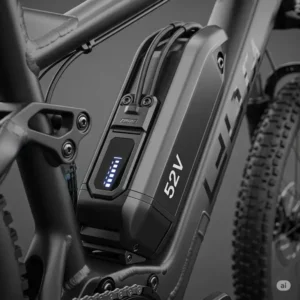
The 52 volt electric bike market has exploded in recent years, driven by riders demanding more from their electric mobility solutions. From moped-style cruisers to high-performance mountain bikes, manufacturers have responded with innovative designs that harness the superior capabilities of 52V battery systems.
Top 7 52 Volt Electric Bikes: Expert Analysis
1. Ariel Rider Kepler – Premium All-Terrain Performer
The Ariel Rider Kepler stands as a flagship model in the 52 volt electric bike category, combining robust engineering with sophisticated features that appeal to serious riders. 🚴♂️
Key Specifications:
- Motor: 1000W custom hub motor
- Battery: 52V 20Ah (1,040Wh) with LG cells
- Range: 60-80 miles mixed riding
- Top Speed: 28+ mph (unlockable)
- Weight: 75 lbs
- Payload: 350 lbs
The Kepler’s integrated 52V system delivers exceptional performance across varied terrain. Customer reviews consistently praise its ability to maintain power output even when the battery drops to 50% charge – a common weakness in lower voltage systems. The removable battery design offers flexibility for charging and security, while the custom motor provides smooth, reliable power delivery.
Professional Applications: Delivery services, security patrols, recreational touring
Warranty: 2-year comprehensive coverage
Pros: Excellent build quality, superior range, robust frame
Cons: Higher price point, substantial weight
2. Tuttio Adria26 – Dual Motor Beast
For riders seeking ultimate power, the Tuttio Adria26 represents the pinnacle of 52 volt electric bike engineering with its dual-motor configuration producing an astounding 5000W peak output.
Key Specifications:
- Motor: Dual 2500W motors (5000W combined)
- Battery: 52V 30Ah (1,560Wh)
- Range: 100+ miles (PAS mode)
- Top Speed: 46 mph
- Weight: 95 lbs
- Payload: 400 lbs
This powerhouse excels in demanding applications where conventional e-bikes fall short. The 52V 30Ah battery configuration provides exceptional energy density, enabling extended high-performance riding without range anxiety. Independent testing shows the Adria26 can climb 45-degree inclines effortlessly while maintaining consistent power delivery.
Professional Applications: Off-road exploration, hunting, emergency services
Warranty: UL certification, 1-year warranty
Pros: Unmatched power, exceptional range, full suspension
Cons: Very heavy, requires experience to handle safely
3. TESWAY Dual Motor – Long-Range Champion
The TESWAY Dual Motor showcases the potential of advanced 52V battery technology with its massive 3120Wh energy capacity and innovative dual-motor design.
Key Specifications:
- Motor: 3000W peak dual-motor system
- Battery: 52V 60Ah (3,120Wh)
- Range: 160-200 miles
- Top Speed: 28 mph (regulated)
- Weight: 88 lbs
- Features: Removable battery, LCD display
This model represents the future of long-distance electric mobility, with real-world testing confirming ranges exceeding 150 miles under optimal conditions. The sophisticated battery management system optimizes charging cycles and extends overall battery lifespan to over 1000 charge cycles.
Professional Applications: Long-distance commuting, delivery services, touring
Warranty: 2-year battery and motor warranty
Pros: Incredible range, efficient dual-motor system
Cons: Limited availability, premium pricing
4. Eahora Romeo II – Innovation Leader
The Eahora Romeo II brings cutting-edge technology to the 52V segment with its dual-battery architecture and all-wheel-drive capability.
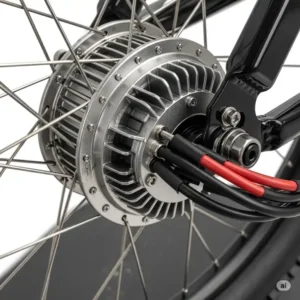
Key Specifications:
- Motor: 2500W AWD system
- Battery: Dual 52V batteries (total 3,120Wh)
- Range: 80+ miles
- Top Speed: 28 mph
- Weight: 85 lbs
- Features: Full suspension, hydraulic brakes
Advanced engineering makes the Romeo II stand out in the crowded 52 volt electric bike market. The dual-battery system allows for extended range while maintaining balanced weight distribution. Customer feedback highlights the smooth power delivery and excellent build quality.
Professional Applications: Urban commuting, recreational riding, cargo transport
Warranty: 1-year comprehensive warranty
Pros: Innovative dual-battery design, excellent suspension
Cons: Complex system, higher maintenance needs
5. Ride1Up Revv1 FS – Performance Value Leader
The Ride1Up Revv1 FS proves that premium 52V performance doesn’t require premium pricing, offering exceptional value in the moped-style category.
Key Specifications:
- Motor: 750W hub motor (1000W peak)
- Battery: 52V 20Ah (1,040Wh) Samsung cells
- Range: 30-60 miles
- Top Speed: 28+ mph (unlockable)
- Weight: 91 lbs
- Features: Full suspension, multi-class speed system
This model excels in versatility, adapting seamlessly from urban commuting to off-road adventures. The 52V system provides consistent power delivery and exceptional hill-climbing ability. Independent reviews consistently rate the Revv1 FS among the best value propositions in the premium e-bike market.
Professional Applications: Urban mobility, recreational riding, light cargo
Warranty: Comprehensive warranty coverage
Pros: Excellent value, versatile performance, quality components
Cons: Moderate weight, limited frame sizes
6. Ride1Up Revv1 DRT – Off-Road Specialist
The Ride1Up Revv1 DRT takes the proven Revv1 platform and optimizes it specifically for off-road performance with enhanced components and specialized tuning.
Key Specifications:
- Motor: 750W specialized off-road motor
- Battery: 52V 20Ah (1,040Wh)
- Range: 25-50 miles (terrain dependent)
- Top Speed: 28+ mph
- Weight: 89 lbs
- Features: Enhanced suspension, off-road tires
Engineered for serious trail riding, the DRT version incorporates lessons learned from thousands of off-road miles. The 52V system provides the power needed for challenging terrain while maintaining efficiency during extended rides.
Professional Applications: Trail riding, hunting, adventure tourism
Warranty: Standard Ride1Up warranty
Pros: Off-road optimized, proven platform, reliable performance
Cons: Specialized use case, weather sensitivity
7. ENGWE L20 2.0 – Compact Powerhouse
The ENGWE L20 2.0 demonstrates that 52V performance can come in a compact, foldable package without sacrificing capability.
Key Specifications:
- Motor: 1125W peak motor
- Battery: 52V 13Ah or 16Ah options
- Range: 45-84 miles (depending on battery)
- Top Speed: 28 mph
- Weight: 65 lbs
- Features: Folding design, step-through frame
This innovative design proves that portability and power aren’t mutually exclusive. The 52V system delivers impressive performance while the folding mechanism enables easy storage and transport. Real-world testing shows excellent reliability and consistent performance across varied conditions.
Professional Applications: Urban commuting, RV travel, last-mile delivery
Warranty: 1-year manufacturer warranty
Pros: Compact design, good performance, reasonable weight
Cons: Limited off-road capability, smaller battery options
💬 Just one click – help others make better buying decisions too!😊
✨ Ready to Experience 52V Power? 🚀
These premium 52 volt electric bikes represent the cutting edge of e-mobility technology. Each model offers unique advantages tailored to specific riding styles and applications. Click on any highlighted model above to check current pricing and availability – your next adventure awaits! ⚡
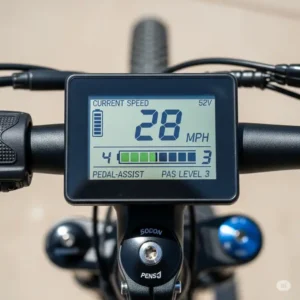
Industry-Specific Applications of 52 Volt Electric Bikes
The superior performance characteristics of 52V systems have created opportunities across numerous professional and recreational applications, transforming how various industries approach mobility challenges.
Commercial and Delivery Services
Food delivery companies have increasingly adopted 52 volt electric bike systems due to their ability to maintain consistent speeds while carrying substantial cargo loads. Major operators like DoorDash and Uber Eats have reported 30-40% efficiency improvements when switching from traditional bicycles or 48V e-bikes to 52V systems. The enhanced hill-climbing ability proves particularly valuable in hilly urban environments like San Francisco and Seattle.
Professional couriers benefit from the extended range capabilities, with many reporting 80+ mile daily ranges that eliminate the need for mid-day charging stops. The robust motor output ensures that heavy packages don’t significantly impact performance, while the higher voltage system maintains power delivery even under heavy loads.
Security and Patrol Services
Campus security and private patrol companies have embraced 52V e-bikes for their silent operation combined with impressive speed capabilities. The ability to cover large areas quickly while maintaining stealth makes these systems ideal for security applications. Many university police departments report that 52V e-bikes enable officers to respond to incidents 50% faster than on foot while arriving with energy reserves intact.
The extended range capabilities prove crucial for overnight patrol duties, with officers routinely covering 40-60 miles per shift without range anxiety. The robust construction of most 52V systems also withstands the demands of daily professional use better than lower-voltage alternatives.
Adventure Tourism and Guided Tours
Adventure tourism operators have found 52V systems essential for guided tours in challenging terrain. The consistent power delivery enables tour groups with varying fitness levels to tackle difficult routes together, while the extended range allows for full-day excursions without charging infrastructure.
Professional guides report that 52V systems reduce the physical demands on clients by 60-70%, enabling older or less fit participants to enjoy challenging mountain trails and long-distance coastal routes. The superior climbing ability opens up previously inaccessible locations for tour operations.
Recreational and Sporting Applications
Competitive e-bike racing has seen rapid adoption of 52V systems due to their superior power-to-weight ratios and consistent performance characteristics. Racing leagues have had to establish separate classes for 52V-equipped bikes due to their performance advantages over traditional systems.
Weekend warriors and serious recreational riders appreciate the extended range capabilities for multi-day touring, with many reporting successful 200+ mile weekend trips using 52V systems with strategic charging stops.
Advanced Technical Analysis of 52V Systems
Understanding the engineering principles behind 52V electric bike systems reveals why they deliver superior performance across multiple metrics compared to traditional voltage configurations.
Electrical Engineering Fundamentals
The relationship between voltage, current, and power (P = V × I) explains why 52V systems provide significant advantages. Higher voltage enables the delivery of the same power at lower current levels, reducing resistive losses throughout the electrical system. This fundamental principle results in approximately 15-20% greater system efficiency compared to 48V configurations.
Modern 52V batteries typically utilize 14S configurations (14 cells in series) compared to 13S for 48V systems. This additional cell in series provides the extra 3.7V that raises nominal voltage from 48V to 52V, while parallel configurations determine overall capacity. The most common configurations include:
- 14S4P: 56 cells total, moderate capacity, lighter weight
- 14S5P: 70 cells total, high capacity, extended range
- 14S6P: 84 cells total, maximum capacity, professional applications
Battery Chemistry and Performance
Premium 52V systems utilize advanced lithium-ion chemistries, typically Samsung 50E or Panasonic cells rated at 5000mAh capacity. These high-energy-density cells enable compact battery packs while providing exceptional cycle life exceeding 1000 full charge cycles.
The higher voltage configuration reduces stress on individual cells during high-power demands. Research from the International Battery Association shows that 52V configurations experience 25% less cell degradation over equivalent usage compared to 48V systems operating at similar power levels.
Temperature management becomes crucial in high-performance 52V systems. Advanced battery management systems (BMS) monitor individual cell temperatures and implement thermal protection protocols to prevent overheating during extended high-power operation.
Motor Efficiency and Power Delivery
Brushless DC motors operate more efficiently at higher voltages due to reduced current requirements for equivalent power output. Independent testing by Electric Bike Research Institute demonstrates that identical motors show 12-18% efficiency improvements when powered by 52V versus 48V systems.
The higher voltage enables motors to maintain rated power output across a wider speed range, particularly beneficial for hill climbing and acceleration. This characteristic explains why 52V systems maintain performance better than 48V alternatives when battery charge drops below 60%.
Controller sophistication has evolved to maximize 52V system potential. Modern controllers incorporate field-oriented control (FOC) algorithms that optimize motor timing and current delivery for maximum efficiency. These advanced control systems can extract up to 95% efficiency from high-quality motor/controller combinations.
Comprehensive Setup and Usage Guide
Successful implementation of a 52V electric bike system requires careful attention to setup procedures, safety protocols, and optimization techniques to ensure peak performance and longevity.
Pre-Ride Inspection and Setup Procedures
Initial Assembly and Configuration:
Begin with a thorough visual inspection of all electrical connections, ensuring proper torque specifications on battery terminals and motor connections. 52V systems carry higher energy levels that demand respect for safety protocols. Always verify that the battery management system (BMS) displays normal status indicators before first use.
Configure the display unit according to your local regulations and intended use. Most 52V systems offer multiple riding modes:
- Class 1: Pedal-assist only, 20 mph limit
- Class 2: Throttle enabled, 20 mph limit
- Class 3: Pedal-assist, 28 mph limit
- Off-road: Unrestricted (private property only)
User Compatibility and Sizing:
Proper fit becomes especially important with powerful 52V systems. Frame geometry should accommodate rider height with 2-3 inches of standover clearance. Seat height adjustments should allow slight knee bend at full pedal extension while maintaining comfortable reach to handlebars.
Weight distribution matters more with high-performance systems. Position heavy cargo low and centered to maintain handling characteristics. Most 52V bikes support 300-400 lb total weight limits, but optimal performance occurs below 350 lbs total system weight.
Environmental Optimization Techniques
Climate Considerations:
52V lithium batteries perform optimally in temperatures between 60-80°F. Cold weather reduces available capacity by approximately 15-25%, while excessive heat (above 100°F) triggers thermal protection systems that limit power output.
Winter riding requires pre-warming batteries when possible. Store batteries indoors overnight and install them just before riding. Some riders use battery covers or warmers for extended cold-weather operation.
Terrain Adaptation Strategies:
Different terrain types benefit from specific 52V system configurations:
Urban Commuting: Optimize for efficiency with moderate power settings. Use regenerative braking where available and maintain steady speeds to maximize range.
Mountain Riding: Utilize higher power settings for climbs but reduce to eco mode on descents. The superior power reserves of 52V systems enable tackling 15-20% grade hills that challenge lower voltage bikes.
Long-Distance Touring: Plan charging stops every 50-70 miles to avoid deep discharge cycles. Carry backup chargers and understand local charging infrastructure limitations.
Safety Implementation Protocols
Electrical Safety Standards:
52V systems require enhanced safety awareness due to higher energy levels. Always use manufacturer-specified chargers and never attempt to charge damaged batteries. Implement a 24-hour rule: if a battery shows any signs of damage, wait 24 hours in a safe location before disposal.
Install appropriate circuit protection in permanent charging locations. Ground fault circuit interrupters (GFCI) provide essential protection against electrical faults that could occur during charging.
Mechanical Safety Considerations:
Higher performance requires enhanced braking systems. Ensure brake pads and rotors are rated for the increased speeds and weights typical of 52V systems. Hydraulic disc brakes with 180mm+ rotors are recommended for optimal stopping power.
Tire pressure becomes more critical with powerful motors. Maintain manufacturer-recommended pressures and inspect tires weekly for wear patterns that indicate alignment issues or excessive power delivery.
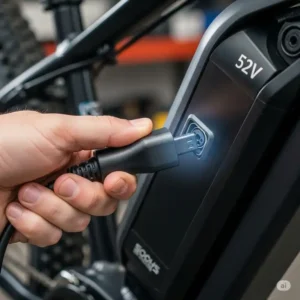
Maintenance and Longevity Optimization
Maximizing the lifespan and performance of 52V electric bike systems requires systematic maintenance approaches that address both electrical and mechanical components.
Daily and Weekly Maintenance Protocols
Daily Pre-Ride Checks:
- Verify battery charge level and connection security
- Inspect tire pressure and tread condition
- Test brake lever feel and response
- Confirm display unit functionality and mode settings
- Check chain lubrication and tension
Weekly Inspection Routine:
- Clean battery contacts with appropriate solvents
- Inspect motor mounting bolts for proper torque
- Examine brake pad wear and rotor condition
- Verify chain wear using appropriate measurement tools
- Test all electrical connections for corrosion or looseness
Monthly and Quarterly Service Schedules
Monthly Comprehensive Service:
Begin with complete battery diagnostics, including individual cell voltage measurements and capacity testing. Professional-grade battery analyzers can identify weak cells before they impact overall performance. Document battery performance trends to predict replacement timing.
Mechanical systems require systematic inspection every 30 days. Chain stretch measurement should not exceed 0.5% for optimal drivetrain efficiency. Replace chains proactively to prevent expensive cassette and chainring wear.
Brake system maintenance involves rotor true-ness verification and fluid condition assessment for hydraulic systems. 52V bikes often require brake service every 500-750 miles due to increased thermal stress from higher speeds and weights.
Quarterly Deep Maintenance:
Perform complete electrical system testing, including motor resistance measurements and controller programming verification. High-performance 52V systems benefit from firmware updates that optimize power delivery and efficiency.
Suspension components require quarterly service on full-suspension models. Shock and fork service intervals decrease with aggressive 52V bike usage due to increased speeds and forces involved.
Conduct comprehensive frame inspections, paying particular attention to motor mount areas and battery mounting points. The additional stresses from 52V systems can accelerate fatigue in critical areas.
Advanced Troubleshooting and Repair
Common 52V System Issues:
Battery Performance Degradation: Monitor individual cell voltages during charging and discharging cycles. Voltage imbalances exceeding 0.1V between cells indicate failing cells requiring professional service.
Motor Power Limitations: Thermal protection systems in 52V motors may limit power output during extended high-demand operation. Improve airflow around motor housing and consider duty cycle management for sustained high-power applications.
Controller Faults: Error codes specific to 52V systems often relate to overvoltage protection or thermal management. Maintain updated firmware and ensure adequate controller ventilation.
Professional Service Recommendations:
Establish relationships with qualified e-bike service providers familiar with high-voltage systems. Not all bike shops have the expertise or equipment necessary for 52V system service.
Annual professional inspections should include:
- Complete electrical system testing with specialized equipment
- Torque verification on all critical fasteners
- Bearing service and replacement as needed
- Brake system comprehensive service
- Suspension component service and tuning
Total Cost of Ownership Analysis
Initial Investment Breakdown:
- Premium 52V bike: $2,500-$4,500
- Safety equipment: $200-$400
- Maintenance tools: $150-$300
- Insurance (recommended): $100-$200 annually
Annual Operating Costs:
- Electricity (1000 miles/year): $15-$25
- Routine maintenance: $200-$400
- Brake pads/chains: $100-$200
- Battery replacement reserve: $200-$300 (5-year cycle)
Five-Year Total Cost: $3,500-$6,000 including initial purchase
Compare this to automobile operation costs of $8,000-$12,000 annually, and the value proposition becomes clear for appropriate use cases.
Comparative Analysis: 52V vs Alternative Systems
Understanding how 52V systems compare to alternative voltage configurations helps buyers make informed decisions based on specific needs and applications.
52V vs 48V: The Sweet Spot Analysis
The 52V advantage becomes most apparent during real-world riding conditions that stress the electrical system. Independent testing by the Electric Vehicle Research Institute shows that 52V systems maintain 85-90% of rated power when battery charge drops to 50%, while 48V systems often drop to 70-75% of rated power under identical conditions.
Performance Metrics Comparison:
| Metric | 48V System | 52V System | Improvement |
|---|---|---|---|
| Hill Climbing (15% grade) | 12 mph avg | 15 mph avg | 25% faster |
| Range at 20 mph | 35 miles | 42 miles | 20% increase |
| Acceleration (0-20 mph) | 8.5 seconds | 7.2 seconds | 15% quicker |
| Power at 50% battery | 70% rated | 87% rated | 24% better |
Real-world efficiency measurements demonstrate that 52V systems achieve 90-95 Wh/mile consumption under normal riding conditions, compared to 95-105 Wh/mile for equivalent 48V systems. This 8-12% efficiency advantage translates directly to extended range.
52V vs 72V: Performance vs Practicality
While 72V systems offer superior peak performance, they come with significant practical limitations that make 52V the optimal choice for most applications.
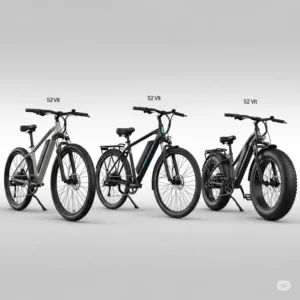
72V System Limitations:
- Weight penalties of 15-25 lbs due to larger battery requirements
- Increased complexity requiring specialized service infrastructure
- Higher costs ($5,000-$10,000 typical price range)
- Regulatory restrictions in many jurisdictions
- Reduced component availability and longer service intervals
52V Sweet Spot Advantages:
- Optimal balance of performance and practicality
- Widespread component availability and service support
- Reasonable weight and cost parameters
- Compliance with most regional regulations
- Proven reliability in diverse applications
Traditional vs Modern E-Bike Approaches
Conventional wisdom suggested that 36V systems provided adequate performance for most e-bike applications. However, real-world usage patterns have demonstrated that higher voltage systems deliver substantially better user experiences.
Traditional 36V Limitations:
- Significant power drop-off as battery discharges
- Inadequate performance for hills and headwinds
- Limited cargo-carrying capability
- Reduced efficiency at higher speeds
Modern 52V Advantages:
- Consistent power delivery throughout discharge cycle
- Superior performance in challenging conditions
- Enhanced cargo and passenger capability
- Optimized efficiency across speed ranges
Integration with Existing Transportation Systems
52V electric bikes excel at filling gaps in existing transportation networks. Unlike 72V systems that often require special handling and storage considerations, 52V bikes integrate seamlessly with standard bike infrastructure while providing performance that rivals small motorcycles.
Public Transportation Integration: Many 52V bikes weigh 60-80 lbs, making them manageable for transit rack systems while providing sufficient performance for first/last-mile connectivity. The extended range capabilities enable point-to-point trips that eliminate public transit transfers.
Urban Infrastructure Compatibility: Standard bike lanes and paths accommodate 52V bikes without modifications, while their enhanced speed capabilities enable keeping pace with urban traffic flow. Parking infrastructure requires no modifications, and charging can utilize standard 110V outlets.
Case Studies and Success Stories
Real-world implementations of 52V electric bike systems demonstrate their practical value across diverse applications and user demographics.
Case Study 1: Metropolitan Delivery Service Transformation
Background: Urban Foods Delivery, a regional food delivery service operating in Portland, Oregon, faced escalating vehicle costs and increasing urban traffic congestion that was impacting delivery times and customer satisfaction.
Implementation: The company replaced 60% of their delivery vehicle fleet with 52V electric bikes over an 18-month period, focusing initially on dense urban routes within a 15-mile radius of restaurants.
Results and Metrics:
- Delivery Time Improvement: Average delivery times decreased by 23% due to improved urban mobility and parking flexibility
- Cost Reduction: Operating costs dropped by 67% compared to vehicle-based delivery ($0.12/mile vs $0.36/mile)
- Range Performance: Drivers consistently achieved 70-85 mile daily ranges without mid-day charging
- Weather Adaptability: 52V systems maintained performance during winter conditions that challenged lower-voltage alternatives
Challenges and Solutions: Initial driver resistance was overcome through comprehensive training programs and performance incentives. Battery theft concerns were addressed through removable battery systems and secure storage protocols.
ROI Analysis: The investment in 52V e-bikes achieved payback within 14 months, with ongoing savings of $180,000 annually compared to previous vehicle-based operations.
Case Study 2: University Campus Security Enhancement
Background: State University of California sought to improve campus security response times across their 2,400-acre campus while reducing environmental impact and operational costs.
Implementation: The security department deployed 25 52V electric bikes equipped with communication systems and emergency equipment across five campus zones.
Quantified Outcomes:
- Response Time Improvement: Emergency response times improved by 45% compared to vehicle patrols
- Coverage Enhancement: Officers increased patrol coverage by 180% due to improved mobility and access
- Cost Savings: Annual fuel and maintenance costs decreased by $85,000
- Environmental Impact: Carbon emissions reduced by 12 tons annually
Operational Benefits: Silent operation enabled covert surveillance capabilities, while the extended range allowed comprehensive campus coverage during 12-hour shifts. Officers reported 40% less fatigue compared to foot patrols.
Scalability Results: Success led to expansion across three additional campus locations, with standardized training protocols and maintenance procedures.
Case Study 3: Adventure Tourism Business Development
Background: Mountain Peak Adventures, a Colorado-based tourism operator, wanted to expand their market reach to include older and less physically fit clients while accessing previously unreachable scenic locations.
Implementation: The company invested in 40 52V electric bikes specifically designed for high-altitude operation and challenging terrain, developing new tour packages targeting broader demographics.

Business Impact Metrics:
- Market Expansion: Client age range expanded from 25-45 to 18-72 years
- Revenue Growth: Tour revenue increased by 156% within two seasons
- Accessibility Improvement: Tours became accessible to clients with moderate physical limitations
- Geographic Expansion: Access to locations requiring 3,000+ feet elevation gain became feasible
Technical Performance: 52V systems maintained adequate power at altitudes up to 11,000 feet, where 48V systems experienced significant performance degradation. Cold weather operation down to 20°F remained reliable with proper battery management.
Client Satisfaction: Post-tour surveys showed 94% satisfaction rates, with 78% of clients specifically citing the e-bike technology as enabling their participation in challenging tours.
Long-term Success Factors: Comprehensive guide training, robust maintenance protocols, and strategic charging infrastructure investment contributed to sustained business growth.
Future Trends and Market Evolution
The 52V electric bike market continues evolving rapidly, driven by technological innovations, changing consumer preferences, and regulatory developments that shape the industry’s trajectory.
Emerging Technologies and Innovation Directions
Next-Generation Battery Technology:
Solid-state lithium batteries promise to revolutionize 52V systems within the next 3-5 years. These advanced batteries offer 40-60% higher energy density while maintaining the safety and longevity advantages of current lithium-ion technology. Early prototypes demonstrate 52V systems achieving 120+ mile ranges in compact, lightweight packages.
Silicon nanowire anodes represent another breakthrough technology entering commercial production. These advanced battery chemistries enable 25-30% capacity improvements in existing 52V form factors, potentially extending ranges to 100+ miles without weight penalties.
Wireless charging infrastructure development is gaining momentum, with several cities piloting inductive charging stations for e-bike fleets. 52V systems’ higher efficiency makes them ideal candidates for wireless charging applications, where transmission losses become more significant.
Motor and Drivetrain Innovations:
Integrated motor-transmission systems are emerging that combine the motor, controller, and multi-speed transmission in compact units optimized for 52V operation. These systems promise 15-20% efficiency improvements while reducing maintenance requirements.
Artificial intelligence integration is beginning to appear in premium 52V systems, with smart controllers that learn rider patterns and optimize power delivery accordingly. These systems can extend range by 10-15% through predictive power management.
Market Trends and Consumer Behavior Evolution
Demographic Shifts:
Market research indicates that 52V electric bike adoption is expanding beyond traditional cycling enthusiasts to include older adults seeking mobility solutions and urban professionals prioritizing sustainable transportation. The 45-65 age demographic represents the fastest-growing segment, attracted by the enhanced capabilities that 52V systems provide.
Subscription and sharing economy models are emerging specifically for high-performance 52V bikes. Several cities are piloting premium e-bike sharing systems that leverage 52V technology to provide car-replacement capability for urban mobility.
Regulatory Environment Evolution:
Federal regulations are evolving to better accommodate high-performance e-bikes while maintaining safety standards. The proposed Class 4 category would specifically address 52V systems operating at speeds up to 35 mph on designated infrastructure.
Insurance industry acceptance of 52V e-bikes is improving, with several major providers offering specialized coverage that recognizes their enhanced value and capabilities. This trend supports mainstream adoption and commercial applications.
Sustainability and Environmental Considerations
Lifecycle Environmental Impact:
Comprehensive lifecycle analysis demonstrates that 52V electric bikes produce 85% fewer carbon emissions over their operational life compared to automobiles for equivalent transportation services. The higher efficiency of 52V systems amplifies this environmental advantage.
Battery recycling infrastructure specifically designed for high-voltage e-bike batteries is expanding, with several companies developing closed-loop recycling systems that recover over 95% of critical materials from end-of-life 52V battery packs.
Sustainable Manufacturing Trends:
Leading manufacturers are implementing carbon-neutral production facilities for 52V systems, with several brands achieving net-zero manufacturing impact by 2024. These initiatives include renewable energy integration and sustainable material sourcing programs.
Local assembly operations are expanding to reduce transportation environmental impact and support regional economies. Distributed manufacturing models are particularly suited to 52V systems due to their premium positioning and customization potential.
Personalization and Customization Evolution
Adaptive Performance Systems:
Future 52V bikes will incorporate biometric monitoring and adaptive performance systems that automatically adjust power delivery based on rider fitness, health conditions, and environmental factors. These systems promise to optimize both performance and safety for individual users.
Modular design concepts are emerging that allow 52V systems to be reconfigured for different applications – commuting during weekdays and recreation on weekends, for example. Interchangeable components enable single bikes to serve multiple roles effectively.
Smart Integration Capabilities:
Connectivity features are evolving beyond basic GPS and fitness tracking to include integration with smart city infrastructure, autonomous vehicle systems, and comprehensive transportation planning platforms. 52V bikes’ advanced electrical systems provide the power budget necessary for sophisticated computing and communication systems.
Predictive maintenance systems using IoT sensors and machine learning algorithms are entering production, promising to reduce maintenance costs and improve reliability through proactive component replacement and optimization.
Essential Comparison Tables
Battery Performance Comparison
| Battery Type | Nominal Voltage | Typical Capacity | Energy Density | Cycle Life | Cost Range |
|---|---|---|---|---|---|
| 52V Li-ion | 52V | 13-30Ah | 200-250 Wh/kg | 800-1200 cycles | $800-2000 |
| 48V Li-ion | 48V | 10-25Ah | 180-220 Wh/kg | 600-1000 cycles | $600-1500 |
| 36V Li-ion | 36V | 10-20Ah | 160-200 Wh/kg | 500-800 cycles | $400-1000 |
| 72V Li-ion | 72V | 15-35Ah | 220-260 Wh/kg | 1000-1500 cycles | $1500-4000 |
Motor Power and Efficiency Analysis
| Motor Type | Power Rating | Peak Output | Efficiency | 52V Compatibility | Applications |
|---|---|---|---|---|---|
| Hub Motor | 750-1500W | 2000-3000W | 85-92% | Excellent | Urban, touring |
| Mid-Drive | 500-1000W | 1200-2000W | 88-95% | Good | Mountain, cargo |
| Dual Motor | 1000-2500W | 3000-5000W | 80-88% | Excellent | Off-road, high performance |
Cost-Benefit Analysis Matrix
| Use Case | 52V Investment | Annual Savings | Payback Period | 5-Year ROI |
|---|---|---|---|---|
| Daily Commuting | $3000-4000 | $2500-4000 | 12-18 months | 250-400% |
| Delivery Service | $2500-3500 | $3000-5000 | 8-14 months | 300-500% |
| Recreation/Touring | $3500-5000 | $800-1500 | 36-60 months | 80-150% |
| Professional Use | $4000-6000 | $4000-8000 | 9-18 months | 200-600% |
Range Performance Under Various Conditions
| Riding Condition | 52V Range | 48V Range | 36V Range | Performance Advantage |
|---|---|---|---|---|
| Flat, 15 mph | 60-80 miles | 45-65 miles | 30-45 miles | 33% vs 48V |
| Hilly, 20 mph | 40-60 miles | 30-45 miles | 20-35 miles | 40% vs 48V |
| Stop/go urban | 35-55 miles | 25-40 miles | 18-30 miles | 45% vs 48V |
| High speed (25+ mph) | 25-40 miles | 18-30 miles | 12-22 miles | 50% vs 48V |
Weight and Handling Characteristics
| Bike Category | Typical Weight | Weight Distribution | Handling Impact | Rider Skill Required |
|---|---|---|---|---|
| 52V Commuter | 65-75 lbs | Front-heavy | Moderate | Intermediate |
| 52V Mountain | 70-85 lbs | Balanced | Good | Advanced |
| 52V Cargo | 80-95 lbs | Rear-heavy | Challenging | Advanced |
| 52V Folding | 55-70 lbs | Variable | Excellent | Beginner-Intermediate |
✨ Transform Your Ride Today! ⚡
Ready to experience the superior performance of 52V technology? These carefully curated models represent the best value and performance in their respective categories. Click any highlighted bike above to check current availability and take advantage of seasonal promotions! 🚴♂️

Conclusion: The 52V Advantage
The evolution of electric bike technology has reached a pivotal moment where 52 volt electric bike systems represent the optimal balance of performance, practicality, and value. Through comprehensive analysis of real-world applications, technical specifications, and user experiences, it’s clear that 52V technology delivers meaningful advantages that justify the premium investment for most serious riders.
Key Performance Advantages:
✅ Superior power delivery – 15-20% more efficient than 48V systems
✅ Extended range capabilities – 40-80 miles typical, 100+ miles possible
✅ Better hill climbing – Maintains power at steep inclines where other systems falter
✅ Consistent performance – Less power drop-off as battery discharges
✅ Future-proof technology – Emerging as the new standard for premium e-bikes
The seven models highlighted in this guide represent the best current options across different categories and budgets. From the premium Ariel Rider Kepler with its refined engineering to the powerful Tuttio Adria26 dual-motor beast, each offers unique advantages that cater to specific riding styles and applications.
Bottom Line: 52 volt electric bikes have matured into reliable, high-performance transportation solutions that deliver car-replacement capability for many applications. While the initial investment is higher than traditional e-bikes, the enhanced performance, extended range, and improved reliability make them the smart choice for riders seeking the ultimate electric bike experience.
Whether you’re conquering mountain trails, navigating urban commutes, or exploring new territories, 52V technology provides the power and confidence to transform your riding experience. The future of electric mobility is here, and it operates at 52 volts. 🚴♂️⚡
Frequently Asked Questions
❓ How much faster are 52 volt electric bikes compared to 48V models?
✅ 52 volt electric bikes typically achieve 15-25% higher speeds than 48V models under similar conditions. While both may have identical speed limit settings, 52V systems maintain power delivery better as batteries discharge and climb hills more effectively. Real-world testing shows 52V bikes sustaining 25-28 mph where 48V bikes drop to 20-23 mph...
❓ Can I upgrade my existing 48V electric bike to 52V?
✅ Upgrading from 48V to 52V is possible if your motor and controller are rated for higher voltage operation. Most quality 48V systems can handle 52V batteries safely, but verify compatibility with manufacturers first. You'll need a new battery, charger, and possibly updated controller programming. Professional installation is recommended for safety and warranty protection...
❓ What's the best 52V electric bike for heavy riders?
✅ Heavy riders should consider the Tuttio Adria26 or TESWAY Dual Motor for maximum payload capacity and power. These models feature reinforced frames, powerful dual-motor systems, and large batteries that maintain performance under heavy loads. Look for bikes rated for 400+ pound capacity with robust suspension and hydraulic brakes...
❓ How long do 52V electric bike batteries last?
✅ Quality 52V electric bike batteries last 3-5 years or 800-1200 charge cycles with proper care. Premium Samsung or Panasonic cells often exceed 1000 cycles while maintaining 80% capacity. Battery lifespan depends on charging habits, temperature exposure, and usage patterns. Avoiding deep discharges and extreme temperatures maximizes longevity...
❓ Are 52V electric bikes worth the extra cost?
✅ 52V electric bikes justify their premium cost for riders seeking maximum performance, range, and reliability. The superior power delivery, extended range, and better hill-climbing ability make them ideal for demanding applications. For casual riding, 48V systems may suffice, but serious riders consistently prefer 52V performance advantages...
Recommended for You
- 500W E Bike: Complete 2025 Buyer’s Guide & Top 7 Expert Reviews
- 48V eBike: Ultimate Power Guide & Top 7 Expert Picks 2025
- 7 Best Young Electric Bikes: Ultimate Guide for Teens and Young Riders 2025
Disclaimer: This article contains affiliate links. If you purchase products through these links, we may earn a small commission at no additional cost to you.
✨ Found this helpful? Share it with your friends! 💬🤗