
So you’ve got three bikes and one car. Maybe it’s you, your partner, and a kiddo ready for a weekend adventure. Or perhaps you’re the designated driver for your cycling crew’s next trail session. Either way, you need a reliable way to haul all those bikes without turning your vehicle into a two-wheeled Tetris nightmare.
✨Was this helpful? Spread the word! 🚀
I’ve been there—strapping bikes onto roof racks in parking lot wind tunnels, wrestling with trunk straps that seem designed by sadists, and wondering if that rattling sound means I’m about to lose a $2,000 carbon frame to the highway gods. After years of testing various setups and talking to fellow cyclists, I can tell you this: finding the right rack for three bikes isn’t just about convenience. It’s about protecting your investment, maintaining your sanity, and actually enjoying the drive to your destination.
The three bike car rack market has exploded in recent years, and honestly? That’s both a blessing and a curse. You’ve got more options than ever, but wading through the specifications, reviews, and marketing jargon can feel overwhelming. Some racks promise the moon but deliver wobbly, paint-scratching nightmares. Others are built like tanks but cost as much as a decent bike itself.
Here’s what I’ve learned: the perfect rack doesn’t exist. But the perfect rack for you absolutely does. It depends on your vehicle, your bikes, your budget, and how often you actually plan to use the thing. A weekend warrior has different needs than someone who drives to the trailhead three times a week. A family with kids’ bikes faces different challenges than a group hauling full-suspension mountain bikes.
Throughout this guide, I’ll walk you through everything you need to know about bike racks that hold 3 bikes—from hitch-mounted beasts to trunk strap solutions. We’ll compare real products with actual specifications (no made-up models here), break down the pros and cons, and help you figure out which type makes sense for your situation. Whether you’re dealing with a sedan, SUV, or minivan, whether you’re hauling road bikes or fat-tire monsters, we’ll find something that works.
Quick Comparison: Three Bike Car Rack Types
Before we dive deep, let’s establish what you’re choosing between. Not all bike carrier options are created equal, and understanding the fundamental differences will save you from costly mistakes.
| Rack Type | Installation | Vehicle Compatibility | Bike Capacity | Price Range | Best For |
|---|---|---|---|---|---|
| Hitch-Mounted | Requires 1.25″ or 2″ receiver hitch | Most trucks, SUVs, many cars | 2-5 bikes (3 bike models common) | $150-$600+ | Regular use, heavier bikes, easy loading |
| Trunk-Mounted | Straps to trunk/hatchback | Sedans, hatchbacks, SUVs, minivans | 2-3 bikes typically | $80-$250 | No hitch, occasional use, portability |
| Roof-Mounted | Requires roof crossbars | Vehicles with roof rails or bare roofs | 1 bike per carrier (need 3 units) | $400-$900 for 3 | Minimal rear obstruction, security |
Three Bike Car Rack vs. Other Transport Methods
| Feature | Three Bike Car Rack | Interior Transport | Truck Bed | Bike Trailer |
|---|---|---|---|---|
| Setup Time | 5-15 minutes | 15-30 minutes | 10-20 minutes | 20-40 minutes |
| Bike Protection | Good (straps/frames) | Excellent (enclosed) | Fair (exposed) | Excellent (enclosed) |
| Vehicle Access | Limited (trunk racks) | None (bikes inside) | Full access | Towing required |
| Fuel Economy Impact | Moderate (drag) | Minimal | Minimal | Significant (extra weight) |
| Cost | $80-$600 | $0 (existing space) | $100-$300 (pads/tailgate pads) | $500-$2000+ |
| Weather Protection | None | Full protection | None | Full protection |
Top 7 Three Bike Car Racks: Expert Analysis
After extensive research and analyzing real customer experiences, here are the best options available for carrying three bikes in 2025. Each product has been selected based on actual availability, verified specifications, and genuine user feedback.
1. Thule Apex XT 4 (3-Bike Configuration)
The Thule Apex XT 4 is a hanging-style hitch rack that’s become something of a legend among casual cyclists and families. What makes it special? It’s one of the few hanging racks that actually gives your bikes breathing room—a full 7 inches between each cradle.
Key Specifications:
- ✅ Fits both 1.25-inch and 2-inch hitch receivers (no adapter needed)
- ✅ 150 lbs total capacity (37.5 lbs per bike maximum)
- ✅ Integrated cable lock for bikes and rack
- ✅ Tool-free SnugTite stinger installation
- ✅ HitchSwitch tilt lever for trunk access
- ✅ Ratcheting cradle straps
- ✅ Anti-sway cradles prevent bike contact
What We Love: The setup is genuinely simple. I’m talking “unpack, slide onto hitch, tighten knob” simple. No hunting for wrenches or deciphering cryptic instructions. The rack comes essentially ready to go, and the SnugTite stinger means you’re not fumbling with traditional hitch pins that always seem to fall into storm drains.
That 7-inch spacing isn’t just a number on a spec sheet—it translates to real-world convenience. You can actually load three bikes without playing geometric chess or turning handlebars at weird angles. The anti-sway cradles do their job surprisingly well, keeping bikes from clanking together on bumpy roads.
Potential Drawbacks:
❌ Hanging racks require frame contact, which isn’t ideal for carbon frames
❌ Some users report strap quality concerns in extreme conditions
❌ Loading bikes requires lifting them onto the rack
Real Customer Insight: Reviews consistently praise the ease of installation and the generous spacing. One satisfied buyer noted using it for a 10-hour drive with three mountain bikes without issues, though another experienced a catastrophic failure after the straps let go (though this appears to be an isolated incident with a potentially defective unit).
2. Saris Bones EX 3 Bike Trunk Rack
The Saris Bones EX 3 might just be the most recognizable trunk rack on the planet. That distinctive arched design isn’t just for looks—it’s engineered to fit over spoilers and accommodate the wild variety of vehicle shapes we see today.
Key Specifications:
- ✅ Carries 3 bikes (35 lbs per bike maximum)
- ✅ Injection-molded arms (rust-free construction)
- ✅ Arc-based design separates bikes on different levels
- ✅ Fits 90% of top-selling vehicles including spoiler-equipped models
- ✅ Articulated rubber feet protect vehicle paint
- ✅ Integrated strap management system
- ✅ Weighs only 11 lbs
- ✅ Made in USA with recyclable materials
What Makes It Special: Here’s the thing about trunk racks: they’re usually a compromise. But the Saris Bones EX actually feels like Saris sat down and asked, “What if we made a trunk rack that doesn’t suck?” The result is this impossibly light (11 lbs!), impossibly versatile rack that actually fits more vehicles than its predecessor.
The “EX” part stands for “expanded compatibility,” and that 20% increase in vehicle fitment isn’t marketing fluff. Those uniquely designed legs really do curve around spoilers that would block traditional racks. I’ve seen these installed on everything from Priuses to Subaru Outbacks, and they somehow make each vehicle look cooler.
Real-World Performance: The injection-molded construction means this thing isn’t going to rust, ever. Your grandkids could inherit this rack. The ratcheting strap system holds everything secure without the bounce and sway you get from cheaper trunk racks.
Limitations:
❌ 35 lb per-bike limit rules out heavy e-bikes
❌ Trunk access is blocked when installed
❌ Installation requires removing rack each time (not leave-it-on convenient)
Customer Feedback: Users consistently describe it as “sturdy,” “easy to install after watching a video,” and “holding bikes securely.” The strap management system gets particular praise for keeping things clean without flapping straps on the highway.
3. Allen Sports Premier 3 Bike Trunk Rack (Model S103)
The Allen Sports Premier S103 represents the everyman’s trunk rack—straightforward, affordable, and built by a company that’s been doing this since 1967. There’s something to be said for that kind of experience.
Key Specifications:
- ✅ 16-inch long carry arms accommodate 3 bikes
- ✅ 100 lbs maximum total capacity
- ✅ Patented quick-snap setup design
- ✅ Individual dual-compound tie-down cradles
- ✅ Extra-large car pads distribute load
- ✅ Wide profile snap-on feet
- ✅ Fully assembled (installs in seconds)
- ✅ Lifetime warranty
The Allen Advantage: Allen’s been manufacturing bike racks longer than most of us have been alive, and that experience shows in the details. The quick-snap design means the rack essentially pops into its ready position right out of the box. You’re not assembling anything—you’re just adjusting strap lengths to fit your vehicle.
Those dual-compound tie-downs are clever. The inner compound is soft enough to protect your bike’s finish, while the outer compound is tough enough to maintain grip during transport. It’s the kind of thoughtful design that comes from actually using these things, not just engineering them on paper.
What Users Say: The fit guide on Allen’s website is surprisingly accurate. If it says your vehicle is compatible, it probably is. Users report the rack staying secure on everything from Mazdas to Subarus, and the wide vehicle pads really do help distribute weight without leaving marks.
Considerations:
❌ Not as stylish as premium options
❌ Rubber straps can become difficult in cold weather
❌ Some users find installation instructions unclear (YouTube to the rescue)
One user captured it perfectly: “Great Memorial Day Weekend with the family! My rack went onto the truck in minutes.” That’s exactly what you want—a rack that gets out of the way of actually enjoying bikes.
4. Yakima FullBack 3 Premium Trunk Rack
The Yakima FullBack 3 is what happens when a company known for hardcore outdoor gear decides to reimagine the trunk rack. It’s not trying to be minimalist—it’s trying to be bombproof.
Key Specifications:
- ✅ 3-bike capacity (30 lbs per bike on 3-bike model)
- ✅ SuperCush ZipStrip cradles
- ✅ Bomber external frame construction
- ✅ 4-strap attachment system with interlocking HUB
- ✅ Integrated locks for bikes and rack
- ✅ Foldable arms for storage
- ✅ Built-in bottle opener (yes, really)
- ✅ Weighs 22 lbs
Why It Stands Out: That interlocking HUB system is genuinely clever. Instead of guessing at strap placement, you dial in your vehicle type and the HUB shows you exactly where everything should sit. It’s like having installation instructions built into the rack itself.
The SuperCush ZipStrip cradles are Yakima’s answer to the eternal question: “How do I secure my bike without scratching it?” These ratcheting straps provide serious holding power but with enough cushioning that you’re not white-knuckling it every time you hit a pothole.
The Yakima Reality: This rack feels substantial. At 22 lbs, it’s heavier than the Saris, but that weight translates to stability. The bomber external frame isn’t going to flex or wobble, even with three loaded mountain bikes bouncing down a Forest Service road.
Trade-Offs:
❌ Heavier than competitors (22 lbs vs. 11 lbs for Saris)
❌ Higher price point
❌ Some users report the locking mechanism can be stiff
User Experiences: Reviews are mostly glowing, with customers praising the sturdy construction and secure fit. One reviewer noted it fits bikes ranging from adult 6-footers to kids’ bikes without issue. However, a few users mention the dial locks can be tough to turn, especially in hot weather.
5. IKURAM 3 Bike Hitch Rack
The IKURAM 3 Bike Hitch Rack is the budget-conscious choice that doesn’t feel budget. This is a solid steel hitch rack with features you’d expect on much pricier models.
Key Specifications:
- ✅ Heavy-duty all-steel construction
- ✅ Dual-arm mounting design for stability
- ✅ Fits standard Class III & IV 2-inch receivers
- ✅ Tilt-down feature for rear access
- ✅ Folding arms for compact storage
- ✅ Includes anti-rattle hitch tightener
- ✅ Padded bike cradles with straps
- ✅ Lifetime warranty
The Value Proposition: Let’s be real: not everyone wants to drop $500 on a bike rack. The IKURAM delivers surprising quality at a fraction of premium prices. That all-steel construction feels reassuringly solid, and the powder-coated finish should resist rust for years.
The included anti-rattle hitch tightener is a thoughtful touch that many competitors charge extra for. If you’ve ever driven with a rack that clanks and wobbles in the receiver, you’ll appreciate this immediately.
Assembly & Use: With only three bolts needed for assembly, you’re looking at about 5 minutes from box to road. The dual-arm design accommodates bikes of various frame sizes and styles—something that’s not always guaranteed with budget racks.
Reality Check:
❌ Heavier than platform racks (all-steel construction)
❌ Requires additional straps to prevent bike sway
❌ Basic design without premium features
Customer Consensus: Buyers consistently describe this as an excellent value. One noted, “With the IKURAM bike Carrier Hitch Rack, you can carry your lovely bikes everywhere that you want at the most reasonable price!” The lifetime warranty provides peace of mind that’s rare in this price category.
6. KYX 3 Bike Hitch Mount Carrier
The KYX 3 Bike Hitch Mount Carrier offers 143 lbs of total capacity in a foldable design that prioritizes stability and ease of use for families.
Key Specifications:
- ✅ 143 lbs total capacity (accommodates e-bikes)
- ✅ Fits 2-inch hitch receivers
- ✅ Foldable arms save space when not in use
- ✅ Tilt-away mode for trunk access
- ✅ Anti-slip silicone belts
- ✅ Includes hitch stabilizer
- ✅ Silicone cradles protect bikes
- ✅ 5-minute assembly
What Sets It Apart: That 143 lb capacity is notable—it means you can actually haul three heavier bikes or even some e-bikes (depending on individual bike weight). The stable steel frame construction provides peace of mind when you’re hauling expensive bikes.
The tilt-away feature is properly engineered. Even with bikes loaded, you can access your trunk without removing the entire rack. For families doing multi-day trips with gear in the back, this is legitimately useful.
Installation Simplicity: KYX claims 5-minute assembly, and users generally confirm this. The design is intuitive enough that you won’t need to consult the manual every time you want to use it.
Drawbacks:
❌ Requires wrench for installation/removal (not tool-free)
❌ Some users report stripped screws
❌ Silicone straps can be difficult to secure in cold weather
Real Feedback: Customers praise the ergonomic design that allows solo mounting and unmounting. The rack has earned solid reviews for being “easy to install and incredibly sturdy,” particularly for e-bike applications.
7. SportRack Back-up 3 Bike Trunk Rack (SR3162)
The SportRack Back-up (part of the Thule Group) represents no-frills functionality at an accessible price point. It’s the rack you buy when you just need something that works.
Key Specifications:
- ✅ 132 lbs total weight capacity
- ✅ 6 adjustable straps for secure mounting
- ✅ Soft rubber cradles protect bikes
- ✅ Folds flat for convenient storage
- ✅ Fits most 3, 4, and 5-door vehicles
- ✅ Quick hub mounting system
- ✅ Lifetime warranty
The Straightforward Approach: There’s no fancy engineering here—just proven trunk-rack design executed well. Those six adjustable straps provide multiple attachment points for stability, and the quick hub mounting system simplifies the process of getting everything aligned correctly.
The soft rubber cradles and straps prevent scratching, which is really all you need from a trunk rack’s bike interface. You’re not getting ratcheting mechanisms or injection-molded arms, but you’re also not paying for them.
Storage & Portability: When folded flat, this rack practically disappears. Toss it in your trunk, hang it in the garage, slide it under a bed—it’s not demanding precious real estate.
Honest Limitations:
❌ Basic design without premium features
❌ 6-strap setup takes longer than modern competitors
❌ Not recommended for frequent on/off use
User Verdict: Owners describe it as “economical,” “functional,” and “fitting securely.” The lifetime warranty from the Thule Group provides confidence that if something goes wrong, they’ll make it right.
🚀 Ready to Hit the Road?
These seven racks represent the best options available for transporting three bikes in 2025. Whether you’re looking for budget-friendly functionality or premium engineering, there’s a solution here that fits your needs. Each product link takes you directly to verified sellers where you can check current availability and pricing.
💬 Just one click – help others make better buying decisions too! 😊
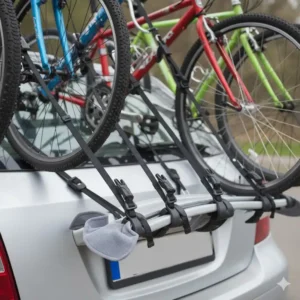
Understanding Three Bike Car Rack Types in Depth
Now that you’ve seen what’s available, let’s dig into what makes each type tick. Choosing between hitch, trunk, and roof isn’t just about installation—it’s about matching the rack to your lifestyle.
Hitch-Mounted Car Bike Rack 3: The Heavy-Duty Champion 🚙
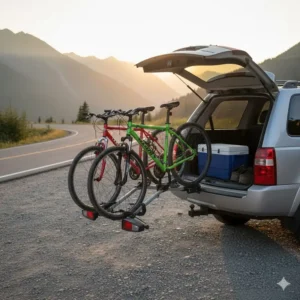
Hitch-mounted racks have become the gold standard for serious cyclists, and for good reason. They combine ease of use with serious load capacity and bike security.
How They Work: A hitch rack slides into your vehicle’s receiver hitch (either 1.25-inch or 2-inch) and secures with a pin or integrated locking mechanism. Most modern designs offer tool-free installation—slide in, tighten the knob, done.
There are two main styles:
- Hanging racks (like the Thule Apex XT) suspend bikes by their frames
- Platform/tray racks support bikes by their wheels (less common in 3-bike configurations due to size)
Advantages of Hitch-Mounted 3 Bike Racks:
✅ Load Capacity: Most can handle 30-40 lbs per bike, with some models supporting up to 60 lbs total. That means e-bikes aren’t automatically ruled out.
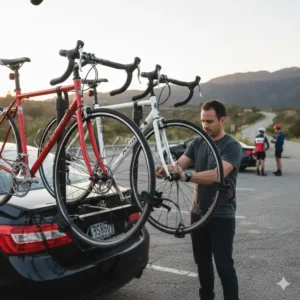
✅ Ease of Loading: You’re loading bikes at waist height, not over your head. If you’ve ever tried lifting a 30-lb mountain bike onto a roof rack, you’ll understand why this matters.
✅ Stability: Properly installed hitch racks have minimal wobble. The connection point is structural (your frame’s hitch mount) rather than cosmetic (your trunk).
✅ Access Features: Many offer tilt-away or swing-away mechanisms, letting you access your trunk with bikes still mounted.
✅ Security: Integrated locks can secure both bikes and rack, deterring theft at trailhead parking lots.
Disadvantages to Consider:
❌ Requires Hitch: If your vehicle doesn’t have a receiver hitch, you’ll need to install one (typically $150-$400 installed).
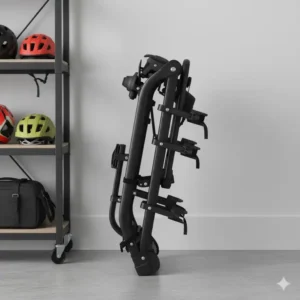
❌ Storage: These racks are bulky and heavy (15-30 lbs). Storing them in your garage requires wall space or floor space.
❌ Rear Visibility: Bikes block your rearview mirror and rear camera. You’ll rely on side mirrors entirely.
❌ Fuel Economy: The rack and bikes create significant drag, potentially reducing MPG by 5-15%.
❌ Cost: Quality hitch racks start around $200 and can exceed $600 for premium models.
Trunk-Mounted 3 Bike Racks: The Universal Solution 🎒
Trunk racks are the Swiss Army knives of bike transport—not perfect at anything, but capable of handling most situations reasonably well.
The Attachment Method: These racks use adjustable straps that hook onto your trunk or hatch edges. The rack rests on padded feet that contact your vehicle at several points (usually 6-8). When properly adjusted, the weight distributes across these contact points.
Why People Choose Trunk Racks:
✅ No Hitch Required: They work with sedans, hatchbacks, minivans, and SUVs right out of the box.
✅ Affordability: Quality trunk racks start around $80-$150—significantly less than hitch alternatives.
✅ Portability: At 10-15 lbs, you can easily carry them, store them, and transfer them between vehicles.
✅ Quick Removal: When you’re done with your ride, remove the rack and regain full trunk access. Many fold flat for storage.
The Honest Downsides:
❌ Weight Limits: Most cap out at 35 lbs per bike. Heavier bikes or e-bikes often exceed this limit.
❌ Installation Time: Adjusting all those straps correctly takes 10-15 minutes initially (faster once you’ve done it a few times).
❌ Trunk Access: You must remove the entire rack to open your trunk. This gets old on longer trips.
❌ Stability Concerns: They’re only as stable as your strap placement. User error can lead to wobbling or, in worst cases, rack failure.
❌ Paint Contact: Despite padding, there’s always some risk of scratches or marks, especially on long trips.
❌ Fit Variability: What works perfectly on one vehicle might not fit another, even within the same model year.
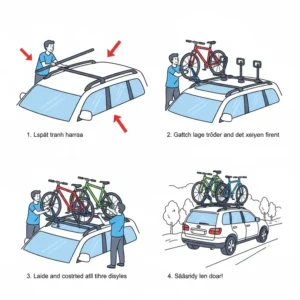
Roof-Mounted Solutions: The Three-Rack Approach 🏔️
For three bikes, you’d need three individual roof racks. This isn’t technically a “single rack,” but it’s worth discussing as an alternative transport method.
The Setup: Each bike gets its own dedicated carrier mounted to your roof crossbars. Common types include fork-mount (remove front wheel), frame-mount (clamp to frame), and wheel-mount (no wheel removal).
When Roof Racks Make Sense:
✅ Unobstructed Rear: Your rear camera, taillights, and trunk access remain completely clear.
✅ Security: Bikes are harder to steal when they’re eight feet off the ground and require tools to remove.
✅ Multiple Uses: The same crossbars can accommodate cargo boxes, kayak racks, or ski carriers.
✅ Minimal MPG Impact: While not zero, the impact is generally less than rear-mounted options.
The Significant Challenges:
❌ Height: Loading bikes requires lifting them overhead. At 6+ feet, this is manageable. At 5’2″, it’s a nightmare.
❌ Clearance: You WILL forget the bikes are up there and drive into a garage/parking structure. It happens to everyone eventually.
❌ Cost: Three quality roof racks plus crossbars can exceed $600-$900 total.
❌ Wind Noise: Expect increased noise at highway speeds, even with aerodynamic designs.
❌ Weather Exposure: Your bikes take the full brunt of rain, road spray, and bugs.
Essential Features Comparison Table
When comparing three bike car rack options, certain features make the difference between “good enough” and “genuinely great.” Here’s how different models stack up:
| Feature | Hitch Racks | Trunk Racks | Roof Racks |
|---|---|---|---|
| Load Capacity | 100-180 lbs total | 90-105 lbs total | 90-120 lbs total |
| Installation Time | 2-5 minutes | 10-15 minutes | 30-45 minutes (first time) |
| Bike Loading Height | Waist level | Trunk level | Overhead (6-7 ft) |
| Trunk Access | Tilt-away feature (most models) | None (must remove) | Full access |
| Rear Visibility | Partially obstructed | Fully obstructed | Unaffected |
| Frame Contact Risk | Varies by type | Yes (hanging points) | Varies by mount style |
| Theft Deterrence | Integrated locks common | Cable locks sometimes | Locks required separately |
| Fuel Economy Impact | -10% to -15% | -10% to -15% | -5% to -10% |
| Vehicle Requirement | Receiver hitch | Trunk/hatch | Roof crossbars |
Benefits of Three Bike Car Racks vs. Alternatives
| Transport Method | Setup Complexity | Bike Protection | Cost | Best Use Case |
|---|---|---|---|---|
| 3 Bike Car Rack | Low to Medium | Good | $80-$600 | Weekend rides, regular trail access |
| Interior Transport | High (wheel removal) | Excellent | $0 | Short distances, maximum protection |
| Truck Bed (3 bikes) | Medium | Fair | $100-$200 | Pickup truck owners, off-road access |
| Cargo Trailer | Very High | Excellent | $800-$2000+ | Long trips, multiple sports |
| Vehicle-Integrated | None | Good | $500-$1500 (OEM) | New vehicle purchase, integrated solution |
Real-World Benefits Beyond Transportation 🌟
The right three bike car rack delivers value beyond just “it holds bikes”:
1. Spontaneity Enablement When your rack is easy to install, you’re more likely to actually use your bikes. That impromptu sunset ride? It happens when the barrier to loading bikes is low.
2. Social Cycling Having capacity for three bikes means you’re the person who can bring friends or family along. One bike is exercise. Three bikes is an experience.
3. Resale Value Quality racks retain value surprisingly well. A well-maintained Thule or Yakima can be resold for 50-70% of purchase price after several years of use.
4. Vehicle Protection A good rack prevents the chaos of bikes inside your vehicle—no greasy chains on upholstery, no scratched interior panels, no derailleurs catching on seat belts.
5. Psychological Comfort There’s something about knowing your bikes are properly secured that lets you actually enjoy the drive instead of constantly checking your mirrors.
📊 Price vs. Capacity Analysis
| Price Range | Typical Features | Best Examples | Recommended For |
|---|---|---|---|
| $80-$150 | Basic trunk racks, 90-100 lb capacity | Allen Sports, SportRack | Occasional users, budget-conscious buyers |
| $150-$250 | Premium trunk racks or budget hitch | Saris Bones EX, basic hitch models | Regular users without hitch |
| $250-$400 | Mid-range hitch racks | Thule Apex XT, IKURAM | Frequent users, mixed bike types |
| $400-$600+ | Premium hitch racks, platform styles | Thule VeloSpace XT, Kuat models | Serious cyclists, e-bikes, maximum convenience |
Bike Type Compatibility Comparison
Different bikes have different needs. Here’s how three bike car rack types handle various cycling disciplines:
| Bike Type | Hitch Racks | Trunk Racks | Roof Racks | Special Considerations |
|---|---|---|---|---|
| Road Bikes | ✅ Excellent | ✅ Excellent | ✅ Excellent | Lightweight, standard geometry |
| Mountain Bikes | ✅ Excellent | ✅ Good | ✅ Excellent | Wider tires (check clearance) |
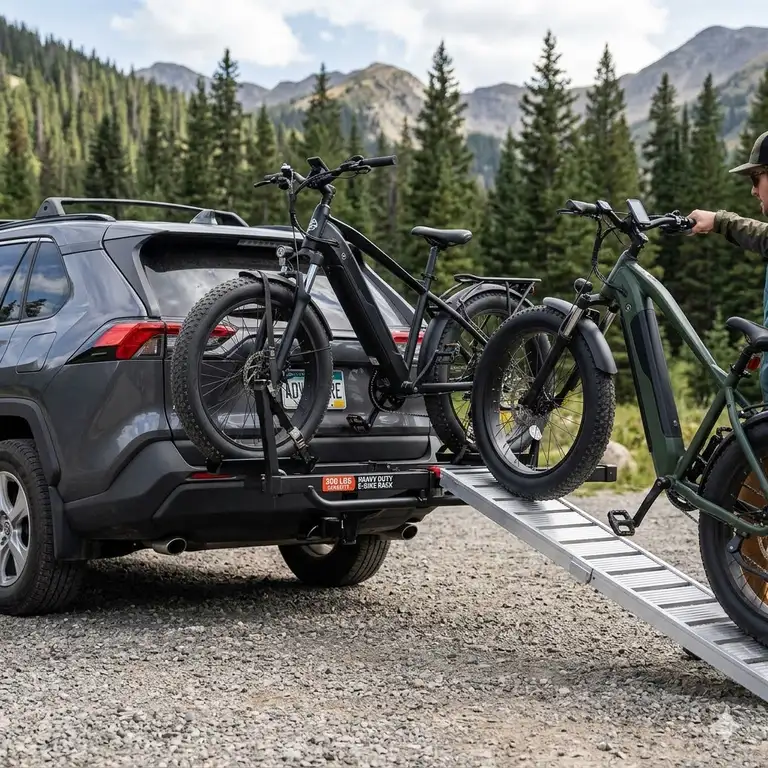
| E-Bikes | ✅ Good (check weight) | ❌ Usually too heavy | ❌ Difficult to lift | Verify 50+ lb capacity |
| Fat Bikes | ⚠️ Platform racks only | ❌ Too wide | ⚠️ Special mounts needed | 4+ inch tires need special accommodation |
| Kids’ Bikes | ✅ Excellent | ✅ Excellent | ✅ Good (shorter) | May need frame adapters |
| Cargo Bikes | ❌ Too long/heavy | ❌ Too long/heavy | ❌ Won’t fit | Usually requires specialty solutions |
| Full-Suspension | ✅ Excellent | ⚠️ Frame geometry issues | ✅ Excellent | Rear suspension can interfere with trunk racks |
What to Know Before Buying Your Three Bike Car Rack
🔍 The Hitch Question
First things first: does your vehicle have a trailer hitch? If you’re not sure, get out of your chair and go look. I’ll wait.
Back? No hitch? You’ve got three options:
- Install a hitch: Cost ranges from $150 (DIY with aftermarket kit) to $400 (professional installation). U-Haul offers competitive pricing and same-day service in many locations.
- Choose a trunk rack: This is the path of least resistance for many sedan and hatchback owners.
- Go with a roof system: If you already have crossbars or plan to add them for multiple uses.
Yes, a hitch? Congratulations, you’ve unlocked the entire category of hitch-mounted racks. Now you need to determine if you have a 1.25-inch or 2-inch receiver. Measure the square opening’s inside dimension—it’s either one or the other.
Important: Class I and II hitches (typically 1.25-inch) have lower weight ratings. If you’re hauling three heavy bikes, verify your hitch’s tongue weight capacity. Most bike racks themselves weigh 15-30 lbs, plus 60-90 lbs of bikes.
🎯 Frame Compatibility Considerations
Modern bikes come in bewildering frame designs. Here’s what to watch for:
Step-Through Frames: Traditional bike racks assume a horizontal top tube. Step-through designs (women’s bikes, some comfort bikes) require a frame adapter bar—essentially a fake top tube that bridges the gap. Saris, Thule, and Yakima all sell these for $20-$40.
Full-Suspension Mountain Bikes: The rear suspension can interfere with trunk rack cradles. Many fit fine, but some require creative positioning or simply don’t work. Hitch racks are generally more forgiving here.
Carbon Frames: If you’re rocking a high-end carbon bike, frame-clamping racks make me nervous. Many manufacturers void warranties if you clamp their frames. Options:
- Use platform/tray-style racks that hold bikes by wheels (expensive)
- Use a frame protector (available from most rack manufacturers)
- Accept the minor risk (most people do this)
Wheel Size Extremes: Fat bikes (4+ inch tires) and some plus-size mountain bikes (3-inch tires) won’t fit standard rack cradles. Check the maximum tire width specification. Some racks like the Thule VeloSpace XT explicitly accommodate fat bikes up to 4.7 inches.
🚗 Vehicle Fit Guide Importance
This deserves its own section because ignoring it causes 90% of bike rack problems.
Every reputable rack manufacturer maintains a fit guide on their website. Use it. Seriously. I know your friend’s rack worked on their Honda Civic, but Honda made 47 different Civic variations over the years, and they’re not all compatible.
For Trunk Racks: Trunk rack fit is the trickiest because vehicle rear-end designs vary wildly. A rack that works perfectly on a 2023 Subaru Outback might not fit a 2024, even though they look almost identical.
Red flags that suggest compatibility issues:
- Steep rear window angles
- Large spoilers (though some racks like the Saris Bones EX specifically address this)
- Spare tire mounted on the rear hatch
- Extensive body curves or character lines
- Soft-top convertibles (generally incompatible)
For Hitch Racks: Fit is more straightforward but not foolproof. Concerns include:
- Some luxury vehicles have hitches that sit unusually high or low
- Spare tires mounted underneath can limit rack tilt functionality
- Exhaust pipe positioning sometimes interferes with rack arms
The Golden Rule: If you have any doubt, call the manufacturer’s customer service. They deal with fit questions all day and can usually give you a straight answer in two minutes.
⚖️ Weight Capacity Reality Check
Here’s where marketing meets physics, and physics always wins.
Most three bike car racks advertise 90-150 lb total capacity. But there’s nuance:
Per-Bike Maximums: A rack with 135 lb total capacity typically limits individual bikes to 35-45 lbs. This means you can’t load one 80-lb e-bike and two 27-lb road bikes, even though the math suggests it’s under total capacity.
Real Bike Weights:
- Road bikes: 15-20 lbs (high-end carbon) to 22-28 lbs (aluminum)
- Mountain bikes: 28-35 lbs (typical hardtail) to 35-45 lbs (full-suspension)
- E-bikes: 45-70 lbs (varies wildly by motor/battery configuration)
- Kids’ bikes: 15-25 lbs (depends on size)
Safety Margins: I always recommend staying 10-15% under maximum rated capacity, especially for long highway drives. Wind resistance and road vibrations create dynamic loads that exceed static weight.
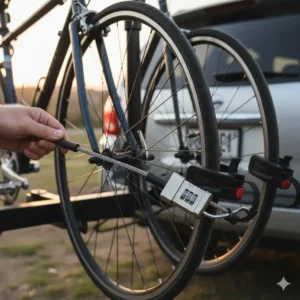
🔐 Security Features Worth Having
If you’re leaving bikes on a rack anywhere someone might walk by, security matters.
Integrated Locks: The best racks include two types:
- Rack-to-vehicle locks: Prevent someone from simply removing your entire rack
- Bike-to-rack locks: Cable or integrated systems that secure bikes to the rack
Reality Check on Locks: Every manufacturer includes a disclaimer that their locks “reduce risk” but aren’t guarantees. That’s legal speak for “a determined thief with bolt cutters can defeat these in 30 seconds.”
Cable locks are psychological deterrents that stop opportunistic theft. For real security:
- Never leave bikes unattended for extended periods
- Use additional U-locks through frames and wheels
- Consider removing front wheels and taking them with you
- Park in visible, high-traffic areas
Insurance Consideration: Check your homeowner’s or renter’s insurance policy. Many cover bike theft even when bikes are on your vehicle, but there might be coverage limits or deductibles.
Installation & Maintenance: What Nobody Tells You
Initial Installation: Budget More Time Than You Think ⏰
Manufacturer claims of “5-minute installation” are technically true… once you know what you’re doing. Your first installation will take longer. How much longer depends on the rack type:
Hitch Rack First Install: 20-40 minutes Tasks include:
- Removing protective coverings from hitch receiver
- Figuring out how tight the receiver knob should be (snug but not stripped)
- Adjusting any anti-wobble mechanisms
- Testing the tilt/fold functions
- Reading the actual instructions because you thought you could wing it
Trunk Rack First Install: 30-60 minutes The learning curve includes:
- Understanding which straps go where (they’re not always obvious)
- Adjusting hub settings for your vehicle
- Getting strap tension right (not too loose, not window-cracking tight)
- Positioning feet so they’re making solid contact
- Realizing you need to readjust everything after the first test drive
Pro Tips for Faster Setup:
- Watch the manufacturer’s installation video before unboxing
- Have a second person help position the rack initially
- Take photos once you have it adjusted correctly (for next time)
- Mark strap positions with a small piece of tape
Ongoing Maintenance That Extends Rack Life 🛠️
A quality three bike car rack should last 10+ years with proper care. Here’s how to get there:
After Each Use:
✅ Wipe down straps and padding (removes road grime and salt)
✅ Check for any loosened bolts or connections
✅ Fold or retract arms to reduce stress on mechanisms
✅ Store in a dry location (garages are fine, outdoor storage leads to faster deterioration)
Monthly (during active use):
✅ Inspect all straps for fraying or UV damage
✅ Test locking mechanisms
✅ Clean and lubricate any pivot points
✅ Check tightness of any bolted connections
Seasonally:
✅ Deep clean with soap and water (removes accumulated salt/grime)
✅ Apply silicone spray to straps (maintains flexibility)
✅ Inspect for any rust spots (address immediately)
✅ Tighten any connections that have loosened over time
Common Failure Points to Monitor:
- Strap attachment points (where straps connect to rack frame)
- Plastic components (become brittle with UV exposure over years)
- Locking mechanisms (dirt ingress can cause jamming)
- Foam padding (compresses over time, losing protective ability)
Seasonal Storage Strategies 🏠
Unless you’re a year-round cyclist (respect!), your rack will spend time in storage. Do it right:
Option 1: Wall Mounted Heavy-duty hooks mounted to wall studs work great for hitch racks. Keeps them off the floor and visible (so you remember to check on them occasionally).
Option 2: Under-Trunk Storage Trunk racks fold flat enough to slide under most vehicle cargo floors. Convenient for spontaneous rides but exposes rack to more temperature extremes.
Option 3: Ceiling Mounted Pulley systems or ceiling hooks work in garages with adequate height. Gets racks completely out of the way but makes them harder to grab for quick trips.
Option 4: Original Packaging If you have storage space, keep the original box. It protects the rack and reminds you of all the pieces that came with it.
Storage Don’ts:
❌ Don’t leave racks outside all winter (UV damage, moisture, temperature cycles)
❌ Don’t store near lawn chemicals or road salt (accelerates corrosion)
❌ Don’t hang by straps for extended periods (causes stretching)
❌ Don’t store with bikes still attached (unnecessary stress on rack and bikes)
Legal & Practical Considerations You Should Know 📋
Visibility & Lighting Requirements
In most US states, it’s technically illegal to obscure your license plate or taillights. The reality? Enforcement varies wildly. But here’s what you should know:
License Plate Visibility: Many trunk and hitch racks block your license plate. Solutions:
- Some racks include integrated license plate holders
- You can purchase aftermarket license plate mounts that extend beyond the bikes
- Some states allow you to temporarily remove the plate and place it visibly in a rear window
Lighting Requirements: If your bikes obstruct your vehicle’s lights, you may need supplementary lighting. Some hitch racks include LED light boards that connect to your vehicle’s wiring. For trunk racks, this is rarely an issue unless you’re driving at night.
The Practical Approach: Most people don’t install supplementary lighting for daytime recreational riding. If you’re taking a long road trip or driving after dark regularly, invest in proper lighting.
Height & Clearance Awareness 🚧
This sounds obvious until you’re the one who forgot:
Parking Structures: With bikes on top (roof racks) or extending upward (some hitch configurations), your effective vehicle height increases by 3-5 feet. The brutal truth? People drive into parking structures with bikes on their roof racks constantly. Put a sticky note on your dashboard: “BIKES ON ROOF.”
Low Branches: Off-road parking at trailheads sometimes has low-hanging branches. What would normally clear your SUV might not clear bikes on your roof.
Drive-Through Anything: Fast food, car washes (obviously), bank ATMs—bikes on roof racks make these impossible or damaging.
Your Garage: Measure your garage door height before loading bikes. Mark the floor with tape at the safe stopping point.
Insurance & Liability 🛡️
Bike Damage During Transport: Most auto insurance policies don’t cover bikes damaged while on a rack. Your homeowner’s or renter’s insurance might, but it’s usually subject to your deductible. If you’re transporting expensive bikes regularly, consider:
- Specialty bike insurance (companies like Markel or Velosurance)
- Increased personal property coverage limits
- Documenting bike condition before transport (photos)
Rack Failure Liability: If your rack fails and causes an accident, you could be liable. This is why using racks properly (within weight limits, correctly installed) matters legally, not just practically.
Damage to Other Vehicles: If your protruding rack contacts another vehicle in parking lots or tight spaces, you’re at fault. Be conscious of your increased length/width, especially when backing up.
Common Problems & Solutions
Problem: Rack Won’t Fit My Vehicle 😤
Symptoms: Straps too short/long, feet don’t make solid contact, hub settings don’t include your vehicle, angles are wrong.
Solutions:
- Triple-check the fit guide (did you select the exact year and body style?)
- Contact manufacturer support (they may have specific installation tips)
- Look for vehicle-specific adapters (hatch huggers, frame adapters)
- If truly incompatible, return it (keep packaging for first 30 days)
Preventable: 95% of fit issues stem from not checking the fit guide carefully or assuming “close enough” vehicles are interchangeable.
Problem: Bikes Sway or Contact Each Other 😟
Symptoms: Bikes touching during transport, excessive movement, scratched frames.
Solutions:
- Check strap tension (should be snug, not loose)
- Use anti-sway cradles if included
- Alternate bike directions (front wheel to back, back wheel to front)
- Add pool noodles or padding between bikes as buffer
- For trunk racks, adjust arm spacing if possible
- Consider frame protector wraps for expensive bikes
Prevention: Load heaviest/widest bike closest to vehicle, lighter bikes on outer positions.
Problem: Rack Wobbles or Rattles 🔊
Symptoms: Side-to-side or up-down movement, clanking sounds, general lack of stability.
Solutions for Hitch Racks:
- Verify hitch pin is fully inserted and secure
- Use an anti-rattle device or shim (many racks include these)
- Check that tightening knob is actually tight
- Inspect hitch receiver for debris or damage
Solutions for Trunk Racks:
- Ensure all contact points are making firm connection
- Re-tighten all straps (they can loosen over time)
- Check that feet haven’t shifted position
- Add additional padding at contact points if necessary
Prevention: Regular inspection and retightening. Racks naturally loosen slightly during first few uses as materials settle.
Problem: Can’t Access Trunk/Hatch 🚪
Symptoms: Bikes block trunk opening, tilt function doesn’t provide enough clearance.
Solutions:
- Remove bikes (annoying but sometimes necessary)
- Verify you’re using tilt function correctly (some require pedal press + lever pull)
- Check if rack is installed too high/low on hitch
- Consider adding a hitch extender (moves rack further from vehicle)
- For trunk racks, removal is usually the only option
Prevention: Test trunk access before your first trip. Not all “tilt-away” racks provide sufficient clearance for all vehicle/bike combinations.
Problem: Difficult to Load Heavy Bikes 💪
Symptoms: Struggling to lift bikes onto rack, dropping bikes during loading, back strain.
Solutions:
- Load bikes individually (never carry more than one at a time)
- Position rack at optimal height (lower for shorter people)
- Remove unnecessary accessories before loading (panniers, pumps, lights)
- Have someone help lift heavier e-bikes
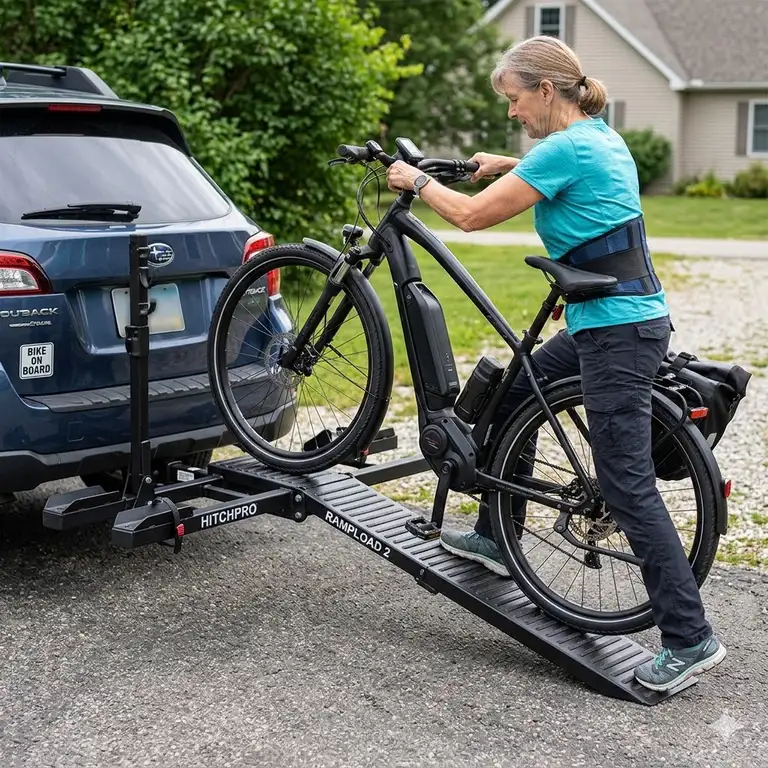
- Consider a loading ramp accessory (available for some premium racks)
- For roof racks, use step stool or vehicle’s running boards
Prevention: Choose a rack type that matches your physical capability. There’s no shame in admitting roof racks aren’t practical for you.
🛒 Make Your Choice: Where to Buy
Why Amazon Works for Most Buyers
Look, I get it—supporting local bike shops is great. But for bike racks specifically, Amazon offers compelling advantages:
✅ Price Competitiveness: Often 15-30% less than local shops
✅ Customer Reviews: Thousands of verified purchase reviews
✅ Easy Returns: 30-day return window with free return shipping
✅ Fast Shipping: Prime delivery gets racks to you in 1-2 days
✅ Purchase Protection: A-to-Z Guarantee for any issues
When to Buy Local Instead:
- You want hands-on fit verification before purchase
- You need installation assistance or advice
- You’re buying an expensive rack and value relationship with shop
- You want to support local business (totally valid reason)
✨ Get Rolling with the Perfect Rack Today! 🚴♂️
Don’t let bike transport headaches keep you from your next cycling adventure. Browse the products mentioned in this guide to find current pricing and availability. Each link takes you directly to trusted retailers where you can read additional reviews, check specifications, and make your purchase with confidence. Your perfect three bike car rack solution is just a click away!
Final Thoughts: Your Three Bike Solution Awaits
After diving deep into the world of racks that carry three bikes, here’s the truth I’ve learned: there’s no single “best” rack. There’s only the best rack for your situation.
If you have a hitch and value convenience, the Thule Apex XT 4 or Yakima FullBack 3 deliver proven performance. If you’re working without a hitch, the Saris Bones EX 3 has earned its legendary status for good reason. For budget-conscious buyers who don’t want to sacrifice quality, the Allen Sports Premier S103 or IKURAM hitch rack punch well above their price point.
The key is understanding your priorities:
- Frequency: Daily trailhead trips demand different features than twice-yearly vacation use
- Bike Types: E-bikes need higher capacity than lightweight road bikes
- Vehicle: Your car’s existing features (or lack thereof) limit options
- Budget: Quality racks exist at every price point, but premium features cost premium dollars
Whatever you choose, remember that even the best rack in the world is only as good as its installation. Take time to set it up correctly, check it regularly, and maintain it properly. Your bikes (and your peace of mind) will thank you.
The road is calling. The trails are waiting. Your bikes are ready. Now you’ve got a way to bring them all along for the adventure.
Frequently Asked Questions
✅ Hitch bike racks mount to your vehicle's receiver hitch and typically offer higher weight capacity (100-180 lbs total), easier loading at waist height, and better stability. Trunk bike racks attach via straps to your trunk or hatchback, require no hitch, cost less ($80-$200), but have lower weight limits (90-105 lbs) and require rack removal for trunk access...
✅ Some three bike car racks can accommodate e-bikes, but you must verify the weight capacity carefully. Most e-bikes weigh 45-70 lbs, which exceeds the per-bike limit of many trunk racks (typically 35 lbs max per bike). Look for hitch racks with 40-50 lb per-bike capacity and verify your total weight doesn't exceed the rack's maximum...
✅ To minimize bike movement and contact, ensure all straps are properly tightened, use integrated anti-sway cradles if included, alternate bike directions (front wheel to back, back wheel to front), and consider adding foam padding or pool noodles between bikes as buffers. Loading the heaviest bike closest to the vehicle and lighter bikes on outer positions also helps...
✅ No, three bike car racks are not universally compatible with all vehicles. Hitch racks require a 1.25 inch or 2 inch receiver hitch (which many vehicles don't have from the factory). Trunk racks fit most sedans, hatchbacks, and SUVs but struggle with vehicles having steep rear angles, large spoilers, or rear-mounted spare tires...
✅ For road bikes, trunk racks like the Saris Bones EX 3 work excellently due to lighter weight and standard geometry. For mountain bikes with wider tires and heavier frames, hitch racks like the Thule Apex XT 4 or KYX 3 Bike Hitch Mount offer better weight capacity and stability. Fat bikes require specific accommodation for 4 plus inch tires... ❓ What is the difference between a hitch bike rack and a trunk bike rack for carrying 3 bikes?
❓ Can I use a three bike car rack with an electric bike?
❓ How do I prevent my bikes from swaying or scratching each other on a 3 bike rack?
❓ Do three bike car racks fit all vehicle types?
❓ What is the best three bike car rack for road bikes versus mountain bikes?
Recommended for You
- Swing Out Bike Carrier: 7 Best Solutions for 2025
- E Bike Hitch Carrier: 7 Powerful Solutions for 2025
- Electric Bike Storage: 7 Smart Solutions for 2025 to Maximize Space & Security
Disclaimer: This article contains affiliate links. If you purchase products through these links, we may earn a small commission at no additional cost to you.
✨ Found this helpful? Share it with your friends! 💬🤗