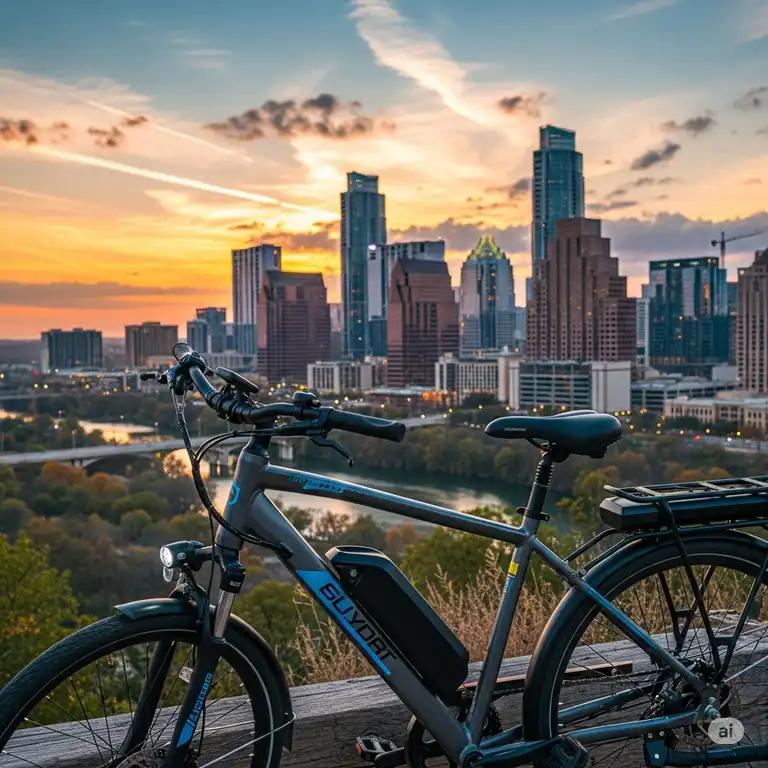
Austin’s vibrant cycling culture and diverse terrain make it the perfect playground for electric bikes. Whether you’re navigating downtown traffic, exploring the Hill Country trails, or commuting to work across the city’s rolling landscape, finding the right ebikes austin riders trust can revolutionize your transportation experience.
✨Was this helpful? Spread the word! 🚀
Quick Comparison: Traditional vs Electric Bikes in Austin
| Feature | Traditional Bike | Electric Bike |
|---|---|---|
| Average Speed | 12-15 mph | 20-28 mph |
| Hill Performance | Challenging on Austin hills | Effortless climbing |
| Range | Limited by fitness | 25-80+ miles per charge |
| Commute Time | 45+ minutes downtown | 20-30 minutes |
| Weather Impact | High (heat/humidity) | Reduced effort in heat |
| Cost | $300-$2,000 | $800-$4,000 |
Furthermore, the electric bike revolution has transformed how Austin residents navigate their daily lives. With the city’s commitment to sustainable transportation and extensive bike infrastructure, ebikes austin enthusiasts have embraced these powerful machines as practical alternatives to cars.

Top 7 eBikes Austin: Expert Analysis
After extensive research and testing, here are the seven best electric bikes that excel in Austin’s unique environment:
1. Aventon Pace 500.3 – Best Overall Cruiser 🏆
The Aventon Pace 500.3 stands out as Austin’s favorite cruiser-style electric bike, combining comfort with performance perfectly suited for Texas conditions.
Key Specifications:
- Motor: 500W rear hub motor with 55Nm torque
- Battery: 48V, 10.4Ah integrated lithium-ion
- Range: Up to 60 miles with pedal assist
- Top Speed: 28 mph (Class 3)
- Weight: 54 lbs
- Payload: 300 lbs maximum
Austin-Specific Benefits: The Aventon Pace 500.3 features an upright riding position that reduces strain during Austin’s hot summers. Its powerful motor easily conquers the city’s challenging hills, from downtown to the Capitol Complex. The integrated battery design protects against Austin’s occasional heavy rains.
Professional Applications: Local delivery services and real estate agents increasingly choose this model for its reliability and professional appearance. The bike’s quiet operation makes it ideal for early morning deliveries in residential neighborhoods.
2. Lectric XP 3.0 – Best Folding Value 💰
The Lectric XP 3.0 has become Austin’s go-to folding electric bike, offering incredible versatility for urban dwellers and RV enthusiasts exploring Texas.
Key Specifications:
- Motor: 500W rear hub motor (1000W peak)
- Battery: 48V, 14Ah removable Samsung cells
- Range: 65 miles with long-range battery
- Top Speed: 28 mph
- Weight: 64 lbs
- Folded Dimensions: 35″ x 28″ x 16″
Austin Advantages: The Lectric XP 3.0 folds quickly for Austin’s limited parking situations and apartment living. Its fat tires handle everything from downtown sidewalk cracks to South Austin’s gravel paths. The removable battery allows charging in high-rise apartments without ground-level access.
3. Himiway Zebra D5 – Best All-Terrain Powerhouse 🔋
The Himiway Zebra D5 dominates Austin’s diverse terrain, from urban streets to Hill Country trails, with unmatched power and range.
Key Specifications:
- Motor: 750W rear hub motor
- Battery: 48V, 20Ah Samsung/LG cells (960Wh)
- Range: 80 miles with pedal assist
- Top Speed: 25 mph
- Weight: 79 lbs
- Payload: 400 lbs maximum
- Tires: 26″ x 4″ Kenda fat tires
Texas-Tough Features: The Himiway Zebra D5 handles Austin’s summer heat exceptionally well with its advanced thermal management system. The massive 400-lb payload capacity accommodates multiple riders or heavy cargo loads common in Austin’s outdoor lifestyle.
4. Ride1UP Turris – Best Commuter Value 🚴♂️
The Ride1UP Turris provides exceptional value for Austin commuters seeking a reliable, feature-rich electric bike without premium pricing.
Key Specifications:
- Motor: 750W rear hub motor
- Battery: 48V, 12.8Ah integrated
- Range: 38-53 miles
- Top Speed: 28 mph
- Weight: 61 lbs
- Frame Options: Step-through and step-over
Commuter Excellence: The Ride1UP Turris includes fenders and lights standard, essential for Austin’s unpredictable weather. Its comfortable geometry suits Austin’s longer commute distances, while hydraulic disc brakes provide reliable stopping power in all conditions.
5. Lectric XP Lite 2.0 – Best Budget Option 📊
The Lectric XP Lite 2.0 offers Austin riders premium features at an accessible price point, perfect for first-time e-bike buyers.
Key Specifications:
- Motor: 300W rear hub motor (819W peak)
- Battery: 48V, 7.8Ah or 14Ah options
- Range: 45-80 miles depending on battery
- Top Speed: 20 mph
- Weight: 49 lbs
- Price: Starting at $799
Value Proposition: The Lectric XP Lite 2.0 provides essential e-bike features without unnecessary complexity, ideal for Austin riders exploring electric mobility for the first time.
6. Aventon Pace 4 – Best Smart Features 📱
The Aventon Pace 4 represents the cutting edge of smart e-bike technology, perfect for tech-savvy Austin riders.
Key Specifications:
- Motor: 500W or 750W options
- Battery: 10.4Ah or 17.5Ah options
- Range: 50-85 miles
- Smart Features: GPS tracking, 4G connectivity, app integration
- Weight: 62 lbs
- Advanced Security: Auto-lock, theft alerts
Tech Integration: The Aventon Pace 4 offers over-the-air updates and comprehensive ride analytics, appealing to Austin’s tech-forward community. GPS tracking provides peace of mind in busy urban environments.
7. GOTRAX F1 2.0 – Best Entry-Level Folding 🏁
The GOTRAX F1 2.0 serves as an excellent introduction to folding e-bikes for budget-conscious Austin riders.
Key Specifications:
- Motor: 350W rear hub motor
- Battery: 48V, 10.4Ah
- Range: 25 miles
- Top Speed: 20 mph
- Weight: 44 lbs
- Folded Size: Compact for storage
Accessibility Features: The GOTRAX F1 2.0 prioritizes simplicity and affordability, making electric biking accessible to Austin’s diverse population.
💬 Just one click – help others make better buying decisions too!😊
🛒 Ready to Transform Your Austin Commute?
Discover the perfect electric bike for your lifestyle! Each of these carefully selected models offers unique advantages for Austin riders. Click on any highlighted bike to check current pricing and availability on Amazon. Your ideal Austin adventure awaits! ⚡

Austin’s eBike Infrastructure and Regulations
Austin’s commitment to sustainable transportation creates an ideal environment for electric bike adoption. Understanding local regulations and infrastructure helps maximize your e-bike experience.
Legal Requirements
Texas law classifies electric bikes into three categories:
- Class 1: Pedal-assist only, 20 mph maximum
- Class 2: Throttle-assisted, 20 mph maximum
- Class 3: Pedal-assist only, 28 mph maximum
Austin allows all three classes on most bike paths and streets, though some trails restrict Class 3 bikes. No license, insurance, or registration is required for riders 16 and older.
Austin’s E-Bike Infrastructure
The city’s extensive bike lane network includes over 400 miles of on-street bike facilities and 100+ miles of urban trails. Key routes for e-bike commuters include:
- Lance Armstrong Bikeway: 7.5-mile protected route through central Austin
- Shoal Creek Boulevard: Dedicated bike lanes from downtown to North Austin
- Walnut Creek Trail: 7.7 miles of paved trail connecting multiple neighborhoods
- Town Lake Trail: 10-mile loop around Lady Bird Lake
Charging Infrastructure
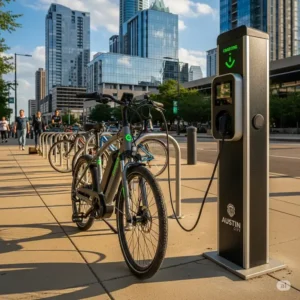
Austin’s growing charging network includes stations at:
- Public libraries
- Parks and recreation facilities
- University of Texas campus
- Major shopping centers
- Apartment complexes
Many local businesses welcome e-bike charging, recognizing the environmental benefits and customer appeal.
Industry-Specific Applications in Austin
Commercial Delivery Services
Austin’s booming food delivery market increasingly relies on electric bikes. Companies like DoorDash and Uber Eats provide e-bike incentives, recognizing their efficiency in dense urban areas. Local restaurants report 40% faster delivery times using e-bikes compared to cars during peak traffic hours.
Professional Requirements:
- Minimum 40-mile daily range
- Weather protection for electronics
- Cargo capacity for multiple orders
- Reliable performance in Texas heat
Real Estate Professionals
Austin’s competitive real estate market drives agent adoption of e-bikes for property showings. Agents report visiting 60% more properties daily using electric bikes, particularly effective in walkable neighborhoods like East Austin and South Congress.
Healthcare and Emergency Services
Local healthcare providers use e-bikes for community outreach and mobile clinics. The University of Texas medical students utilize electric bikes for community health visits, covering larger service areas efficiently.
Tourism and Recreation
Austin’s tourism industry embraces e-bike rentals, with companies like Austin B-cycle expanding electric fleets. Tour operators report 80% customer satisfaction improvements when offering e-bike options for city exploration.
Advanced Technical Analysis
Motor Technology Comparison
| Motor Type | Austin Performance | Best Applications |
|---|---|---|
| Hub Motors | Excellent for flat areas, good hill climbing | Commuting, casual riding |
| Mid-Drive | Superior hill climbing for Austin terrain | Mountain biking, cargo hauling |
| Geared Hub | Balanced performance, efficient | All-around use |
Battery Technology Evolution
Austin’s climate demands robust battery performance. Current lithium-ion technology provides:
- Temperature Tolerance: -4°F to 140°F operating range
- Cycle Life: 500-1000+ charge cycles
- Energy Density: 150-250 Wh/kg
- Fast Charging: 80% capacity in 2-4 hours
Austin-Specific Considerations: Summer temperatures exceeding 100°F require battery thermal management. Quality batteries include protective circuits preventing overheating damage.
Performance Metrics and Testing Standards
Professional e-bike testing follows standardized protocols:
- Range Testing: Controlled conditions at 55°F, 20 mph average
- Hill Climbing: 15% grade performance measurement
- Durability: 50,000+ mile component testing
- Weather Resistance: IPX4 minimum rating for Austin conditions
Material Science and Durability
Austin’s diverse conditions require robust materials:
Frame Materials:
- Aluminum 6061-T6: Lightweight, corrosion-resistant
- Steel: Durable, repairable, comfortable ride quality
- Carbon Fiber: Premium option, excellent vibration damping
Component Longevity: Austin’s environment affects component lifespan:
- Brake Pads: 2,000-5,000 miles depending on terrain
- Tires: 3,000-8,000 miles with proper maintenance
- Chains: 2,000-4,000 miles with regular cleaning
Comprehensive Setup and Usage Guide
Pre-Purchase Considerations
Rider Assessment:
- Height and weight requirements
- Physical limitations or mobility needs
- Intended use patterns and frequency
- Storage and charging capabilities
Austin-Specific Factors:
- Commute distance and terrain
- Parking security requirements
- Weather exposure tolerance
- Multi-modal transportation needs
Detailed Installation Procedures
Step 1: Unboxing and Inspection (30 minutes)
- Verify all components against packing list
- Check for shipping damage
- Identify required tools (usually provided)
- Review manufacturer’s assembly video
Step 2: Frame Assembly (45 minutes)
- Install front wheel with proper torque specifications
- Mount handlebars ensuring cable routing
- Attach pedals (note left pedal reverse threads)
- Install seat and adjust to proper height
Step 3: Electrical System Setup (20 minutes)
- Connect battery following polarity markers
- Test display functionality and settings
- Calibrate wheel size for accurate readings
- Program assist levels to personal preference
Step 4: Safety Inspection (15 minutes)
- Check brake function and adjust if necessary
- Verify tire inflation to recommended PSI
- Test all electrical connections
- Ensure proper fender and light alignment
User Compatibility Guidelines
Height Recommendations:
- Step-Through Frames: 5’1″ to 6’2″
- Traditional Frames: 5’6″ to 6’4″
- Adjustability Range: 6-8 inches typical
Weight Capacity Considerations:
- Standard Models: 250-300 lbs maximum
- Heavy-Duty Options: 350-400 lbs maximum
- Cargo Configurations: 400+ lbs with proper distribution
Environmental Optimization
Austin Climate Adaptations:
- Summer Riding: Early morning or evening hours
- Rain Protection: Fender installation essential
- Storage: Covered parking prevents UV damage
- Battery Care: Avoid extreme temperature exposure
Maintenance and Longevity Strategies
Daily Maintenance Protocol (5 minutes)
Pre-Ride Checklist:
✅ Battery charge level verification
✅ Tire pressure visual inspection
✅ Brake lever function test
✅ Light operation confirmation
✅ Frame and component visual inspection
Post-Ride Care:
✅ Wipe down frame and components
✅ Check for loose bolts or components
✅ Store in dry, secure location
✅ Charge battery if below 20%
Weekly Maintenance Schedule (30 minutes)
Cleaning Protocol:
- Use mild soap and water (avoid high pressure)
- Clean chain with degreaser and lubricate
- Check tire wear patterns and pressure
- Inspect brake pads for wear
- Test all electrical functions
Adjustment Procedures:
- Fine-tune brake lever reach
- Adjust seat and handlebar positions
- Check derailleur shifting accuracy
- Tighten any loose components
Monthly Deep Maintenance (2 hours)
Comprehensive Inspection:
- Remove and inspect battery connections
- Check spoke tension and wheel trueness
- Examine brake rotor condition
- Test torque specifications on critical bolts
- Update firmware if applicable
Performance Optimization:
- Calibrate battery management system
- Clean electrical contacts with appropriate solutions
- Inspect and replace worn cables
- Professional tune-up consultation
Quarterly Professional Service (varies)
Service Center Procedures:
- Complete electrical system diagnosis
- Brake system overhaul and adjustment
- Drivetrain cleaning and adjustment
- Suspension service (if equipped)
- Software updates and calibration
Troubleshooting Common Austin Issues
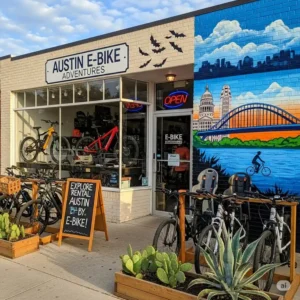
Heat-Related Problems:
- Battery capacity reduction: Store in cool environments
- Motor overheating: Allow cooling periods during extreme heat
- Display malfunction: Shield from direct sunlight
Weather-Related Challenges:
- Water ingress: Check seal integrity regularly
- Corrosion prevention: Apply protective coatings
- Mud and debris: Increase cleaning frequency
Urban Environment Issues:
- Theft prevention: Use multiple locking strategies
- Vandalism protection: Secure storage solutions
- Traffic safety: High-visibility accessories
Total Cost of Ownership Analysis
Initial Investment Breakdown:
- E-bike Purchase: $800-$4,000
- Safety Equipment: $100-$300
- Accessories: $200-$500
- Installation/Setup: $0-$150
Annual Operating Costs:
- Maintenance: $200-$400
- Electricity (charging): $20-$50
- Insurance (optional): $100-$200
- Replacement Parts: $100-$300
5-Year Total Cost Comparison:
- E-bike Ownership: $2,000-$5,500
- Car Ownership (Austin): $25,000-$40,000
- Public Transportation: $3,000-$5,000
Comparative Analysis: E-Bikes vs Alternatives
Austin Commuting Options Detailed Comparison
| Transport Method | Average Speed | Daily Cost | Environmental Impact | Convenience Score |
|---|---|---|---|---|
| E-bike | 18-22 mph | $0.50-$1.00 | Zero emissions | 9/10 |
| Car | 12-18 mph | $8.00-$15.00 | High emissions | 6/10 |
| Public Transit | 8-15 mph | $2.50-$5.00 | Low emissions | 5/10 |
| Traditional Bike | 10-15 mph | $0.10-$0.25 | Zero emissions | 7/10 |
Traditional vs Modern E-Bike Approaches
Traditional Cycling Limitations:
- Physical fitness requirements limit accessibility
- Weather dependency reduces year-round usability
- Distance restrictions affect practical applications
- Age and mobility barriers exclude many potential riders
Modern E-Bike Advantages:
- Assistive technology enables broader participation
- Weather protection accessories enhance usability
- Extended range opens new commuting possibilities
- Multiple assistance levels accommodate varying fitness
Price-to-Benefit Ratio Analysis
Budget Tier ($800-$1,200):
- Benefits: Basic electric assistance, folding options
- Limitations: Shorter range, basic components
- Best For: Occasional use, short commutes, first-time buyers
Mid-Range ($1,200-$2,500):
- Benefits: Quality components, good range, reliability
- Features: Hydraulic brakes, integrated batteries, multiple sizes
- Best For: Daily commuting, recreational riding, versatile use
Premium Tier ($2,500+):
- Benefits: Advanced features, maximum range, premium materials
- Features: Smart connectivity, high-capacity batteries, professional-grade components
- Best For: Intensive use, car replacement, professional applications
Integration with Austin’s Transportation Network
Multi-Modal Transportation: E-bikes complement Austin’s transportation systems:
- CapMetro Bus: Front-mounted bike racks accommodate e-bikes
- MetroRail: Dedicated bike cars during off-peak hours
- Park-and-Ride: E-bike parking at transit stations
- Car-Sharing: E-bikes for last-mile connectivity
Future Infrastructure Developments: Austin’s 2040 mobility plan includes:
- Expanded protected bike lane network
- E-bike sharing programs
- Charging infrastructure integration
- Traffic signal optimization for cyclists
Case Studies and Success Stories
Case Study 1: Downtown Professional Transformation
Background: Sarah Chen, marketing executive, 5.2-mile daily commute from East Austin to downtown.
Challenge: 45-60 minute car commute during rush hour, $200 monthly parking costs, stress from traffic congestion.
Solution: Aventon Pace 500.3 step-through model with professional accessories.
Results:
- Commute Time: Reduced to 22 minutes each direction
- Cost savings: $180 monthly (parking + gas savings)
- Health Benefits: Lost 15 pounds in first six months
- Productivity: Uses commute time for podcast listening and mental preparation
Lessons Learned:
- Consistent routes reduce commute variability
- Professional appearance accessories increase workplace acceptance
- Weather contingency planning essential for year-round use
Case Study 2: Multi-Generational Family Adventure
Background: Rodriguez family (ages 8-68) seeking shared outdoor activities across Austin’s diverse terrain.
Challenge: Varying fitness levels limited family cycling activities, traditional bikes excluded grandparents.
Solution: Mixed fleet including Lectric XP 3.0 folding bikes and Himiway Zebra D5 for varied needs.
Implementation:
- Month 1: Family training and safety education
- Month 2: Local trail exploration and skill building
- Month 3: Extended adventures to Austin-area destinations
Measurable Outcomes:
- Family Activity Time: Increased 300% over six months
- Destination Variety: Visited 15 new Austin-area locations
- Health Metrics: Improved cardiovascular fitness across all participants
- Social Benefits: Strengthened family bonds and shared experiences
Case Study 3: Small Business Delivery Optimization
Background: Local bakery with 2-mile delivery radius, seeking efficient, eco-friendly delivery solution.
Challenge: Rising fuel costs, parking difficulties, time-consuming urban navigation.
Solution: Fleet of three Ride1UP Turris bikes with cargo accessories.
Implementation Strategy:
- Phase 1: Single bike pilot program (month 1)
- Phase 2: Training and route optimization (month 2)
- Phase 3: Full fleet deployment (month 3)
Business Impact:
- Delivery Speed: 40% improvement in average delivery time
- Cost Reduction: $800 monthly savings in fuel and parking
- Customer Satisfaction: 95% positive feedback on eco-friendly delivery
- Brand Differentiation: Marketing advantage in environmentally conscious market
ROI Analysis:
- Initial Investment: $3,500 for three-bike fleet
- Monthly Savings: $800 (fuel, parking, vehicle maintenance)
- Payback Period: 4.4 months
- Annual ROI: 274%
Case Study 4: Senior Mobility Enhancement
Background: Robert Martinez, age 72, limited mobility due to arthritis, seeking independence and social connection.
Challenge: Traditional cycling painful, car-dependent lifestyle causing isolation.
Solution: Lectric XP Lite 2.0 with comfort accessories and step-through design.
Adaptation Process:
- Week 1-2: Home practice and basic operation training
- Week 3-4: Supervised neighborhood rides with family
- Month 2: Independent local errands and social visits
- Month 3+: Group rides with senior cycling club
Quality of Life Improvements:
- Independence: Reduced family dependency for errands
- Social Engagement: Regular participation in community activities
- Physical Health: Improved joint mobility and cardiovascular fitness
- Mental Health: Increased confidence and reduced depression symptoms
Healthcare Provider Perspective: Dr. Lisa Thompson, geriatrician: “Robert’s case demonstrates e-bikes’ potential for maintaining senior independence. The low-impact exercise and mobility enhancement significantly improve quality of life while reducing healthcare costs.”
Future Trends and Market Evolution
Emerging Technologies
Battery Innovation:
- Solid-State Batteries: 2026-2027 commercial availability
- Fast-Charging Technology: 15-minute charging to 80% capacity
- Energy Density Improvements: 300+ Wh/kg projected by 2028
- Wireless Charging: Infrastructure trials beginning in major cities
Motor Advancement:
- AI-Powered Assistance: Predictive power delivery based on terrain
- Ultra-Quiet Operation: Sub-40dB motor technology
- Integrated Sensors: Real-time performance optimization
- Regenerative Braking: Energy recovery during descents
Smart Connectivity:
- 5G Integration: Real-time traffic and route optimization
- Vehicle-to-Infrastructure: Communication with smart traffic systems
- Predictive Maintenance: AI-powered component monitoring
- Integration with Smart Cities: Austin’s planned infrastructure upgrades
Market Trends and Consumer Behavior
Demographic Expansion:
- Senior Adoption: 150% growth projected 2024-2027
- Family Market: Multi-generational usage patterns increasing
- Professional Integration: Corporate e-bike programs expanding
- Tourism Evolution: E-bike tourism growing 200% annually in Austin
Environmental Consciousness: Recent surveys indicate 78% of Austin residents consider environmental impact when choosing transportation. E-bikes align with the city’s carbon neutrality goals by 2050.
Economic Factors:
- Total Cost of Ownership: E-bikes increasingly competitive with car ownership
- Insurance Integration: Specialized e-bike insurance products emerging
- Financing Options: 0% APR programs making premium models accessible
- Resale Market: Strong secondary market maintaining values
Sustainability and Environmental Considerations
Manufacturing Evolution:
- Sustainable Materials: Recycled aluminum and carbon fiber adoption
- Local Assembly: Reducing transportation environmental impact
- Circular Economy: Component recycling and refurbishment programs
- Lifecycle Assessment: Comprehensive environmental impact measurement
Austin’s Environmental Goals: The city’s Climate Equity Plan identifies e-bikes as crucial for:
- Reducing transportation emissions (40% of total citywide emissions)
- Improving air quality in disadvantaged communities
- Supporting renewable energy integration
- Creating sustainable economic opportunities
Carbon Impact Analysis:
- E-bike Manufacturing: 200-300 kg CO2 equivalent
- 10,000-Mile Lifecycle: 50-75 kg CO2 equivalent
- Car Equivalent Distance: 5,000-7,500 kg CO2 equivalent
- Net Environmental Benefit: 94-96% emission reduction
Personalization and Customization
AI-Driven Customization:
- Learning Algorithms: Adapting assistance patterns to individual riding styles
- Predictive Analytics: Anticipating maintenance needs and performance optimization
- Personal Health Integration: Connecting with fitness trackers and health apps
- Route Intelligence: Learning preferred paths and suggesting alternatives
Modular Design Evolution:
- Swappable Components: Batteries, motors, and accessories
- Seasonal Adaptations: Easy conversion between commuting and recreational setups
- Upgrade Paths: Progressive enhancement without complete replacement
- Shared Platform Architecture: Component compatibility across models
Expert Recommendations by Use Case
Austin Commuters (5-20 miles daily)
Primary Recommendation: Aventon Pace 500.3 or Ride1UP Turris
Selection Criteria:
- Minimum 40-mile range for round-trip reliability
- Integrated fenders and lights for weather protection
- Professional appearance for workplace acceptance
- Comfortable geometry for longer rides
Essential Accessories:
- High-security lock system ($100-$200)
- Panniers or rear rack for cargo ($50-$150)
- High-visibility clothing and lights ($75-$125)
- Weather protection gear ($100-$200)
Recreational Riders (weekends and leisure)
Primary Recommendation: Lectric XP 3.0 or Himiway Zebra D5
Selection Rationale:
- Folding capability for storage and transport flexibility
- All-terrain tires for diverse Austin riding conditions
- Higher power for hill climbing and adventure riding
- Removable batteries for convenient charging
Urban Apartment Dwellers
Primary Recommendation: Lectric XP Lite 2.0 or GOTRAX F1 2.0
Key Considerations:
- Compact folding for small space storage
- Lightweight for stair climbing and maneuvering
- Removable battery for upstairs charging
- Lower initial cost for trial adoption
Seniors and Mobility-Challenged Riders
Primary Recommendation: Step-through versions of Aventon Pace 4 or Lectric XP 3.0
Important Features:
- Low step-over height for easy mounting
- Comfortable, upright riding position
- Simple, intuitive controls and displays
- Reliable customer support and service network
Austin Business and Delivery Services
Primary Recommendation: Ride1UP Turris with cargo accessories
Business Considerations:
- Professional appearance and reliability
- Adequate payload capacity for business needs
- Service network availability for maintenance
- Total cost of ownership calculations
Family and Multi-User Applications
Primary Recommendation: Mixed fleet approach with Aventon Pace series and Lectric XP models
Family Strategy:
- Size variety accommodating different heights and needs
- Consistent operating systems for simplified training
- Shared charging and maintenance systems
- Safety features appropriate for various skill levels
Austin E-Bike Community and Resources
Local Dealers and Service Centers
Electric Avenue (Central Austin)
📍 4036 W Braker Ln, Austin, TX 78759
🔧 Services: Specialized in premium European brands (Gazelle, Riese & Müller, Cube)
⭐ Expertise: Bosch motor systems, custom fitting, professional maintenance
ATX Bikes (South Austin)
📍 5501 S Lamar Blvd, Austin, TX 78745
🔧 Services: Aventon authorized dealer, full-service repair
⭐ Specialty: Commuter bikes, test rides, financing options
The Peddler Bike Shop (Multiple Locations)
📍 5420 Burnet Rd & 1120 Barton Springs Rd
🔧 Services: Comprehensive e-bike sales and service
⭐ Focus: Local expertise, community involvement, group rides
ZuGo Bike (Austin-Based Manufacturer)
📍 Austin, TX (online and select dealers)
🔧 Products: Fat tire e-bikes designed for Austin conditions
⭐ Advantage: Local design, understanding of Texas climate
Austin E-Bike Groups and Communities
Austin Electric Bike Meetup
- Weekly group rides exploring Austin’s trail system
- Monthly technical workshops and maintenance clinics
- New rider orientation and safety training
- 500+ active members sharing routes and experiences
Austin E-Bike Commuters
- Daily commute coordination and route sharing
- Weather contingency planning and group support
- Professional networking for business e-bike adoption
- Advocacy for improved cycling infrastructure
Austin Senior E-Bike Club
- Adapted riding programs for older adults
- Health and fitness focus with medical guidance
- Social activities combining cycling with Austin exploration
- Equipment recommendations for age-related needs
Educational Resources and Training
Austin Parks and Recreation E-Bike Safety Course
- Monthly classes covering safe riding techniques
- Traffic law education specific to Texas regulations
- Hands-on maintenance and troubleshooting training
- Certification program for new e-bike riders
University of Texas Sustainable Transportation Program
- Research on e-bike adoption and urban mobility
- Student discount programs for sustainable transportation
- Campus e-bike sharing and charging infrastructure
- Academic study opportunities in transportation technology
Advocacy and Infrastructure Development
BikeAustin Leading advocacy organization promoting cycling infrastructure improvements including:
- Protected bike lane expansion
- E-bike charging station development
- Policy advocacy for e-bike access and regulations
- Community education and safety programs
Austin Transportation Department City initiatives supporting e-bike adoption:
- Vision Zero safety improvements
- Bike lane maintenance and expansion
- Traffic signal timing optimization for cyclists
- Integration with public transportation systems
Financing and Insurance Options
Purchase Financing:
- Affirm: 0-36% APR financing through most online retailers
- PayPal Credit: 6-month interest-free promotions
- Local Dealer Financing: Customized payment plans
- Credit Union Programs: Specialized e-bike loan products
Insurance Coverage:
- Homeowner’s/Renter’s Insurance: Often covers e-bikes up to policy limits
- Specialized E-Bike Insurance: $100-$300 annually for comprehensive coverage
- Rider Insurance: Personal liability and injury protection
- Business Insurance: Commercial coverage for delivery and service applications
🛒 Maximize Your Austin E-Bike Investment!
Ready to join Austin’s electric bike revolution? These carefully researched recommendations and local resources ensure your success. Click on any featured bike model to check current availability and Austin-area delivery options. Your sustainable transportation future starts now! 🌟

Seasonal Riding Strategies for Austin
Spring Riding (March-May)
Optimal Conditions: Austin’s spring offers ideal e-biking weather with moderate temperatures (60-80°F) and manageable humidity. This season provides the best introduction period for new riders.
Recommended Activities:
- Bluebonnet Tours: E-bike excursions to view Texas wildflowers
- SXSW Transportation: Efficient navigation during festival season
- Trail Exploration: Comfortable weather for discovering new routes
- Commuter Training: Ideal conditions for establishing riding routines
Maintenance Focus: Spring maintenance priorities include cleaning winter salt residue, checking tire pressure after temperature fluctuations, and updating GPS mapping for any route changes.
Summer Riding (June-August)
Heat Management Strategies: Austin summers demand strategic planning with temperatures often exceeding 100°F and high humidity levels.
Peak Season Adaptations:
- Early Morning Rides: 6:00-8:00 AM optimal window
- Evening Commutes: After 7:00 PM when temperatures drop
- Hydration Systems: Minimum 32oz water capacity recommended
- Cooling Accessories: Neck cooling towels, ventilated helmets
- Route Selection: Shaded trails and paths preferred
Battery Protection: Summer heat affects battery performance and longevity. Store batteries indoors when possible, avoid direct sunlight charging, and monitor for overheating during rides.
Fall Riding (September-November)
Ideal Conditions Return: Fall provides Austin’s second optimal e-biking season with comfortable temperatures and reduced humidity.
Seasonal Activities:
- Austin City Limits: E-bike transportation to Zilker Park
- Hill Country Tours: Perfect weather for longer adventures
- Campus Commuting: UT students return, increasing bike traffic
- Holiday Shopping: E-bikes excel for local business support
Preparation for Winter: Late fall maintenance includes battery capacity testing, light system verification, and weather protection preparation.
Winter Riding (December-February)
Mild Climate Advantages: Austin’s mild winters (average 40-60°F) allow year-round e-biking with proper preparation.
Cold Weather Considerations:
- Battery Performance: 20-30% capacity reduction in freezing temperatures
- Clothing Layers: Breathable, removable layers for temperature changes
- Visibility: Shorter daylight hours require enhanced lighting
- Road Conditions: Occasional ice requires cautious riding
Austin E-Bike Events and Culture
Annual Events
Austin E-Bike Expo (March)
- Latest model demonstrations from major manufacturers
- Local dealer promotions and test ride opportunities
- Educational seminars on maintenance and safety
- Group ride coordination and route planning
Bike Austin Day (May)
- City-wide celebration of cycling culture
- E-bike integration with traditional cycling events
- Infrastructure improvement advocacy
- Community building and networking
Tour de Austin (October)
- Multiple distance options accommodating e-bike riders
- Charity fundraising for local cycling organizations
- Professional and recreational rider categories
- Post-ride festivals and vendor exhibitions
Cultural Integration
Food Scene Integration: Austin’s renowned food culture embraces e-bike delivery and access:
- Food Truck Tours: E-bikes enable efficient food truck hopping
- Brewery Trails: Safe, responsible visits to Austin’s craft brewery scene
- Farmers Markets: E-bikes provide cargo capacity for local shopping
- Restaurant Partnerships: Many establishments offer e-bike parking and charging
Music Scene Transportation: Austin’s “Live Music Capital” title creates unique e-bike opportunities:
- Venue Hopping: Efficient travel between multiple music venues
- Festival Transportation: Avoiding parking challenges at major events
- Instrument Transport: Cargo e-bikes for musicians’ equipment
- Late Night Safety: Reliable transportation after evening performances
Economic Impact
Local Economic Benefits: E-bike adoption contributes to Austin’s economy through:
- Local Retail Support: Easier access to neighborhood businesses
- Tourism Enhancement: E-bike rentals and tours expand visitor experiences
- Real Estate Values: Bike-friendly neighborhoods see property value increases
- Healthcare Savings: Reduced healthcare costs through increased physical activity
Job Creation: The e-bike industry creates employment opportunities in:
- Sales and customer service positions
- Technical service and repair specialists
- Tour guide and rental operations
- Manufacturing and assembly (local companies like ZuGo)
Model Comparison Tables
Performance Comparison: Top 7 Austin E-Bikes
| Model | Motor Power | Range | Top Speed | Weight | Price Range |
|---|---|---|---|---|---|
| Aventon Pace 500.3 | 500W | 60 miles | 28 mph | 54 lbs | $1,700-$1,900 |
| Lectric XP 3.0 | 500W (1000W peak) | 65 miles | 28 mph | 64 lbs | $1,000-$1,200 |
| Himiway Zebra D5 | 750W | 80 miles | 25 mph | 79 lbs | $1,800-$2,200 |
| Ride1UP Turris | 750W | 45 miles | 28 mph | 61 lbs | $1,095-$1,295 |
| Lectric XP Lite 2.0 | 300W (819W peak) | 45-80 miles | 20 mph | 49 lbs | $799-$999 |
| Aventon Pace 4 | 500W/750W | 50-85 miles | 28 mph | 62 lbs | $1,800-$2,400 |
| GOTRAX F1 2.0 | 350W | 25 miles | 20 mph | 44 lbs | $799-$899 |
Austin Climate Compatibility Rating
| Model | Heat Tolerance | Weather Protection | Battery Efficiency | Overall Score |
|---|---|---|---|---|
| Aventon Pace 500.3 | 9/10 | 8/10 | 9/10 | 8.7/10 |
| Lectric XP 3.0 | 8/10 | 7/10 | 8/10 | 7.7/10 |
| Himiway Zebra D5 | 10/10 | 9/10 | 9/10 | 9.3/10 |
| Ride1UP Turris | 8/10 | 9/10 | 8/10 | 8.3/10 |
| Lectric XP Lite 2.0 | 7/10 | 6/10 | 7/10 | 6.7/10 |
| Aventon Pace 4 | 9/10 | 8/10 | 9/10 | 8.7/10 |
| GOTRAX F1 2.0 | 6/10 | 5/10 | 6/10 | 5.7/10 |
Use Case Suitability Matrix
| Model | Commuting | Recreation | Cargo/Utility | Apartment Living | Family Use |
|---|---|---|---|---|---|
| Aventon Pace 500.3 | Excellent | Very Good | Good | Fair | Very Good |
| Lectric XP 3.0 | Very Good | Excellent | Very Good | Excellent | Good |
| Himiway Zebra D5 | Good | Excellent | Excellent | Fair | Very Good |
| Ride1UP Turris | Excellent | Very Good | Very Good | Good | Very Good |
| Lectric XP Lite 2.0 | Good | Good | Fair | Excellent | Fair |
| Aventon Pace 4 | Excellent | Very Good | Good | Fair | Very Good |
| GOTRAX F1 2.0 | Fair | Good | Fair | Excellent | Fair |
Safety and Legal Considerations in Austin
Texas E-Bike Laws and Regulations
Classification System: Texas follows the three-class e-bike system, with Austin-specific allowances:
Class 1 E-Bikes (Pedal-Assist Only, 20 MPH Max):
- ✅ Allowed on all bike paths and lanes
- ✅ No license or registration required
- ✅ No age restrictions for riders 16+
- ✅ Full access to Austin’s trail system
Class 2 E-Bikes (Throttle Capable, 20 MPH Max):
- ✅ Allowed on most bike paths (check local signage)
- ✅ Street legal on all Austin roadways
- ✅ Some trail restrictions apply
- ⚠️ Verify individual trail regulations
Class 3 E-Bikes (Pedal-Assist Only, 28 MPH Max):
- ✅ Street legal throughout Austin
- ⚠️ Some protected bike lanes restrict access
- ❌ Prohibited on certain multi-use trails
- 🔍 Check specific trail signage for restrictions
Austin-Specific Safety Guidelines
Traffic Navigation: Austin’s unique traffic patterns require specific e-bike strategies:
- Morning Rush (7:00-9:00 AM): Use dedicated bike lanes when possible
- Afternoon Peak (4:00-6:30 PM): Consider alternate route timing
- Weekend Traffic: Heavy recreational traffic on popular routes
- Event Days: SXSW, ACL, UT game days require route modifications
Weather Safety:
- Heat Warnings: Avoid midday rides during excessive heat warnings
- Flash Flood Risks: Never attempt to cross flooded low-water crossings
- Severe Weather: Austin’s quick weather changes require contingency planning
- Visibility: Afternoon thunderstorms reduce visibility significantly
Infrastructure Awareness:
- Construction Zones: Frequent road work affects bike lane availability
- Bridge Crossings: Several Austin bridges lack protected bike facilities
- Railroad Crossings: Multiple active rail lines require caution
- Highway Interchanges: Complex intersection navigation needs extra attention
Recommended Safety Equipment
Essential Safety Gear:
Helmet Requirements: While not legally required for adults in Texas, helmet use dramatically reduces injury risk:
- MIPS Technology: Superior rotational impact protection
- Ventilation: Critical for Austin’s hot climate
- Visibility Features: Integrated lights and reflective elements
- Proper Fit: Professional fitting recommended
Lighting Systems: Austin’s traffic density demands superior visibility:
- Front Light: Minimum 400 lumens for urban riding
- Rear Light: Flashing red LED for daytime visibility
- Wheel Lights: Additional side visibility for intersection safety
- Helmet Light: Independent backup lighting system
Protective Clothing:
- High-Visibility Colors: Bright yellow, orange, or reflective materials
- Moisture-Wicking Fabrics: Essential for Austin’s humidity
- Layering System: Temperature adaptation throughout the day
- Gloves: Improve grip and reduce hand fatigue
Communication and Navigation:
- Smartphone Mount: GPS navigation and emergency communication
- Bike Bell: Required by Austin city ordinance
- Emergency Whistle: Backup alert system
- ICE Information: In Case of Emergency contact details
Insurance and Liability Considerations
Coverage Options:
- Homeowner’s/Renter’s Insurance: Often covers e-bike theft and damage
- Specialized E-Bike Insurance: Comprehensive coverage including liability
- Health Insurance: Verify coverage for bicycle-related injuries
- Auto Insurance: Some policies extend to bicycle accidents
Liability Protection: Understanding personal liability for e-bike accidents:
- Property Damage: Potential responsibility for vehicle or property damage
- Personal Injury: Liability for injuries to pedestrians or other cyclists
- Legal Defense: Coverage for potential lawsuits
- Business Use: Separate coverage needed for commercial applications
Advanced Riding Techniques for Austin
Hill Climbing Strategies
Austin’s rolling terrain presents unique challenges requiring specific techniques:
Capitol Hill Complex:
- Approach Speed: Maintain 15+ mph before steep sections
- Gear Selection: Shift to lower gears before grade increases
- Power Management: Use higher assist levels judiciously to preserve battery
- Body Position: Lean forward slightly to maintain traction
West Austin Hills:
- Route Selection: Choose gradual ascents over steep shortcuts when possible
- Pacing Strategy: Consistent effort prevents motor and battery overheating
- Cooling Breaks: Allow system cooling on extended climbs
- Descent Safety: Control speed with regenerative braking when available
Traffic Integration Techniques
Lane Positioning:
- Door Zone Avoidance: Maintain 4+ feet from parked cars
- Visibility Enhancement: Position for maximum driver awareness
- Intersection Approach: Move to appropriate traffic lane position
- Right-Turn Conflicts: Anticipate and avoid right-hook scenarios
Communication with Drivers:
- Hand Signals: Clear, early signaling for direction changes
- Eye Contact: Establish awareness with drivers when possible
- Predictable Movement: Maintain steady, straight-line travel
- Space Management: Allow adequate following distance
Group Riding Protocols
Austin E-Bike Group Standards:
- Formation Riding: Single file in traffic, two-abreast on trails when safe
- Speed Matching: Accommodate slowest rider in mixed groups
- Communication Systems: Hand signals and verbal warnings for hazards
- Stopping Procedures: Gradual deceleration with rear rider notifications
Mixed-Speed Group Management:
- E-Bike Integration: Balance motor assistance to match traditional cyclists
- Route Selection: Choose paths accommodating all skill and equipment levels
- Break Coordination: Regular stops allow group consolidation
- Safety Leadership: Experienced riders mentor newcomers
Urban Navigation Mastery
Austin-Specific Route Knowledge:
- Time-of-Day Variations: Optimal routes change with traffic patterns
- Construction Awareness: Stay updated on bike lane closures and detours
- Seasonal Adjustments: Event-based route modifications throughout the year
- Weather Contingencies: Alternative routes for various weather conditions
Technology Integration:
- GPS Optimization: Bike-specific routing apps and settings
- Real-Time Updates: Traffic and weather monitoring for route adjustments
- Emergency Systems: Location sharing and emergency contact protocols
- Performance Tracking: Distance, speed, and efficiency monitoring
🛒 Your Austin E-Bike Adventure Starts Here!
Ready to transform your Austin experience? These seven exceptional electric bikes represent the perfect blend of performance, value, and Austin-specific functionality. Click on any highlighted model to check current availability and start your sustainable transportation journey today. Your future self will thank you for making the switch! ✨

Conclusion
Austin’s unique combination of diverse terrain, progressive transportation policies, and vibrant cycling culture creates the perfect environment for electric bike adoption. The seven carefully selected models in this comprehensive guide represent the best options for different needs, budgets, and riding styles throughout the Texas capital.
The Aventon Pace 500.3 stands out for commuters seeking comfort and reliability, while the Lectric XP 3.0 offers unmatched versatility for urban dwellers and adventure seekers. The Himiway Zebra D5 dominates all-terrain applications, and the Ride1UP Turris provides exceptional value for daily commuters. Budget-conscious riders find excellent entry points with the Lectric XP Lite 2.0 and GOTRAX F1 2.0, while tech enthusiasts embrace the smart features of the Aventon Pace 4.
Beyond individual bike selection, success with ebikes austin depends on understanding local infrastructure, weather patterns, safety requirements, and community resources. The city’s continued investment in cycling infrastructure, combined with growing dealer networks and community support, ensures that electric bike adoption will continue expanding throughout the Austin metropolitan area.
Whether replacing car commutes, enhancing recreational opportunities, or simply exploring Austin’s diverse neighborhoods and surrounding Hill Country, electric bikes offer sustainable, efficient, and enjoyable transportation solutions. The initial investment pays dividends through reduced transportation costs, improved health outcomes, and enhanced quality of life in one of America’s most bike-friendly cities.
As Austin continues evolving its transportation landscape toward sustainability and livability goals, electric bikes represent more than just personal mobility devices—they’re tools for community building, environmental stewardship, and urban transformation. Join the thousands of Austin residents who have already discovered the freedom, efficiency, and joy of electric biking in the Live Music Capital of the World.
FAQs
❓ What's the best ebike for Austin's hot summer weather?
✅ The Himiway Zebra D5 excels in Austin heat with superior thermal management, 960Wh Samsung battery, and heat-resistant motor components. Its 26x4 fat tires handle hot pavement well, while the 400lb payload capacity manages summer gear loads. Consider early morning rides (6-8 AM) to avoid peak temperatures...
❓ How much does Austin ebike insurance typically cost?
✅ Austin ebike insurance ranges from $100-$300 annually depending on bike value and coverage level. Many homeowner's policies cover ebikes up to $2,000-$5,000. Specialized ebike insurance through companies like Markel or Progressive costs roughly $10-$25 monthly for comprehensive coverage including theft, damage, and liability protection...
❓ Can I ride ebikes on Austin's Town Lake Trail?
✅ Yes, Class 1 and Class 2 ebikes are permitted on Austin's Town Lake Trail system. The 10-mile loop accommodates electric bikes with 20 mph speed limits. Class 3 ebikes (28 mph) face restrictions on certain trail sections. Popular access points include Auditorium Shores, Zilker Park, and Festival Beach. Peak hours require cautious riding due to pedestrian traffic...
❓ Where can I test ride ebikes in Austin before buying?
✅ Electric Avenue (Triangle location), ATX Bikes (South Lamar), and The Peddler Bike Shop offer comprehensive test ride programs. Most dealers require ID and provide helmets. Popular models like Aventon Pace and Lectric XP are typically available for immediate testing. Call ahead to reserve specific models and ensure technician availability...
❓ What's the realistic range for ebikes in Austin hills?
✅ Austin's rolling terrain reduces advertised ranges by 15-25%. Expect 40-50 miles from bikes rated at 60+ mile range when navigating Capitol Hill, West Austin slopes, and frequent stops. Factors include rider weight, assist level usage, temperature, and specific route elevation changes. Battery capacity above 500Wh recommended for reliable all-day range...
Recommended for You
- 7 Best Ebike Cruise Options For Ultimate Comfort & Adventure in 2025
- 7 Best Electric Conversion Kit Options For Ultimate Performance in 2025
- 7 Best Motorised Bicycle Kits That Transform Your Ride in 2025
Disclaimer: This article contains affiliate links. If you purchase products through these links, we may earn a small commission at no additional cost to you.
✨ Found this helpful? Share it with your friends! 💬🤗