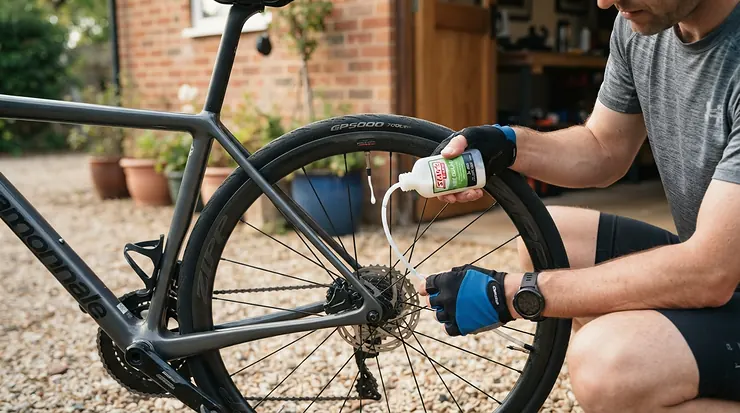
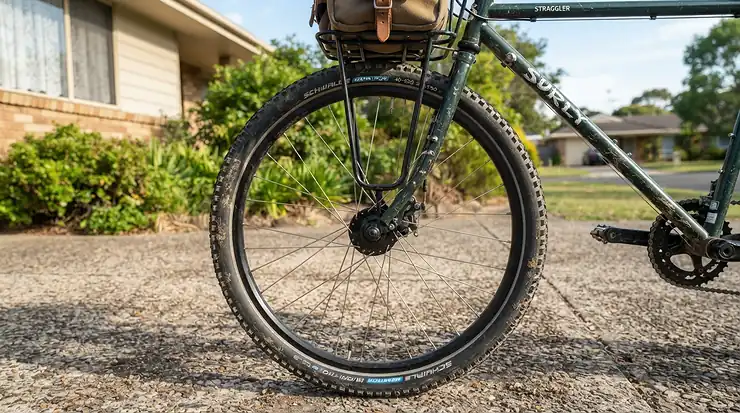
Two riders can own the same ebike and still need opposite bottles: one rolls on tubed commuter tires, the other on tubeless trail tires. Ebike tire sealant is sold for both setups, yet the formulas are not interchangeable, and Slime’s own page for its tube formula says it does not belong in a tubeless tire. This 2027 guide sorts five real bottles by the wheel and the ride they suit, so the liquid you order matches the tire it will live in.
Nobody poured these into a tire for this article. The comparisons lean on maker pages, retailer listings, three published tests from BikeRadar, Singletracks and Bike Perfect, and owner threads on forums, with each source named where it matters. Prices are ranges from the pages checked, so confirm the current figure on Amazon.com before you order.
Tire sealant for ebike tubeless wheels or tubed ones: what separates these bottles
Start with the wheel. A tubeless setup relies on sealant to coat the inside of the tire and plug tread holes, while a tubed setup relies on sealant sitting inside the tube. Slime’s tube-sealant page limits that formula to tread punctures up to 1/8 inch (3 mm) and lists sidewall holes, snake bites, rim or spoke punctures and metal or glass gashes as damage it will not cover.
Hole size is the second filter. Maker claims cluster around a quarter inch, or about 6 mm, and BikeRadar’s stabbing tests show why that number matters. With 100 ml in each tire at 30 psi, Stan’s No Tubes Race Sealant was the only formula that plugged an 8 mm screwdriver hole, while a long-life latex formula sealed 6 mm but let go when the tire was reinflated above 20 psi.
Drying time is the third. A Bike Forums thread about congealed sealant has riders agreeing that every sealant dries out and needs replenishing; one rider checks his tires about every six weeks and tops up while the valve cores are out. Riding often spreads the liquid around, which helps, and a bike that sits for months invites clumping.
Volume matters too, because wide tires hold more air and need more liquid. Specialized’s own chart for its sealant lists 100 to 125 ml for a 2.4 to 3.0 inch mountain tire, so an ebike tire of that width can swallow a small trail pouch in one go.
Bottle
Wheel type
Hole size claimed by maker or seller
Size seen on pages
Price spread seen
Slime Tube Sealant
Tubes only
Up to 1/8 inch (3 mm), tread only
8 oz
Around $10
Slime Tubeless Bicycle Tire Sealant
Tubeless
Up to 1/4 inch
8 oz
Around $9
Muc-Off eBike No Puncture Hassle Tubeless Sealant
Tubeless
Not stated for this version; standard formula claims 6 mm
140 ml, 1 L
Around $10 to $35, by size and seller
Orange Seal Endurance Tubeless Tire Sealant
Tubeless
Up to 1/4 inch
8 oz with injector
Around $16 to $17
LiQuiTube Bicycle Tire Sealant
Tubes and tubeless
1/4 inch (Amazon listing title)
8 fl oz
Around $12
Only the Slime Tube Sealant and the LiQuiTube Bicycle Tire Sealant claim to work in a tube; the other three are tubeless-only. Slime’s own numbers show the gap that tubed riders live with, since its tube formula covers half the hole size its tire formula does.
Spotted a bottle that fits your tires? Take a closer look at its entry below.
The best ebike tire sealant for five different rides
Each entry starts from a situation and works back to the bottle, so read the one that sounds like your commute or trail before comparing prices.
Take a hypothetical commuter on a tubed ebike whose bike path is lined with thorns and who wants fewer roadside tube swaps. The 8-ounce Slime Tube Sealant is aimed at that rider. Slime’s page says it seals tread punctures up to 1/8 inch (3 mm) in tubes and protects for up to two years, with a valve-core removal tool built into the cap and a freezing point of 14°F. The same page rules out tubeless tires, sidewall punctures, gashes and tires traveling above 45 mph; most ebike assist limits sit far below that figure, though a heavily modified bike might not. The maker’s page shows around $10.
Owner reports are mixed, and they arrive with names attached. In an Electric Bike Forums thread on tire sealers, one rider said Slime clogged the valve, so the tire could not be deflated to reseat it on an undersized rim, and another reported a wheel imbalance and a shudder under braking on a 26-inch cruiser. A repair tech quoted in the same thread said Slime suits heavy-duty or tubeless tires, and that with standard tubes it may slow a leak enough to get you home without truly fixing it. A poster in a different thread on that forum adds that these formulas are water-soluble, so small leaks can return in heavy rain.
There is also a positive data point. Bike Tires Direct’s page for Slime’s pre-filled tubes carries 104 reviews, two of them from ebike riders, and one reports two years and 3,500 miles without a flat on a bike that shipped with Slime. That is a single anecdote, not a pattern. Slime tire sealant of this type has no per-tire amount on the bottle’s page, which points to an online calculator instead.
Slime Tube SealantSee current price, sizes and reviews on Amazon.
Half the work with Slime tire sealant is picking the right bottle. Singletracks points out that most Slime bottles on a store shelf are labeled for tubes, and that the bicycle-specific tubeless formula is a different, thinner product than the thick general-purpose stuff. That page also notes a separate bottle, the Slime 2-in-1 Tire & Tube Premium Sealant, which Camping World’s listing says is not approved for tubeless bicycle tires.
Singletracks’ tester found the tubeless formula medium-thick, thicker than Stan’s and Orange Seal but thinner than Muc-Off. A pick-tool puncture took about ten seconds of jiggling and rotating before the hissing stopped, slower than Stan’s or Orange Seal. The tester ran it in one tire, a Maxxis Assegai, with no accidental punctures so far, and called it a new formulation with unknown long-term results. Slime suggests 4 to 5 ounces for a typical 29-inch tire, and the 8-ounce bottle cost around $9 on that page, enough for roughly two mountain tires. Wide ebike tires may use more of it.
Pros:
Easier to push through a syringe or valve and easier to clean up than the thick general-purpose Slime
Blended and bottled in the USA, with a low cost per bottle
Cons:
Slower to seal than the two big latex names in the same tester’s comparison
Bike-specific bottles are hard to find among the tube-labeled ones
Slime Tubeless Bicycle Tire SealantSee current price, sizes and reviews on Amazon.
Retailer pages for the Muc-Off eBike No Puncture Hassle Tubeless Sealant show 140 ml pouches and 1-liter bottles at Rocky Mountain ATV/MC, Charged Cycleworks and Lionsparts, with prices spanning around $10 to $35 depending on size and seller. What makes it the eBike version is not spelled out: the copy on those pages repeats the standard formula’s microfibre-and-latex description, so any difference stays unconfirmed.
The standard formula has more on record. Muc-Off claims it seals holes up to 6 mm, is ammonia-free, and carries a UV dye that lets you spot a leak under a small light. Sources disagree on pressure: a road.cc review gives 15 to 80 psi, while Scheels’ listing for the 1-liter bottle says 15 to 120 psi, so read the label on the bottle you buy. In road.cc’s test it sealed a 3 mm hole instantly and a 5 mm hole after a small puff of air and spray, though the reviewer notes it can clump after longer stretches in the tire. An older Mountain Bike Rider group test said it was the only product to seal a 2.7 mm hole, a 5 mm hole and a sidewall cut.
This is the pick among tire sealant for ebike tubeless wheels when the rider wants a thick formula that clings to porous casings, on an eMTB or a tubeless commuter. It is not the cheapest way to fill a wide tire, since road.cc called the small pouches an expensive way to buy it. The standard-formula pouch has a nozzle shaped for Presta valves, a detail to check against your own valve type.
Muc-Off eBike No Puncture Hassle Tubeless SealantSee current price, sizes and reviews on Amazon.
Price tier first: around $16 to $17 for an 8-ounce bottle with an injector, which puts it above Slime and in line with the other premium latex names. What the extra money buys is a formula designed to stay liquid longer, and BikeRadar lists a claimed gap of up to four months between top-ups, compared with 30 to 45 days that The Loam Wolf’s review gives for the regular formula.
Independent testing shows the trade. In BikeRadar’s stabbing test it sealed a 6 mm screwdriver hole and plugged sidewall holes well, but the seal broke when the tire was reinflated above 20 psi, and it could not match the original formula on larger holes. A Bikerumor reviewer who set it up at about -13°C, well beyond the recommended range, had a tire that would not hold air until it was pumped to 25 psi, and later had a gummed-up valve let the pressure out. Once cleaned and reinflated, the same sealant carried on for months with no top-ups. A Bike Forums thread describes Orange Seal congealing in a road tire, and riders there say that adding fresh sealant whenever the valve cores are out keeps the older liquid from setting.
Pros:
Formulated to last longer between top-ups than the regular formula
Comes with an injector for adding sealant through the valve
Cons:
A broken seal at higher reinflation pressure in BikeRadar’s test
Reviewers describe valve gumming and trouble in freezing weather
Orange Seal Endurance Tubeless Tire SealantSee current price, sizes and reviews on Amazon.
LiQuiTube’s main business is farm and industrial tires, and its main site says nothing about bicycles. That matters for anyone weighing LiQuiTube tire sealant for an ebike, because the testimonials on that site concern irrigation systems, pulling trucks and heavy-ply tires, not a 2.6-inch ebike tire. The company’s site describes installing through the valve stem once the valve core is removed and claims it does not rust or corrode wheels, without test details.
The bicycle bottle is a separate 8 fl oz product. Walmart’s listing calls it made in the USA, works in tube and tubeless tires, and lists “Electric Bikes” among the bicycle types, at around $12 with no reviews yet. Amazon’s listing title adds that it contains no natural rubber latex, seals 1/4 inch punctures, works to -30°F, injects through the valve and treats two tires, with a valve-core tool included. No independent bike test of this formula turned up, so those figures are maker and seller claims.
One bottle covering a tubed bike and a tubeless bike appeals to a household with two ebikes, and the Walmart price sits near the low end of the five. What the listings leave open is how fast LiQuiTube tire sealant works in a wide tire and how it behaves in a tube, since the language does not separate the two cases.
LiQuiTube Bicycle Tire SealantSee current price, sizes and reviews on Amazon.
Fix a flat tire sealant: what a bottle can and can’t repair
A bottle poured in after a puncture is a different job from sealant installed beforehand. Sealant needs air pressure to push into a hole and wheel rotation to spread, so a tire that has lost all its air usually needs a pump before any liquid can help. Jenson USA’s sealant page notes that when a puncture is too large for the liquid to bridge, a spare tube may be needed to finish the ride.
A fix a flat tire sealant approach has less margin on tubes. The Electric Bike Forums repair tech’s advice was that with standard tubes sealant may slow a leak enough to get home but not fix it, and Slime’s tube formula lists sidewall holes, snake bites and rim punctures as outside its range. On a tubeless setup, BikeRadar’s tests put the realistic ceiling at 6 to 8 mm; a bigger slash usually means a plug or new tire.
Three more ways a purchase goes wrong:
Putting a tube formula into a tubeless tire, which Slime says not to do.
Skipping the valve-core check, since injection through the valve needs a removable core on both the Giant sealant page and the Jenson guide.
Treating a bottle as permanent, when a six-month stretch without change in Bike Perfect’s test of a thick latex formula counts as a good result.
A spare tube and a pump remain the fallback on any ride where a bigger hole is possible. On a hub-motor bike, removing a wheel is a larger job than on an unpowered bike, which is the reasoning behind keeping sealant in the tire in the first place.
Keeping sealant working: a top-up rhythm for how often you ride
Bike Perfect’s reviewer saw no significant change in consistency or effectiveness after six months in temperatures from 0 to 20 degrees Celsius, but also called the sealant slower to reach a puncture and in need of a generous amount to perform well. Muc-Off itself says to shake the bottle before use. Those two details suggest a rhythm rather than a calendar date:
Check at around six weeks if you ride several times a week, the interval one forum rider uses.
Remove the valve core, inject fresh sealant, and spin the wheel to spread it.
Check again after any cold snap or long storage, since a bike that sits for months is the one that tends to congeal.
Valves, volume and shelf life: straight answers on ebike sealant
Can you put tire sealant in an ebike tire that has an inner tube?
Yes, with a formula made for tubes. Slime's tube sealant is rated for tread punctures up to 1/8 inch and says not to use it in tubeless tires. Tubeless formulas work the other way around, so match the bottle to the tire.
How often does ebike tire sealant need topping up?
Makers give ranges rather than dates. One long-life formula claims up to four months between top-ups, while one reviewer describes a regular formula at 30 to 45 days. Forum riders check every few weeks, particularly in heat, and add fresh liquid at each check.
Does tire sealant damage ebike rims or valves?
Makers of the formulas reviewed here describe them as non-corrosive and water-based, but that is a maker claim without published test details. Owners report valve clogging with thicker formulas, so remove the valve core periodically and clean it when you top up.
How much sealant does an ebike tire need?
It scales with tire volume. Slime suggests 4 to 5 ounces for a typical 29-inch mountain tire, while Specialized's chart lists 100 to 125 milliliters for tires 2.4 to 3.0 inches wide. Check the chart on your bottle for your exact tire width.
Will sealant fix a flat tire that has already lost all its air?
Only if the hole is small. Sealant needs air pressure and wheel rotation to reach the puncture, and tests show limits around 6 to 8 millimeters. Bigger holes, sidewall cuts and tube blowouts still need a plug, a patch or a spare tube.
Choosing your ebike tire sealant
The decision comes down to the wheel. If your bike runs tubes, the Slime Tube Sealant is the straightforward, low-cost choice, though owners’ valve-clogging reports are a reason to remove and clean the core now and then. If it runs tubeless and you dislike opening the valve, the Orange Seal Endurance Tubeless Tire Sealant is built for longer gaps between top-ups, while the Muc-Off eBike No Puncture Hassle Tubeless Sealant suits riders who want a thick, ebike-labeled formula. On a tight budget with tubeless wheels, the Slime Tubeless Bicycle Tire Sealant costs least and seals a little slower, and the LiQuiTube Bicycle Tire Sealant fits a household that wants one bottle for both wheel types. Whichever you pick, the best ebike tire sealant is the one matched to your tire type and to how often you will check it.
Spotted the bottle that matches your tires? Take a closer look at its listing before you order.
Disclaimer: This post contains affiliate links. As an Amazon Associate, we earn from qualifying purchases made through these links, at no additional cost to you.
A thorn on tomorrow’s route is cheaper to shrug off with the right bottle in the tire.
NextGenEBike is an independent buying-guide site for electric bikes, motors, batteries and accessories. Our editorial team compares products using manufacturer specifications, independent tests from specialist e-bike media, owner reports and retailer listings. We do not claim to have tested the products ourselves; see How We Choose Gear for our method.