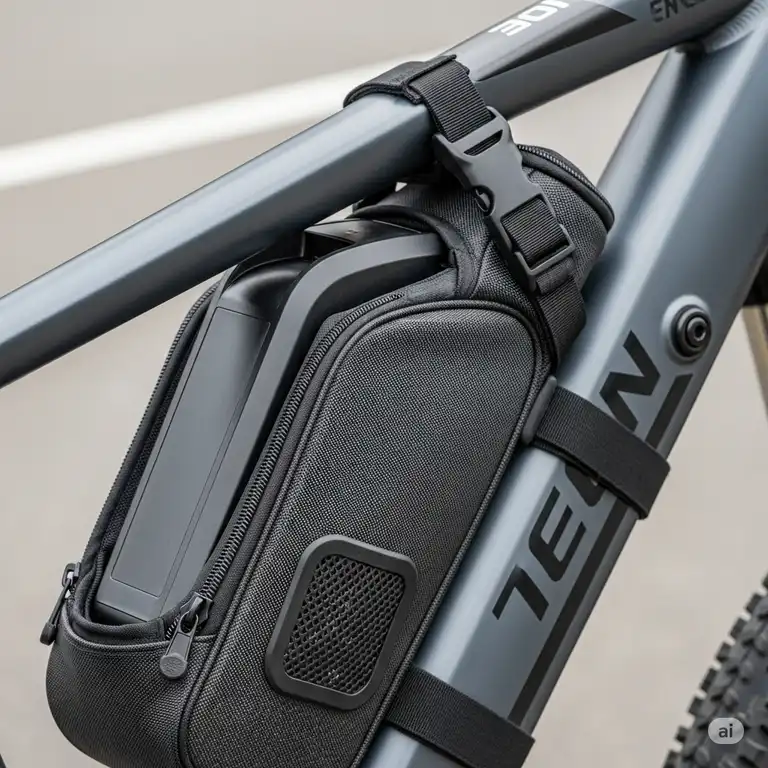
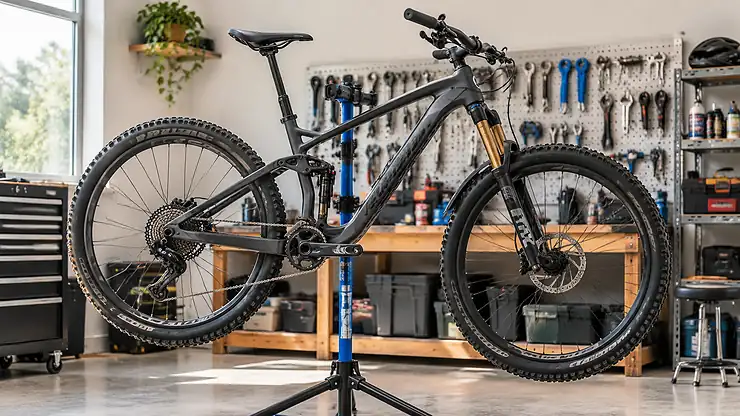
Introduction: Why Your E-Bike Needs a Real Stand
Here’s a quick reality check: the average e-bike weighs somewhere between 45 and 80 pounds, and that weight sits in awkward places — a battery on the down tube, a motor at the bottom bracket, maybe a rear rack loaded with a pannier. The flimsy kickstand that came with the bike, or the $30 repair stand you bought for your old road bike, was never designed for that. A proper ebike stand is the difference between a calm Saturday chain tune-up and a 70-pound bike crashing onto your garage floor (and your derailleur).
What Is an ebike stand?
An ebike stand is a support built to hold the extra weight and bulk of an electric bike, either for maintenance or for storage. Repair stands clamp the bike off the ground so you can work on it; parking (floor) stands cradle a wheel to keep the bike upright without touching the frame.
That split matters more than most shoppers realize. As Electric Bike Report notes in its e-bike repair stand roundup, not long ago it was genuinely hard to find stands rated for e-bike weights, because most were designed for bikes around 30 pounds. Today you can choose from heavy-duty clamp stands, lift-assisted workstands, and wheel-cradle parking stands built specifically for wide tires and heavy frames.
In this 2027 guide, we compare seven real, verifiable options across both categories — from a budget floor rack you can grab for under $50 to a lift-assisted workstand that costs more than some commuter bikes. Every pick is analyzed against its real spec sheet and the aggregated sentiment in published reviews, so you can match the right ebike stand to your bike, your space, and your wrench skills.
Quick Comparison: ebike stand Picks at a Glance
| Stand | Type | Rated Bike Capacity | Approx. Price Range | Best For |
|---|---|---|---|---|
| Feedback Sports Pro Mechanic HD | Clamp repair stand | 100 lb | Around $500 | Feedback Sports Pro Mechanic HD: frequent home mechanics |
| Topeak PrepStand eUP Pro | Lift-assisted repair stand | 77.1 lb (US listings) | $850–$950 | Topeak PrepStand eUP Pro: riders who hate lifting |
| Park Tool PCS-10.3 | Clamp repair stand | 80 lb | Under $300 | Park Tool PCS-10.3: best all-round value |
| Bikehand Heavy-Duty E-Bike Repair Stand | Clamp repair stand | 110 lb | $150–$200 | Bikehand Heavy-Duty E-Bike Repair Stand: budget heavy lifting |
| Feedback Sports RAKK 2.0 E | Wheel parking stand | 75 lb | Around $70 | Feedback Sports RAKK 2.0 E: tidy charging station |
| Bikehand Fat Bike Floor Stand | Wheel parking stand | Not officially rated | $40–$50 | Bikehand Fat Bike Floor Stand: fat-tire budget parking |
| CyclingDeal Upright E-Bike Stand | Upright/vertical parking stand | 110 lb | $60–$70 | CyclingDeal Upright E-Bike Stand: tight floor space |
Looking at the table above, the clearest pattern is that repair stands and parking stands solve completely different problems — so price comparisons across the two categories are misleading. Within repair stands, the Park Tool PCS-10.3 delivers the best balance of capacity and cost, while the Feedback Sports Pro Mechanic HD earns its premium through extra stiffness and a 100-pound rating. For pure storage, the Feedback Sports RAKK 2.0 E is the most thoughtfully e-bike-specific design, but the Bikehand Fat Bike Floor Stand covers fat tires for far less.
💬 One click helps other shoppers make an informed choice too! 😊
Top 7 ebike stand Picks for 2027: Expert Analysis
1. Feedback Sports Pro Mechanic HD — stiffest portable heavy-duty clamp
The Feedback Sports Pro Mechanic HD is built to stay rock-steady when a heavy e-MTB is hanging off one side of its clamp. It uses oversized 6061-T6 aluminum tubing, a 100-pound maximum capacity (Feedback says it’s optimized for bikes up to 70 pounds), clamp jaws that open to 2.6-inch tubes, and a height range of roughly 42 to 67 inches. In practice, that height range means a tall rider can work standing upright, and the 2.6-inch jaw opening handles fat e-bike seat tubes and oversized posts that cheaper clamps can’t swallow.
Based on comparing the specs, this is the stand for the person who works on bikes every week — or owns both a road bike and a heavy e-bike. Feedback claims it’s 145% stiffer than its own Pro Elite, and at about 18 pounds it still folds into a car trunk.
Published reviews consistently praise its stability with heavy bikes, including fat bikes, and testers report it’s less bothered by imbalance when you pull a wheel or fork. One recurring caveat: Feedback’s standard tool tray doesn’t fit its larger tubing.
Pros:
- ✅ True 100-pound capacity with a wide, stable base
- ✅ Fast ratchet clamp with 360° rotation
- ✅ Light enough to travel at about 18 pounds
Cons:
- ❌ Standard Feedback tool tray isn’t compatible
- ❌ Premium price for occasional home use
Expect to pay around $500 (check the current price) — expensive, but justified if you wrench often.
2. Topeak PrepStand eUP Pro — lift assist that saves your back
The Topeak PrepStand eUP Pro is marketed as the first lift-assisted folding workstand, and its headline trick is a foot pedal that raises and lowers the clamped bike using a pressurized nitrogen cartridge. Topeak rates that cartridge for at least two years or 30,000 cycles. US retailers list a 77.1-pound bike limit, a clamp height of roughly 42 to 59 inches, a clamp that fits tubes from about 22 to 76 mm, and a built-in wheel for rolling the folded stand.
What most buyers overlook with this model is that “lift assist” doesn’t mean “floor-to-workstand.” In road.cc’s test, the reviewer found you still need to hoist the bike roughly a foot before the stand takes over — and a smaller rider couldn’t load a 25 kg (55 lb) e-bike on her own. So it’s ideal for people who can manage a short lift but struggle to hold a heavy bike at chest height.
Aggregated review sentiment is positive on sturdiness and build quality, with the main criticisms being the stand’s own weight (about 30.8 pounds) and that lift height limitation.
Pros:
- ✅ Pedal-operated lift makes height changes effortless
- ✅ Extremely stable thanks to its heavier build
- ✅ Folds and rolls on a built-in wheel
Cons:
- ❌ Bike must still be lifted partway by hand
- ❌ Heavy stand and very high price
Typically $850–$950 at the time of writing — only worth it if lifting is your real pain point.
3. Park Tool PCS-10.3 — best all-round value for most riders
The Park Tool PCS-10.3 is the stand many US shop mechanics recommend to home riders, and for e-bike owners its 80-pound capacity is the key number. It’s all steel with teardrop tubing, adjusts from 39 to 57 inches, rotates the clamp 360°, and uses Park’s cam-operated micro-adjust clamp that fits tubes from 1 to 3 inches. There’s an integrated parts tray and a rubber saddle pad for hanging a bike by the saddle.
Here’s what to weigh: Park’s capacity assumes the weight is centered under the clamp and between the legs. For a typical 55- to 65-pound commuter e-bike, that leaves comfortable headroom. For a 75-pound cargo or fat-tire e-bike, you’re near the limit — and an off-center battery makes it worse.
Reviews consistently highlight the clamp’s secure grip and quick one-handed operation. A few forum users raised durability concerns about the previous PCS-10.2, so the current .3 revision’s improved internals are worth noting.
Pros:
- ✅ Proven Park Tool clamp with micro-adjustment
- ✅ Integrated tray keeps small parts handy
- ✅ Folds compactly to about 45 by 14.5 inches
Cons:
- ❌ 80-pound rating is tight for cargo e-bikes
- ❌ Steel build is heavier to carry around
Usually under $300 — the strongest value-for-money repair pick in this list.
4. Bikehand Heavy-Duty E-Bike Repair Stand — highest capacity per dollar
The Bikehand Heavy-Duty E-Bike Repair Stand gives you a 110-pound rating for roughly a third of the premium stands’ price. Published specs list a stand weight around 13.85 pounds and a height range of about 39 to 59 inches. OutdoorGearLab notes it looks nearly identical to Bikehand’s popular budget YC-100BH, but with a beefier clamp arm that roughly doubles its weight rating.
On paper, this means you get capacity headroom no other stand here matches. But a 110-pound sticker on a lightweight stand isn’t the same as a 100-pound rating on a stiff, oversized frame. Expect more flex when you pedal the drivetrain or pull a heavy rear wheel. It’s a smart buy for commuters who do basic maintenance — chain cleaning, brake pad swaps, derailleur tweaks — a few times a month.
Owner feedback on e-bike forums and retailer listings is mostly positive, with several users reporting it holds 60- to 70-pound e-bikes securely. Be cautious with look-alike, no-name “110 lb” stands, though: some buyers report those listings don’t come close to their claimed capacity.
Pros:
- ✅ Highest rated capacity in this roundup
- ✅ Folds for easy garage or closet storage
- ✅ Very affordable for an e-bike-rated stand
Cons:
- ❌ More flex than premium oversized stands
- ❌ Clamp feel is less refined than Park Tool’s
Typically $150–$200 — excellent value if you accept some flex.
5. Feedback Sports RAKK 2.0 E — the smartest e-bike parking spot
The Feedback Sports RAKK 2.0 E is a wheel-cradle parking stand with one genuinely e-bike-specific idea: a built-in tray for your charger plus magnets that hold the charging plug. It holds bikes up to 75 pounds by either the front or rear wheel, fits wheels from 20 to 29 inches, and accepts tires from 23 mm up to 4.5 inches. A three-position pulley accommodates fenders, and the arm folds down when you don’t need it.
In practice, the charger tray turns a messy corner into a dedicated charging station — no brick on the floor, no cable getting run over. Because the stand only touches the tire, it won’t scratch paint or put pressure on a frame-mounted battery. It’s ideal for apartment dwellers who park inside and charge overnight.
Reviews from The Loam Wolf and others are strongly positive on stability and the recycled, plastic-free packaging. The Loam Wolf did note that occasional leaning came from aggressive tire tread catching the arm, and that true 4.8-inch fat tires won’t fit.
Pros:
- ✅ Charger tray and cable magnets keep things tidy
- ✅ Tire-only contact protects frame and battery
- ✅ Fits fenders thanks to adjustable pulley
Cons:
- ❌ Maxes out at 4.5-inch tires
- ❌ Not for maintenance requiring wheel removal
Around $70 — modest money for a noticeably tidier charging setup.
6. Bikehand Fat Bike Floor Stand — budget pick for wide tires
The Bikehand Fat Bike Floor Stand (fat-bike version of Bikehand’s YC-97 design) is a patented, freestanding wheel rack for 24- to 29-inch wheels. Depending on the version and listing, it’s described as fitting fat tires up to 4.0 or 5.0 inches — confirm the exact tire width on the listing before you buy. It uses a pulley-style cradle that holds the tire from multiple points, a powder-coated steel body, and a rubber-protected base.
The practical upside is simple: fat-tire e-bikes are notoriously hard to park because most racks top out around 2.4 inches. This one is cheap enough to buy two, and that’s not a joke — one owner of a 70-pound fat e-bike uses one stand under each wheel to keep the bike rock-steady while doing light work.
Aggregated reviews are mostly positive, with owners describing it as stable even with heavy fat-tire e-bikes. Criticism centers on thin instructions, some buyers calling it a bit flimsy, and one complaint about a fat e-bike tire binding in the multi-bike version.
Pros:
- ✅ Fits fat tires most racks can’t handle
- ✅ Tire-only contact avoids frame scratches
- ✅ Light and easy to move around
Cons:
- ❌ No official bike weight rating published
- ❌ Instructions are minimal and unclear
Generally $40–$50 per stand — hard to beat for fat-tire parking.
7. CyclingDeal Upright E-Bike Stand — reclaim floor space vertically
The CyclingDeal Upright E-Bike Stand lets you park a heavy bike either horizontally or tipped up vertically on its rear wheel, which can cut the floor footprint dramatically. CyclingDeal lists a 110-pound (50 kg) capacity, compatibility with 26- to 29-inch MTB wheels and 700c road wheels, and fat tires up to 4 inches.
What the spec sheet doesn’t say is how hard it is to tilt a 70-pound e-bike upright. Lifting the front end of a heavy bike — especially one with a front hub motor — takes real strength, so the vertical mode suits lighter commuter e-bikes or stronger riders. Horizontal mode works for anyone. If your e-bike has a removable battery, pulling it first makes vertical parking far more manageable.
We couldn’t verify a meaningful body of US customer reviews for this specific model at the time of writing, so judge it primarily on its published specs and the retailer’s return policy. That honesty matters: a 110-pound rating is a manufacturer claim, not an independently tested number.
Pros:
- ✅ Two-way parking saves serious floor space
- ✅ High 110-pound manufacturer rating
- ✅ Accepts 4-inch fat tires and 700c wheels
Cons:
- ❌ Vertical mode requires lifting the bike’s front
- ❌ Limited verifiable independent reviews so far
Around $60–$70 — a reasonable gamble for space-starved apartments.
Detailed Spec Comparison of the Top 7
| Stand | Stand Weight | Height / Fit | Tire or Tube Fit | Key Extra | Best For |
|---|---|---|---|---|---|
| Feedback Sports Pro Mechanic HD | ~18 lb | ~42–67 in | Tubes to 2.6 in | Clamp magnet | Feedback Sports Pro Mechanic HD: e-MTB owners |
| Topeak PrepStand eUP Pro | ~30.8 lb | ~42–59 in | Tubes ~22–76 mm | Pedal lift | Topeak PrepStand eUP Pro: lifting limits |
| Park Tool PCS-10.3 | ~16 lb | 39–57 in | Tubes 1–3 in | Parts tray | Park Tool PCS-10.3: most commuters |
| Bikehand Heavy-Duty E-Bike Repair Stand | ~13.85 lb | ~39–59 in | Standard tubes | 110-lb rating | Bikehand Heavy-Duty E-Bike Repair Stand: tight budgets |
| Feedback Sports RAKK 2.0 E | ~7–8 lb | 20–29 in wheels | 23 mm–4.5 in tires | Charger tray | Feedback Sports RAKK 2.0 E: indoor charging |
| Bikehand Fat Bike Floor Stand | ~5.6 lb | 24–29 in wheels | Fat tires (4–5 in) | Low price | Bikehand Fat Bike Floor Stand: fat tires |
| CyclingDeal Upright E-Bike Stand | Not verified | 26–29 in, 700c | Up to 4 in tires | Vertical mode | CyclingDeal Upright E-Bike Stand: small spaces |
Reading across the table, stand weight tracks closely with stability: the heavier Topeak PrepStand eUP Pro and steel Park Tool PCS-10.3 feel planted, while the lighter Bikehand Heavy-Duty E-Bike Repair Stand trades some rigidity for portability. Tube-fit range is the hidden decider for repair stands — if your e-bike has an oversized or aero seatpost, the Feedback Sports Pro Mechanic HD and Park Tool PCS-10.3 give you the widest margin. Among parking stands, tire width is everything, and only the Bikehand Fat Bike Floor Stand clearly targets true fat tires.
✨ Don’t miss the right stand for your ride!
🔍 Take your e-bike maintenance to the next level with this carefully curated lineup. Click a highlighted stand to check current pricing and availability. These picks will help you work faster, park safer, and keep your e-bike looking new for years!
How to Set Up and Use an E-Bike Repair Stand Safely
A great e-bike repair stand still needs good technique. Here’s a practical first-use routine that most product manuals don’t spell out in one place.
Before you clamp:
- Remove the battery if you can. On most frame-integrated or rack batteries, this drops 6 to 10 pounds and, more importantly, moves the center of gravity closer to the clamp.
- Set up on level, hard ground. Garage concrete beats carpet or gravel every time; uneven ground effectively lowers your stand’s real-world capacity.
- Spread the legs fully and lock every quick-release lever before the bike goes anywhere near the clamp.
Clamping the bike:
- Clamp the seatpost, not the top tube, whenever possible. Frame tubes on e-bikes often house wiring, and many are thin-walled aluminum or carbon.
- If you have a dropper post, avoid clamping the moving upper stanchion; clamp the fixed lower section instead.
- Position the bike so its weight sits over the base, not out past the legs. Rotate the clamp so the heavier motor end stays low and centered.
While working:
- Keep a hand on the bike when removing a wheel — the balance point shifts suddenly.
- Use the stand’s tray (or a magnetic strip) so tools don’t end up balanced on the frame.
For step-by-step procedures on drivetrain, brake, and wheel jobs, Park Tool’s free Repair Help library is one of the best resources available, and it applies whether you own a Park stand or not.
Your first 30 days: check clamp tension weekly as rubber jaws bed in, wipe chain lube drips off the stand’s tubes so they don’t attract grit, and note which height setting suits each job. Within a month, you’ll mount the bike in under a minute.
Which ebike stand Fits You? Three Real-World Scenarios
Specs only go so far, so let’s match stands to real situations.
Scenario 1: The apartment commuter
You ride a 55-pound commuter e-bike 8 miles each way, park it in a one-bedroom apartment, and charge it nightly. Your maintenance is mostly chain cleaning and occasional brake adjustments you’d rather leave to a shop.
Best match: the Feedback Sports RAKK 2.0 E. It’s around $70, keeps the bike upright without frame contact, and the charger tray solves the cable-on-the-floor problem. If your space is truly tiny, the CyclingDeal Upright E-Bike Stand could free up more floor — but only if you’re comfortable tipping the bike upright.
Scenario 2: The weekend DIY mechanic
You own a 62-pound e-MTB, ride trails every weekend, and want to handle your own tune-ups, brake bleeds, and suspension cleaning. Budget is around $300, and you have a garage.
Best match: the Park Tool PCS-10.3. It handles your bike’s weight with headroom, the integrated tray matters during longer jobs, and it folds when the car needs the garage. If your budget stretches to around $500 and you also travel to races, the Feedback Sports Pro Mechanic HD is the upgrade.
Scenario 3: The fat-tire or cargo owner
You ride a 75-pound fat-tire or long-tail cargo e-bike, and lifting it to chest height isn’t realistic. You need storage and occasional maintenance.
Best match: two Bikehand Fat Bike Floor Stands for everyday parking (one under each wheel for light work), plus the Bikehand Heavy-Duty E-Bike Repair Stand for the occasional proper job. If your back is the limiting factor and budget isn’t, the Topeak PrepStand eUP Pro reduces lifting — though check its 77.1-pound rating against your bike’s actual weight first.
Fixing Common ebike stand Problems
Even good stands cause headaches. Here are the most common issues and how to solve them.
Problem 1: The bike slowly rotates in the clamp. This usually happens because the heavy motor end pulls the bike downward. Increase clamp tension slightly, clamp closer to the seat tube junction, and rotate the bike so the motor sits directly below the clamp. A heavy-duty stand like the Feedback Sports Pro Mechanic HD handles this better thanks to its stiffer clamp head.
Problem 2: The whole stand tips when you remove a wheel. Removing a hub-motor wheel shifts several pounds at once. Before you pull it, rotate the bike so the remaining weight is centered between the legs — Park Tool’s own capacity note on the Park Tool PCS-10.3 assumes exactly that positioning.
Problem 3: Your e-bike won’t fit a parking stand. Measure the tire width and wheel diameter before buying. Standard racks often cap at 2.4 inches; the Feedback Sports RAKK 2.0 E goes to 4.5 inches, and the Bikehand Fat Bike Floor Stand targets fat tires.
Problem 4: The bike leans in a parking stand. Aggressive knobby treads can catch the holding arm unevenly. Reposition the tire so the arm sits on smooth tread, or adjust the pulley position. Parking by the rear wheel is often more stable because more of the bike’s weight sits over it.
Problem 5: The clamp scuffs your seatpost. Wrap the post with a clean rag or a strip of old inner tube, and keep the rubber jaws clean — embedded grit is what causes scratches. Replace worn jaw covers rather than over-tightening.
How to Choose an ebike stand
Use these seven steps to narrow your choice quickly:
- Weigh your e-bike with the battery installed. A bathroom scale works: weigh yourself holding the bike, then subtract your own weight. Manufacturer listings are often optimistic.
- Add a 20–30% safety margin. If your bike weighs 65 pounds, look for a stand rated at 80 pounds or more, especially for repair stands where the load is off-center.
- Decide between repair and parking. If you’ll remove wheels, adjust derailleurs, or bleed brakes, you need a clamp stand. If you just need the bike upright, a wheel stand is cheaper and frame-friendly.
- Check the clamp or tire range. Repair stands should fit your seatpost diameter (dropper and oversized posts need wide jaws). Parking stands must fit your exact tire width and wheel size.
- Consider your lifting ability. If raising 60+ pounds to waist height is a struggle, factor in lift assist or plan to remove the battery every time.
- Measure your space. A repair stand’s legs can span about 3 feet when open; parking stands need the full length of the bike.
- Think about portability. If you’ll take the stand to races or a friend’s garage, a lighter aluminum design beats heavy steel.
Following these steps rules out most mismatches before you spend a dollar — and it’s the same checklist bike shops use when recommending a heavy duty bike stand to e-bike customers.
Repair Stand vs Parking Stand vs Kickstand
Most e-bikes come with a kickstand, so it’s fair to ask whether you need anything else. The answer depends on what you’re trying to do.
A kickstand is built for quick stops. It holds the bike upright on flat ground, but it puts all the bike’s weight on a single narrow point and leans the bike to one side. Heavy e-bikes are more prone to tipping over on a kickstand, especially if someone bumps them or the floor is slightly sloped — which is exactly why several owners in published reviews say they bought a dedicated stand after not trusting their kickstand indoors.
An ebike parking stand cradles a wheel and holds the bike vertically upright. That spreads the load, keeps the bike from leaning against walls, and avoids frame contact entirely. It’s the better daily-storage solution.
A repair stand lifts the bike off the ground so wheels can spin and you can access every part at a comfortable height. It’s the only option that makes real maintenance practical.
| Option | Holds Bike Upright | Lifts Bike for Repairs | Frame Contact | Typical Cost | Best For |
|---|---|---|---|---|---|
| Kickstand | Leaning | No | Mounted to frame | Often included | Quick stops outdoors |
| Parking stand (e.g., Feedback Sports RAKK 2.0 E) | Yes, vertical | No | None | $40–$70 | Feedback Sports RAKK 2.0 E: daily indoor storage |
| Repair stand (e.g., Park Tool PCS-10.3) | Yes, raised | Yes | Clamp on post | $150–$950 | Park Tool PCS-10.3: home maintenance |
The comparison shows why many e-bike owners end up with two stands, not one: a parking stand for everyday storage and a repair stand for the jobs that need it. A kickstand remains handy outside the coffee shop, but it’s the weakest option indoors where a tipped e-bike can damage the bike, the floor, or the battery. If you can only buy one, choose based on whether storage or maintenance causes you more frustration today.
Heavy Duty Bike Stand Specs That Actually Matter (and Ones That Don’t)
Marketing copy loves big numbers. Here’s how to separate the useful specs from the noise.
Specs that matter
- Rated capacity — and how it’s measured. Park Tool specifies that its 80-pound rating assumes centered weight. That level of transparency is a good sign; vague claims are a warning sign.
- Tube diameter and stiffness. Oversized tubing, like the Feedback Sports Pro Mechanic HD‘s, resists flex when you pedal the drivetrain or torque a bolt. Flex is what makes a heavy e-bike wobble.
- Base footprint. A wider tripod base resists tipping. A stand with a 110-pound rating and a narrow base can feel less secure than an 80-pound stand with a broad stance.
- Clamp jaw range. E-bikes increasingly use 31.6 mm or 34.9 mm dropper posts. A clamp that fits 1 to 3 inches covers almost everything.
Specs that matter less than you think
- Extreme maximum height. Unless you’re very tall, anything topping out around 57 inches works for most riders.
- Very high claimed capacity on cheap stands. A 132- or 176-pound claim on a budget stand doesn’t make it stiffer; it just means the parts won’t break. Stability and flex are separate issues.
- “Pro” in the product name. Look at materials and clamp design, not branding.
The bottom line: a heavy duty bike stand earns that label through stiffness, base width, and clamp quality — not a single number on the box.
Fat Tire Ebike Stand Advice for Heavy and Cargo Bikes
Fat-tire and cargo e-bikes push every stand to its limits, so they deserve their own advice.
Tire width is the first filter. Fat-tire e-bikes commonly run 4.0-inch tires, and some go wider. Many parking stands max out at 2.4 or 2.8 inches. A fat tire ebike stand must explicitly list your tire width — the Feedback Sports RAKK 2.0 E handles up to 4.5 inches, while the Bikehand Fat Bike Floor Stand is marketed for 4- to 5-inch tires depending on version.
Weight changes the repair stand equation. A 75-pound fat-tire e-bike sits near the limit of the Park Tool PCS-10.3 and is right at the edge of the Topeak PrepStand eUP Pro‘s US-listed rating. For these bikes, the Feedback Sports Pro Mechanic HD (100 pounds) or the Bikehand Heavy-Duty E-Bike Repair Stand (110 pounds) give you real headroom.
Cargo bikes are a special case. Long-tail and front-loading cargo e-bikes often exceed 80 pounds before cargo, and their length makes seatpost clamping awkward. For these, many owners skip clamp stands entirely and use two wheel stands plus a center stand, or have a shop handle major work.
Lifting is the real bottleneck. Even with a 110-pound stand, you still have to hoist the bike. Removing the battery first, enlisting a second person, or using a lift-assisted stand are the practical solutions. An electric bike floor stand that requires no lifting at all is often the smarter daily choice for these heavy machines.
Long-Term Cost and Value
A stand is a one-time purchase that can last a decade, so the sticker price only tells part of the story.
| Stand | Approx. Price Range | Expected Lifespan Factors | Ongoing Costs | Best For |
|---|---|---|---|---|
| Feedback Sports Pro Mechanic HD | Around $500 | Aluminum, replaceable feet | Optional travel bag | Feedback Sports Pro Mechanic HD: decade of weekly use |
| Topeak PrepStand eUP Pro | $850–$950 | Lift cartridge rated 2 yrs / 30,000 cycles | Possible cartridge service | Topeak PrepStand eUP Pro: lifting-limited owners |
| Park Tool PCS-10.3 | Under $300 | Steel build, serviceable clamp | Optional tray accessories | Park Tool PCS-10.3: best cost per year |
| Bikehand Heavy-Duty E-Bike Repair Stand | $150–$200 | Lighter components | Possible jaw replacement | Bikehand Heavy-Duty E-Bike Repair Stand: occasional use |
Viewed over five or more years, the Park Tool PCS-10.3 likely offers the lowest cost per year of use for a typical home mechanic, because it combines a modest price with a long-proven design. The Topeak PrepStand eUP Pro carries a higher long-term risk because its lift cartridge is a wear item, so ask about replacement availability before buying. The Bikehand Heavy-Duty E-Bike Repair Stand wins on upfront cost, but if you work on your bike weekly, the stiffer premium stands repay their price in time saved and frustration avoided.
There’s also a hidden return on investment: a basic shop tune-up often costs more than a budget stand. If owning a stand lets you handle routine chain, brake, and derailleur adjustments yourself, it can pay for itself within a year or two — while keeping your e-bike running smoothly between professional services.
Common Mistakes to Avoid When Buying an ebike stand
- Buying a road-bike stand for an e-bike. Many budget stands are rated around 55 pounds — fine for a road bike, not for most e-bikes. Always check the rating against your bike’s real weight.
- Trusting capacity claims blindly. Some no-name listings claim 110 pounds or more but draw reviews saying they barely hold a 40-pound bike. Favor brands that publish clear specs and conditions.
- Ignoring tire width. Fat-tire owners frequently buy parking stands that simply won’t accept their tires. Measure first.
- Clamping the frame instead of the seatpost. Clamping thin frame tubes, especially carbon or tubes with internal wiring, risks damage. Choose a stand whose clamp fits your post.
- Forgetting about storage space. An open repair stand needs roughly a 3-by-3-foot footprint plus room around the bike. Make sure your garage or apartment can handle it.
- Overlooking lifting. The best stand in the world won’t help if you can’t get the bike into it. Plan for battery removal or lift assistance.
- Choosing a parking stand when you need repairs (or vice versa). Be honest about whether you’ll actually do maintenance at home. If not, an electric bike floor stand is cheaper and simpler.
Safety, Regulations, and Standards
Bike stands themselves aren’t governed by a specific federal standard in the US, so the burden falls on manufacturers to publish honest load ratings — and on you to respect them. The e-bike sitting in the stand, however, is a different story, and safety considerations around it matter whenever you store or service it at home.
Battery safety comes first. Lithium-ion e-bike batteries can overheat if damaged, overcharged, or poorly made. When you work on your e-bike in a stand, avoid dropping or impacting the battery, keep it away from heat sources, and never use a damaged battery. If your parking stand doubles as a charging spot — as the Feedback Sports RAKK 2.0 E is designed to — charge on a hard, non-flammable surface, away from exits, and don’t leave the battery charging unattended for long periods.
Look for UL 2849 certification on the bike. UL 2849 is the standard for e-bike electrical systems, covering the drive train, battery, and charger as a combined system. A certified e-bike is a meaningful safety signal, especially if you store it indoors.
Watch the regulatory landscape heading into 2027. The US Consumer Product Safety Commission has been pushing for safety standards on lithium-ion micromobility products, and in June 2026 it published a notice of proposed rulemaking aimed at batteries in these devices. As of this writing, that’s a proposal — not a final rule — so check for updates before you buy a new e-bike or battery.
Stand-specific safety: never exceed the stated capacity, always open legs fully on level ground, and keep children and pets clear when a heavy bike is clamped and raised.
FAQ: Your ebike stand Questions Answered
❓ Should I remove the battery before putting my e-bike in a repair stand?
✅ If the battery is removable, yes. Taking it out reduces weight by several pounds and lowers the bike's center of gravity, making the stand more stable. It also protects the battery from accidental drops while you work…
❓ Can I clamp an e-bike with a dropper seatpost?
✅ Yes, but clamp the fixed lower part of the dropper, not the sliding upper stanchion. Clamping the moving section can damage seals and internals. If the exposed post is too short, a frame-clamp adapter or wheel-based stand is safer…
❓ Is an ebike stand worth it if my bike already has a kickstand?
✅ For indoor storage, usually yes. Kickstands lean heavy e-bikes on a single point, making tip-overs more likely. A parking stand holds the bike vertically upright with no frame contact, and costs relatively little for the protection it provides…
❓ What capacity do I need for a 70-pound e-bike?
✅ Aim for a stand rated at least 85 to 100 pounds. That margin accounts for off-center weight from batteries and motors, plus the forces you apply while wrenching. Stiffness and base width matter as much as the number itself…
❓ Can I use an ebike parking stand outdoors?
✅ Most can be used outdoors on flat, hard ground, but they won't stop wind gusts or theft. Steel stands may rust if left out in rain. For outdoor parking, combine a stand with a lock and store it inside when possible…
Conclusion: Pick the Stand That Matches Your Real Life
The right ebike stand isn’t the most expensive one — it’s the one that matches your bike’s weight, your tire width, your space, and how often you actually pick up a wrench. If you want one versatile repair stand, the Park Tool PCS-10.3 remains the smartest value for most commuter and trail e-bikes. Frequent home mechanics and racers will appreciate the extra stiffness and 100-pound capacity of the Feedback Sports Pro Mechanic HD, while the Topeak PrepStand eUP Pro is a niche but genuinely helpful tool for anyone whose back can’t handle heavy lifting.
On a tight budget, the Bikehand Heavy-Duty E-Bike Repair Stand gives you the most rated capacity per dollar, as long as you accept some flex. For daily storage, the Feedback Sports RAKK 2.0 E turns a corner into a tidy charging station, the Bikehand Fat Bike Floor Stand finally gives fat tires a home, and the CyclingDeal Upright E-Bike Stand helps apartment riders reclaim floor space.
Whatever you choose, treat your e-bike’s battery with care whenever it’s in a stand or on a charger. The CPSC has urged manufacturers to comply with safety standards for battery-powered products, and buying certified gear plus following safe charging habits is the easiest way to keep 2027’s rides worry-free.
🚴♂️ Ready to upgrade your garage?
⚡ Pick the stand that fits your e-bike today and spend less time wrestling with your bike — and more time riding it. Click any highlighted stand above to check current pricing and availability!
Recommended for You
- Specialized eBikes 2027: 7 Best Purpose-Built Picks, Ranked
- 5 Top-Tier specialised ebike Models for 2026: Die besten Experten-Empfehlungen für maximale Performance
- 5 Best Ebike Rack Ramp Setups in 2026: Expert Field Tests & Reviews
Disclaimer: This post contains affiliate links. As an Amazon Associate, I earn from qualifying purchases made through these links, at no additional cost to you.
✨ Found this article helpful? Share it with someone who needs it! 💬🤗