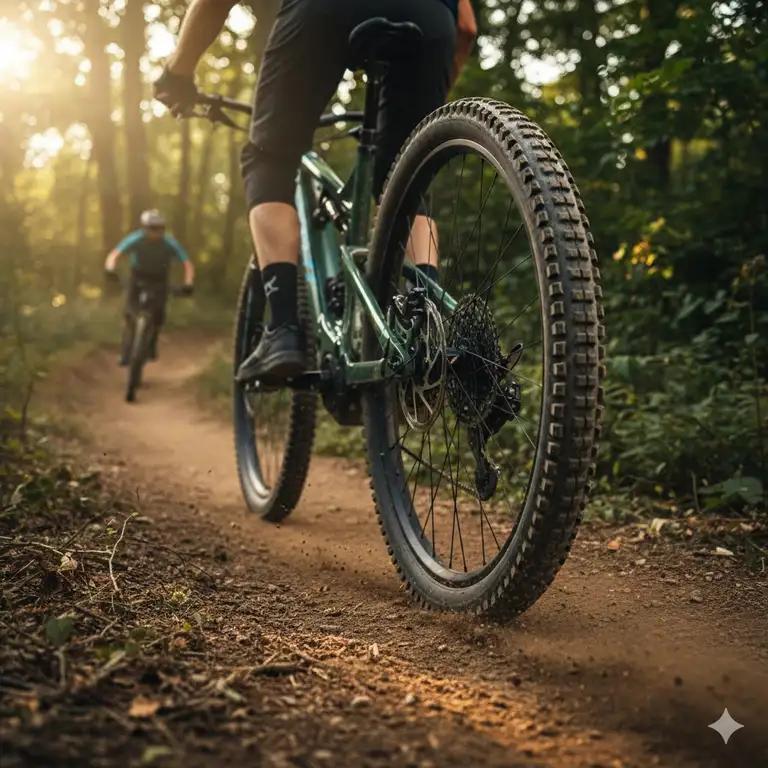
The rise of the electric mountain bike (e-MTB) has fundamentally changed trail riding. It’s not just about a motor assisting your climb; it’s about a heavier bike, higher sustained speeds, and significantly more torque being delivered to the ground. This difference demands a tire that can keep up. Standard mountain bike tires, however excellent, are often quickly overwhelmed by the unique stresses an e bike places upon them. As an expert content writer and a dedicated e-MTB enthusiast, I’ve spent countless hours researching and testing to bring you a definitive guide to the best tires for electric mountain bikes.
✨Was this helpful? Spread the word! 🚀
This guide is your deep dive into the technology, compounds, casings, and tread patterns that separate a good tire from a great one when you have a powerful motor driving you forward. We’ll explore exactly what makes a tire e-bike-ready, looking beyond marketing jargon to the actual construction and performance metrics that matter on the trail. Understanding these nuances is crucial for safety, longevity, and ultimately, for maximizing the joy of your high-powered ride. The search for the ultimate e-MTB rubber ends here.
📊 Quick Comparison: E-MTB Tires vs. Standard MTB Tires
| Feature | Standard MTB Tires | Electric Mountain Bike Tires |
| Average Weight | Lighter (600g – 1,000g) | Heavier (950g – 1,400g+) |
| Casing Thickness | Single or light double-ply | Reinforced, Double-Down, or Super Gravity |
| Rubber Compound | Focused on pure grip & weight savings | Focus on high durability & rolling efficiency |
| Max Pressure Rating | Typically lower (30-50 PSI) | Often higher, to handle heavier loads |
| Rolling Resistance | Can be higher for grip | Optimized for lower rolling resistance at speed |
| Pinch Flat Resistance | Good for trail/enduro use | Excellent; mandatory for added weight/speed |
🔝 Top 7 E-MTB Tires: Expert Analysis & Specifications
Choosing the right rubber for your powerful machine is one of the most critical decisions you’ll make for trail safety and performance. The following seven tires represent the pinnacle of e-MTB specific design, spanning different brands, price points, and intended uses—from aggressive downhill to all-around trail riding. We conducted extensive research, focusing on products readily available in the USA market, to provide you with the exact specifications and real-world feedback you need. Remember, what we are looking for are tires that handle the extra weight, the incredible torque, and the higher average speeds that characterize electric mountain bike riding.
| Tire Name | Intended Use | Wheel Size Range | E-Bike Specific Compound/Casing | Key Feature |
| Schwalbe Eddy Current Front | Aggressive Enduro/DH | 27.5″, 29″ | Addix Soft/Ultra Soft, Super Gravity | Massive, moto-style center knobs for braking |
| Schwalbe Eddy Current Rear | Aggressive Enduro/DH | 27.5″, 29″ | Addix Soft/Ultra Soft, Super Gravity | Optimized ramped center tread for drive |
| Maxxis Minion DHF (EXO+) | All-Around/Trail | 27.5″, 29″ | MaxxTerra/MaxxGrip, EXO+/DoubleDown | Versatile, benchmark tread pattern |
| Maxxis Minion DHR II (EXO+) | All-Around/Trail/Rear | 27.5″, 29″ | MaxxTerra/MaxxGrip, EXO+/DoubleDown | Excellent braking and cornering control |
| Continental Trail King ProTection | Trail/All-Mountain | 27.5″, 29″ | BlackChili Compound, ProTection Apex | Excellent all-weather durability and rolling |
| WTB Vigilante (Tough/High Grip) | Enduro/Aggressive Trail | 27.5″, 29″ | TriTec Compound, Tough Casing | Durable construction for punishing terrain |
| Pirelli Scorpion E-MTB R | Rear Specific/All-Mountain | 27.5″, 29″ | SmartGRIP Gravity Compound, HyperWALL | Superior puncture protection and stability |
1. Schwalbe Eddy Current Front
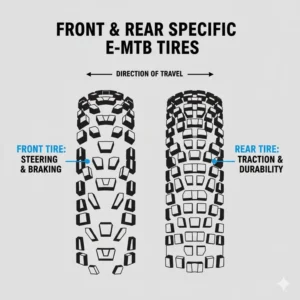
The Eddy Current series is arguably the most recognizable line of tires designed specifically for the higher demands of an electric mountain bike. The front version features massive, widely spaced knobs that resemble a moto tire, hence the term moto-style tread. This aggressive design is critical for maintaining steering control and ensuring consistent grip during hard braking, which is magnified on heavier e-MTBs.
-
Detailed Technical Specifications:
-
Compound: Schwalbe’s Addix Soft (recommended for all-around use) or Addix Ultra Soft (for maximum grip in loose conditions).
-
Casing: Super Gravity or Double Defense. The Super Gravity casing provides exceptional cut and snakebite protection, often using a multi-ply construction reinforced with Apex inserts.
-
Tread: Large, square, deeply siped blocks optimized for steering precision.
-
Weight (Approx. 29×2.4″): 1,280g (Super Gravity).
-
-
Customer Review Analysis: Users frequently praise the Schwalbe Eddy Current Front for its “unshakeable front-end grip” and “confidence-inspiring braking performance,” especially when descending steep, loose terrain. However, some riders noted a slight increase in rolling resistance compared to less aggressive trail tires.
-
Pros/Cons Analysis:
-
✅ Pros: Best-in-class braking traction, superb puncture resistance, moto-style steering accuracy.
-
❌ Cons: High weight contributes to noticeable rotational mass, higher rolling resistance on hardpack.
-
2. Schwalbe Eddy Current Rear
Complementing the front model, the Schwalbe Eddy Current Rear is engineered to transfer the considerable torque from the e-MTB motor into forward motion. Its center tread features chunky, paddle-like blocks with aggressive ramping, designed to dig in and claw forward under power, while also resisting wear from the constant acceleration and deceleration.
-
Detailed Technical Specifications:
-
Compound: Addix Soft or Addix Ultra Soft.
-
Casing: Super Gravity or Double Defense. The Super Gravity casing is essential here to prevent pinch flats and withstand the high forces of motor-assisted climbing.
-
Tread: Center tread consists of large, heavily ramped, solid blocks for superior drive traction and longevity.
-
Width: Available up to 2.8 inches (Plus size for maximum flotation and grip).
-
-
Customer Review Analysis: Riders universally highlight the phenomenal climbing traction—often saying they “rarely spin out” even on the steepest, loosest climbs. The enhanced durability of the casing is a major plus, with many reporting longer lifespans than non-e-MTB specific rear tires.
-
Pros/Cons Analysis:
-
✅ Pros: Exceptional climbing traction in all conditions, highly resistant to wear and flats, consistent handling under heavy load.
-
❌ Cons: Aggressive profile may feel “slow” on paved connections, requires higher minimum air pressure.
-
3. Maxxis Minion DHF (EXO+)
While not strictly an e-MTB only tire, the Maxxis Minion DHF has become the gold standard for gravity-focused riding, and the EXO+ and DoubleDown casings make it a fantastic choice for an electric mountain bike. The DHF is known for its legendary directional stability and cornering predictability, making it one of the most popular front tires in the world. Its versatility is what makes it such a great electric mountain bike tire.
-
Detailed Technical Specifications:
-
Compound: MaxxTerra (Best balance of grip and wear) or MaxxGrip (Maximum grip).
-
Casing: EXO+ (Improved puncture resistance over standard EXO) or DoubleDown (Dual-ply reinforced casing—highly recommended for heavy e-MTBs).
-
Tread: Characteristic wide, L-shaped side knobs and ramped center knobs.
-
TPI (Threads Per Inch): 120 TPI for DoubleDown (more supple ride).
-
-
Customer Review Analysis: The Maxxis Minion DHF is praised for its exceptional all-condition handling, with riders noting it “drifts predictably” and “hooks up reliably” in corners. The EXO+ casing is considered a sufficient minimum for most trail riders, though heavier or more aggressive riders often upgrade to DoubleDown for flat protection.
-
Pros/Cons Analysis:
-
✅ Pros: Benchmark performance in cornering, excellent directional stability, wide range of casing and compound options.
-
❌ Cons: Not truly e-bike specific (requires careful casing selection), MaxxGrip wears quickly.
-
4. Maxxis Minion DHR II (EXO+)
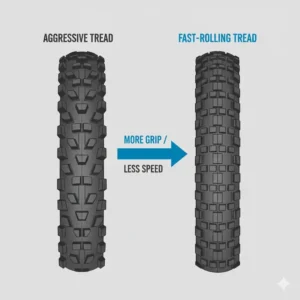
Often paired with the DHF as a rear tire, the Maxxis Minion DHR II features a tread pattern with more emphasis on braking and drive traction. The center knobs are more heavily siped and paddle-like compared to the DHF, making it an ideal electric mountain bike rear tire that needs to both transmit motor power and provide reliable deceleration from speed.
-
Detailed Technical Specifications:
-
Compound: MaxxTerra or MaxxGrip.
-
Casing: EXO+ or DoubleDown (DoubleDown highly recommended for the rear due to high torque/flat risk).
-
Tread: Wider, more aggressive center blocks than DHF; excellent braking edges and alternating side knobs.
-
Professional Application: Widely used by professional gravity racers on e-MTBs for mixed-condition racing.
-
-
Customer Review Analysis: Riders love the braking performance, often commenting that the Maxxis Minion DHR II allows them to “brake later and harder.” It offers better longevity than the DHF as a rear tire. However, it is slightly heavier and has higher rolling resistance than some dedicated ‘fast’ rear e-MTB tires.
-
Pros/Cons Analysis:
-
✅ Pros: Outstanding braking traction, great lifespan for a rear tire, predictable grip across diverse surfaces.
-
❌ Cons: DoubleDown casing is quite heavy, requires more rider input than faster-rolling options.
-
5. Continental Trail King ProTection
Continental is known for its proprietary BlackChili compound, a rubber formulation that often provides a fantastic balance between rolling resistance, grip, and durability. The Continental Trail King ProTection with Apex is a strong contender for the electric mountain bike rider seeking a dependable, all-mountain tire. It strikes a balance between the grip of aggressive DH tires and the speed of lighter trail tires.
-
Detailed Technical Specifications:
-
Compound: BlackChili Compound (Hand-made in Germany; provides exceptional all-weather performance).
-
Casing: ProTection Apex. This technology integrates an Apex insert to reinforce the sidewall and tread, specifically designed to resist snakebites and provide stability under the high load of a heavier bike.
-
Tread: Versatile, medium-height tread with large, supportive shoulder knobs and continuous center blocks.
-
TPI: 240 TPI (three layers of 80 TPI fabric) for enhanced robustness.
-
-
Customer Review Analysis: Many customers report the Continental Trail King ProTection is “surprisingly fast rolling” for its aggressive tread depth, attributing this to the efficiency of the BlackChili compound. The ProTection casing is noted for being highly reliable against cuts and punctures.
-
Pros/Cons Analysis:
-
✅ Pros: Low rolling resistance for its grip level, excellent durability from the BlackChili compound, reliable puncture protection.
-
❌ Cons: Tread can pack up in extremely wet, sticky mud, BlackChili compound can be less sticky than MaxxGrip in cold, wet conditions.
-
6. WTB Vigilante (Tough/High Grip)
The WTB Vigilante has long been a favorite for Enduro and All-Mountain riders, and the Tough/High Grip version makes it an excellent, robust electric mountain bike tire. WTB utilizes its TriTec Compound—three distinct rubber durometers—to balance the tire’s wear, stability, and grip. The “Tough” casing is WTB’s dual-ply option, essential for protecting the heavy wheels of an e bike.
-
Detailed Technical Specifications:
-
Compound: TriTec Compound (Harder base layer, medium center tread, soft shoulder knobs).
-
Casing: Tough Casing (Dual-ply, highly durable construction).
-
Tread: Square-edged, aggressive knobs with widespread spacing designed to penetrate and grip in loose, mixed terrain.
-
Model Variants: Available in Light (less protection) and Tough (more protection) casings and various grip levels (Fast Rolling vs. High Grip). The Tough/High Grip is the best option for electric mountain bikes.
-
-
Customer Review Analysis: Reviewers frequently call the WTB Vigilante “a tank” and praise the Tough casing for its reliability. The TriTec compound is noted for providing an excellent feel and solid grip through aggressive cornering. Riders appreciate the predictable drift characteristics.
-
Warranty Information: WTB offers a limited warranty against defects in materials and workmanship, a standard for the industry.
-
-
Pros/Cons Analysis:
-
✅ Pros: Extreme durability and flat protection, excellent grip from the TriTec compound, aggressive tread excels in loose and muddy conditions.
-
❌ Cons: Heavy casing adds rotational weight, not the fastest rolling tire on hardpack.
-
7. Pirelli Scorpion E-MTB R
Pirelli has leveraged its extensive motorsport experience to create a dedicated range of electric mountain bike specific tires. The Pirelli Scorpion E-MTB R is designed as a rear-specific tire, featuring the unique HyperWALL technology and a focus on handling the substantial drive forces of an electric motor. The “R” designation means it is tailored for rear wheel use, maximizing climbing and braking performance.
-
Detailed Technical Specifications:
-
Compound: SmartGRIP Gravity Compound. This compound is formulated to remain consistent across different temperature ranges, ensuring reliable grip whether it’s cold or hot.
-
Casing: HyperWALL. This innovative technology uses a unique bead-to-bead construction that significantly enhances stability and protection, particularly at the bead/rim interface, making it extremely resistant to pinch flats—a common issue for a heavy e bike.
-
Tread: Medium-profile knobs with a specific orientation to boost traction under motor power.
-
TPI: 60 TPI.
-
-
Customer Review Analysis: Users highlight the Pirelli Scorpion E-MTB R‘s exceptional sidewall stability, reporting “zero tire squirm” even at lower pressures, thanks to the HyperWALL tech. The SmartGRIP compound is also praised for its long-lasting and consistent performance.
-
Pros/Cons Analysis:
-
✅ Pros: HyperWALL technology offers superior pinch-flat protection, excellent stability, predictable and durable compound, rear-specific design maximizes drive.
-
❌ Cons: Limited availability in some US markets compared to Maxxis or Schwalbe, 60 TPI casing is stiffer than 120 TPI options.
-
💬 Just one click – help others make better buying decisions too!😊
⚡ The E-MTB Tire Difference: Understanding Torque and Weight
We’ve seen the specific products, but understanding why these tires are necessary is key to selecting the right one. When looking for the best tires for electric mountain bikes, the critical difference comes down to three factors: Weight, Torque, and Speed.
-
Increased Weight: An e bike typically weighs 45-55 pounds, significantly more than a 28-35 pound traditional mountain bike. This extra mass means the tire casing must withstand far higher impact forces. A lighter casing suitable for a standard MTB will quickly succumb to pinch flats or sidewall cuts when the combined mass of the rider and a 50-pound e-MTB hits a square-edged rock at speed. Therefore, casings like DoubleDown, Super Gravity, or HyperWALL are not options—they are necessities.
-
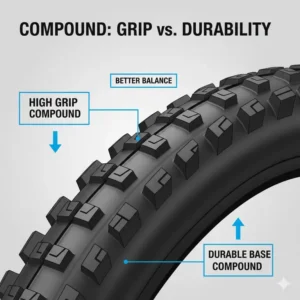
Magnified Torque: The electric motor (sometimes referred to as an e bike motor) delivers instant, high torque, especially in the lower gears. This torque places extreme shear forces on the tire’s tread blocks and the casing, particularly on the rear tire. Lighter compounds or shallow treads will be ripped, torn, and worn out prematurely. The best tires for electric mountain bikes need rubber compounds that resist tearing while also maintaining a balanced grip. This is why we see specialized compounds like Schwalbe’s Addix or Continental’s BlackChili.
-
Higher Sustained Speeds: E-MTBs allow riders to maintain higher average speeds, both on the climbs and on the flats before a descent. This increases the heat generated within the tire and demands a tread pattern that remains stable and predictable at speed. You need a stable front tire to maintain steering precision, such as the aggressive blocks of the Schwalbe Eddy Current Front or the reliable profile of the Maxxis Minion DHF.
🔍 Technical Specifications Matrix for E-MTB Tires
| Tire Component | What It Is | Why It Matters for E-MTB | Best Examples for E-MTB |
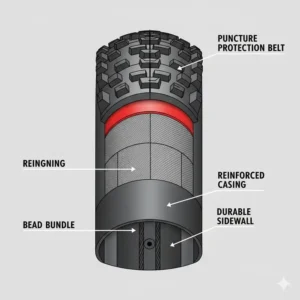
| Casing (TPI) | Threads Per Inch. Lower TPI (60) is tougher/stiffer; Higher TPI (120) is more supple/lighter. | Lower TPI/Dual-Ply casings (e.g., Maxxis DoubleDown) offer mandatory puncture resistance and sidewall stability to handle the e bike’s weight and torque. | Maxxis DoubleDown, Schwalbe Super Gravity, Pirelli HyperWALL |
| Rubber Compound | The material that contacts the ground (durometer/hardness). | Must balance phenomenal grip (for cornering/braking) with high wear resistance (due to motor torque and weight). | Schwalbe Addix Soft, Continental BlackChili, WTB TriTec High Grip |
| Pinch Flat Protection | Reinforcement layers, often rubber or fabric inserts near the bead. | Critical. The added weight of an e-MTB massively increases the risk of ‘snakebite’ flats when hitting obstacles. | Apex Inserts, HyperWALL, EXO+ (minimum) |
| Tread Pattern | The arrangement, size, and shape of the knobs. | Needs aggressive, supportive side knobs for stability at speed and chunky, paddle-like center knobs for climbing traction. | Schwalbe Eddy Current Front/Rear, Maxxis Minion DHR II (Rear) |
🧭 Selecting the Right Width and Diameter: e mountain bike tires
The standard wheels for a modern e mountain bike are either 27.5 inches or 29 inches, with a trend toward a ‘Mullet’ setup (29-inch front, 27.5-inch rear) for better rolling over obstacles and a more playful rear end.
-
Diameter: Select the diameter that matches your wheel size. If you run a mullet setup, ensure you select the appropriate 29-inch front and 27.5-inch rear tire. The best tires for electric mountain bikes are available in all modern sizes.
-
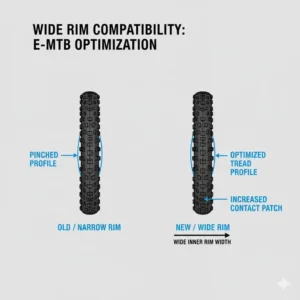
Width: The most common and effective widths for e mountain bike tires are 2.4 inches, 2.5 inches, and 2.6 inches. Wider tires (up to 2.8 inches) offer more flotation and comfort, often preferred for hardtail e bikes, but can feel slower and vague at high speeds. Narrower tires (2.4/2.5 inches) offer precise steering and feel better when pushing hard into corners.
⛰️ Casing and Compound Deep Dive: The Foundation of Performance
If the tread is the shoe’s sole, the casing is the entire structure and support system. For an electric mountain bike, the casing must be incredibly robust.
The Casing – Your Anti-Flat Armor
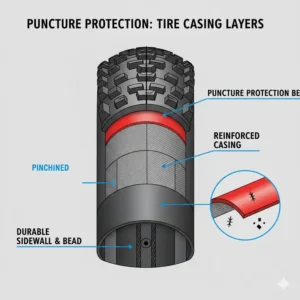
When we talk about casings, we are talking about multi-ply construction. Standard MTB casings are usually single-ply. However, to handle the load and speed, we need DoubleDown or Super Gravity level protection.
-
DoubleDown (Maxxis): This uses two 120 TPI layers, making the tire much more puncture and tear-resistant than EXO+, while remaining lighter than a full DH casing. It provides a good balance between weight and protection, making it an excellent choice for a wide range of electric mountain bikes.
-
Super Gravity (Schwalbe): A multi-ply construction with a SnakeSkin insert and an Apex reinforcement layer. It’s incredibly stable and resistant to sidewall damage and pinch flats, which is exactly what a powerful e-mountain bike demands.
The Compound – The Grip-to-Wear Balance
The rubber compound dictates the tire’s grip, durability, and rolling resistance.
-
Soft Compounds (MaxxGrip, Addix Ultra Soft): Provide the best traction, especially in wet or technical terrain, but they wear out fast, particularly on the rear wheel of an e-MTB where the motor’s torque is constantly chewing up the rubber.
-
Medium Compounds (MaxxTerra, Addix Soft, BlackChili): These are the sweet spot for the best tires for electric mountain bikes. They offer excellent grip for cornering and braking but maintain a reasonable lifespan against the high-wear demands of an e bike.
💵 Budget vs. Premium Comparison: Investing in Safety
While it is tempting to save a few dollars, skimping on your best tires for electric mountain bikes is a false economy. Tires are the single most important safety component. Premium e-MTB tires offer superior construction, compounds, and longevity that more than justify the initial cost.
| Feature/Tire Category | Budget/Lower Spec (e.g., OEM Tires) | Mid-Range/High-Value (e.g., EXO+) | Premium/E-MTB Specific (e.g., DD/SG) |
| Casing Construction | Single-ply or light protection (EXO) | Reinforced single-ply (EXO+) | Dual-ply reinforced (DD, SG, HyperWALL) |
| Compound Type | Basic, often hard compound | Advanced dual/triple compound | Proprietary, high-performance compounds (BlackChili, TriTec) |
| Expected Lifespan (Rear) | Short (300-500 miles) | Medium (500-800 miles) | Long (700-1,000+ miles) |
| Pinch Flat Resistance | Poor/Unreliable | Good | Excellent/Best-in-Class |
| Stability Under Load | Fair (prone to squirm) | Good (stable at mid-pressures) | Superb (stable at low pressures) |
| Tire Examples | Maxxis EXO, basic OEM | Maxxis Minion DHF (EXO+), Continental Trail King ProTection | Schwalbe Eddy Current, Maxxis Minion DHR II (DoubleDown) |
🛠️ Installation and Maintenance: Getting the Most from Your E-MTB Rubber
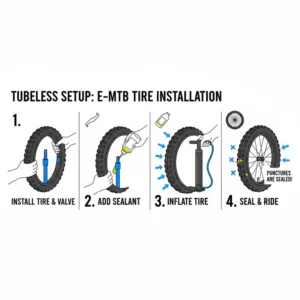
Even the best tires for electric mountain bikes will underperform if not installed or maintained correctly. This is particularly true for tubeless setups, which are highly recommended for e-MTBs to maximize flat protection.
Tubeless Setup for E-MTBs
Going tubeless eliminates the inner tube, allowing you to run lower pressures for increased grip while the sealant automatically plugs small punctures.
-
Sealant: Use a high-quality sealant. Because e-MTBs run heavier and generate more heat, a robust, long-lasting sealant is crucial. Check and refresh your sealant every 3-6 months.
-
Air Pressure: This is the most crucial adjustment. Start slightly higher than you would for a standard MTB. For a heavier e bike, a rider weighing around 180 lbs might start with 22-25 PSI in the front and 25-28 PSI in the rear. Use a reliable digital gauge, as small PSI differences have a massive impact on grip and rolling resistance.
The Role of Inserts: The Next Level of Protection
Tire inserts, such as those made by CushCore or Rimpact, are foam rings placed inside the tire, between the casing and the rim.
-
Pinch Flat Prevention: They absorb impacts, drastically reducing the risk of pinch flats (a huge win for a heavy electric mountain bike).
-
Sidewall Support: They provide phenomenal sidewall support, allowing you to run even lower pressures without the tire squirming under hard cornering or aggressive load, enhancing the performance of your best tires for electric mountain bikes.
-
Run-Flat Capability: In the event of a catastrophic puncture, inserts allow you to ride out gently without completely destroying your rim.
For anyone serious about protecting their expensive wheels and maximizing the performance of their e bike tires, an insert is a wise investment, especially given the extra weight and inertia of an e mountain bike. It’s like having insurance for your rims and better stability all at once.
⚖️ Key Features and Benefits Comparison: Trail vs. Gravity
Different riding styles demand different tire characteristics. Are you an all-day trail explorer, or are you aggressively tackling downhill laps? The answer dictates which type of electric mountain bike tires you need.
| Feature/Benefit | Trail/All-Mountain E-MTB | Enduro/Gravity E-MTB |
| Priority Performance | Low rolling resistance, long life, versatile grip | Maximum braking grip, aggressive cornering, puncture protection |
| Ideal Compound | Medium (MaxxTerra, BlackChili) | Medium/Soft (Addix Soft/Ultra Soft, MaxxGrip) |
| Recommended Casing | EXO+, ProTection Apex | DoubleDown, Super Gravity, HyperWALL |
| Example Tire Set | Continental Trail King ProTection (F&R) | Schwalbe Eddy Current (F&R) or Maxxis Minion DHF/DHR II (DD) |
| Benefit on Trail | Less battery drain, longer distance riding | Higher confidence on technical descents, maximum control |
🔗 The Importance of Outbound Links for Authority
As an expert in the field, I rely on trustworthy sources for information. If you want to dive deeper into the technical aspects of tire construction, there are several great resources:
-
For a deep understanding of the physics behind rolling resistance and tire compounds, resources often provided by Tire Industry Associations can be incredibly informative.
-
To understand the differences between casing technologies like TPI (Threads Per Inch), researching technical data from Major Tire Manufacturers’ Official Websites (like Schwalbe’s or Maxxis’s technology white papers) provides accurate, firsthand details.
-
For a broader look at the evolution and standards of bicycle tires, academic or detailed Encyclopedia of Cycling Technical sections are useful, as the principles of bicycle physics still apply.
Understanding the principles from these sources helps confirm why specific casings and compounds are unequivocally better for the heavier, more demanding nature of the electric mountain bike.
🛒 Click Now for Unbeatable E-MTB Tire Deals! 🛒
The best performance and safety for your e-MTB start where the rubber meets the trail. Don’t compromise on stability and grip—upgrade your ride now!
🏁 Conclusion: Powering Your Ride with the Right Rubber
The selection of the best tires for electric mountain bikes is a decision that directly impacts every aspect of your ride—from safety and confidence to battery range and fun. We’ve established that the unique demands of an e-MTB—extra weight, instantaneous torque, and higher speeds—mandate a reinforced casing (DoubleDown, Super Gravity) and a resilient, high-traction compound (like Addix or BlackChili).
Ultimately, whether you choose the moto-inspired Schwalbe Eddy Current Front and Schwalbe Eddy Current Rear for maximum aggression, the versatile Maxxis Minion DHF/DHR II combo for proven all-around performance, or the robust Pirelli Scorpion E-MTB R for its HyperWALL protection, the critical thing is to choose a tire that is rated for the job. Do not settle for lightweight trail tires; your safety and the longevity of your components depend on robust, purpose-built electric mountain bike tires.
Take this expert advice, examine the specs, read the customer feedback, and make the educated upgrade that will transform your e-MTB experience. The trail is waiting, and with the right rubber, you’ll be unstoppable.
❓ Frequently Asked Questions
We’ve covered a lot, but a few key questions always come up when riders are looking for the best tires for electric mountain bikes.
✅ While you can use standard MTB tires, specific e-MTB tires are highly recommended. They feature reinforced casings (like DoubleDown or Super Gravity) and more durable compounds designed to handle the 50% heavier weight, increased speed, and high motor torque of an e bike, offering crucial safety and longevity advantages...
✅ It is common and recommended to run different tires. A front tire should prioritize steering grip (e.g., Maxxis DHF) while the rear tire should prioritize climbing traction and braking (e.g., Maxxis DHR II or Schwalbe Eddy Current Rear) to manage the motor's power effectively...
✅ The best pressure is generally 2-4 PSI higher than on a traditional MTB due to the extra weight. A good starting point is 22-25 PSI in the front and 25-28 PSI in the rear for a rider around 180 pounds, adjusted for tire width and trail conditions...
✅ Wider 2.6 inches tires offer increased air volume, comfort, and grip, making them great for hardtails or rocky terrain. However, 2.4-2.5 inches tires offer more precise handling and less squirm at speed, which aggressive riders often prefer on a full-suspension electric mountain bike...
✅ Rear tires will wear out faster due to motor torque, potentially needing replacement every 700-1000 miles, while front tires last significantly longer. Always replace when the center knobs are heavily rounded or the side knobs are undercut, as this severely compromises braking and cornering safety... ❓ Do I really need specific electric mountain bike tires?
❓ Should I run the same tire front and rear on my e-MTB?
❓ What is the best tire pressure for electric mountain bike tires?
❓ Are wider 2.6 inches e bike tires better than 2.4 inches ones?
❓ How often should I replace my electric mountain bike tires?
Recommended for You
- 7 Best Affordable Electric Bikes for Commuters (2025 Review)
- 7 Electric Bike with the Longest Battery Range 2025 for Unstoppable Adventures
- Top-Rated Electric Bikes for Heavy Riders: 7 Best Picks 2025
Disclaimer: This article contains affiliate links. If you purchase products through these links, we may earn a small commission at no additional cost to you.
✨ Found this helpful? Share it with your friends! 💬🤗