As an Amazon Associate I earn from qualifying purchases. Links in this article may be affiliate links. How we choose gear
Sizing, not padding, is the complaint that keeps repeating on retailer review pages for the models below, so the real cost of a wrong pair of cycling gloves is a return shipment and a few lost weeks of riding. This 2027 guide sorts six pairs by padding style, finger length and fit, which narrows the choice before you ever open a size chart. The findings rest on tester guides from BikeRadar, Cyclingnews and Cycling Weekly, maker pages, and review sections at REI, Backcountry, Competitive Cyclist and Trisports; no pair was worn for this article, so every comment on feel belongs to a named reviewer. Prices appear as ranges, so check the current price on Amazon.com.
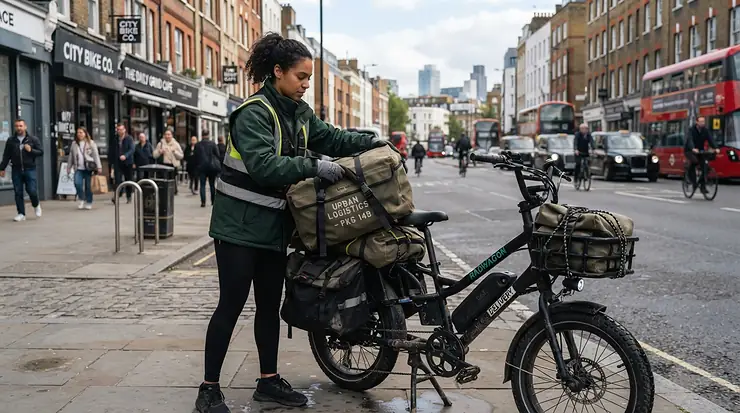
If you want one answer now, the Giro Bravo II Gel is a sensible baseline for warm-weather rides, the Giro Strade Dure Supergel suits rough pavement and gravel, the Giro Tessa II Gel is the women’s fingerless option, and the Specialized Body Geometry Dual-Gel Long Finger Gloves cover cooler mornings. The Giro Supernatural and the Pearl Izumi Elite Gel fill the gaps for riders who want thinner molded padding or a familiar fit with a mixed review record. E-bike riders are the audience in mind: a Favorite Bikes buying guide says motor vibration travels through the frame into the bars and that throttle use keeps hands gripping firmly, which is why palm padding and fit get the most attention here.
Padding, cuff and finger length: three choices that decide the fit
BikeRadar’s buyer’s guide to summer gloves says padded mitts usually rely on silicone or foam, that not every rider needs padding, and that it is worth trying a pair on to see whether the cushioning helps or only adds bulk. Cyclingnews makes the same trade-off in its guides: thicker pads soften vibration on long or rough rides, while a thinner palm keeps more feel for braking and shifting.
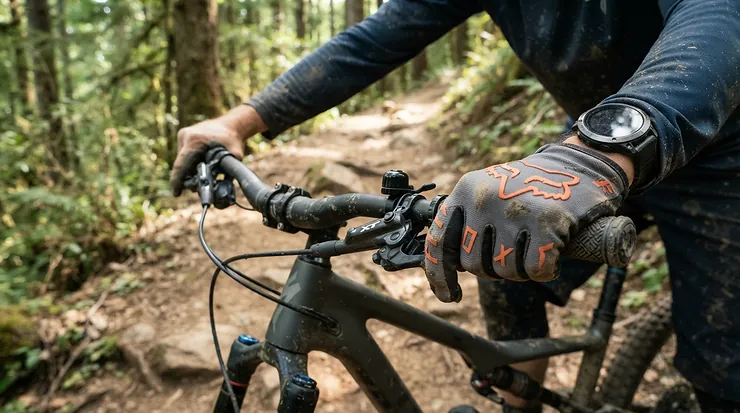
Those two ideas sort the six pairs below. Three use gel (the Giro Bravo II Gel, the Giro Tessa II Gel and the Pearl Izumi Elite Gel), two layer gel or gel and foam (the Giro Strade Dure Supergel and the Specialized Body Geometry Dual-Gel Long Finger Gloves), and one molds a single foam palm (the Giro Supernatural). Five are fingerless, one is full-finger, and the cuffs run from hook-and-loop straps to slip-on elastic.
Fit gets its own warning. BikeRadar wants a slim fit that does not restrict circulation, and Cyclingnews cautions that oversized gloves can interfere with shifting and braking, which is why a snug cut matters more than it sounds.
Lists of the best cycling gloves tend to start at the premium end: BikeRadar’s top pick is the Assos RS Targa, which it flags as pricey, and Cyclingnews’ is the Rapha Core Mitts. The six here are stocked by several US retailers, which means review pages deep enough to read for patterns.
Padding, fingers and price range: the six on one table
| Model | Finger length | Padding | Sizing notes from reviewers | Price range at retailers |
|---|---|---|---|---|
| Giro Bravo II Gel | Fingerless | 3 mm gel | REI labels it true to size; many REI reviewers say small | Around $30 |
| Giro Strade Dure Supergel | Fingerless | Technogel plus rebound foam, about 6 mm | Tight at first per one Trisports reviewer; one XL would not clear the knuckles | $35 to $42 |
| Giro Supernatural | Fingerless | Molded multi-density foam | Conflicting: true to size, small, and slightly large | $40 to $65 |
| Pearl Izumi Elite Gel | Fingerless | 3D-shaped gel | Small-fit complaints after a redesign | $40 to $45 |
| Giro Tessa II Gel | Fingerless, women’s | 3 mm gel | Small-fit reports at REI, Trisports and Terry | $18 to $30 |
| Specialized Body Geometry Dual-Gel Long Finger Gloves | Full-finger | Two-layer gel | One buyer says a full size small | $30 to $45 |
Padding thickness spans a wider range than price does. The Giro Strade Dure Supergel carries about 6 mm of gel and foam according to Bike Tires Direct, the Giro Bravo II Gel and Giro Tessa II Gel carry 3 mm, and the Giro Supernatural swaps thickness for a molded foam palm.
Sizing is the other split, and it cuts across the whole table: every pair has at least one reviewer reporting a small fit. Giro appears four times because its gloves came with the most retailer review pages to read for patterns, not because other brands were ruled out.
Best cycling gloves 2027, picked by ride type
The order below runs from everyday to specialist, not from best to worst.
1. Giro Bravo II Gel — everyday gel padding at a fair price
At around $30 at REI and several independent bike shops, the Giro Bravo II Gel sits at the lower end of this group. Retailer spec pages list 3 mm of gel in the palm, a recycled AX Suede palm, a stretch woven back and sonic-welded pull tabs, which adds up to a conventional road mitt without frills. REI’s page holds 74 reviews averaging 4.1 out of 5, and most reviewers there describe the padding as substantial without being bulky, though one rider wanted it thicker and reported numbness on long rides.
Fit is where the complaints concentrate. REI labels the glove true to size, yet many of its reviewers say it runs small, and one advises trying a pair on before buying online. A Trisports reviewer found an XL snug enough that pulling the fingers out was difficult. Check the size chart on the Amazon.com listing before ordering, and note that REI reviewers who found the pair small recommend going up a size.
Durability reports split. One REI reviewer says a seam by the thumb tore on first race use, while a longer-term owner got about a year of regular riding out of a pair.
2. Giro Strade Dure Supergel — thick cushioning for rough pavement
Chip seal and gravel are where this mitt earns its place. BikeRadar’s testers recommend it for riders who want loads of padding, citing thick dual-layer Technogel and rebound foam at the base of the palm and the inner thumb, and they flagged it as slightly bulky for some and somewhat expensive at $42 as tested. US retailers show it between $35 and $42. Giro’s own claim, relayed on Competitive Cyclist’s page, is that the Supergel insert spreads pressure 300 percent better than standard gel; treat that as a maker’s figure, not a test result.
Trisports shows 88 reviews, 64 of them five-star, while Backcountry’s smaller sample averages about 3.2 out of 5 from six. One Trisports reviewer reports several pairs over roughly eight years of use. Another used a pair at gravel events across seasons and thought the padding thick for road use, and a third could not get an XL over the knuckles. A separate reviewer says the fit is tight at first but stretches.
Pros:
- About 6 mm of gel and foam, per Bike Tires Direct
- Finger pull tabs and a hook-and-loop closure make removal easy, per BikeRadar
Cons:
- Bulk that some road riders find excessive
- A tight knuckle fit reported by buyers with larger hands
3. Giro Supernatural — thin molded padding that keeps bar feel
Not every rider wants a gel block under the palm, and this mitt takes a different route: a seamless, one-piece palm of multi-density foam developed with the chamois specialists at Elastic Interface, as Giro describes it on retailer pages. A road.cc tester called the fit perfect and the vibration damping very good, while noting the price, and the same review points out that mitts are a personal preference, with some riders wanting almost no padding and others wanting plenty.
Competitive Cyclist lists the men’s glove at 4 out of 5 from 10 ratings. One reviewer there reports over 1,000 miles without the padding packing out, which is a single report, not a pattern. Sizing evidence conflicts: Competitive Cyclist’s fit summary says true to size, while Trisports reviewers split between one who found it small and another who found it slightly bigger than past Giro mediums. A women’s version exists, and Terry’s page shows 12 reviews averaging about 3.8 out of 5.
Retailers show the men’s glove between $40 and $65 depending on version and sale timing, the highest range in this group.
4. Pearl Izumi Elite Gel — classic gel mitts, divided opinions
Retailer ratings for the Pearl Izumi Elite Gel point in different directions. Mike’s Bikes shows 5.0 out of 5 from 7 reviews, Competitive Cyclist’s men’s page averages about 2.6 from 9 reviews, and Backcountry’s women’s page shows 3 out of 5 from 5 ratings. The gap traces partly to a redesign: REI reviewers who had bought the glove for years said the newer version ran small and felt thinner and stiffer. Those complaints date from roughly 2020 to 2022, so current production may read differently.
On the spec side, REI lists a 3D-shaped gel pad, a synthetic AX Suede palm with four-way stretch, a hook-and-loop closure and reflective elements, at about $45 for both the men’s and women’s versions. Competitive Cyclist shows the men’s pair at $40, which gives the range of $40 to $45 above. Backcountry’s women’s page carries a small-fit label in its review summary, matching the REI complaints.
Backcountry also lists a lifetime manufacturer warranty, and given that wear and sizing drove the low ratings, the warranty is the strongest argument for this pair.
5. Giro Tessa II Gel — women’s fingerless pair, 3 mm gel
Anyone shopping for women’s fingerless cycling gloves at a low price will meet this model quickly. The Giro Tessa II Gel pairs 3 mm of gel with a three-panel palm that Giro says reduces bunching, plus finger pullers, a microfiber nose-wipe panel and a hook-and-loop closure, per retailer descriptions from Terry and Trisports. Terry sells it from $18, and REI lists $29.95, which makes the range about $18 to $30.
Size is the problem reviewers keep describing. An REI reviewer who normally wears a small or medium found the medium very snug and planned to try a large or extra large. A Trisports buyer wrote that a small felt like a child’s glove and a medium would not go on, and Terry’s own fit note says to size up when between sizes. REI’s earlier listing for the glove averages 3.9 out of 5 from 17 reviews.
Pros:
- One of the lowest prices in this guide
- 3 mm gel with a palm patterned to reduce bunching
Cons:
- Small-fit reports from several retailers
- One REI reviewer found the finger pullers and finger fabric stiff
6. Specialized Body Geometry Dual-Gel Long Finger Gloves — full-finger cover for cooler rides
Cyclingnews named this pair its best full-finger glove, calling it a good-value all-rounder for road, gravel and mountain biking, with touchscreen-compatible fingertips, a large nose-wipe panel and plenty of palm padding that looks chunkier than it is. Specialized’s page says the placement of the two gel layers relieves pressure on the ulnar nerve, a maker’s claim. Retailers show the pair between $30 and $45, and Competitive Cyclist lists a limited one-year warranty.
The record from buyers is split. Specialized’s own page shows 4.4 out of 5 from 49 reviews for the men’s pair, and one owner there reports three years of use, including a crash the gloves held up through. Others report fingertip holes after about ten rides, seams splitting within six months, and, from one heavier rider, gel that felt flattened after roughly 200 km. A different buyer found an early spring ride at 50°F borderline cold, and a Quilicot Bicycles spec page lists the glove as neither windproof nor waterproof.
One buyer says Specialized gloves run a full size small. Check current availability and sizes on Amazon.com, because the women’s version is a separate pair, rated 4.5 out of 5 from 29 reviews on Specialized’s page, where one buyer also reports holes in the fingertips after four months.
Gloves or no gloves: what riding bare-handed trades away
The question behind “gloves no gloves cycling” comes down to one set of benefits against one cost, and the sources split along that line. Cycling Weekly’s explainer on why riders wear gloves, a December 2019 piece whose product tips are dated but whose reasoning holds, lists nerve-related numbness, vibration, grip, crash protection and sweat-wiping as the reasons, then concedes that some riders, including some of its own staff, skip gloves for a closer feel on the bars. BikeRadar adds that gloves help when hands sweat and that the sacrificial fabric takes the abrasion in a fall.
Padding is the contested part. Cycling Weekly says padding may help against numbness from nerve compression but also says handlebar position can cause that compression, so a bike fit is the first thing to consider. Roadman Cycling’s answer page makes a similar point: padded gloves and gel tape manage symptoms when too much weight rests on the hands. A Bike Forums thread from October 2025 shows the other side. One rider who used padded gloves for years switched to minimalist ones and suspects the padding had been creating pressure points, and another there got relief by moving his hand from beside the shifter to the bar top. These are individual reports, not trials.
The practical reading is to try a thin-palm pair such as the Giro Supernatural before assuming that more gel means more comfort. Numbness that continues after fit and glove changes is worth raising with a bike fitter or a doctor.
Fingerless or full-finger: matching the glove to season and e-bike
Cyclingnews’ guide to short and long fingered gloves frames the split by temperature: short-fingered gloves suit summer and indoor sessions, while full-length fingers earn their place in the cold, ideally with windproof panels, water repellency or extra insulation. BikeRadar agrees that fingerless mitts are lighter and meant for warm weather, with long-fingered pairs covering more skin in a fall.
That makes a fingerless pair the warm-weather default and a full-finger pair a shoulder-season layer. The Specialized Body Geometry Dual-Gel Long Finger Gloves are thin and not windproof, so true cold calls for the insulated constructions Cyclingnews describes.
On an e-bike, the Favorite Bikes guide notes that throttle users put steady pressure on one area of the palm. Check where the pad sits and whether it lines up with where your hand meets the grip or throttle.
When reading cycling gloves reviews on retailer pages, start with the two- and three-star entries, since that is where the size and seam complaints in this article came from.
Women’s fingerless cycling gloves: where size charts go wrong
Cyclingnews’ women’s guide tells shoppers to follow the brand’s size guide because women-specific sizing can be tricky, and to try fit in person where possible. The reviews bear that out. The Giro Tessa II Gel draws small-fit reports from REI, Trisports and Terry, a Backcountry reviewer says the women’s Pearl Izumi Elite Gel fits small, and REI’s size chart for the Tessa II runs from hand lengths of 6.3 to 6.7 inches in small to 7.7 to 8 inches in extra large.
Measure your hand before choosing, compare it against the maker’s chart, and read the two- and three-star reviews for the exact version. The original Tessa Gel and the Tessa II are separate gloves with separate review pages, and Competitive Cyclist and Backcountry reviews of the older glove describe the same small fit.
Padding, sizing, washing and winter: short answers
Do cycling gloves really help with numb hands?
How snug should a glove fit?
Are fingerless gloves enough for cooler weather?
How do I wash cycling gloves?
Is it fine to ride without gloves?
Which pair to start with
For a first pair of cycling gloves for warm-weather rides, the Giro Bravo II Gel is the sensible choice: 3 mm of gel, a price around $30, and a base of 74 REI reviews that points to sizing, not padding, as the thing to watch. Rough pavement and gravel favor the Giro Strade Dure Supergel, riders who dislike bulk can try the Giro Supernatural, and the Giro Tessa II Gel covers women’s fingerless needs once the size is chosen carefully. For cooler rides, the Specialized Body Geometry Dual-Gel Long Finger Gloves add coverage without windproofing, and the Pearl Izumi Elite Gel rewards a careful read of recent reviews. Compare the exact model and size chart on the Amazon.com listing before buying, because fit problems are cheaper to catch before the order than after.
Recommended for You
- Belt drive bike: The 6 Worth Buying Right Now
- Ebike saddles: 7 Seats and Bags Worth Buying Now
- Fingerless Bicycle Gloves: 7 Best Expert-Tested Models 2026
Disclaimer: This post contains affiliate links. As an Amazon Associate, we earn from qualifying purchases made through these links, at no additional cost to you.
Measure your palm first, then let the size chart, not the color, pick your pair.