The Turbo Vado 4.0 weighs about 58 pounds and the Turbo Vado SL 2 4.0 about 45, so choosing the wrong one means either hauling 13 extra pounds up your stairs or running short of battery on the hills you ride every day. Most specialized turbo ebikes reviews bury that trade-off under spec lists, which is why this page sorts the 2027 lineup by budget, terrain and storage space instead.
The weights, ranges and complaints below come from specialist-press tests, shop spec pages and owner threads, and the places where those sources contradict each other are marked as they come up. The 13-pound gap is my conversion of Upway’s 58 pounds and BikeRadar’s 20.4 kilograms. Prices appear as ranges only, so check the current price on Amazon.com before you commit.
A Specialized turbo ebikes guide: motor family, charging, weight, class and battery cost
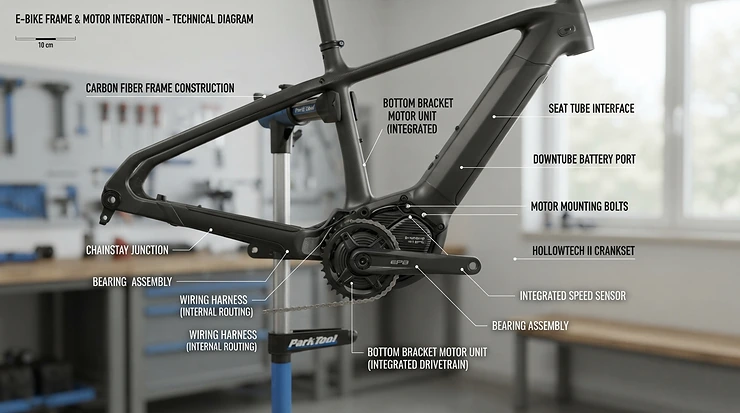
Every Specialized ebike starts with a choice between two engine families. Full-power Turbos such as the Turbo Vado 4.0 pair a 70 Nm mid-drive with a 710 Wh removable battery, according to Upway’s model roundup. The SL line, including the Turbo Vado SL 2 4.0, uses a 320 W motor rated at 50 Nm and a 520 Wh battery sealed into the frame, according to BikeRadar’s review, which adds that the previous SL generation managed only 35 Nm.
Charging logistics follow from that split. BikeRadar’s tester points out that a fixed battery can only be charged through the port on the bike, which is awkward without a socket at home or at work, and Electric Bike Report’s reviewer likewise says the bike has to come indoors to charge. A removable pack walks upstairs on its own.
Weight is the next filter, and the lineup is less spread out than the names suggest. The Turbo Tero 4.0 EQ (25.7 kg, about 57 pounds by my conversion), the Turbo Levo 4 Comp Alloy (nearly 57 pounds per Electric Bike Report) and the Turbo Vado 4.0 (58 pounds) sit within a pound or two of each other. Only the SL bike sheds a meaningful amount.
Class matters where you ride. Reviewers describe the commuter Turbos as Class 3, with pedal assist to 28 mph, whereas Singletracks’ tester found the assist on the Levo 4 he rode cutting out abruptly near 20 mph. Rules on where a Class 3 bike may go differ by state and trail, so read your local regulations before you lean on that top speed.
The last filter shows up years later. Owners on specialist forums quote replacement batteries at roughly $1,000 in the United States and £720 to £1,200 in the UK, and Digital Trends expects a battery to need replacing after about five years of regular use. That bill is why the entries below keep returning to warranty and charging habits.
Motor, battery and weight across the lineup
The table uses the figures reviewers reported, so a few cells carry a source note instead of a single number.
Model
Motor
Battery
Weight reported
Assist speed reported
Specialized Turbo Como 4.0
Full Power 2.0, 70 Nm
710 Wh, removable
About 45 lb or 62 lb (sources conflict)
28 mph on the belt-drive version
Specialized Turbo Vado 4.0
70 Nm mid-drive
710 Wh, removable
58 lb
28 mph
Specialized Turbo Vado SL 2 4.0
SL 1.2, 320 W, 50 Nm
520 Wh, fixed
About 45 lb (20.4 kg)
28 mph on the 6.0 EQ Carbon tested
Specialized Turbo Tero 4.0 EQ
70 Nm mid-drive
710 Wh, removable
About 57 lb (25.7 kg)
Not stated in the test
Specialized Turbo Levo 4 Comp Alloy
3.1, 666 W peak, 101 Nm
840 Wh, removable
Nearly 57 lb
Near 20 mph on the Levo 4 tested
Weight sorts these bikes more neatly than motor numbers do. The SL commuter drops about 13 pounds against the Specialized Turbo Vado 4.0 but carries 190 Wh less battery (710 minus 520, our arithmetic) and 20 Nm less torque. The Specialized Turbo Como 4.0 row holds a real contradiction: Digital Trends reports about 45 pounds while E-Bike Review Lab lists about 62 for the belt-drive version, and the maker’s spec sheet for the frame you want has to settle it.
Best Specialized Turbo ebikes, matched to where you ride and store them
Each entry starts from a situation and works back to the bike. The order runs from the gentlest price to the heaviest-duty trail machine, and none of it is a ranking.
Cheap specialized turbo ebikes begin here, with the caveat that cheap is relative for a full-power mid-drive. Of the bikes in this article with a sourced price, this is the one that asks the least: E-Bike Review Lab puts the Como 4.0 between $3,300 and $3,750 across its chain-drive and belt-drive IGH versions, a gap it attributes to the Gates belt and enviolo hub.
The Turbo Como 4.0 is the upright, step-through choice for riders who care more about sitting tall than going fast. Digital Trends rated it an excellent commuter, measured about 55 miles per charge (roughly one charge every four days of riding) and found level 3 good for 25 to 28 mph on flat streets. The same review dislikes the small black-and-white screen and the underwhelming app, and it notes the bike has no suspension, so the ride turns jittery on bumpy roads at speed. The unit tested carried no rack, though every Como has front and rear mounts.
E-Bike Review Lab adds that the 62-pound belt-drive version is hard for smaller riders to lift onto a rack or carry upstairs, and that the reviewer wiped the belt only once in 340 miles. Battery longevity is where the evidence turns cautious. On ebikesforum.com, one owner of a 2019 Como says the pack now starts rides at 96 percent, drops quickly and covers about 36 miles, while another poster calls a roughly $1,000 replacement unconscionable. That is two posters on one thread, so read it as a warning rather than a pattern.
E-Bike Review Lab lists a 275-pound total limit for rider plus cargo on the belt-drive version.
Specialized Turbo Como 4.0See current price, sizes and reviews on Amazon.
Ten to thirty miles each way is the commute Upway names for the Specialized Turbo Vado 4.0, and Upway’s spec rundown backs that up: a 70 Nm mid-drive, a 710 Wh battery that lifts out for charging, an 11-speed SRAM NX drivetrain, an 80 mm suspension fork and a suspension seatpost. Fenders, lights, a rear rack and a kickstand come with it. Upway says all Vado 2 models, this one included, are Class 3 with assist to 28 mph. Specialized claims 90 miles in Eco mode, Upway’s author estimates 40 to 55 miles in mixed riding, and a recharge takes about four to five hours.
Reliability notes are mixed but specific. Upway’s roundup says a few 4.0 owners reported intermittent motor cut-outs, most of them fixed under warranty with a new motor or wiring harness. It also says older bikes picked up more punctures than expected on the stock Pathfinder Sport tires and that the magnetic battery connector can be fiddly to seat. For the belt-drive Turbo Vado 5.0 IGH, Upway reports a November 2025 recall of chain guards because clothing could catch in the drivetrain, with free replacements at authorized dealers.
Pros:
A 710 Wh removable battery charges indoors without hauling the bike
Rack, fenders, lights and a kickstand come with it, per Upway
Cons:
About 58 pounds, which Upway flags for stairs and car racks
A few owners report intermittent motor cut-outs
None of the pages opened for this trim gave a US price, so check the current price on Amazon.com. Upway lists the Turbo Vado 5.0 IGH at about 60 pounds with a 62-mile Eco claim, against 90 miles for the 4.0.
Specialized Turbo Vado 4.0See current price, sizes and reviews on Amazon.
Weight is the story of the Specialized Turbo Vado SL 2 4.0, and not in the direction the name suggests. BikeRadar measured 20.4 kilograms, up from 16 on the previous SL, and BIKE magazine’s equipped step-through weighed 20.8 kilograms against a predecessor near 16. BikeRadar’s reviewer called the trade fair because the bike gained a 50 Nm motor, up from 35 Nm, and a 520 Wh battery in place of 320 Wh, while BIKE lists the extra weight among the bike’s weaknesses. BikeRadar scored it 4 out of 5 and called it among the best urban ebikes, though less exciting to ride.
Range is better documented here than for any other model. BikeRadar logged 65.68 miles with 2,172 feet of climbing and 53 miles with 2,672 feet, and a full recharge on the supplied charger took about 3 hours 45 minutes. Electric Bike Report tested the carbon 6.0 EQ at 41 pounds, rode 35 miles in under two hours in Turbo mode and estimated about 103 miles in Eco without the 160 Wh range extender (135 miles with it). Commuter mid-drives in that comparison averaged 33.2 miles in Turbo, so the SL’s Turbo-mode range is merely average.
Complaints cluster around charging and fittings. Both BikeRadar and Electric Bike Report note that the battery cannot come off the bike. BikeRadar’s tester found the front light weak on unlit paths, the single-stay rack less sturdy-looking than a traditional one and the kickstand unsteady under heavy loads. One reader comment under Electric Bike Report’s review reports a loud motor and brake noise, which the reviewer suspected was caliper alignment, so treat that as a single report.
The two reviews bracket the line at around $4,500 for the alloy 4.0 and around $6,000 for the carbon 6.0 EQ. BikeRadar rates the rack at 25 kg and BIKE at 27 kg, so the label on the rack settles it.
Specialized Turbo Vado SL 2 4.0See current price, sizes and reviews on Amazon.
One bike for the school-run pavement, a gravel towpath and a weekend trail is the job description of the Specialized Turbo Tero 4.0 EQ. The German magazine radfahren.de scored it 91, which it labels very good, and called it a strong crossover from short city trips to high-mountain touring. It lists a Specialized 2.0 motor rated at 70 Nm, a removable 710 Wh battery, a 110 mm RockShox fork and a weight of 25.7 kilograms.
Equipment is the draw. The tester praises the child-seat approval, the Mission Control app, the mudguards, the comfort and the lowerable seatpost, and the rack is rated to 27 kg. Two negatives stand out: a charging port mounted low on the frame, and a payload figure the review lists as just over 110 kilograms in its negatives while giving a permitted total weight of 136 kilograms. Those two numbers conflict, so the maker’s own rating has the last word.
That test dates from 2023, and Specialized’s own catalog still lists the Tero 4.0, the Tero 4.0 EQ and a step-through version under 2027, so confirm what the current build carries before you rely on the old spec. The review reports no tested range, only a spec-table figure of over 100 kilometers without test conditions.
Specialized Turbo Tero 4.0 EQSee current price, sizes and reviews on Amazon.
Specialized mountain ebikes start from a full-power baseline, and the Specialized Turbo Levo 4 Comp Alloy is the aluminum way into it. Singletracks puts the whole Levo 4 range between roughly $8,000 and $13,500, with the S-Works carbon build at the top, and Electric Bike Report frames the alloy Comp as serious power and a well-regarded frame without carbon pricing. The Turbo Levo 4 Comp Alloy gets the standard 3.1 motor, 666 W peak and 101 Nm, rather than the 720 W, 111 Nm S-Works version, plus an 840 Wh removable battery with 600 Wh and 280 Wh options.
Electric Bike Report weighed it near 57 pounds and rode 27.02 miles with 2,885 feet of climbing in the highest power mode, then estimated about 36 miles with the 280 Wh extender added. Its complaints are small and specific: a tight bottle-cage fit, a stem tool that stuck until greased, and one tester who dislodged the battery on a rough descent until a dealer made a 1 mm adjustment. Singletracks tested the S-Works build on the same platform and found it natural to ride, but heavy enough that it “feels like a motorcycle,” with noticeable coasting drag, a high-pitched whine and assist that cuts out abruptly near 20 mph.
Pros:
Full-power 3.1 motor and an 840 Wh battery below carbon pricing
Battery options of 600 Wh and 280 Wh let you trade range for weight
Cons:
Nearly 57 pounds, which makes lifting and loading a chore
Singletracks found drag and an abrupt assist cutoff near 20 mph on the S-Works build
Riders who find that too much bike have a lighter route in the Specialized Turbo Levo SL 2 Comp Alloy, listed by Kinetik Cycles with a 320 W motor rated at 50 Nm, a 320 Wh battery and 150 mm of travel. BikeRadar’s review of the 2025 version called it sweet-handling but short on power and spec. Specialized’s e-mountain-bike catalog lists both the Levo 4 and the Levo SL 2 under model year 2027.
Specialized Turbo Levo 4 Comp AlloySee current price, sizes and reviews on Amazon.
Cheap Specialized Turbo ebikes: where the savings are real
New-bike discounts on a Turbo come and go, so the more dependable route to cheap specialized turbo ebikes is pre-owned stock with a safety net. Upway, a refurbisher, says its certified bikes get a 50-point inspection, any battery below 80 percent capacity is replaced before listing, and the frame, motor and electrical system carry a one-year warranty with a 14-day return window. The company also advertises discounts of up to 60 percent off retail, which is its own claim rather than a tested figure.
Battery age is the number to ask about. A long owner thread on eMTB Forums shows how unsettled the warranty picture can be: owners disagree on what Specialized covered, with batteries reported at a standard two years or 300 charge cycles. One owner’s 2020 Levo battery claim was refused at around 30 months and 35 charges, another received a goodwill replacement, and dealers handled claims inconsistently. A used Turbo with a fresh battery and a written warranty removes most of that uncertainty, which is worth remembering with specialized mountain ebikes, since that thread’s owner was quoted £720 to £1,200 for a 700 Wh Levo pack. For belt-drive Vados, ask whether the recalled chain guard was replaced.
Specialized ebikes 2027: what the maker’s own listings show
Specialized’s e-bike pages carry a 2027 model-year filter that includes the Turbo Como 4.0, Vado 4.0, Tero 4.0 and Levo 4 families covered above, and the US Vado page counts ten 2027 listings. Upway adds that the Turbo Vado EVO 3, launched in April 2026, borrows the 3.1 motor from the Levo with 105 Nm, 810 W and an 840 Wh battery. Shoppers comparing specialized ebikes 2027 listings against last year’s stock should check each spec sheet, because most of the reviews cited here tested earlier model years. This specialized turbo ebikes guide leaves out the Turbo Kenevo SL 2 and Turbo Creo 2, which sit outside its commuter and trail focus.
Where Turbo purchases go wrong: hills, sockets and battery bills
Even the best Specialized Turbo ebikes disappoint when the buyer ignores one of three constraints. The first is terrain. Upway’s author advises choosing the full-power Vado for serious hills or long distances and the SL for buyers who want a lighter, more natural ride, and the SL’s 50 Nm will feel thin on a steep daily climb.
The second is the socket. A fixed battery means the bike itself must reach an outlet, which BikeRadar, BIKE and Electric Bike Report all flag, so apartment dwellers with stairs and no ground-floor outlet should weigh a removable pack before an integrated one. Specialized turbo ebikes reviews rarely dwell on this, yet it decides how the bike fits into a day.
The third is the battery bill. A replacement near $1,000 is the number owners keep quoting, and the eMTB Forums thread shows warranty claims turning on cycle counts and dealer goodwill. Ask for the purchase date and charging history of any used bike, and keep the pack indoors at partial charge when it is idle.
Specialized Turbo battery life, classes and price: short answers
Are Specialized Turbo ebikes worth the money?
Reviewers keep praising the natural motor feel and integrated design of the commuter models. Ownership cost is the sore point: owners on forums report replacement batteries around $1,000 in the United States and £720 to £1,200 in the UK, so plan for one eventually.
How long does a Specialized Turbo battery last?
One reviewer expects a battery to need replacing after about five years of regular use. Specialized's standard battery warranty is reported by owners as two years or 300 cycles, whichever comes first, and real-world degradation varies with charging habits.
Which Specialized Turbo ebike is the cheapest?
Among the bikes covered here with a sourced price, the upright city model is the lowest, between $3,300 and $3,750 across its chain and belt versions per one review site, against roughly $4,500 or more for the lightweight commuter. Certified pre-owned bikes are the other realistic way to pay less.
Are Specialized Turbo ebikes Class 3?
Reviewers describe the commuter models as Class 3, with pedal assist to 28 mph, while one tester found a mountain model's assist cutting out near 20 mph. Where Class 3 bikes may ride varies by state and trail, so read your local regulations before buying.
What separates a full-power Specialized Turbo from an SL model?
Reviews put the full-power commuter at about 58 pounds with a 710 Wh removable battery and 70 Nm, and the SL commuter near 45 pounds with a fixed 520 Wh battery and 50 Nm. The SL trades power and range for lighter handling.
A decision rule for the Turbo you will actually use
After weighing the specialized turbo ebikes reviews above, the rule is short: match the battery to your longest daily ride, the weight to your stairs and the class to your local rules. The Turbo Como 4.0 is the gentlest way in, the Turbo Vado 4.0 covers hilly commutes with a battery you can carry indoors, and the Turbo Vado SL 2 4.0 suits anyone who has to lift the bike. The Turbo Tero 4.0 EQ handles mixed surfaces and family duty, and the Turbo Levo 4 Comp Alloy is the full-power trail option below carbon pricing. Whichever you pick, budget for the battery you will eventually replace, and confirm that a Class 3 top speed of 28 mph is allowed on the paths you actually use.
Disclaimer: This post contains affiliate links. As an Amazon Associate, we earn from qualifying purchases made through these links, at no additional cost to you.
Before you order, compare the exact model name and frame size with the spec you just read, because Turbo trims differ in small details.
NextGenEBike is an independent buying-guide site for electric bikes, motors, batteries and accessories. Our editorial team compares products using manufacturer specifications, independent tests from specialist e-bike media, owner reports and retailer listings. We do not claim to have tested the products ourselves; see How We Choose Gear for our method.