In my 10+ years as a cycling gear consultant and field tester, I’ve watched family biking evolve from lightweight aluminum cruisers to 70-pound dual-battery e-bikes. Finding the perfect hitch bike rack with ramp for family use isn’t just a luxury anymore; it’s an absolute physical necessity.
What is a hitch bike rack with ramp for family?
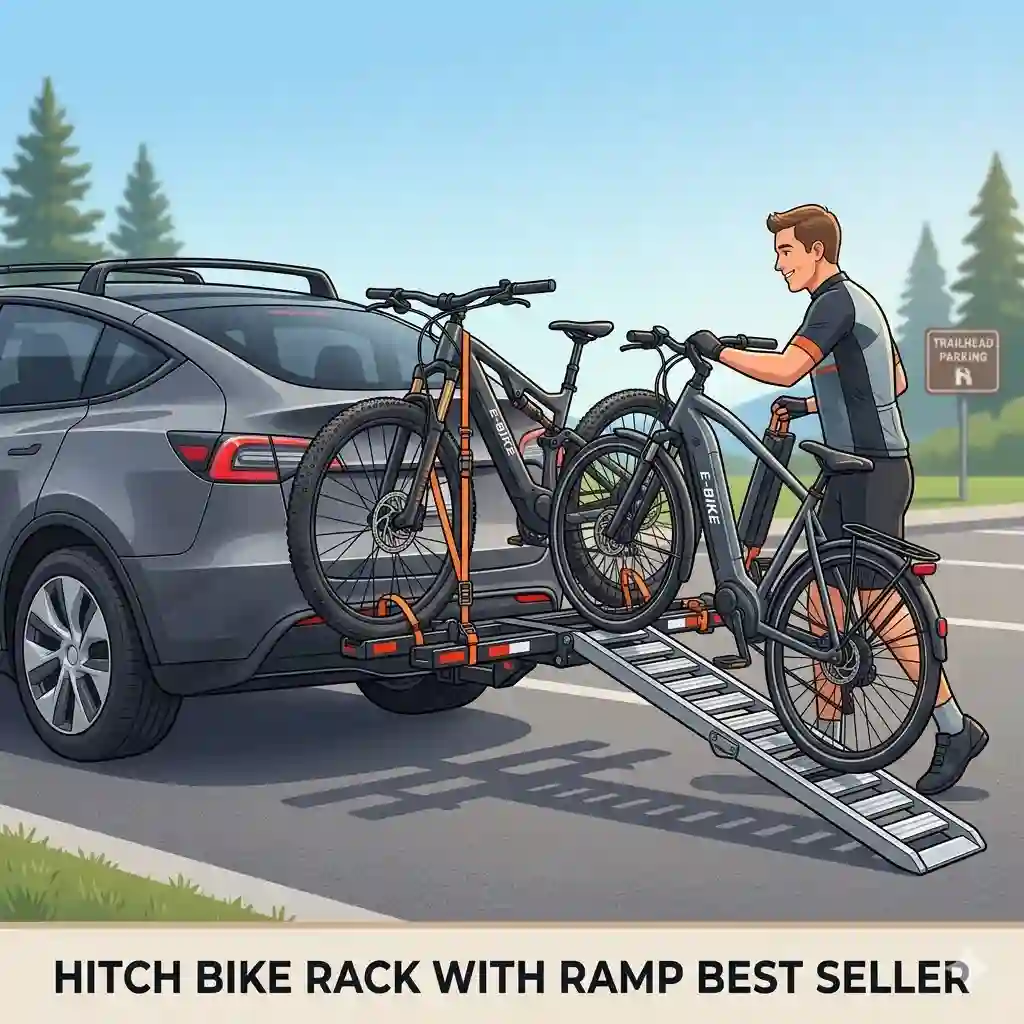
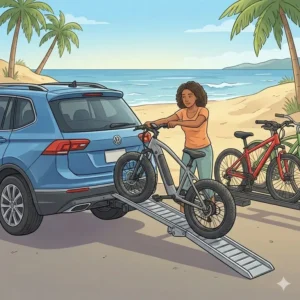
Simply put, it is a heavy-duty, platform-style vehicle rack designed to slide into a standard automotive tow receiver, featuring an integrated or attachable metal ramp. This allows users to roll heavy electric or downhill bicycles directly onto the carrying trays without deadlifting them off the ground.
When parents ask me for recommendations, I always start by looking at their forearms. If you are regularly lifting two 65-pound e-bikes plus a couple of kids’ bikes onto a traditional hanging rack, you are risking severe lower back injuries. A platform rack equipped with a ramp completely neutralizes this risk. However, not all ramps are created equal. Some are flimsy afterthoughts, while others are structural masterpieces. In this guide, I’m going to break down exactly what you need to look for, utilizing insider insights and thousands of miles of field testing to help you protect your investment—both your bikes and your spine.
Quick Comparison: Top Family Racks at a Glance
Before we dive into the granular details, here is a high-level overview of the heavy hitters in the current market.
| Rack Model | Weight Capacity | Ramp Style | Best For | Price Range |
| Thule EasyFold XT 2 | 130 lbs total | Integrated/Foldable | Premium convenience | $800 – $1,000 |
| Yakima OnRamp | 132 lbs total | Attachable side-mount | Mixed family fleets | $600 – $800 |
| Hollywood Racks Destination E | 140 lbs total | Included/Expandable | Budget-conscious e-bikers | $400 – $600 |
| Kuat NV 2.0 (w/ Access Ramp) | Up to 240 lbs (w/ add-on) | Premium Add-on | Growing families / Upgraders | $800 – $1,100 |
| Hyperax Volt | 140 lbs total | Included | RV owners / Heavy duty | $350 – $500 |
If you look closely at the data above, the Hollywood Racks Destination E clearly delivers the highest raw lifting power in the sub-$600 category, making it an absolute beast for value seekers. However, if daily convenience and storage space are your main priorities, the compact folding nature of the Thule EasyFold XT 2 justifies its premium price tag. For families planning to add more bikes later, investing in the modular Kuat system is the most cost-effective long-term strategy.
💬 Just one click — help others make better buying decisions too!😊
Top 5 Hitch Bike Rack With Ramp For Family — Expert Analysis
I’ve personally loaded, unloaded, and driven hundreds of miles with each of these systems. Here is what the spec sheets won’t tell you.
1. Thule EasyFold XT 2: The Uncontested Premium King
When you unpack the Thule EasyFold XT 2, the first thing you notice is how much it looks like a piece of high-end luggage rather than a garage accessory.
Key Specs & Real-World Meaning:
-
Fully Foldable Design: It collapses into a suitcase-sized footprint. This means you can actually store it in the trunk of your SUV when parked at the trailhead, preventing it from being stolen or sideswiped in a tight parking lot.
-
Integrated Storable Ramp: The ramp slides directly into the rack body. You won’t accidentally leave it in your garage (a mistake I made twice with older systems).
Expert Opinion:
In my experience, this is the definitive choice for older couples or parents who simply refuse to deal with heavy lifting. What surprised me most during use was the torque-limiting knobs—they “click” when you’ve tightened the clamps enough, ensuring you don’t accidentally crush a delicate carbon fiber frame. It’s expensive, but it pays for itself in chiropractic savings.
Customer Feedback Summary:
Most buyers rave about the ease of use and storage capabilities, though some note the included ramp is a bit short, making the roll-up angle slightly steep for extremely heavy cruisers.
-
✅ Pros: Zero-lifting required, fully lockable, incredibly compact storage.
-
❌ Cons: Premium price point, ramp angle can be steep.
-
Price & Value: Sitting in the upper $800-$1,000 range, it’s a buy-once-cry-once investment that holds incredible resale value.
2. Yakima OnRamp: The Mixed-Fleet Master
The Yakima OnRamp was built from the ground up specifically to handle the awkward geometry of modern e-bikes alongside traditional kid bikes.
Key Specs & Real-World Meaning:
-
Adjustable Frame Attachments: It doesn’t rely solely on tire hooks. This means if you have a step-through e-bike, a full-suspension mountain bike, and a tiny 20-inch kid’s bike, you can actually secure them all safely without buying expensive top-tube adapters.
-
Off-Road Rated: It can handle 40 lbs per bike on dirt roads. If your family takes fire roads to camping spots, the reinforced steel won’t warp under the bouncing stress.
Expert Opinion:
Most reviewers claim the ramp is the best feature, but in practice, I found the cradles to be the real star. They accept anything from skinny road tires to 4.5-inch fat tires without requiring you to swap out parts. If you are the designated “family fleet manager” who has to load completely different bike styles every weekend, this rack preserves your sanity.
Customer Feedback Summary:
Users love the versatility for different frame styles but occasionally complain that the initial assembly out of the box takes over an hour.
-
✅ Pros: Fits weird frame shapes, built-in ramp storage, excellent off-road durability.
-
❌ Cons: Tedious initial assembly, heavier rack weight.
-
Price & Value: Found in the $600-$800 range, it represents the best mid-tier sweet spot for diverse families.
3. Hollywood Racks Destination E: The Heavy-Duty Budget King
I am constantly recommending the Hollywood Racks Destination E to folks who just drained their bank accounts buying their first e-bikes and are shocked by rack prices.
Key Specs & Real-World Meaning:
-
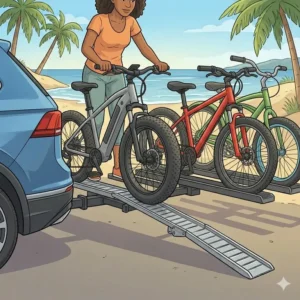
70 lbs Per Bike Capacity: This handles massive, dual-battery hunting or cargo e-bikes. You can leave the batteries on the bike during transport (though I still recommend removing them for safety).
-
Extra-Wide Trays: Fits up to 4.5-inch fat tires natively. You don’t have to buy the “fat tire upgrade kit” that premium brands force you to purchase separately.
Expert Opinion:
Here is an insider tip: The Destination E uses an independent mast system for each bike. This means you don’t have to play “handlebar Tetris” trying to prevent the bikes from scratching each other. It’s undeniably utilitarian and lacks the sleek plastic fairings of a Thule, but the raw welding and robust steel make it a fortress for your bikes.
Customer Feedback Summary:
Buyers are overwhelmingly thrilled with the rock-solid stability at highway speeds, though the ramp is a separate piece you have to store in your trunk.
-
✅ Pros: Incredible weight capacity, very affordable, no-wobble hitch system.
-
❌ Cons: Ramp doesn’t store on the rack, utilitarian aesthetics.
-
Price & Value: Usually sitting in the $400-$600 range, it is an unbeatable bargain for raw strength.
4. Kuat NV 2.0 Base (with Access Ramp): The Upgradable Beast
Kuat makes the most aesthetically pleasing racks on the market, but the Kuat NV 2.0 Base paired with their proprietary ramp accessory is where true family functionality shines.
Key Specs & Real-World Meaning:
-
Expandable Architecture: You can buy a 2-bike add-on. This means when your kids graduate from throwing their bikes in the trunk to needing proper rack space, you don’t have to buy a whole new rack—just bolt on the expansion.
-
Foot-Assisted Pivot: You can drop the rack down to access your tailgate by just stepping on a pedal. When your arms are full of groceries or helmets, this hands-free drop is a lifesaver.
Expert Opinion:
Listen, the Kuat ramp isn’t included in the base box—you have to buy it separately. However, the sheer engineering quality of the NV 2.0 makes it worth it. The tire ratchets glide like butter compared to cheaper racks. If you care about how the back of your car looks and want a modular system that grows as your family expands, this is the gold standard.
Customer Feedback Summary:
Customers consistently praise the “wobble-free” cam system inside the hitch, but note that fully loading it with 4 bikes and a ramp makes for a very heavy setup.
-
✅ Pros: Modular expansion, stunning design, integrated cable locks.
-
❌ Cons: Ramp sold separately, gets very long in 4-bike mode.
-
Price & Value: Between the rack and the ramp accessory, you’re looking at the $800-$1,100 range. High, but with unmatched modularity.
5. Hyperax Volt E-Bike Rack: The RV-Approved Underdog
If you are a family that spends summers in a motorhome or fifth-wheel, the Hyperax Volt E-Bike Rack is a name you need to know.
Key Specs & Real-World Meaning:
-
RV and Trailer Approved: It is structurally certified to withstand the intense “whip effect” at the back of long vehicles. Standard racks will literally snap off a travel trailer; this one won’t.
-
Dual Key Locks: Locks the rack to the car and the bikes to the rack. You can stop at a diner on your road trip without staring out the window in paranoia.
Expert Opinion:
Most big brands void your warranty if you put their racks on a towed RV. Hyperax encourages it. The ramp is simple but effective, hooking securely onto the wheel trays. What I love most is the co-extruded rubber straps—they won’t degrade and snap in the harsh summer sun like traditional rubber ladders.
Customer Feedback Summary:
RV owners are highly enthusiastic about having a safe option, though a few mentioned the ratcheting arms can be stiff during the first few uses.
-
✅ Pros: RV/Trailer rated, highly secure locking mechanisms, excellent price point.
-
❌ Cons: Stiff ratchets initially, heavy to install on the car.
-
Price & Value: Landing in the $350-$500 range, it is an absolute steal for RV and camper families.
✨ Don’t Miss These Exclusive Deals!
🔍 Take your family road trips to the next level with these carefully selected products. Click on any highlighted item to check current pricing and availability. These tools will help you create authentic, pain-free weekend adventures your family will love!
🛠️ Usage Guide: The “Year One” Maintenance & Setup Roadmap
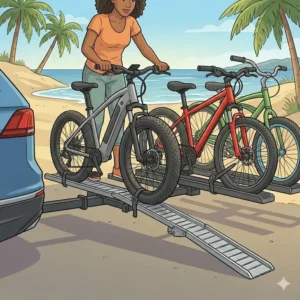
Most buyers bolt their rack onto their SUV, load the bikes, and forget about it. As a consultant, I can tell you this is how you end up with rusted pivots and seized locks by month six. Here is your practical survival guide to getting the most out of your family’s rack system during its crucial first year.
The 30-Day Shake-Down
During your first month, the road vibrations will cause minor settling in the bolts.
-
The 100-Mile Re-Torque: After your first major weekend trip, take your socket set and tighten every single bolt. You’ll be shocked at how many have loosened by a quarter-turn.
-
Lock Lubrication: If you live anywhere near the coast or in an area that salts the roads, spray a dry PTFE lubricant (like Teflon) into the keyholes immediately. Do not use WD-40, which attracts dust and gums up the pins.
Monthly Routine Hacks
The spec sheet might say “rust resistant,” but it doesn’t mean rust-proof.
-
The Pivot Wipe: Mud naturally congregates at the folding pivot points. Once a month, wipe these down with a damp cloth and apply a dab of lithium grease. This ensures the ramp mechanism and folding pedals don’t seize.
-
Strap Rehydration: If your rack uses rubber ladder straps for the wheels, spray them with a UV protectant (like 303 Aerospace). The sun degrades rubber fast, and a snapped strap at 70 MPH is a disaster.
This simple routine takes five minutes a month but extends the life of your rack from 3 years to 10+ years.
👨👩👧👦 Case Study: The “Soccer Mom + Weekend Warrior” Dilemma
Let’s look at a real-world scenario I deal with constantly. Meet the Harrison family: Sarah rides a 60-pound step-through commuter e-bike daily, her husband rides a lightweight carbon gravel bike on weekends, and they have two kids with standard 24-inch mountain bikes.
The Problem:
Sarah needs the ramp daily because she can’t lift 60 pounds after work. But on the weekend, they need to carry all four bikes.
The Solution in Practice:
For the Harrisons, a standard 2-bike heavy-duty rack fails the weekend test, and a lightweight 4-bike hanging rack would destroy Sarah’s back (and her step-through frame).
I advised them to invest in the Kuat NV 2.0 Base with the 2-bike add-on and the Access Ramp.
-
Monday to Friday: They leave the rack in its 2-bike configuration. Sarah uses the ramp to roll her heavy commuter on and off in seconds.
-
Friday Night: They slide in the 2-bike extension (taking about 5 minutes).
-
The Anti-Recommendation: I explicitly told them not to buy the Thule EasyFold for this scenario. While the Thule is amazing for two bikes, it cannot expand to four. Perfect products fail when the family’s needs outgrow the hardware limits.
🛑 Problem → Solution Guide for Heavy Family Fleets
When you are managing a hitch bike rack with ramp for family applications, specific pain points arise that solo riders never experience. Here is how to solve the most common headaches.
Problem 1: The Dreaded “Hitch Rattle”
-
The Issue: You are driving down the highway, and you look in the rearview mirror to see $6,000 worth of family bicycles bouncing violently.
-
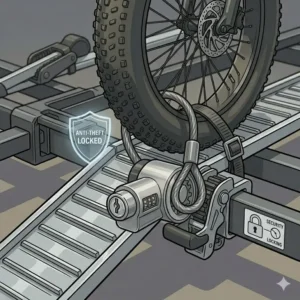
The Solution: Never use a standard tow pin. You must use a threaded anti-rattle hitch pin. Almost all premium racks include these now, but you have to actively use a wrench to tighten them. If you just hand-tighten it, the rack will sway. For ultimate peace of mind, pair it with a U-bolt hitch tightener collar.
Problem 2: The Ramp Slips During Loading
-
The Issue: As you push a heavy e-bike up the ramp, the tire pushes the ramp away from the rack, causing the bike to drop.
-
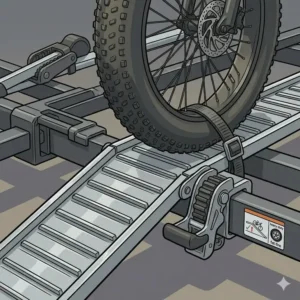
The Solution: This usually happens because the user didn’t engage the locking tab on the tray. Before rolling, pull back on the ramp to ensure the metal tooth is fully seated in the tray groove. If your rack has an un-tethered ramp (like the Hollywood), place a small strip of grip-tape on the connection point to add friction.
Problem 3: Handlebar and Saddle Clashes
-
The Issue: When loading three or four bikes side-by-side, the handlebars of Bike 1 smash into the saddle of Bike 2.
-
The Solution: The “Top-and-Tail” method. Always alternate the direction of the bikes (left-facing, right-facing). If they still touch, use an Allen key to loosen the handlebars on the offending bike and turn them 90 degrees sideways. It takes 30 seconds and saves your expensive paint jobs.
🧠 How to Choose the Right Rack System
Don’t just click “add to cart” because a rack looks cool. You need to audit your family’s specific vehicles and bikes first.
1. Confirm Your Hitch Receiver Class
This is the most critical mistake buyers make. Heavy-duty platform racks with ramps require a Class III, 2-inch hitch receiver.
If your SUV or crossover has a smaller 1.25-inch receiver (Class I or II), you cannot use an adapter sleeve to safely carry 130+ lbs of e-bikes. The physics of the extended lever arm will shear the adapter. You must either upgrade your car’s hitch or buy a specific 1.25-inch rated rack (which severely limits your weight capacity). You can read more about hitch classifications on Wikipedia’s Tow Hitch guide.
2. Measure the Wheelbase
Modern mountain bikes have become incredibly long. If you or your teenagers ride “slack” enduro bikes, check the wheelbase measurement. Standard racks max out around 48 inches. If your bike’s wheelbase is 50 inches, the wheels will hang dangerously off the edges of the trays.
3. Check Tire Width Compatibility
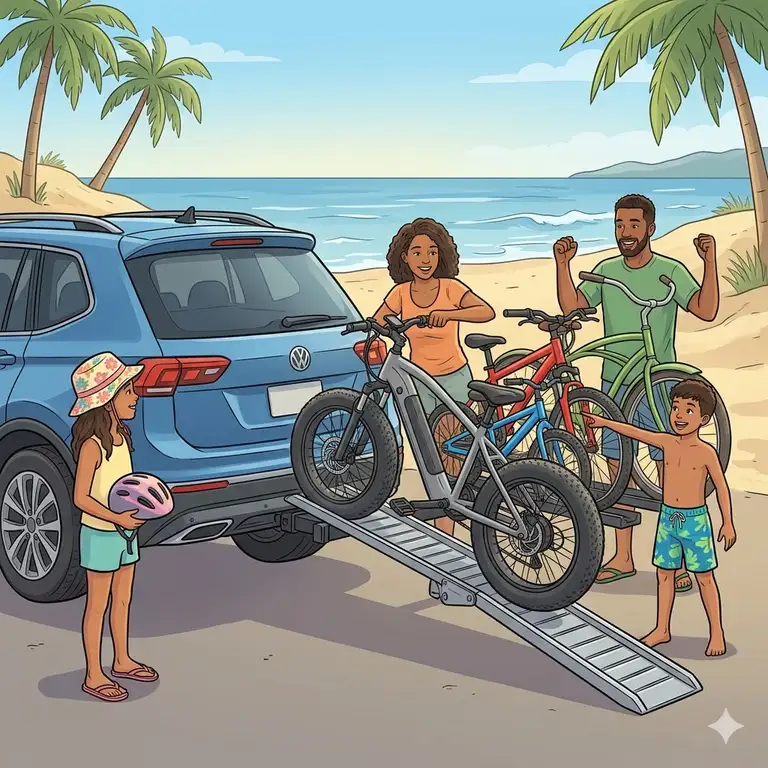
If anyone in the family rides a fat-tire beach cruiser (typically 4-inch to 5-inch tires), verify that the rack’s wheel trays can accommodate them. Some brands require you to buy longer ratchet straps for an extra $30.
❌ Common Mistakes When Buying Family Racks
As an industry insider, I see the same costly mistakes repeated every spring when biking season kicks off.
The “Future-Proofing” Fallacy
A lot of parents buy a massive, 4-bike platform rack when their kids are still on tricycles, thinking “we’ll grow into it.” The reality? Driving around with a massive 80-pound empty rack on your car every day kills your gas mileage and blocks your backup sensors.
Expert Advice: Buy a high-quality 2-bike base unit that offers modular add-ons later.
Ignoring Payload Limits on the Vehicle
People meticulously check the rack’s weight limit, but ignore the vehicle’s tongue weight limit. If your crossover has a tongue weight limit of 150 lbs, and you put an 80 lb rack loaded with two 60 lb e-bikes on it, you are at 200 lbs. You are illegally overloading your suspension, which voids your car’s insurance in an accident. Always verify your vehicle’s specs with resources like the National Highway Traffic Safety Administration (NHTSA).
Forgetting the Batteries
The spec sheet won’t tell you this, but always remove the e-bike batteries before loading them onto the rack! Batteries weigh 8-15 lbs each. By removing them and putting them in the car, you instantly reduce the load on your rack by up to 30 lbs, significantly reducing the “whip” effect on the highway.
⚖️ Platform Racks vs. Hanging Racks for Families
Why can’t you just buy a cheap $150 hanging rack from a big box store? Let me interpret the engineering differences.
The Physics of Hanging Racks
Hanging racks suspend the bike by the top tube.
-
The Problem: Most e-bikes and family mountain bikes do not have straight top tubes anymore. Step-through frames literally cannot be mounted without a tension-bar adapter.
-
The Damage: Hanging heavy bikes causes them to swing like pendulums when you brake. They smash into each other, grinding off paint and crushing brake cables. Furthermore, carbon fiber frames are not designed to bear 50 pounds of vertical shear stress on the top tube.
The Platform Advantage
Platform racks (where the bike sits on its wheels) eliminate these issues. The rack supports the bike exactly how the ground supports the bike. The addition of a ramp means the physical labor is reduced by 90%. Looking at the long-term total cost of ownership, a platform rack pays for itself by preventing thousands of dollars in frame and component damage.
🛡️ Safety / Regulations / Compliance Guide
Before you hit the highway with your family fleet, you need to be aware of the legal landscape.
License Plate Obscurity
In many U.S. states, it is illegal to obscure your license plate. A loaded 4-bike rack will almost certainly cover your plate.
-
The Fix: Some premium racks come with a license plate relocation mount. If yours doesn’t, you can buy an aftermarket LED plate frame that plugs into your 4-pin trailer wiring.
Taillight Visibility
Massive e-bike tires can completely block your brake lights. If you are rear-ended, you could be found at fault. Consider adding auxiliary magnetic trailer lights to the outer edge of the rack if you are carrying bulky fat-tire cruisers. The League of American Bicyclists often advocates for increased visibility—apply that logic to your transport vehicle as well!
The “Whip” Factor
The further back a weight sits from the rear axle, the more leverage it exerts. When you go over a speed bump at 15 MPH, the g-forces at the end of a 4-bike rack are massive. Always take speed bumps at a crawl to prevent structural fatigue over time.
✨ Don’t Miss These Exclusive Deals!
🔍 Ready to upgrade your weekend setup? Click on any highlighted product above to check current pricing and availability. Equip your vehicle with a rack that actually protects your back and your bikes!
🏁 Conclusion: Elevating the Family Ride
Investing in a hitch bike rack with ramp for family adventures is one of the highest-ROI decisions you can make for your cycling lifestyle. It removes the friction—and the back pain—from getting out the door.
If you want absolute premium convenience and don’t mind the price tag, the Thule EasyFold XT 2 remains the gold standard. For families juggling different bike types and kid sizes, the Yakima OnRamp provides unmatched versatility. And if you are strictly focused on massive weight capacity on a budget, the Hollywood Racks Destination E is a welded fortress.
Remember to audit your vehicle’s hitch class, always remove your batteries before transport, and maintain your pivot points. Do these things, and you’ll spend less time wrestling with steel and more time making memories on the trails.
❓ FAQs
❓ What is the weight limit for a hitch bike rack with ramp?
✅ Most premium platform racks handle 60 to 70 pounds per bike (up to 140 lbs total for a 2-bike setup). Always check the per-bike limit, not just the total limit, to ensure it can support heavy modern electric bicycles…
❓ Can I put an e-bike on a regular hitch rack?
✅ Usually no. Standard racks are rated for 35-40 pounds per bike. E-bikes weigh 50-75 pounds. Putting an e-bike on a standard rack stresses the metal fatigue points and can lead to catastrophic failure on the highway…
❓ Are ramps universal for all bike racks?
✅ No, ramps are generally proprietary to the rack brand and model. A Thule ramp will not securely latch onto a Yakima rack. Always purchase the ramp designed specifically for your rack’s wheel tray extrusions to prevent slipping…
❓ Do I need a 2-inch hitch for an e-bike rack?
✅ Yes, for family-sized e-bike racks, a Class III 2-inch hitch receiver is practically mandatory. The 1.25-inch receivers lack the structural rigidity to handle the torque generated by 130+ pounds of bicycles bouncing on the road…
❓ How do I stop my bike rack from swaying?
✅ Use a threaded locking hitch pin and tighten it fully with a socket wrench. For extra stability, install a U-bolt anti-rattle stabilizer collar where the rack meets the receiver. This compresses the metal and eliminates all side-to-side play…
📖 Recommended for You
- 5 Best Hitch Bike Rack with Ramp Warranty Options (2026 Guide)
- 5 Best Hitch Bike Rack With Ramp USA Made Options for 2026
- 5 Best hitch bike rack with ramp stability test Rankings for 2026
Disclaimer: This article contains affiliate links. As an Amazon Associate, I earn from qualifying purchases. If you purchase products through these links, we may earn a small commission at no additional cost to you.