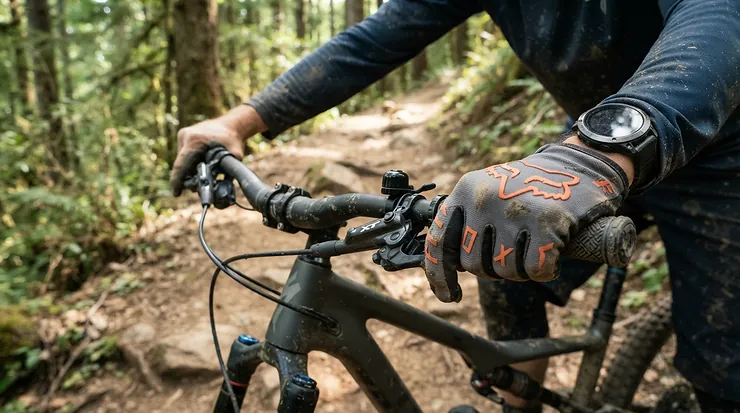
Someone riding 12 miles to an office with a laptop, a pair of shoes and a U-lock needs a very different pack from a rider heading out for a three-hour trail loop with a water reservoir, yet both end up shopping for bike backpacks. This 2027 guide sorts six real models by the job they do, from a laptop commute to a hot gravel day to a small dog riding along.
The findings rest on test pages from BikeRadar, Cycling Weekly, Treeline and a German bike magazine, a long commuter thread on Bike Forums, Rover’s dog-carrier reviews and maker spec sheets; none of these packs were worn or ridden for this guide, so every comfort verdict belongs to a named reviewer. A search for “best bike backpack 2027” tends to return one winner, but the sources below disagree with each other often enough that a single winner would be misleading.
Where bike backpacks reviews agree, and where they split
Two things come up in almost every test: size and sweat. BikeRadar’s buying advice says most commuters need roughly 20 to 30 liters, with couriers going up to 40, and Cycling Weekly’s testers settled on the same 20-to-30-liter band as the balance between capacity and weight. Cycling Weekly’s FAQ adds that smaller and larger bags bring more compromises.
Sweat is the part no pack fully solves. In one long Bike Forums thread about packs versus panniers, roughly seven posts name a sweaty back as the main complaint, while a single rider reports a 32-mile round trip in 80 to 90°F heat with no trouble. Cycling Weekly’s tester made the same point about Deuter’s Compact 14+3: its ventilation worked as well as could be expected, and the rider still got warm. Plan on some sweat, then choose the pack that moves air best for your load.
Where reviews split is more useful than where they agree. For example, road.cc scored the Osprey Metron 24 a 9 out of 10 and called it one of the best commuter packs around, while TOUR magazine measured it at about 17 liters instead of the stated 24 and withheld a recommendation. Both can be true: they weighed different things, and the Osprey Metron 24 is a pack where you should read both before buying.
Three other points separate packs more than any brand name:
Waterproofing. BikeRadar notes that roll-top closures keep water out better and last longer with heavy use, while zips are the weak point. A rain cover is a cheaper fix; fully waterproof fabric is the expensive one.
Load height. A rider in the drops feels a tall pack more. One forum poster says a backpack sits too high on the back in that position, and BikeRadar’s tester specifically noted that the CamelBak H.A.W.G. Commute 30 can be adjusted to stay clear of a drop-bar rider’s helmet.
Pack or pannier. Cycling Weekly and BikeRadar both say a backpack suits shorter trips and riders who switch bikes, while panniers suit heavy or bulky loads. If your e-bike already has a rack, panniers move the weight off your shoulders entirely.
Six packs compared on size, weight, rain and water
The table lines up what the sources report. Where two sources disagree, the cell says so.
Model
Stated capacity
Weight
Weather protection
Water reservoir
Built for
Osprey Metron 24
24 L (TOUR measured about 17 L)
1,043 g measured by TOUR; road.cc lists 1.2 to 1.29 kg
Detachable rain cover, waterproof shoe pocket
Not listed
Laptop and shoe commutes
CamelBak M.U.L.E. Commute 22
22 L
730 g
Weatherproof laptop sleeve, water-resistant shell
Takes 3 L, sold separately
Light daily loads
CamelBak H.A.W.G. Commute 30
30 L
975 g weighed by Cycling Weekly
Sources disagree (see entry)
Takes 3 L, sold separately
Bigger loads, clothes
Ortlieb Commuter Daypack Urban Line
21 L or 27 L
740 g or 790 g
Fully waterproof roll-top
None
Wet-weather commuting
CamelBak M.U.L.E. Pro 14
11 L gear plus 3 L reservoir
About 1 lb 14 oz
Not covered by the Treeline test
3 L included
Trail and gravel days
Timbuk2 Muttmover Luxe Backpack
Dog up to 20 lb
3.7 lb
Mesh sides, wipe-clean liner
Not applicable
Small dogs, short rides
Capacity is the least reliable column. The TOUR measurement of the Osprey Metron 24 is a reminder that a stated liter figure can be generous, so compare dimensions and the laptop sleeve as well. Weight also varies by what a reviewer includes: the CamelBak H.A.W.G. Commute 30 came in lighter than CamelBak’s own claim when Cycling Weekly weighed it.
The reservoir column is the one that decides between the two CamelBak families. Spotted one you like? Give its listing a closer look before the next ride.
A commuter who carries work shoes, a 16-inch laptop and a rain layer is the person this pack was drawn for. Road.cc’s reviewer fit a 16-inch MacBook Pro into the two-level internal sleeve, called the zipped shoe compartment fully waterproof, and praised the orange rain cover that lives in its own pocket on the underside. The curved back is shaped to match a rider leaning forward, and the Airscape mesh panel reduces heat build-up without ending sweat.
TOUR magazine’s test is the counterweight. It measured about 17 liters, found ventilation weakens under a full load, noted no side pockets for a bottle and limited reflective detail, and described the pack as “more of an MTB backpack than a commuter backpack.” Its rain cover handles short showers only, in TOUR’s view, which matches road.cc’s note that the zips are water-resistant but not fully waterproof without the cover.
Osprey sells several Metron versions, including an 18-liter messenger and a 22-liter roll-top according to road.cc, so confirm the 24-liter listing before ordering. Check the current price on Amazon.com. The weight reports differ too: 1,043 grams on TOUR’s scale against roughly 1.2 kilograms in road.cc’s spec list.
Osprey Metron 24See current price, sizes and reviews on Amazon.
At 1 pound 10 ounces, or 730 grams, this is the lightest commuter in the group, and Cycling Weekly named it best overall, citing comfort and stability on the bike whether loaded or empty. Its tester liked the pocket selection: a weatherproof laptop sleeve, a zipped lid pocket, a phone pocket on the harness, and side pockets that take a D-lock or a bottle. BikeRadar lists 360-degree reflectivity and a light clip.
Pros:
Cycling Weekly describes a three-zone back panel with an air channel to cut sweat
CamelBak lists a lifetime guarantee against manufacturing defects
A 3-liter reservoir fits, though it is sold separately
Cons:
Cycling Weekly found the helmet carry fiddly and not suited to every helmet strap system
CamelBak’s page lists a removable waist strap among the features yet answers no on waist belt in the specs, so the listing contradicts itself
CamelBak gives a torso fit range of 17 to 21 inches, which is worth measuring before you buy a pack with so little waist support to take up slack. The weatherproof sleeve is roll-top style, so water has to get past a fold before it reaches the laptop. Check the current price on Amazon.com.
CamelBak M.U.L.E. Commute 22See current price, sizes and reviews on Amazon.
Anyone who bikes in with tomorrow’s shirt, lunch and a 17-inch laptop runs out of space in a 22-liter pack fast. This pack opens clamshell-style, which Carryology says CamelBak designed for carrying a change of clothes, and BikeRadar’s tester found it comfortable, adjustable and stable on the bike. Cycling Weekly agrees it stayed steady even without the waist strap and gave it the best-pockets award.
Waterproofing is where the sources split. BikeRadar lists fully waterproof Cordura and storm zips, road.cc’s reviewer calls it not totally waterproof, and Cycling Weekly credits only the laptop sleeve as weatherproof. Treat it as weather-resistant until the label you receive says otherwise, and bag the electronics.
BikeRadar’s US test listing points to a range of roughly $160 to $180. Cycling Weekly’s buying tip is that the smaller CamelBak M.U.L.E. Commute 22 serves riders who do not need the 30 liters. Helmet carry straps are fiddly here as well.
CamelBak H.A.W.G. Commute 30See current price, sizes and reviews on Amazon.
Rain days are the whole argument for this one, and it costs accordingly: Cycling Weekly’s roundup puts it at roughly $200 or a little more, and a separate review from the same outlet gave a higher figure, so a range of about $200 to $230 is realistic. The fabric is a PU-coated Cordura blend that Cycling Weekly’s tester called completely waterproof, and Ortlieb says the pack meets IP64.
It comes in 21 liters at 740 grams and 27 liters at 790 grams, with a maximum load of 8 kilograms, which is about 17.6 pounds (our arithmetic). That limit is plenty for a laptop, lunch and a jacket but tight for a full change of clothes plus shoes.
Pros:
Cycling Weekly rates it comfortable and well ventilated despite the plain look
BikeRadar lists a roll-top, reflective stitching, D-lock loops and a padded laptop sleeve
Cons:
A single external pocket, and no hi-vis detailing, per Cycling Weekly
Loose straps drag when the pack is off your back, and the tall roll-top can foul a helmet or block the shoulder check
Ortlieb Commuter Daypack Urban LineSee current price, sizes and reviews on Amazon.
Gravel and trail riders in hot weather are the audience, and the reservoir is the reason. Treeline’s mountain-bike pack test names this pack best overall. It carries 11 liters of gear plus a 3-liter Crux reservoir, and CamelBak adds the two to list it as 14 liters. Treeline calls its ventilation some of the best the reviewer has seen on a backpack, says it sits low enough to stay clear of a helmet, and notes the magnetic sternum clip held on rough ground.
Treeline is the only hands-on test opened for this pack, so treat its praise as one reviewer’s view. The same page found CamelBak’s reservoir delivered water with no taste, while testers noticed a plastic taste from Osprey’s. The downsides are that the back protector costs extra and stiffens the pack. Treeline’s listing puts it in the high $170s, so budget roughly $170 to $180.
Pros:
Reservoir included, with a magnetic tube setup
Treeline gives it top marks for airflow
Cons:
Eleven liters of cargo is trail-day space, not a laptop-and-shoes commute
The optional back protector stiffens it
CamelBak M.U.L.E. Pro 14See current price, sizes and reviews on Amazon.
Rover’s reviewers took a Boston terrier named Olive on bike rides in this carrier and found she preferred it to a bike basket because it shielded her from the wind. The same page notes a quirk: leaning forward on a bike tilts the dog back against your spine instead of resting on the stiff 13-by-10-inch base. Timbuk2 lists a maximum pup weight of 20 pounds, and the carrier itself weighs 3.7 pounds, so the heaviest allowed load is about 23.7 pounds on your back (our arithmetic).
Mesh sides keep it cooler than most carriers in Rover’s view, and the nylon liner wipes clean. Straps are lightly padded and the back is stiffer than comfortable for long wear, and the side windows make it less escape-proof even with a tether. Dogster’s review says dogs close to 20 pounds fit less well and calls the pack a better match for the smallest breeds.
Ask your vet before riding with a dog in any carrier, and let the dog get used to this one indoors first. Plan on around $140 to $160.
Timbuk2 Muttmover Luxe BackpackSee current price, sizes and reviews on Amazon.
Test lists rarely dwell on failures, but the testers’ notes do, and a few of them should change what goes in your cart.
BikeRadar’s tester found that a laptop pressed into the rider’s back on longer commutes with Rapha’s Roll Top Backpack, which also scored poorly on comfort. Durability brings its own penalty: the same site’s reviewer calls Chrome’s Barrage Cargo 22X heavy, with straps that need a few rides to break in, and Cycling Weekly lists the Barrage Freight at 2.3 kilograms empty, about 5 pounds (our arithmetic). A pack built to survive a decade of messenger abuse is not light.
Rain is another gap between promise and result. In BikeRadar’s test of the Ogio No Drag Mach LT, the zips soaked through in prolonged rain, although the contents stayed dry. That is the zipper weakness BikeRadar warns about, and it is why a roll-top or a pack cover matters more than a “water-resistant” label.
Visibility is the third. Cycling Weekly says reflective details help but lights matter more after dark, so a pack that offers a light loop, such as the Ortlieb and CamelBak commuters above, earns more credit than one that is only covered in reflective print.
Fit is the last and the most personal. BikeRadar’s tester says the Ogio’s fit will not suit everyone and that the chest could feel tight, and CamelBak publishes a torso range of 17 to 21 inches for its Commute 22. The bike backpack best on a spec sheet can still be the wrong one for your torso, so measure from the base of your neck to your hip bones before you decide.
A bike backpack with water bladder: what changes at 3 liters
Cycling Weekly notes that mountain and gravel packs often come with a bladder sleeve, while road-oriented packs may offer only a compartment and a tube loop. Both CamelBak commuters take a 3-liter reservoir, but it is sold separately, and CamelBak’s own spec lists a capacity of 101 ounces.
Water is heavy. A full 3-liter reservoir weighs about 3 kilograms, close to 6.6 pounds (our arithmetic), which is more than a third of the Ortlieb’s 8-kilogram load limit on its own. For a commute that passes a water fountain, a side-pocket bottle is lighter.
On the trail side, Treeline also tested Osprey’s Raptor 14, a 14-liter pack with a 2.5-liter reservoir and a lifetime warranty program. It costs more than the CamelBak M.U.L.E. Pro 14 in Treeline’s listing, with ventilation rated below the CamelBak’s and the plastic taste noted above. A bike backpack with a water bladder is a trail or gravel tool first and a commuter second; the commuter packs treat it as an option.
A bike backpack for dogs: what the sources support
The evidence here is narrow. Rover’s dog-carrier roundup recommends backpack-style carriers mainly for small dogs: the Timbuk2 Muttmover Luxe Backpack for dogs under 20 pounds, Kurgo’s G-Train for up to 25 pounds with padded mesh that can get hot, and the K9 Sport Sack, a forward-facing design for larger dogs that makes you weigh how much you can realistically ride with on your back. For bigger dogs Rover points to trailers: the Schwinn Rascal holds up to 100 pounds but adds about 34 pounds to the ride, and the Burley Tail Wagon holds up to 75 pounds with no internal tether.
A retailer listing for K&H’s Travel Bike Backpack describes a variation worth knowing about: a pack for teacup and small dogs that clips onto the bicycle rather than riding on your shoulders. None of these sources gives veterinary or safety standards for biking with a dog, and Rover says so. Treat a dog bike backpack as a short, slow, city-ride tool for a small, calm dog. A larger dog belongs in a trailer or at home.
Sweat, rain, laptops and dogs: short answers before you buy
Are bike backpacks better than panniers?
Backpacks suit short trips, light loads and riders who switch bikes or walk around after the ride. Panniers suit heavy or bulky loads and keep weight off your back, but they need a rack and are awkward to carry, per BikeRadar and Cycling Weekly.
How many liters should a bike backpack hold?
BikeRadar says most commuters need about 20 to 30 liters, with couriers going up to 40. Leave room for winter layers and shoes. Stated volumes can run generous: one German magazine test measured a 24-liter pack at about 17 liters.
Can I use a water bladder in a normal bike backpack?
Only if the pack has a reservoir sleeve. CamelBak's two commuter packs accept a 3-liter reservoir sold separately, and Cycling Weekly says many road-oriented packs offer just a compartment and a tube loop, so check the listing for a sleeve.
Are bike packs waterproof?
Some are. Ortlieb's Urban Line uses waterproof fabric with a roll-top, while many others rely on a rain cover or water-resistant zips. BikeRadar says roll-tops keep water out best and zips are the weak point, so check the label.
Can a dog ride in a bike backpack?
Sources limit backpack carriers to small dogs, around 20 to 25 pounds at most, and Rover steers bigger dogs toward trailers. Check with your vet first, then build up slowly from short, slow rides.
Matching a pack to your ride
Start with the load, not the brand. A laptop-and-shoes commuter will find the Osprey Metron 24 worth a look once the TOUR volume figure is weighed against road.cc’s praise, while a lighter day suits the CamelBak M.U.L.E. Commute 22. A full change of clothes calls for the CamelBak H.A.W.G. Commute 30, and a wet climate justifies the price of the Ortlieb Commuter Daypack Urban Line. Trail and gravel riders who want water on their back should look at the CamelBak M.U.L.E. Pro 14. The Timbuk2 Muttmover Luxe Backpack is for a small dog on a short ride, nothing heavier.
Whichever of these bike backpacks you choose, settle the sweat question first: if your commute runs long and hot, a rack and panniers may spare you the whole debate.
Disclaimer: This post contains affiliate links. As an Amazon Associate, we earn from qualifying purchases made through these links, at no additional cost to you.
Spotted the pack that matches your commute or trail loop? Take a closer look at its current listing before your next ride.
NextGenEBike is an independent buying-guide site for electric bikes, motors, batteries and accessories. Our editorial team compares products using manufacturer specifications, independent tests from specialist e-bike media, owner reports and retailer listings. We do not claim to have tested the products ourselves; see How We Choose Gear for our method.