The best 52v ebike batteries are the ones whose BMS rating, plug and 58.8V charger match your bike, and for a 1,000 W conversion that points first to the Varstrom 52V 20Ah or the Joyisi 52V 20Ah, with the ZLSHELIBK 52V 31.8Ah for bigger builds. A 52V pack stacks 14 cells in series instead of the 13 in a 48V pack, so a full charge sits at 58.8V instead of 54.6V, and vendor guides from EM3ev and Leoguar warn that a controller not rated for that peak can fail. Five Amazon-sold 52v ebike batteries make this 2027 shortlist, with the Joyisi 52V 25Ah and BAFANG 48V/52V 20Ah filling the middle.
The notes lean on maker manuals, reseller mirrors of Amazon listings with their buyer reviews, owner threads on Electric Bike Review’s forum, and CPSC and Federal Register documents. No pack was bench-tested, and none of the five came with a lab report in the sources found, so the certificate checks below carry more weight than any star rating.
Controller ceiling, BMS amps and charger voltage come before amp-hours
Five checks, run in this order, settle most of a 52V decision before a brand enters it.
The controller’s voltage ceiling. The label should say 52V, 14S or a maximum near 60V. Vendor guides say many 48V controllers use 63V capacitors or 60V MOSFETs that tolerate 58.8V, and a UK retailer adds that not all do. Owners split as well. In a December 2020 Electric Bike Review thread on Bafang bikes, one poster reports that Bafang firmware throws an overvolt error with a 52V pack and says he has seen many fried parts on overvolted systems, while another poster runs 52V on 48V-rated controllers without trouble. That is a disagreement between individual reports, so the label and the maker’s written answer outrank both.
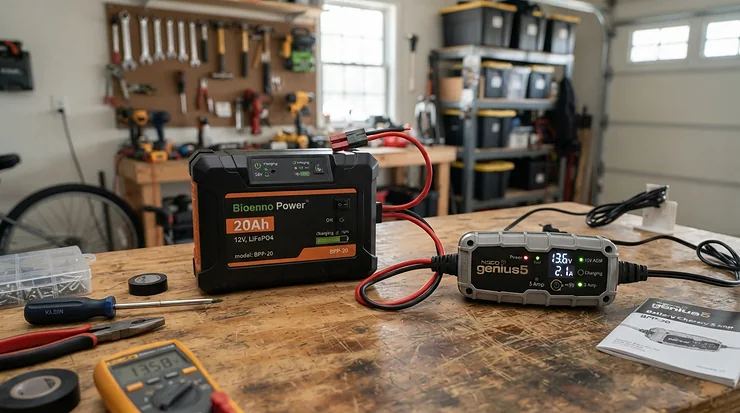
The charger. EM3ev’s guide says a 52V pack needs a charger that cuts off at 58.8V, because a 54.6V charger never fills it and leaves the cell groups unbalanced, while Gyroor’s guide warns that a 52V charger on a 48V battery overcharges it. Use the charger supplied with the exact pack.
The BMS current. Divide rated watts by 52 to get the continuous amps the pack must deliver. The table turns that into numbers you can hold against a listing.
Rated motor power
Current at 52V (watts ÷ volts)
What it means for the BMS
500 W
about 9.6 A
Every pack here clears it comfortably
750 W
about 14.4 A
A 30A BMS has about twice the current it needs
1,000 W
about 19.2 A
The Varstrom 52V 20Ah at 30A works; 40A leaves margin for hills
1,500 W
about 28.8 A
30A sits at its limit; 40A is the safer floor
2,000 W
about 38.5 A
Needs 50A or more once voltage sag is counted
Sag raises the real current above the nominal figure as a pack drains, which is why sellers and owners leave headroom. EM3ev’s 1,000 W guide pairs a Bafang BBSHD with a 30A continuous controller limit, and a 30A BMS behind a 30A controller leaves nothing in reserve on a long climb.
The certificate. The CPSC’s proposed rule published on June 24, 2026 names UL 2271 for user-replaceable battery packs and would reach packs sold separately, aftermarket chargers and conversion-kit components. The notice calls it a proposal, and written comments closed on August 24, 2026, so check the Federal Register for any final rule. Biketips reports that California already requires e-bike batteries and chargers to be tested to recognized standards. A listing that says “UL” is not a certificate: ask for the lab name and the report number.
The plug and the case. Reviewers of the Varstrom listing needed separate mounts, a buyer on the BAFANG listing needed an adapter cable to mate with a controller, and one forum poster argues that many 52V packs are poor builds because the case is too small for 14 cell groups. Measure the downtube and look at the connector before you look at capacity.
The five packs on the figures sources agree on
Where sources disagree, the table says so, because several of these brands sell different packs under one name.
Pack
Energy
BMS (continuous)
Cells per sources
Weight per sources
Certificate wording found
Joyisi 52V 20Ah
1,040 Wh
40A or 50A, by listing
LG (roundups); domestic 2500 (one reseller page); Tesla 21700 (one reviewer)
about 8 kg to 9 kg on reseller pages; 12.1 lb in a roundup
A seller page claims UL, CE and SGS testing; no report number
Varstrom 52V 20Ah
1,040 Wh
30A
Unconfirmed; reviewers mention Samsung and Sanyo
11 lb (roundups)
None found
Joyisi 52V 25Ah
1,300 Wh
50A
LG 5000 (roundups)
Not found
UL 2271 in roundups; no certificate seen
BAFANG 48V/52V 20Ah
1,040 Wh on the 52V style
30A on one listing; 20A in a roundup
Samsung
11 lb
None found
ZLSHELIBK 52V 31.8Ah
about 1,654 Wh
80A
Samsung, 14S6P (Panoz Auto)
about 16 lb (Digitalnpq)
IP65 water rating; no UL wording
The spread shows why amp-hours are the last number to read. The Joyisi 52V 20Ah and Varstrom 52V 20Ah store the same 1,040 Wh, yet one changes cells and BMS between listings and the other publishes a manual, and the certificate column is thin for all five. Because Joyisi and Varstrom each sell several versions, compare the exact model number and BMS rating on the listing before paying.
Several different packs share this name, so the first job is working out which one a listing describes. One reseller page lists domestic 2500 cells, a 40A BMS, a 58.8V 2.5A charger, about 8 kg and Anderson plugs. A page for the 52V 20AH style gives 9 kg, 17 by 6 by 3 inches and a one-year warranty, and roundups credit LG cells, a 50A BMS and 12.1 pounds. One reviewer on the reseller copy says the cells are Tesla 21700s and that the XT60 plugs arrived unattached, so a crimper and splices were needed.
Buyer feedback on those reseller copies swings widely. One rider reports 100 miles on the pack and says it still performs perfectly, and a commuter says a 25-mile daily ride leaves 50 to 60 percent. A buyer on a related 52V 20AH page measured about 1.1 kWh out to a 45V cutoff, and several reviewers praise fast support, including one who was sold parts to build another bike around an old pack. On the other side, one owner reports two units dead within a year at about 300 miles of light use, and another says a pack sold as a 45-mile battery quit at 24 miles. A roundup with an Amazon Associate disclosure adds charger-connector sparking and a dead-on-arrival risk, so measure the voltage the day it arrives. Check current availability on Amazon.com.
Pros:
✅ 1,040 Wh, with a 40A BMS on most listings that clears a 1,000 W motor at about 19 A
✅ Reseller-page reviewers repeatedly praise quick customer support
✅ A one-year warranty appears on the reseller listings
Cons:
❌ Cells, BMS rating and weight differ between listings
❌ One owner reports two failures within a year, and a roundup reports a sparking charger connector
❌ Heavy for a bottle-style pack and needs a solid mounting point
Joyisi 52V 20Ah Ebike BatterySee current price, sizes and reviews on Amazon.
Varstrom publishes a user manual for this pack, which few rivals in the category do. It lists 1,040 Wh, a 30A maximum continuous discharge, a 3A maximum charge current, a 6-pin charger connector, an XT60 battery connector and a body of 368 by 95 by 125 mm, and the box adds a mounting plate, two keys and four screws. The reseller copy of the listing shows 4.4 stars from 21 reviews, 30-day returns and 365 days of repair or replacement.
At 30A the BMS tops out near 1,560 W at nominal voltage. That clears a 1,000 W motor at about 19 A and sits at the limit for 1,500 W, so the listing’s 0-to-1,500W wording describes the ceiling, not the comfortable zone.
Owner detail is unusually concrete. One reviewer’s pack arrived at 53.5V, charged to 58.8V and lost 1.6V on a 12-mile ride, and a May 2025 update reports 71.7 miles on a fat-tire mid-drive before the 46V cutoff, with the pack still running at 44.3V on a steep hill where the previous battery would have shut off. A BBSHD rider reports full 30A output and a shut-off while the charger is connected, so the bike cannot be ridden while plugged in. Two other reviewers needed separate mounts, and one says the level indicator never worked. Cell brand is unsettled: one reviewer was told Samsung 5000 mAh and could not verify it, and another mentions Sanyo. Check current availability on Amazon.com.
Varstrom 52V 20Ah Ebike BatterySee current price, sizes and reviews on Amazon.
The headline is a UL 2271 label, and that is also the claim to verify hardest. Roundups from Kiddofspeed, Panoz Auto, Digitalnpq and Rosenberry Rooms repeat the same set: LG 5000 cells, a 50A BMS, a 3A charger, a one-year warranty and UL 2271. None shows a certificate, and the wording is similar enough across them that it may trace back to one listing, so treat it as the seller’s claim until you hold a lab name and report number. Digitalnpq says few aftermarket packs on Amazon carry the certification, and it also lists capacity-labeling discrepancies and a fiddly mounting plate among its complaints.
Multiplying 52V by 25Ah gives 1,300 Wh, 25 percent more than the 20Ah versions. The 3A charger means more than eight hours from empty before the charge taper, and Kiddofspeed says the case will not fit a standard bottle cage. A 50A BMS leaves headroom for a 2,000 W motor at about 38.5 A, which matches the listing’s wording for up to 2,000 W. The federal proposal covered earlier names UL 2271 for exactly this kind of replacement pack, which is why the report number is worth asking for.
Joyisi 52V 25Ah Ebike BatterySee current price, sizes and reviews on Amazon.
One listing, two voltages: this page sells 48V and 52V options from 13Ah to 20Ah, so the style dropdown is part of the purchase. The 52V 20Ah style is listed for 0 to 1,600 W motors with Samsung cells at about 11 pounds, while the 48V-styled copy gives a 14.49 by 3.54 by 4.84 inch case, a lock and a mounting bracket, 4.2 stars from 33 reviews and no warranty. BMS information conflicts, with up to 30A continuous on one listing and 20A in a roundup, which makes a 750 W motor (about 14 A) a more comfortable match than a 1,500 W one.
Those reviews mix both voltages, so read them as general rather than 52V-specific. One buyer says range doubled on a Revv1 with a small top-end speed boost, another reports about 30 miles at 20 mph with a 1,000 W Bafang mid-drive on hilly roads, and a third used 30 miles and still had 89 percent left. Complaints cluster elsewhere. One pack stopped charging after about a month with no reply from support and no return offered, the remaining-charge indicator is called unreliable (one rider watches voltage and recharges near 47 to 48V), a solar charger would not work, and two buyers needed a male connector or an adapter cable to mate with their controller. A Bafang-branded pack does not guarantee kit compatibility, so match the connector before ordering.
BAFANG 48V/52V 20Ah Ebike BatterySee current price, sizes and reviews on Amazon.
The largest pack here is built for conversions of 2,000 W and up. The listing gives 52V 31.8Ah, a 14S6P Samsung-cell layout per Panoz Auto, an 80A BMS, a 4A charger rated for about eight hours and a manufacturer named as Dongguan Batterysea Energy Co., Ltd. Multiplying 52 by 31.8 gives about 1,654 Wh, and Digitalnpq prints 1,649 Wh. The supported motor range conflicts, with 500 to 4,000 W on the listing and 500 to 3,000 W in a product title, so the 80A rating (roughly 4,160 W at nominal voltage) is the number to trust.
Digitalnpq says the pack weighs 16 pounds and carries an IP65 rating, and the listing claims 31 to 74 miles depending on conditions and more than 1,000 cycles. Review evidence is thin: the reseller copy shows six reviews, among them a BBSHD rider who says 52V gives plenty of torque on steep hills, saw 86 percent left after a ride and notes three connector choices for the drive. No UL wording appears in the sources found, and IP65 is a water-ingress rating, not a safety certificate. Check current availability on Amazon.com.
Pros:
✅ About 1,654 Wh, the most energy of the five
✅ An 80A BMS leaves wide margin even for a 2,000 W motor at about 38.5 A
✅ A 4A charger cuts a full recharge to about eight hours per the listing
Cons:
❌ About 16 pounds, which affects mounting and handling
❌ Only six reviews on the reseller copy
❌ No pack-level certificate wording in the sources found
ZLSHELIBK 52V 31.8Ah Ebike BatterySee current price, sizes and reviews on Amazon.
52v ebike batteries reviews: what owners report and which sources to trust
Roundup sites that surfaced do not agree. Digitalnpq names the Varstrom 52V 20Ah its editor’s choice and gives the Joyisi 52V 25Ah its top rating, Rosenberry Rooms and Cleveland Heart lead with the Joyisi 52V 20Ah, and Peggyomara picks a Leonidas pack. Each carries an Amazon Associate disclosure, and several describe weeks of first-person testing without publishing logs, so their badges cannot be re-measured.
Weigh each signal by whether it can be repeated. A forum member’s voltage log or an owner’s cutoff reading can be checked; a “best overall” label cannot. Star figures on the reseller mirrors (4.4 from 21 reviews for the Varstrom 52V 20Ah, 4.2 from 33 for the BAFANG 48V/52V 20Ah, six reviews for the ZLSHELIBK 52V 31.8Ah) are snapshots of other people’s pages, so recheck the live count before relying on them. A one-star review that names a failure, such as a pack that stopped charging after a month, tells you more than five stars that name nothing.
What the extra voltage does to top speed, and when to buy the whole bike
Searches such as “ebike amazon 52v top speed” mostly land on complete bikes whose headline speeds depend on the controller, the motor winding and local class rules, not on the pack alone. A pack changes speed through the voltage it holds at that moment. One rider on Electric Bike Review’s forum measured about 37.5 mph assisted at 58.8V, about 35 mph at 55.4V and about 32.5 mph at 50.4V on his 52V pack, and he said the speed follows the real-time voltage. In a thread that began in 2022, the original poster called the 52V gain noticeable but slight and short-lived, and another member reported a mile or two per hour. The BAFANG buyer who swapped in the pack describes a small top-end boost, which fits the same pattern.
Sag is where owners report the clearest difference. A 52V user in the December 2020 Bafang thread says the pack gave more consistent power, allowed riding one to two assist levels lower and showed less drop-off as it emptied, though the pack was built in an oversized case that the poster calls bulky. That is one owner’s report.
Shoppers hunting the best 52v ebike rather than a pack can apply the same checks. Cyrusher’s site lists 52V 20Ah (1,040 Wh) with 750 W Bafang motors on its Ranger 2.0 and Trax 2.0, says its commuter models assist up to 28 mph, and says the Ranger 2.0 meets UL 2849 and UL 2271. Consumer Reports describes UL 2849 as covering a bike’s electrical and charging systems, so ask which standard a listing means and for which part. US e-bike classes and state rules limit assisted speed, and they vary by state, so a bike advertised near 28 mph may not be street-legal everywhere.
Cheap 52v ebike batteries: where the savings stop
Low prices are real, and so are the failures. The CPSC’s April 2024 warning on Unit Pack Power models U004 and U004-1 counts 13 U.S. overheating reports, seven of them fires with substantial property damage. Those batteries sold through AliExpress, Amazon, DHgate, eBay, Walmart and others for between $280 and $730. The agency said they had not been certified by an accredited lab to the applicable UL standard, and it told owners to stop using them.
A poster in the Bafang thread goes further and alleges that some vendor 52V packs are identical to UPP builds, with nickel-coated steel connections and a cheap BMS. That is one member’s claim, not a test result, but it matches the pattern the CPSC describes: a price that looks like a deal and a certificate that never appears.
Genuine-cell packs are not cheap either. EM3ev, which does not sell through Amazon, shows its 52V Samsung-cell packs at sale prices between about $380 and $410. Use that as a yardstick, not a rule: when an Amazon listing for a 20Ah-plus pack sits well under it, ask which cells and which BMS before ordering. A defensible way to save is to favor listings that name the cell brand and BMS amps, include a manual (the Varstrom 52V 20Ah does), offer a return window and attract reviewers who quote voltages instead of stars.
If a pack swells, smells or overheats, stop using it. The CPSC says to follow local procedures for damaged lithium batteries, not the trash, and to report incidents at SaferProducts.gov.
Charging a 58.8V pack, and how long it should last
Consumer Reports advises charging outside the home when possible, never overnight, only with the equipment that came with the bike, with the charger kept away from your exit path and someone checking while it runs. It also says to inspect a battery after a crash and replace it if it is damaged. Those habits cost nothing and apply to all five packs.
On lifespan, Electric Bike Report gives a rule of thumb of two to four years and says most lithium e-bike packs are rated for roughly 500 to 1,000 full cycles, with a half discharge counting as half a cycle. Its storage advice is a cool, dry place at about 40 to 70 percent charge, though makers differ. Seller claims of more than 1,000 cycles on these listings are ratings, not owner results. One forum member in the 2022 thread says they rarely run a pack past halfway and link aging mainly to heavy current draw and riding until the bike shuts off, which is a single owner’s view but fits the cycle logic.
Voltage, charger, range and speed: short answers on 52V packs
❓ Can I use a 52V battery on a 48V ebike?
✅ Often, but check first. A 52V pack charges to 58.8V, and vendors say many 48V controllers tolerate that while others do not. Look for a 14S or 52V rating on the controller label, or ask the maker, before connecting.
❓ How fast is a 52V ebike?
✅ Speed depends on the controller and motor more than the pack. One forum owner measured about 37.5 mph assisted at 58.8V, falling to about 32.5 mph at 50.4V. One maker advertises 28 mph assisted on its commuter line, and legal limits vary by state.
❓ How far will a 52V 20Ah ebike battery go?
✅ Watt-hours decide range: 52V times 20Ah is 1,040 Wh. A reviewer on a reseller page reports 71.7 miles on a fat-tire mid-drive to a 46V cutoff, though hills, wind and throttle use can cut that sharply.
❓ Are cheap 52V ebike batteries safe?
✅ Price alone does not decide it, but certification matters. The CPSC warned about Unit Pack Power batteries sold for between $280 and $730 after 13 U.S. overheating reports, and noted they lacked accredited-lab certification. Ask for the lab name and report number, and charge only while awake.
❓ Do I need a different charger for a 52V battery?
✅ Yes. A 52V pack charges to 58.8V, so it needs a 58.8V charger, while a 48V charger stops at 54.6V and leaves a 52V pack undercharged. Use the charger supplied with the exact pack, and never swap a 52V charger onto a 48V battery.
Matching a 52V pack to your build
Start with the controller label, then the continuous amps, then the plug and the case. A 1,000 W conversion with a 30A controller fits the Varstrom 52V 20Ah, which documents its 1,040 Wh in a manual, or the Joyisi 52V 20Ah once you confirm which version ships. The Joyisi 52V 25Ah earns its place only if the UL 2271 claim arrives with a lab report. The BAFANG 48V/52V 20Ah suits kit owners who confirm the 52V style and the connector, and the ZLSHELIBK 52V 31.8Ah is for 2,000 W-plus builds that can carry 16 pounds.
Among 52v ebike batteries, the right one is the pack whose BMS clears your motor’s amps, whose charger stops at 58.8V and whose seller can name the lab behind its certificate. Check current availability on Amazon.com for the exact version that matches your label.
Disclaimer: This post contains affiliate links. As an Amazon Associate, we earn from qualifying purchases made through these links, at no additional cost to you.
A pack that charges to 58.8V is only a bargain on a bike built to receive it.
NextGenEBike is an independent buying-guide site for electric bikes, motors, batteries and accessories. Our editorial team compares products using manufacturer specifications, independent tests from specialist e-bike media, owner reports and retailer listings. We do not claim to have tested the products ourselves; see How We Choose Gear for our method.