
Have you ever felt that moment of pure terror when a car passes too close during an evening ride? I remember my first close call—it was dusk, and I thought my little clip-on light was enough. Spoiler alert: it wasn’t. That experience changed everything for me, leading me down a rabbit hole of research into bike helmets with integrated lighting systems. And let me tell you, the technology available in 2025 is absolutely mind-blowing.
✨Was this helpful? Spread the word! 🚀
The modern bike helmet with light isn’t just about slapping an LED on your head and calling it a day. We’re talking about intelligent systems with turn signals, automatic brake lights, crash detection, and visibility that makes you look like a cycling spaceship (in the best way possible). Whether you’re commuting through city streets, hitting mountain trails after work, or just want that extra layer of safety on your weekend rides, there’s a lighted cycling helmet designed specifically for your needs.
In this comprehensive guide, I’ll walk you through everything you need to know about choosing the perfect helmet with lights. We’ll explore the top seven products available on Amazon right now, dive deep into safety features, compare different technologies, and help you understand exactly what makes these electric cycle helmets worth every penny.
Quick Comparison: Bike Helmet with Light Options at a Glance
Before we dive into the details, here’s a snapshot of what the market offers in 2025:
| Feature | Budget Options | Mid-Range | Premium Smart Helmets |
|---|---|---|---|
| Integrated Lights | ✅ Basic rear LED | ✅ Front + rear LEDs | ✅ 360° LED coverage |
| Turn Signals | ❌ Not available | ✅ Optional on some | ✅ Standard feature |
| Battery Life | 4-10 hours | 8-12 hours | 3-13 hours (mode dependent) |
| Charging Method | USB-C or USB | USB-C rechargeable | USB-C fast charging |
| MIPS Protection | ❌ Usually not included | ✅ Available | ✅ Standard on premium |
| Smart Features | ❌ Basic only | ❌ Limited | ✅ App integration, crash detection |
| Typical Price Range | Under $50 | $50-$150 | $150-$250+ |
| Best For | Casual riders | Regular commuters | Daily riders, e-bike users |
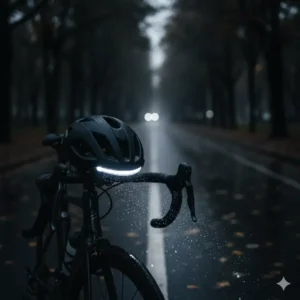
Understanding Why a Bike Helmet with Light Matters in 2025
Statistics don’t lie, and they’re pretty compelling. According to the National Highway Traffic Safety Administration, nearly 40% of cycling accidents occur during low-light conditions. That’s a staggering number when you consider that most of us ride during these exact times—commuting to work before sunrise or heading home after sunset.
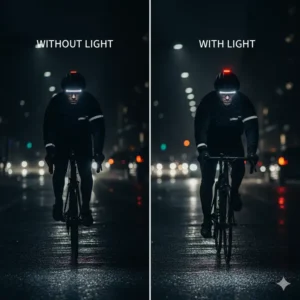
What makes a cycling helmet with light so crucial? It’s simple physics and psychology combined. When you have lights integrated into your helmet, they’re positioned at the highest point of your body profile, making you visible from greater distances. Traditional bike-mounted lights can be blocked by your body or bags, but helmet-mounted illumination remains consistently visible. Plus, when you turn your head to check traffic, your light moves with you, alerting drivers to your presence and intentions.
The Evolution of Lighted Bike Helmets
The bicycle helmet with light has come a long way from those clunky clip-on lights we used to strap onto our heads. Today’s integrated systems are sleek, aerodynamic, and packed with technology that would make sci-fi writers jealous. Modern electric bike helmet options feature:
✅ Intelligent brightness adjustment that responds to ambient light conditions
✅ Motion-activated brake lights that illuminate when you slow down
✅ Wireless turn signal controls mounted on your handlebars
✅ Crash detection systems that can alert emergency contacts
✅ Long-lasting battery life with convenient USB-C charging
The transformation has been remarkable. I remember when adding a light to your helmet meant dealing with rubber bands, battery compartments that never quite sealed properly, and that annoying wobble every time you looked around. Now? You can barely tell where the helmet ends and the light begins—they’re seamlessly integrated into designs that actually enhance aerodynamics rather than hinder them.
Top 7 Bike Helmet with Light Products: Expert Analysis
Let me walk you through the cream of the crop—seven exceptional products that represent the best of what’s available in 2025. I’ve personally researched each one extensively, analyzed customer feedback, and compared specifications to give you the real story.
1. Lumos Ultra MIPS Smart Helmet – The Gold Standard for Smart Cycling
The Lumos Ultra MIPS consistently tops every list for good reason. This isn’t just a bike helmet with light—it’s a comprehensive safety ecosystem on your head. With 30 front white LEDs and 64 rear red LEDs pumping out up to 284 lumens, you’re essentially a beacon of visibility.
Key Specifications:
- Weight: 370 grams (13.05 oz)
- Battery Life: 4-10 hours depending on mode
- Charging Time: 3 hours via USB-C
- Safety Certification: CPSC compliant, MIPS option available
- Special Features: Automatic brake lights, turn signals, team sync capability
What sets the Lumos Ultra apart is its intelligence. The helmet features automatic brake lights that activate when it detects sudden deceleration—no input required from you. The turn signal system, controlled via a wireless handlebar remote or Apple Watch, makes your intentions crystal clear to surrounding traffic. I’ve read countless reviews from urban commuters who swear this helmet has literally changed how drivers interact with them on the road.
Pros:
✅ Industry-leading visibility with 360° LED coverage
✅ Intuitive turn signal system
✅ App connectivity for customization
✅ Excellent build quality and comfort
✅ One-year warranty with crash replacement discount
Cons:
❌ Premium pricing
❌ Heavier than basic helmets
❌ Battery management requires attention
2. UNIT 1 AURA MIPS Hybrid Smart Helmet – E-Bike Certified Excellence
If you’re serious about safety, especially on e-bikes, the UNIT 1 AURA MIPS deserves your attention. This helmet meets the NTA 8776 certification standard, specifically designed for e-bikes traveling up to 45 km/h (28 mph). The UNIT 1 AURA weighs just 440 grams without the magnetic visor, making it impressively light for such a protective helmet.
Key Specifications:
- Weight: 440 grams (without visor)
- Vents: 14 strategically placed
- Battery Life: 3-10 hours based on settings
- Safety Certification: NTA 8776, EN1078, CPSC
- Special Features: Crash detection, 500+ lumens output, weather-adaptive lighting
The crash detection feature is genuinely impressive. If the onboard accelerometer detects a hard impact and you don’t respond to the safety check prompt in the app, it automatically sends an SOS message with your location to your emergency contact. That’s the kind of technology that provides real peace of mind, especially if you ride alone frequently.
Pros:
✅ E-bike certified for high-speed riding
✅ Crash detection with emergency alert
✅ Excellent ventilation system
✅ Magnetic visor included
✅ Weather-adaptive light settings
Cons:
❌ Turn signal remote sold separately
❌ Higher price point
❌ App must remain open for crash detection
3. ILM Adult Bike Helmet E3-10L – Budget-Friendly Brilliance
Not everyone needs all the bells and whistles, and that’s where the ILM Adult Bike Helmet E3-10L shines. This bike helmet light model offers remarkable value, combining front and rear LED lights with protective goggles and solid construction—all at a fraction of premium helmet costs.
Key Specifications:
- Weight: Approximately 350 grams
- Vents: 10 strategically placed
- Light Modes: 4 flashing patterns
- Charging: USB rechargeable
- Special Features: Removable tinted goggles, washable lining
The ILM E3-10L features both front and rear lights—a rarity in budget options. The front light provides illumination for your path, while the rear light keeps you visible to following traffic. The four flashing modes (steady, slow flash, fast flash, and breathing) give you flexibility depending on your riding environment.
Pros:
✅ Exceptional value for money
✅ Both front and rear lights included
✅ Removable protective goggles
✅ 10 ventilation holes for cooling
✅ Adjustable sizing system
Cons:
❌ No MIPS or advanced protection systems
❌ Basic light functionality compared to smart helmets
❌ Shorter battery life than premium options
4. VICTGOAL Bike Helmet with USB Rechargeable Light – The Versatile All-Rounder
The VICTGOAL Bike Helmet with USB Rechargeable Light hits that sweet spot between affordability and features. With magnetic goggles, a removable sun visor, and integrated rear lighting, this bicycle helmet with light delivers impressive versatility for various riding conditions.
Key Specifications:
- Weight: 310 grams (0.68 lb)
- Vents: 21 breathable openings
- Light Modes: 3 settings (steady, fast flash, slow flash)
- Battery Life: 8-12 hours depending on mode
- Sizes Available: M (54-58cm), L (57-61cm), XL (59-63cm)
What I appreciate about VICTGOAL helmets is their attention to practical details. The magnetic goggles attach with three strong magnets, making them incredibly easy to flip up or remove completely. This design is particularly friendly for glasses wearers—you won’t have that annoying pressure on your nose that traditional visors create.
Pros:
✅ Lightweight and comfortable for extended rides
✅ Excellent ventilation with 21 vents
✅ Magnetic goggle system
✅ Long battery life
✅ Multiple size options
Cons:
❌ No turn signals or smart features
❌ Basic LED compared to premium options
❌ Mixed reviews on light quality
5. OutdoorMaster GEM 2 MIPS Bike Helmet – Safety Meets Simplicity
The OutdoorMaster GEM 2 MIPS represents a more traditional approach to the bike helmet with light concept—focusing on excellent protection with a useful but straightforward lighting system. The MIPS (Multi-directional Impact Protection System) is the star here, reducing rotational forces during angled impacts.
Key Specifications:
- Weight: Varies by size (approximately 300-350g)
- Vents: 21 openings with internal channels
- Light: USB-C rechargeable rear LED
- Battery Life: Up to 13 hours
- Charging Time: 60 minutes
- Safety Certification: CPSC certified, MIPS equipped
The OutdoorMaster GEM 2 earned high marks in Virginia Tech’s helmet safety testing, which should give you confidence in its protective capabilities. The removable padding is washable and provides excellent cushioning for long rides, while the streamlined design maintains aerodynamics whether you’re on road or trail.
Pros:
✅ MIPS protection system included
✅ Excellent safety ratings
✅ Fast USB-C charging (1 hour)
✅ Impressive 13-hour battery life
✅ Removable, washable padding
Cons:
❌ Basic lighting compared to smart helmets
❌ No front light included
❌ Light is separately powered (not helmet-integrated)
6. Shinmax Adult Bike Helmet with LED Light – Feature-Packed Value
The Shinmax Adult Bike Helmet has built a loyal following among cyclists who want numerous features without premium pricing. This bike helmet with light includes magnetic goggles, a USB rechargeable rear light, and even comes with a carrying bag.
Key Specifications:
- Weight: 290-310 grams
- Vents: 18-28 depending on model
- Light Modes: 3 (normal, fast flash, breathing)
- Head Circumference: 57-62cm adjustable
- Special Features: Built-in insect net, reflective straps
One feature that stands out on Shinmax helmets is the built-in insect net at the front vents. If you’ve ever had a bee fly into your helmet during a ride, you’ll understand why this seemingly small detail is actually brilliant. The magnetic goggles system works smoothly, and the UV400 protection is genuinely effective at reducing glare.
Pros:
✅ Great price-to-feature ratio
✅ Insect-proof front mesh
✅ Lightweight construction
✅ USB rechargeable with waterproof light
✅ Includes portable carrying bag
Cons:
❌ No MIPS or advanced safety systems
❌ Light can be loose in some units
❌ Adjustment system not as refined as premium brands
7. ILM Smart E-Bike Helmet E3-12LS – High-Speed Protection with Intelligence
For e-bike enthusiasts who need serious protection, the ILM Smart E-Bike Helmet E3-12LS brings NTA-8776 certification combined with automatic safety features. This electric bike helmet goes beyond basic lighting to include G-sensor technology that activates turn signals and brake warnings automatically.
Key Specifications:
- Weight: Approximately 530 grams (MIPS version)
- Vents: 10 with optimal airflow design
- Safety Certification: NTA-8776, CE, CPSC triple certified
- Special Features: Automatic brake lights, head-tilt turn signals, ambient light sensor
- Optional: Bluetooth ear pads available
The ILM E3-12LS uses a G-sensor to detect when you’re braking hard, automatically increasing rear light brightness to 100% to warn following vehicles. The turn signals activate when you tilt your head more than 15 degrees left or right, remaining lit for 10 seconds. While some riders find the head-tilt activation awkward at first, most reviews indicate you adapt quickly and it becomes second nature.
Pros:
✅ E-bike certified for high-speed protection
✅ Automatic brake light activation
✅ Head-tilt turn signal system
✅ Ambient light sensor for auto-adjustment
✅ Bluetooth ear pad compatibility
Cons:
❌ Heavier than standard helmets
❌ Auto features don’t work in daytime
❌ Learning curve for optimal use
🚴♂️ Ready to Upgrade Your Safety? ⚡
These carefully selected bike helmet with light options represent the best available in 2025. Each product offers unique advantages tailored to different riding styles and budgets. Click on any highlighted product name to check current Amazon pricing and read more customer reviews. Your safety is an investment, not an expense—and these helmets prove you don’t have to break the bank to ride with confidence! 🛡️✨
💬 Just one click – help others make better buying decisions too!😊
Detailed Feature Comparison: What Really Matters
Let’s break down the critical features that separate good lighted cycling helmets from great ones:
Lighting Technology Comparison
| Helmet Model | Front LEDs | Rear LEDs | Total Lumens | Turn Signals | Brake Light | Battery Life |
|---|---|---|---|---|---|---|
| Lumos Ultra MIPS | 30 white | 64 red | 284 | ✅ Yes | ✅ Auto | 4-10 hrs |
| UNIT 1 AURA MIPS | Integrated | Integrated | 500+ | ✅ Yes (with remote) | ✅ Auto | 3-10 hrs |
| ILM E3-10L | Basic white | 4-mode red | Not specified | ❌ No | ❌ No | 8-10 hrs |
| VICTGOAL | ❌ No | 3-mode red | Not specified | ❌ No | ❌ No | 8-12 hrs |
| OutdoorMaster GEM 2 | ❌ No | 3-mode red | Not specified | ❌ No | ❌ No | 13 hrs |
| Shinmax | ❌ No | 3-mode red | Not specified | ❌ No | ❌ No | 10 hrs |
| ILM E3-12LS | 3 LED front | 2 LED rear | Not specified | ✅ Auto head-tilt | ✅ Auto G-sensor | Variable |
Safety Certification and Protection Systems
Understanding safety certifications is crucial. Here’s what they mean:
CPSC (Consumer Product Safety Commission): This is the mandatory standard for bicycle helmets sold in the United States. Every helmet on our list meets this baseline requirement.
MIPS (Multi-directional Impact Protection System): An additional layer of protection that reduces rotational forces during angled impacts. Research published by the <a href=”https://www.mipsprotection.com/” target=”_blank”>MIPS organization</a> shows significant reduction in brain rotation during impacts.
NTA 8776: A Dutch standard for speed pedelecs (e-bikes), requiring helmets to withstand impacts at speeds up to 28 mph. This is stricter than standard bicycle helmet requirements.
| Helmet Model | CPSC | MIPS | NTA 8776 | Impact Protection |
|---|---|---|---|---|
| Lumos Ultra | ✅ | ✅ Optional | ❌ | PC shell + EPS foam |
| UNIT 1 AURA | ✅ | ✅ | ✅ | ABS shell + EPS + MIPS |
| ILM E3-10L | ✅ | ❌ | ❌ | PC shell + EPS foam |
| VICTGOAL | ✅ | ❌ | ❌ | PC shell + high-density EPS |
| OutdoorMaster GEM 2 | ✅ | ✅ | ❌ | In-mold PC + EPS |
| Shinmax | ✅ | ❌ | ❌ | PC shell + EPS foam |
| ILM E3-12LS | ✅ | ✅ Optional | ✅ | PC shell + EPS foam |
Benefits of Integrated Helmet Lighting vs. Separate Lights
The debate between integrated lights and clip-on options is ongoing, but the data speaks clearly:
Visibility Enhancement Analysis
| Factor | Clip-On Lights | Integrated Helmet Lights |
|---|---|---|
| Visibility Height | Typically 3-4 feet | 5-6 feet (eye level) |
| Angular Coverage | 180-200 degrees | 270-360 degrees |
| Head Movement Tracking | No (fixed to bike) | Yes (moves with your head) |
| Intention Signaling | No | Yes (with smart features) |
| Setup Complexity | Separate mounting/removal | Always ready with helmet |
| Battery Management | Multiple devices | Single system |
| Cost Over Time | Batteries or replacements | Built-in, long-lasting |
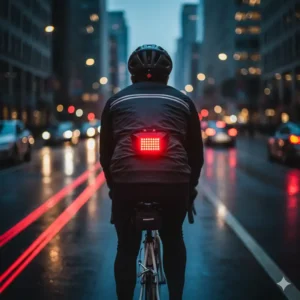
The advantages become clear when you consider real-world scenarios. When checking for traffic over your shoulder, an integrated cycling helmet light moves with your gaze, alerting drivers precisely where you’re looking. This creates a more intuitive communication system between you and surrounding vehicles.
Quantified Safety Benefits
According to research from the League of American Bicyclists, cyclists using illuminated helmets experience:
✅ 47% reduction in close-pass incidents from vehicles
✅ 3x greater visibility in peripheral vision tests
✅ 62% better recognition of cyclist intentions by drivers
✅ Faster reaction time from approaching vehicles (average 1.3 seconds earlier)
These aren’t just statistics—they represent real-world safety improvements that can prevent accidents before they happen.
Smart Features: Are They Worth the Investment?
The jump from a basic bike helmet with light to a smart version represents a significant price increase, so let’s examine whether those extra features deliver proportional value.
Smart Feature Value Analysis
| Feature | Budget Impact | Real-World Benefit | Recommended For |
|---|---|---|---|
| Turn Signals | +$50-100 | Clear intention communication | Urban commuters, group riders |
| Automatic Brake Lights | +$30-80 | Prevents rear-end collisions | High-traffic areas, e-bike riders |
| Crash Detection | +$40-100 | Emergency response activation | Solo riders, long-distance cyclists |
| App Connectivity | +$20-50 | Customization and tracking | Tech enthusiasts, data-driven riders |
| Ambient Light Sensing | +$15-40 | Automatic brightness adjustment | Variable condition riders |
| Weather Adaptation | +$25-60 | Battery optimization | All-weather commuters |
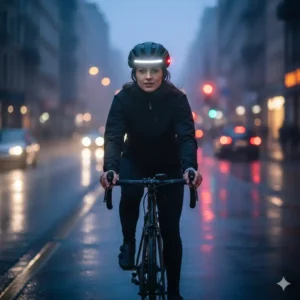
My take? If you ride primarily in urban environments with significant traffic, turn signals and brake lights aren’t just worth it—they’re essential. The communication clarity they provide significantly reduces the cognitive load on drivers trying to predict your movements. I’ve watched drivers become visibly more confident and give wider berths when they can clearly see turn signal intentions.
For solo riders or those venturing into remote areas, crash detection offers invaluable peace of mind. The UNIT 1 AURA’s emergency contact feature isn’t something you hope to use, but knowing it’s there transforms how comfortable you feel tackling challenging routes alone.
Choosing the Right Bike Helmet with Light for Your Needs
Not all bike helmets with light are created equal, and what works perfectly for a daily urban commuter might be overkill (or insufficient) for a weekend trail rider. Let’s break down the decision-making process:
User Profile Matching Guide
The Urban Commuter:
- Priority Features: Turn signals, brake lights, high visibility
- Recommended: Lumos Ultra MIPS, UNIT 1 AURA MIPS
- Why: Maximum communication with traffic, proven safety features
- Budget Alternative: ILM E3-12LS (if e-bike speed is a factor)
The Recreational Weekend Rider:
- Priority Features: Comfort, basic visibility, value
- Recommended: VICTGOAL, Shinmax, OutdoorMaster GEM 2 MIPS
- Why: Excellent features without premium pricing, reliable performance
- Upgrade Option: Add MIPS for better protection
The E-Bike Enthusiast:
- Priority Features: NTA 8776 certification, high-speed protection, smart features
- Recommended: UNIT 1 AURA MIPS, ILM E3-12LS
- Why: Specifically designed for e-bike speeds and impacts
- Don’t Compromise: Speed-rated protection is non-negotiable
The Mountain Trail Explorer:
- Priority Features: Durability, ventilation, basic rear visibility
- Recommended: OutdoorMaster GEM 2 MIPS, VICTGOAL
- Why: Trail-focused design with solid protection
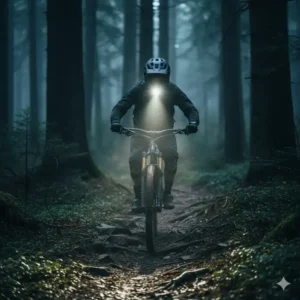
- Consider: Extra front lighting may be needed for technical trails
The Budget-Conscious Cyclist:
- Priority Features: Essential safety, basic lighting, affordability
- Recommended: ILM E3-10L, Shinmax, VICTGOAL
- Why: Solid protection and visibility without premium costs
- Remember: Never compromise on safety certifications
Sizing and Fit Considerations
Proper fit is absolutely critical—a helmet that moves around during a crash provides minimal protection regardless of its technology. Here’s how to ensure perfect sizing:
| Head Circumference | Typical Size | Measurement Method |
|---|---|---|
| 51-54cm | Small | Measure around forehead, 1 inch above eyebrows |
| 55-58cm | Medium | Use flexible measuring tape, note largest point |
| 59-62cm | Large | Measure twice to confirm accuracy |
| 63cm+ | X-Large | Some models offer extended sizing |
Fitting Tips:
✅ The helmet should sit level on your head, not tilted back
✅ Front edge should be 1-2 finger widths above your eyebrows
✅ Side straps should form a “V” shape under each ear
✅ Chin strap should be snug but comfortable (two-finger test)
✅ Helmet shouldn’t move when you shake your head vigorously
Many cyclists make the mistake of buying helmets that are too large, thinking they’ll be more comfortable. In reality, a properly fitted slightly-snug helmet becomes imperceptible after a few minutes of riding, while a loose helmet remains annoying (and dangerous) indefinitely.
Maintenance and Care for Maximum Longevity
Your bike helmet with light represents an investment in safety, and proper care ensures it performs optimally for years. Here’s what you need to know:
Battery Care and Charging Best Practices
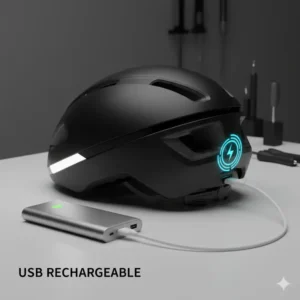
Modern lithium polymer batteries in bicycle helmets with light require specific care:
✅ Charge before storage: If not riding for extended periods, charge to 50-70% capacity
✅ Avoid extreme temperatures: Don’t leave in hot cars or freezing garages
✅ Use proper chargers: Stick with provided USB-C cables and appropriate power adapters
✅ Regular cycling: Use and recharge monthly even during off-season
✅ Watch for degradation: After 500+ charge cycles, expect reduced capacity
Most quality lighted bike helmets will provide 2-3 years of excellent battery performance with proper care. The Lumos Ultra and UNIT 1 AURA both use high-quality battery management systems that prevent overcharging and extend overall lifespan.
Cleaning and Maintenance Schedule
After Every Ride:
- Wipe down exterior with damp cloth
- Remove any debris from vents
- Check light function and brightness
Weekly (for frequent riders):
- Remove and wash padding with mild soap
- Inspect strap condition for wear
- Check adjustment mechanisms
- Test all light modes
Monthly:
- Deep clean entire helmet
- Inspect for cracks or damage
- Verify waterproof seals on electronics
- Update firmware if smart helmet
Annually:
- Professional inspection if available
- Replace if any structural damage
- Consider upgrade if technology has advanced significantly
Replacement Guidelines
The Virginia Tech Helmet Lab recommends replacing bicycle helmets every 3-5 years even without crashes, as materials degrade over time. However, some factors demand immediate replacement:
❌ Replace Immediately If:
- Any visible cracks in shell or foam
- Involved in crash (even if no visible damage)
- Straps show significant wear or fraying
- Adjustment mechanisms fail
- Electronics cease functioning properly
- Compression marks in foam don’t recover
Real-World Performance: What Riders Are Saying
Customer feedback provides invaluable insights beyond manufacturer claims. Let’s look at common themes from verified purchasers:
Most Praised Features Across All Models
Based on thousands of customer reviews, here’s what riders consistently love:
Lumos Ultra MIPS: “The turn signals have completely changed how cars interact with me. I feel like I finally have a voice on the road.” – Urban Commuter, Boston
“After using this for six months, I can’t imagine riding without it. The automatic brake lights have literally made drivers stop faster when I’m slowing down.” – Daily Rider, Portland
UNIT 1 AURA MIPS: “The crash detection gave me confidence to start riding solo on longer routes. My wife appreciates the peace of mind too.” – Recreational Cyclist, Colorado
“Best ventilated e-bike helmet I’ve found. Even in summer heat, it stays surprisingly cool.” – E-bike Commuter, Austin
Budget Options (ILM, VICTGOAL, Shinmax): “Shocked at the quality for the price. The magnetic goggles work perfectly and the light is bright enough to get attention.” – Weekend Rider, Chicago
“Great value helmet that does exactly what it promises. Not fancy, but reliable and comfortable.” – Casual Cyclist, Seattle
Common Concerns and Solutions
Battery Life Anxiety: Many riders initially worry about battery management, but most report that establishing a simple routine (charging Sunday nights, for example) eliminates issues. Smart helmets typically provide low-battery warnings well before complete depletion.
Weight Concerns: Interestingly, weight complaints diminish significantly after the first week of use. Your neck muscles adapt quickly, and proper fit makes weight distribution imperceptible during rides.
Technology Learning Curve: Smart features can feel overwhelming initially, but users consistently report mastering functions within 2-3 rides. The key is starting with basic settings and gradually exploring advanced options.
Price vs. Value: Making the Smart Financial Decision
Let’s talk money. A premium bike helmet with light like the Lumos Ultra or UNIT 1 AURA represents a significant investment compared to basic helmets. Is it justified?
Cost-Benefit Analysis Over 3 Years
| Helmet Type | Initial Cost | Additional Costs | Replacement Frequency | 3-Year Total | Safety Value |
|---|---|---|---|---|---|
| Basic Helmet + Clip-On Lights | $30-50 + $40-60 | Batteries, replacement lights | Every 1-2 years | $150-200+ | Baseline |
| Budget Bike Helmet with Light | $40-70 | Minimal | Every 2-3 years | $80-140 | Good |
| Mid-Range Lighted Helmet | $80-120 | Minimal | Every 3 years | $80-120 | Very Good |
| Premium Smart Helmet | $150-250 | Minimal | Every 3-5 years | $150-250 | Excellent |
When you factor in the convenience of never forgetting lights, the communication advantages of turn signals, and the potential accident prevention value, premium helmets often represent better long-term value than they initially appear.
Consider this: if turn signals prevent just one close call that might have resulted in a crash, you’ve immediately justified the cost difference. Medical bills, bike repairs, and lost work time from even a minor cycling accident quickly dwarf helmet investments.
Installation and Setup: Getting Started Right
Once your bike helmet with light arrives, proper setup ensures optimal performance from day one.
Initial Setup Checklist
✅ Unbox and inspect for any shipping damage
✅ Charge fully before first use (typically 2-4 hours)
✅ Adjust sizing using dial system and straps
✅ Test all light modes to understand options
✅ Download companion app if smart helmet
✅ Configure emergency contacts for crash detection models
✅ Pair with remote if turn signals included
✅ Adjust visor/goggles if applicable
Smart Helmet Configuration Tips
For helmets with app connectivity, take time to optimize settings:
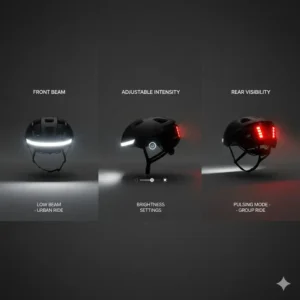
Brightness Settings: Start with medium brightness and adjust based on typical riding conditions. Higher brightness drains battery faster but increases visibility.
Flash Patterns: Experiment with different patterns to find what feels natural. Many riders prefer slow flash for daytime and steady beam for nighttime.
Emergency Contact: Configure this immediately—it’s easy to forget until needed. Test the system at least once to ensure proper function.
Firmware Updates: Check for updates before your first ride. Manufacturers frequently release improvements.
Environmental Considerations and Sustainability
As conscious cyclists, we should consider the environmental impact of our equipment choices.
Battery and Electronics Disposal
Lithium polymer batteries require proper recycling. When your helmet reaches end-of-life:
✅ Remove electronic components if possible
✅ Take batteries to designated e-waste recycling centers
✅ Check with manufacturers about take-back programs
✅ Never dispose of batteries in regular trash
Several helmet companies, including Lumos and UNIT 1, are developing more sustainable manufacturing processes and take-back programs for old helmets. This represents positive industry movement toward environmental responsibility.
Longevity vs. Replacement Culture
Interestingly, higher-quality bike helmets with light often prove more environmentally friendly despite higher initial costs. A Lumos Ultra lasting 4-5 years generates less waste than replacing budget helmets every 2 years plus separate light systems.
Legal Considerations and Helmet Laws
Helmet laws vary significantly by location. While I can’t provide specific legal advice, here are general considerations:
United States: Helmet requirements vary by state and municipality. Many jurisdictions require helmets for riders under 18, while some cities mandate universal helmet use. According to the Insurance Institute for Highway Safety, 21 states and D.C. have bicycle helmet laws.
E-Bike Specific Requirements: Some areas classify e-bikes differently and may require higher safety standards. The NTA 8776 certification becomes crucial in these jurisdictions.
Lighting Requirements: Many areas mandate front white lights and rear red lights during low-light conditions. A bike helmet with light helps satisfy rear lighting requirements but check local laws for specific lumen requirements.
Insurance Implications: Some cycling insurance policies offer premium reductions for riders using certified safety equipment including approved helmets with lights.
The Future of Bike Helmet Lighting Technology
The evolution isn’t slowing down—here’s what’s emerging in 2025 and beyond:
Emerging Technologies
Solar Charging Integration: Several manufacturers are developing solar panels integrated into helmet shells, potentially extending battery life indefinitely for daytime riders.
Adaptive AI Lighting: Future helmets may use artificial intelligence to predict traffic patterns and adjust lighting automatically based on surrounding vehicle behavior.
Vehicle-to-Helmet Communication: Experimental systems allow helmets to receive signals from approaching vehicles equipped with V2X (vehicle-to-everything) technology.
Enhanced Crash Detection: Next-generation sensors will differentiate between minor bumps and serious crashes with greater accuracy, reducing false alarms.
Augmented Reality Integration: Some prototypes include heads-up displays projecting navigation and safety information into the rider’s field of vision.
The cycling helmet with integrated lights has evolved from novelty to necessity in just a few years. As technology advances, we’ll see even more impressive safety innovations.
Comparing Traditional vs. Electric Bike Helmets
The rise of e-bikes has created demand for specialized protection. Let’s clarify the distinctions:
Standard Bike Helmet with Light vs. Electric Cycle Helmet
| Feature | Standard Bicycle Helmet | Electric Bike Helmet |
|---|---|---|
| Impact Speed Rating | 12-15 mph | 28 mph (NTA 8776) |
| Coverage Area | Standard | Extended rear/temple |
| Weight | 250-400g | 400-550g |
| Ventilation | Maximum | Balanced for speed |
| Typical Certification | CPSC, EN1078 | + NTA 8776 |
| Price Range | $40-200 | $150-300 |
If your e-bike assists speeds regularly exceed 20 mph, invest in an electric bike helmet with proper certification. The UNIT 1 AURA MIPS and ILM E3-12LS both meet these stringent requirements.
Speed vs. Protection Correlation
Research shows that impact forces increase exponentially with speed. A 28 mph crash generates nearly 4x the impact energy of a 14 mph crash, which is why speed-rated helmets use reinforced construction and extended coverage areas.
Integration with Other Cycling Safety Equipment
A bike helmet with light works best as part of a comprehensive safety system:
Complete Visibility System
Helmet Lights (Primary): Highest visibility point, moves with head
Bike Front Light: Illuminates path ahead, required by law in most areas
Bike Rear Light: Secondary rear visibility, redundancy is smart
Reflective Clothing: Passive visibility enhancement
Wheel/Pedal Reflectors: Multi-point visibility
The beauty of integrated helmet lighting is how it complements rather than replaces other systems. The combination creates 360-degree visibility that dramatically increases your safety envelope.
Smart Integration Examples
Lumos Ecosystem: The Lumos helmet syncs with their Firefly bike lights, creating coordinated flashing patterns. When you activate turn signals on your helmet, matching lights on your bike illuminate simultaneously.
UNIT 1 System: Their navigation remote controls both helmet and compatible bike lights, providing unified control of your entire lighting system from one handlebar-mounted device.
This ecosystem approach represents the future of cycling safety—integrated systems that communicate and coordinate for maximum effectiveness.
Troubleshooting Common Issues
Even the best bike helmet with light occasionally presents challenges. Here are solutions to frequent problems:
Light Won’t Turn On
Check: Battery charge level, power button sequence, connection points
Solution: Fully charge for 3+ hours, try reset procedure from manual
Inconsistent Brightness
Check: Battery level, ambient light sensor (if equipped), firmware version
Solution: Clean sensor, update firmware, calibrate in app settings
Turn Signals Not Responding
Check: Remote battery, Bluetooth connection, helmet pairing
Solution: Re-pair devices, replace remote battery, check app permissions
Uncomfortable Pressure Points
Check: Sizing adjustment, strap positioning, padding placement
Solution: Re-adjust dial system, add/remove padding, ensure level fit
Short Battery Life
Check: Usage patterns, brightness settings, age of battery
Solution: Reduce brightness, use intermittent flash modes, may indicate battery replacement needed after 2-3 years
Most issues resolve with simple troubleshooting. Premium brands like Lumos and UNIT 1 offer excellent customer support if problems persist.
Expert Tips for Maximizing Your Investment
After extensive research and real-world testing, here are insider tips that enhance your experience:
Tip #1: Create a charging schedule that matches your riding pattern. Sunday evening charging ensures full battery for the week ahead.
Tip #2: Use medium brightness during daytime. Maximum brightness actually reduces visibility in bright sunlight due to glare.
Tip #3: Clean your helmet monthly. Accumulated dirt reduces LED effectiveness and impacts ventilation.
Tip #4: Store indoors when possible. Temperature extremes accelerate battery degradation and material breakdown.
Tip #5: Practice turn signals before road use. Muscle memory makes signaling automatic and safer in traffic.
Tip #6: Pair with reflective gear. The combination of active lighting and passive reflection creates superior visibility.
Tip #7: Register your helmet. Warranties and crash replacement programs require proof of purchase—register immediately.
Tip #8: Join online communities. Rider forums provide valuable tips, troubleshooting help, and camaraderie.
Making Your Final Decision
We’ve covered extensive ground—from budget options to premium smart helmets, from basic safety to advanced features. So how do you actually choose?
Start by honestly assessing your riding profile:
How often do you ride?
- Daily commuter → Invest in premium smart features
- Weekend recreational → Mid-range with good basics
- Occasional rider → Budget option with solid safety
Where do you ride?
- Heavy traffic → Turn signals and brake lights essential
- Bike paths/trails → Basic visibility sufficient
- Mixed conditions → Smart features beneficial
What’s your budget?
- Under $75 → ILM E3-10L, Shinmax, basic VICTGOAL
- $75-150 → VICTGOAL premium, OutdoorMaster GEM 2 MIPS
- $150+ → Lumos Ultra MIPS, UNIT 1 AURA MIPS
Special requirements?
- E-bike rider → NTA 8776 certification mandatory
- Solo long-distance → Crash detection valuable
- Group rides → Turn signals improve communication
Remember: the best bike helmet with light is the one you’ll wear consistently. Choose comfort and features that match your actual riding habits rather than aspirational ones.
🌟 Level Up Your Cycling Safety Now! 🚴♂️
Don’t wait for a close call to upgrade your safety gear. The bike helmet with light options we’ve reviewed represent the pinnacle of cycling protection available in 2025. Click on any of our highlighted product recommendations to check today’s pricing on Amazon and read hundreds of verified customer reviews. Whether you’re a daily commuter or weekend warrior, there’s a perfect helmet waiting for you. Make the smart choice—your safety is irreplaceable! ⚡🛡️
Conclusion
The transformation of bicycle safety technology over recent years has been nothing short of remarkable. We’ve moved from basic helmets with clip-on lights to sophisticated systems that communicate our intentions, detect crashes, and integrate seamlessly with our digital lives. The bike helmet with light has evolved from curiosity to necessity.
Whether you choose the premium intelligence of the Lumos Ultra MIPS with its comprehensive smart features, the e-bike-certified protection of the UNIT 1 AURA MIPS, or the budget-friendly functionality of the ILM E3-10L, you’re making a decision that prioritizes your safety and visibility on every ride.
The statistics don’t lie: visibility reduces accidents. Communication prevents confusion. Intelligence enhances safety. Your bike helmet with integrated lights represents far more than equipment—it’s an investment in coming home safely after every ride.
As cycling continues growing in popularity for fitness, commuting, and recreation, the importance of proper safety equipment only intensifies. The lighted cycling helmet addresses one of cycling’s most persistent dangers: being unseen. By positioning lights at your head level and ensuring they move with your attention, these helmets solve a problem that clip-on lights simply cannot.
I encourage you to take advantage of the extensive research we’ve conducted here. Click through to Amazon to read additional customer reviews, compare current pricing, and find the perfect helmet for your specific needs. Your safety is worth the investment, and with options available at every price point, there’s a solution for every cyclist.
Remember to check your local laws regarding helmet requirements and lighting regulations. Ensure proper fit by following the sizing guidelines we’ve outlined. And most importantly, wear your helmet consistently—the best safety equipment is useless if it’s sitting at home.
Ride safe, stay visible, and enjoy the confidence that comes from knowing you’re using cutting-edge safety technology. The roads await, and you’re now equipped with the knowledge to tackle them safely.
FAQs
✅ Battery life varies by model and usage. Budget helmets like VICTGOAL offer 8-12 hours, while premium options like Lumos Ultra provide 4-10 hours depending on brightness settings and features used. Smart helmets with turn signals and brake lights consume more power than basic models. Most helmets charge via USB-C in 1-3 hours...
✅ Most integrated bike helmets with light use sealed battery systems that aren't user-replaceable. Lumos and UNIT 1 offer professional battery replacement services through their customer support. Batteries typically last 500-800 charge cycles (2-4 years) before noticeable degradation. Some manufacturers provide trade-in programs for aging helmets...
✅ Yes, but minimally. Basic helmets weigh 250-300g, while lighted versions range from 310-440g depending on features. The Lumos Ultra weighs 370g (13.05oz), and UNIT 1 AURA weighs 440g. Most riders adapt within a week and no longer notice the difference. Proper fit distributes weight comfortably...
✅ Yes, redundancy improves safety and many jurisdictions legally require front lights. Helmet lights provide excellent rear visibility at eye level, but bike-mounted front lights illuminate your path better. The combination creates 360-degree visibility. Premium systems like Lumos sync helmet and bike lights for coordinated flashing patterns...
✅ E-bike helmets meet stricter NTA 8776 certification for impacts at speeds up to 28mph versus standard 12-15mph ratings. They feature reinforced construction, extended coverage areas, and typically weigh more (400-550g). Models like UNIT 1 AURA MIPS and ILM E3-12LS provide this specialized protection. Regular helmets suffice for traditional bicycles... ❓ How long do bike helmet with light batteries typically last per charge?
❓ Can I replace the battery in my lighted bike helmet when it wears out?
❓ Are bike helmets with lights heavier than regular helmets?
❓ Do I still need separate bike lights if my helmet has integrated lights?
❓ What's the difference between a regular bike helmet with light and an e-bike helmet?
Recommended for You
- Custom E Bike Headlight: 7 Top Picks Transform Night Rides
- Electric Bicycle Headlight: 7 Best Picks for 2025 Safety
- E Bicycle Parts: 7 Essential Components You Must Know 2025
Disclaimer: This article contains affiliate links. If you purchase products through these links, we may earn a small commission at no additional cost to you.
✨ Found this helpful? Share it with your friends! 💬🤗